

What Is Niche Perfumery? A Complete 2026 Guide to the Alternative Fragrance World
The word niche has been so heavily marketed in the fragrance industry over the past two decades that it now risks meaning everything and nothing
By The Fragrenza Team 9 min read
The word niche has been so heavily marketed in the fragrance industry over the past two decades that it now risks meaning everything and nothing. Walk into any department store and you will find shelves labelled niche that contain compositions indistinguishable from mainstream releases in everything but price and packaging. Read any fragrance discussion forum and you will find heated arguments about whether particular houses qualify as niche or merely market themselves that way. Understanding what niche perfumery actually is, structurally and culturally, requires looking past the marketing and examining the underlying choices that distinguish niche compositions from their mainstream counterparts.
The definition that holds up across decades and avoids the marketing inflation involves three criteria. First, niche fragrances are designed primarily as creative statements rather than commercial products engineered to maximise mass appeal. Second, niche fragrances use raw material budgets that exceed what mainstream commercial calculation can support. Third, niche fragrances accept the risk of being polarising in exchange for the reward of being distinctive. Any composition that meets these three criteria is functionally niche, regardless of brand size or distribution model. Any composition that fails them is functionally mainstream, regardless of how it markets itself.
The Creative Intent Distinction
The clearest difference between niche and mainstream perfumery shows up in the design brief. Mainstream fragrance development begins with consumer research, focus groups, and market positioning analyses. Niche fragrance development begins with the perfumer's creative idea. This distinction has cascading consequences throughout the development process. Mainstream compositions get adjusted toward consumer feedback during development, smoothing distinctive features that test poorly. Niche compositions get refined toward the perfumer's creative vision, often deepening distinctive features that the perfumer judges essential.
The result is two genuinely different categories of olfactory product. Mainstream compositions are usually pleasant, broadly wearable, and architecturally familiar. Niche compositions are usually distinctive, contextually demanding, and architecturally ambitious. Neither category is intrinsically superior, but they serve different purposes, and confusing them produces frustration for wearers who do not understand which type they are buying.
The Material Budget Distinction
Raw materials are the second arena where niche and mainstream diverge significantly. A great natural jasmine absolute costs orders of magnitude more than a synthetic jasmine reconstruction. Real oakmoss absolute costs more than evernyl, the regulatory-compliant substitute. High-grade rose otto costs more than synthetic rose accords built from a handful of captive molecules.
Mainstream commercial calculation generally favours the synthetic alternatives because they deliver acceptable approximations at a fraction of the cost. Niche calculation generally favours the natural materials when the perfumer judges them essential to the creative statement, even when the cost implications are significant. Wearers who notice the difference between mainstream and niche compositions are often noticing the material budget difference, even when they cannot articulate it in those terms.
The Polarisation Distinction
The third criterion is the most counterintuitive. Mainstream fragrance development optimises for broad acceptance, which means avoiding choices that produce strong negative reactions in any significant subset of testers. Niche fragrance development tolerates and sometimes embraces polarisation, because the creative ambition matters more than the universal welcome.
This is why niche compositions often produce stronger emotional reactions than mainstream releases. A wearer encountering a distinctive niche composition will often either love it or actively dislike it, with little middle ground. A wearer encountering a mainstream release will more often find it pleasant but unmemorable. The polarisation that niche houses tolerate is the trade-off that produces architectural distinctiveness, and it explains why niche fragrance discussions tend to be more passionate than mainstream conversations.
Niche Examples Across Families
The breadth of niche perfumery becomes clear when you look across architectural families. The category includes radically different aesthetic propositions, unified only by the creative intent and material commitment described above.
Santal Lush
illustrates how niche perfumery approaches sandalwood. Where mainstream sandalwood fragrances tend to use synthetic sandalwood reconstructions that read as one-dimensional cream, Santal Lush builds around a multifaceted sandalwood treatment that draws out the woody, creamy, slightly sweet, and faintly milky character of the material simultaneously. Wearers familiar with the Santal 33 territory will recognise the adjacent aesthetic but find Santal Lush more architecturally complete.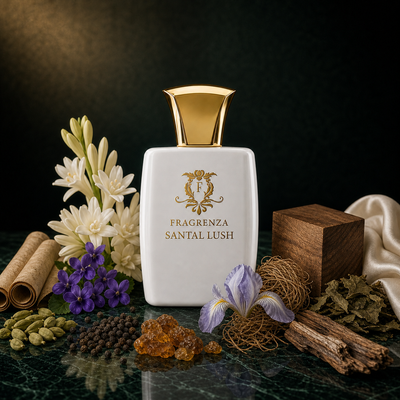
Caramelle Rosse
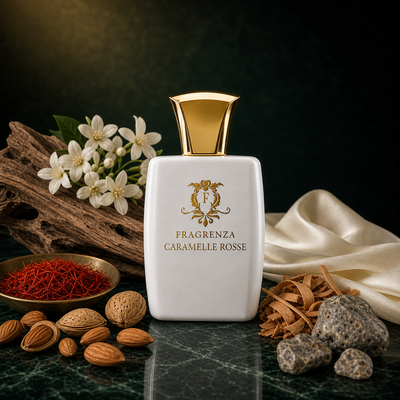
Adeline
sits in the airy floral territory occupied by compositions like delina. The architecture emphasises a transparent rose-lychee structure with subtle musky underpinnings, demonstrating how niche perfumery can approach feminine floral territory without resorting to either the heavy chypre conventions of vintage perfumery or the sugar-spun conventions of contemporary mainstream releases.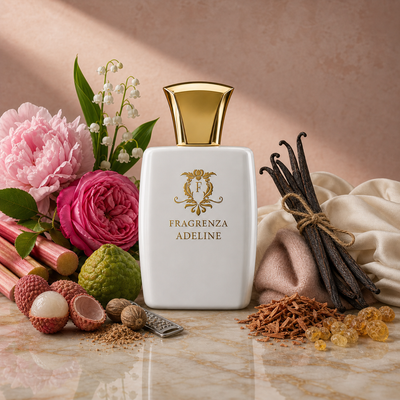
Oudensity
shows the niche approach to oud. Mainstream oud-themed releases tend to use synthetic oud reconstructions that read as one-dimensional smoky woody. Oudensity builds around materials with the genuine animalic-warm-resinous complexity that oud is supposed to deliver, with architectural choices that highlight the multiple facets of the material rather than collapsing them into a single woody impression. Wearers seeking the adjacent territory of compositions like oud-for-greatness will find Oudensity a serious exploration of the same architectural family.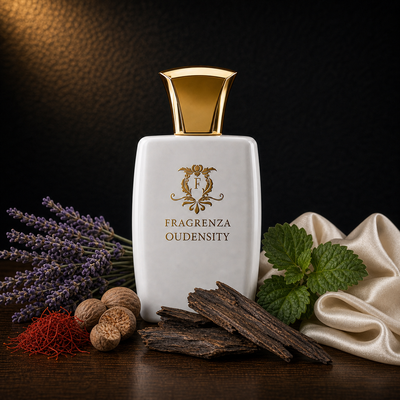
Hunters Smoke
illustrates the niche approach to smoke and leather, building a composition around the campfire and birch-tar associations of smoke rather than the temple and resinous associations more common in mainstream incense compositions. This commitment to a single facet of a complex accord is characteristic of niche development, where the creative idea drives the architectural choices rather than commercial calculation about broad appeal.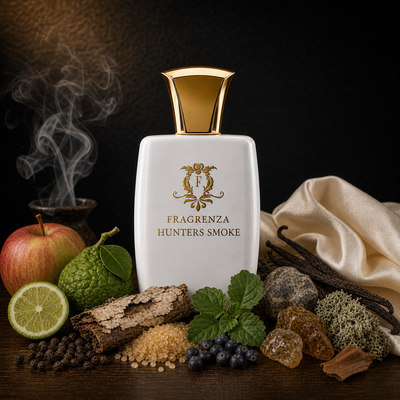
What Niche Is Not
Several common misconceptions distort the conversation about niche perfumery. The first is that niche means expensive. Price correlates with niche but does not define it. Some niche compositions are accessibly priced, and some luxury releases are mainstream in their creative calculation. Use the three structural criteria rather than the price tag.
The second is that niche means unwearable. Some niche compositions are deliberately challenging, but many are eminently wearable across daily contexts. The defining quality is creative intent rather than provocative output, and a composition can be both distinctive and easy to wear.
The third is that niche means small-batch or artisan. Some niche houses produce limited quantities; others produce significant volumes. Production scale is independent of creative intent, and conflating them produces confusion about what niche actually means.
The fourth is that niche means natural. Some niche compositions emphasise naturals; others use synthetic captives extensively. The choice depends on the creative idea rather than on a categorical preference, and the best niche perfumers move fluidly between natural and synthetic materials based on what each composition needs.
How to Identify Genuine Niche
Three diagnostic questions help separate genuine niche from marketing niche. First, does the composition take a clear architectural position rather than presenting as a generic pleasant scent? Second, can you identify materials or compositional choices that would not survive mainstream consumer testing? Third, does the composition produce strong emotional reactions in at least some wearers rather than uniform mild approval?
If the answers to these questions are yes, you are looking at genuine niche perfumery regardless of how the brand markets itself. If the answers are no, you are looking at mainstream perfumery in niche packaging regardless of the price point.
How Niche Fits Into a Modern Fragrance Wardrobe
For wearers building a fragrance wardrobe, niche compositions earn their place by delivering depth and distinctiveness in the contexts where those qualities matter most. Daily-driver slots can be filled with either niche or mainstream compositions depending on preference, but evening, special-occasion, and signature-statement slots benefit significantly from the architectural ambition that niche perfumery provides.
The wearer who has filled even one or two key slots with thoughtful niche compositions usually reports a much richer relationship with their fragrance practice than the wearer who fills every slot with mainstream releases. The differential is the architectural distinctiveness that niche delivers, which compounds across years of wear.
Related Reads
- Exploring niche fragrances: deeper application of architectural thinking
- How to choose your signature scent: framework for niche wardrobe building
- Psychology of perfume: how niche compositions serve mood needs
- Oud in Perfumery: a pillar material in niche development
- Sandalwood in Perfumery: niche treatment of a classical material
- Bespoke perfumery: the most rarefied end of niche
- Oudensity: niche oud architecture in practice
Frequently Asked Questions
How can I tell if a fragrance is genuinely niche?
Apply three diagnostic questions. Does the composition take a clear architectural position rather than presenting as generic pleasant scent? Does it include materials or choices that would not survive mainstream consumer testing? Does it produce strong reactions in at least some wearers rather than uniform mild approval? Yes answers indicate genuine niche; no answers indicate mainstream in niche packaging.
Are all expensive fragrances niche?
No. Price is correlated with niche but does not define it. Some luxury releases are mainstream in their creative calculation and merely priced at niche levels. Some niche compositions are accessibly priced and worth significantly more than they cost. Use creative intent and material quality as criteria rather than price.
Can niche fragrances be worn every day?
Absolutely. The notion that niche compositions are too challenging for daily wear conflates the category with one subset of it. Plenty of niche compositions are eminently wearable across daily contexts, and the architectural distinctiveness they provide tends to make them more rather than less suitable for repeated wear because they reward attention.
Why are niche fragrances often controversial?
Because they accept polarisation as the trade-off for distinctiveness. Mainstream development smooths distinctive features that test poorly, producing compositions that are widely liked but rarely loved. Niche development preserves distinctive features that the perfumer judges essential, producing compositions that some wearers love deeply and others actively dislike. The controversy is a consequence of the creative ambition rather than a flaw in the products.
How do I start exploring niche perfumery?
Begin with sample sets covering several architectural families rather than buying full bottles based on hype. Wear each sample across multiple days and contexts before forming opinions. Identify which families resonate with you and explore deeply within those families before broadening. Expect the first month to feel disorienting; expect the third month to start producing clear preferences; expect the sixth month to consolidate into a working aesthetic.
Is niche perfumery worth the extra cost?
For wearers who care about architectural depth and material quality, yes. For wearers who primarily want pleasant scent without strong opinions about composition, mainstream releases offer better value. The decision depends on what you want fragrance to do for you, and there is no universally correct answer.
The Bottom Line
Niche perfumery is a structural category defined by creative intent, material commitment, and willingness to be distinctive. The marketing inflation that has turned niche into a fashion label distracts from this underlying definition, but the underlying category remains real and continues to produce compositions of genuine architectural ambition. Use the criteria described here to identify genuine niche, and build your wardrobe accordingly.