

Hedione in Perfumery: The Molecule That Gave Jasmine Its Soul
Edmond Roudnitska wired methyl dihydrojasmonate into Eau Sauvage for Dior in 1966, and the molecule named for the Greek word for pleasure has shaped diffusive jasmine radiance ever since.
By The Fragrenza Team 8 min read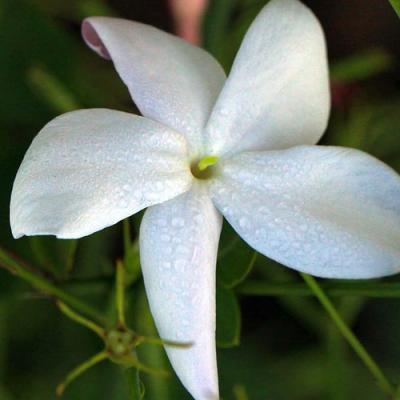
What Is Hedione?
Few synthetic molecules have reshaped the landscape of perfumery as profoundly as hedione. Introduced to the world of fine fragrance in 1966 through Edmond Roudnitska's iconic Eau Sauvage for Christian Dior, this unassuming compound — a methyl dihydrojasmonate — quietly revolutionised what a fragrance could feel like. It did not smell loud. It did not announce itself. It bloomed, drifted, and expanded in a way that no ingredient before it quite managed to do.
The name hedione comes from the Greek word for pleasure, and that etymology feels exactly right. Hedione does not simply add a scent; it adds a sensation — a quality of light, air, and movement that transforms whatever surrounds it. Understanding hedione means understanding a major turning point in the history of modern perfumery.
What Does Hedione Smell Like?
Hedione's own smell is deceptively gentle. Taken on its own, it presents a soft, clean, slightly floral character — faintly reminiscent of jasmine, but without the indolic richness or buttery heaviness that characterises true jasmine absolute. There is a watery freshness to it, a translucence that makes it feel less like a perfume ingredient and more like the memory of a warm breeze carrying jasmine from somewhere nearby.
At low concentrations it can seem almost odourless to some noses, which is part of what makes it so remarkable. Hedione's power lies less in its own smell and more in how it interacts with everything around it. It acts as an amplifier and a diffuser — lifting other materials, making them project further, last longer, and breathe more freely.
In a finished fragrance, hedione reads as radiance. It is the quality that makes a floral feel luminous rather than dense, fresh rather than heavy, effortless rather than constructed. Perfumers sometimes describe it as adding a quality of light to a composition.
The Chemistry Behind the Magic
Hedione is the common name for methyl dihydrojasmonate (MDJ), a synthetic compound derived from the jasmonate family of molecules found naturally in jasmine flowers. The compound was first synthesised and described in the early 1960s by Firmenich chemist Günter Ohloff, who identified it as a trace constituent of natural jasmine absolute.
What distinguishes hedione chemically is its molecular structure, which features a cyclopentanone ring bearing a side chain with an ester group. This architecture gives the molecule a relatively low odour threshold and, crucially, a remarkable ability to bind to certain olfactory receptors that respond to diffusive, floral-fresh stimuli. Later research confirmed that hedione activates a specific human olfactory receptor — OR51E2 — with unusual efficiency, triggering not just olfactory perception but potentially influencing areas of the brain associated with hormonal and emotional response.
The commercial form of hedione is a racemic mixture. In the late 1980s, Firmenich developed a more refined version called Hedione HC (high cis), which contains a higher proportion of the more odour-active cis isomer. Hedione HC is approximately three to four times more potent and more diffusive than the original, and it has become a staple of contemporary fine fragrance formulation — particularly in the creation of fresh, transparent florals and aquatic compositions.
Hedione's Debut: Eau Sauvage and the Birth of a New Aesthetic
The fragrance that introduced hedione to the world was Eau Sauvage, created by Edmond Roudnitska for Christian Dior in 1966. This was a genuinely radical fragrance for its time. Where men's colognes of the era tended toward heavy fougères, dense woods, or sharp citrus compositions, Eau Sauvage offered something entirely new: a bright, crystalline freshness built around an almost impossibly clean jasmine note.
Hedione was used at an unusually high concentration in Eau Sauvage — reportedly around ten per cent of the formula. At that level it created a diffusive halo of radiant floral-fresh energy that was unlike anything perfumers or consumers had encountered before. Eau Sauvage smelled modern, unisex before the concept really existed in mainstream fragrance, and possessing of a quality of effortless elegance that has kept it a classic for six decades.
Roudnitska understood that hedione was not simply a jasmine substitute. It was a way of achieving lightness, projection, and a sense of naturalness that could not be obtained from any material then available. His use of it at scale established a template that hundreds of perfumers have followed ever since.
Hedione in the Context of Perfumery History
The decades following Eau Sauvage saw hedione become one of the most widely used synthetic materials in fine fragrance. Its influence can be traced through the development of the fresh floral category in the 1970s and 1980s, the aquatic fragrances of the 1990s, and the luminous transparent florals that have dominated prestige perfumery since the 2000s.
When perfumers at the great fragrance houses of Givaudan, Firmenich, IFF, and Symrise began building the clean, radiant compositions that would define the late twentieth century, hedione was almost always part of the toolkit. Its ability to add projection without heaviness made it indispensable in an era when lighter, fresher fragrances were displacing the big oriental and chypre constructions of the 1970s.
Fragrances in the floral category particularly benefited from hedione's luminous lifting quality. Designers began building entire fragrance architectures around the molecule's diffusive properties, using it as a structural element rather than merely a supporting player.
Famous Fragrances That Feature Hedione
Beyond Eau Sauvage, hedione — particularly in its Hedione HC form — appears prominently in dozens of landmark fragrances. Jean-Paul Guerlain's Champs-Élysées uses it to give mimosa and acacia their sunny, transparent warmth. The molecule is central to the clean floral effect in many fresh masculine fragrances, where it provides jasmine radiance without feminising the composition.
In more recent decades, hedione HC became a foundational ingredient in the luminous transparent florals pioneered by houses like Maison Margiela and in the sheer, aquatic rose constructions that proliferated through the 2000s and 2010s. Its presence in Chanel Chance contributes to the fragrance's characteristic quality of movement and freshness, giving its citrus-floral heart an almost tactile sense of airiness.
The broader influence of hedione can also be felt in the DNA of fragrances like Coco Mademoiselle, where its diffusive quality helps the patchouli-rose heart remain elegant and airy rather than heavy, and in the luminous jasmine opening of J'adore by Dior, where it is used to give the floral heart an almost photographic quality of brightness.
How Hedione Interacts With Other Notes
One of hedione's most valued properties is its extraordinary versatility as a blending material. It possesses an almost universal affinity with other fragrance ingredients, lifting and clarifying rather than competing or muddying.
With citrus notes — bergamot, lemon, neroli — hedione extends their freshness and adds a floral dimension that prevents the composition from reading as simply sharp or tart. With jasmine, its natural parent note, hedione amplifies the bright, radiant aspects of jasmine absolute while softening its indolic depth, making the result feel simultaneously more natural and more wearable. With rose, it adds transparency and prevents the note from becoming heavy or soapy.
In woody and musky bases, hedione provides lift — that quality of projection and diffusion that prevents a fragrance from sitting flat against the skin. It is particularly effective when combined with white musks, where it enhances their clean, skin-like quality and extends their sillage. With aquatic ozonic materials, hedione adds a floral dimension that keeps the composition from feeling cold or synthetic.
Perfumers frequently describe hedione as a transparent material — one that, at appropriate concentrations, seems to add volume and space to a composition without adding density. This makes it structurally invaluable in the construction of modern fragrances where lightness and wearability are paramount.
Hedione and the Science of Olfactory Receptors
In 2015, researchers at the Ruhr University Bochum published a study identifying hedione as a selective agonist for the human olfactory receptor OR51E2 — also known as the putative pheromone receptor. This receptor, unlike most olfactory receptors which detect odours through the peripheral olfactory epithelium, is expressed in areas of the brain associated with neuroendocrine function.
The study suggested that exposure to hedione activates areas of the limbic system linked to emotional and hormonal regulation, and observed measurable differences in brain activation patterns between male and female subjects. While the science of human olfactory communication is still evolving and complex, these findings offered a fascinating partial explanation for hedione's long-observed quality of making wearers feel more attractive, at ease, and emotionally open.
Whether or not hedione functions as a pheromone-like compound in any pharmacologically meaningful sense remains scientifically debated. What is undeniable is the consistent anecdotal evidence from decades of fragrance wearing: hedione seems to make fragrances feel more intimate, more radiant, and more emotionally resonant than they would without it.
Wearing Hedione: Fragrance Context and Wardrobe Placement
Because hedione is a structural and supporting molecule rather than a dominant note, you will rarely find it listed prominently on a fragrance's official note pyramid. Nevertheless, its presence is felt in almost every fragrance that possesses that quality of luminous, effortless radiance — particularly in compositions from the floral and floral-fruity categories.
If you are drawn to fragrances that feel like sunlight on skin — transparent, radiant, effortlessly elegant rather than heavy or constructed — you are likely drawn to hedione's influence. The best expressions of this quality tend to sit in daytime, warm-weather, and professional contexts: fragrances that project beautifully without overwhelming, that leave a trail of freshness and warmth rather than loudness.
Exploring fragrances rich in hedione is essentially exploring a particular aesthetic philosophy in perfumery — one that values lightness, radiance, and the feeling of naturalness over density and spectacle. It is an aesthetic that has defined luxury perfumery for the last half-century, and it shows no sign of losing its relevance.
A Molecule That Changed Everything
Hedione occupies a singular place in fragrance history. It is the molecule that taught perfumers how to make light. Before its introduction, creating a fresh, radiant floral required either enormous concentrations of costly naturals or acceptance that the result would inevitably feel slightly heavy or constructed. Hedione changed that equation permanently.
Its legacy is everywhere in contemporary perfumery — in the luminous jasmine heart of a designer flanker, in the clean projection of a fresh masculine, in the transparent floral signature of a bestselling women's fragrance. To understand hedione is to understand something essential about why modern perfumery smells the way it does.
Related reading
Keep exploring related notes: