Men's Fragrance Trends in 2026: The Complete Map
Modern oud took the premium-upgrade slot, gourmand-for-men took the warm-personal slot, and revived mossy fougeres took the fresh-clean slot from the twenty-year aquatic-blue default.
By The Fragrenza Team 7 min read
Men's fragrance in 2026 looks almost nothing like it did five years ago. The aquatic blue category that ran the 2010s is over. The single-bottle "signature scent" model is fading. The audience is bigger, more knowledgeable, and shopping with completely different priorities. This is the comprehensive map of where men's fragrance actually is right now — what's growing, what's dying, and which scents the most-engaged audience is actually wearing.
If you're trying to understand the men's category in 2026 — as a wearer, a buyer, or someone trying to keep up — this is the trend hub. Every cluster below maps to a specific shift, and the cumulative picture is the most consequential reorganization the men's market has had in a generation.
Trend 1: The fall of the aquatic-blue era
For roughly twenty years, "fragrance for men" defaulted to a specific blueprint: marine accord, lavender, citrus, generic clean musk, mossy or amber base. The bottle was usually blue. The advertising was usually a man on a yacht. That formula now reads as dated to almost everyone under thirty-five, and the inventory it dominated — drugstore designer, mass-market men's — has lost meaningful share to niche, niche-style, and inspired perfumery.
The replacement is not one new category. It's three. Modern oud has eaten the "premium upgrade" slot. Gourmand-for-men has eaten the "warm and personal" slot. Mossy and aromatic fougère revivals have eaten the "fresh and clean" slot. The blue bottle now competes with three different stories, and it's losing all of them.
Trend 2: Modern oud as the default men's upgrade
Five years ago, "oud perfume" meant a heavy traditional Middle Eastern oud — smoky, leathery, intense, and read as a niche taste. In 2026, modern oud — green, refined, often vanilla- or musk-tinted — is the most common upgrade purchase a man makes when he moves past designer fragrance. The format is wearable all day, projects at conversational range rather than across a room, and reads as expensive without trying to.
The category split is worth understanding. Traditional dark oud is still niche. Rose-oud belongs to the dark glamour evening category. Green or modern oud — the lighter, vanilla-musk-frame style — is the one with crossover momentum. We've covered the broader shift in the biggest perfume trends of 2026, but in the men's market specifically, this is the single largest growth category.
Trend 3: Gourmand-for-men crosses over completely
Vanilla, caramel, coffee, pistachio, and cocoa notes are now firmly in masculine territory — provided they're framed correctly. The frame is the whole game: a vanilla over a smoky woods base reads as masculine; the same vanilla over a sweet floral does not. The successful gourmand-for-men compositions of 2026 build on suede, oud, coffee, tobacco, and dark woods to keep sweetness in tension with depth.
This is also the cluster that has benefited most from the cultural decline of the masculine-feminine fragrance binary. Men under thirty-five are not asking for permission to wear a vanilla composition. They're asking which one to choose. The category has expanded several-fold, and Dubai chocolate, lactonic, and pistachio trends — see the pistachio perfume boom — are all feeding into the men's gourmand wave.
Trend 4: Skin scents go mainstream for men
The 2010s rule that men's fragrance had to project loud has flipped. Soft, second-skin compositions built on musk, ambroxan, and Iso E Super are the prestige daytime choice in 2026. The new flex is presence at close range — readable to people standing within arm's length, invisible across a room. We've covered the full architecture in skin scents 2.0.
The skin-scent slot in a men's wardrobe has gone from optional to mandatory. The rotation now usually includes one quiet, intimate option for low-key wear and meetings — the bottle you reach for when you don't want to think about how loudly you're scenting a room.
Trend 5: Smellmaxxing and the rise of fragrance literacy
The viral term is smellmaxxing — but the underlying behavior is just men treating fragrance as a learnable skill. The audience is fluent in sillage, projection, longevity, dry-down, layering, and concentration in a way the men's market has never been. Sample packs sell better than they ever have. Two-week wear tests are standard before a full-bottle commitment. Brand loyalty to the old designer monoliths has collapsed. Our breakdown of the trend lives at the rise of smellmaxxing.
Trend 6: The fragrance wardrobe replaces the signature scent
The single bottle worn for a decade is fading. The replacement is a small wardrobe — typically three to five fragrances split across categories like fresh aromatic, modern oud, gourmand-for-men, dark evening, and a skin scent. Each one matches a season, a situation, or a mood. We covered the full architecture in the fragrance wardrobe guide for 2026.
This shift alone has expanded men's fragrance buying behavior several-fold. Where the previous generation bought one bottle and replaced it every two years, the current audience is buying three bottles a year across categories — none of them a duplicate of what's already on the shelf.
Trend 7: Extrait and high-concentration formats
Extrait de parfum has gone from a niche oddity to the format of choice for serious wearers. The reason is simple: higher concentration usually means denser base materials, longer wear, and a sillage that holds at close range without going loud. Most men shopping seriously in 2026 ask about concentration before brand. We've covered the format shift in why extrait is suddenly everywhere and extrait vs EDP.
Fragrenza Picks
Four scents that map onto the most important slots in a 2026 men's wardrobe. Each one represents a different cluster, so wearing them in rotation actually changes how you read across a week.
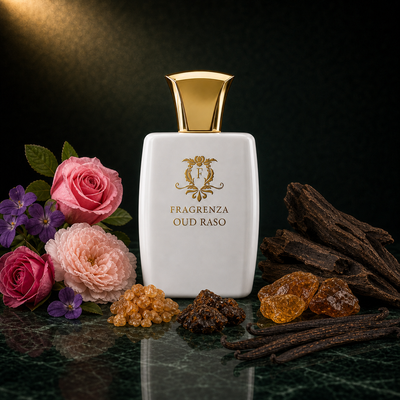
The modern oud slot

The dark glamour slot
is the going-out scent. Rose-oud built on a deep, satiny base — confident, evening-leaning, and the perfume that gets noticed at close range without filling a room.
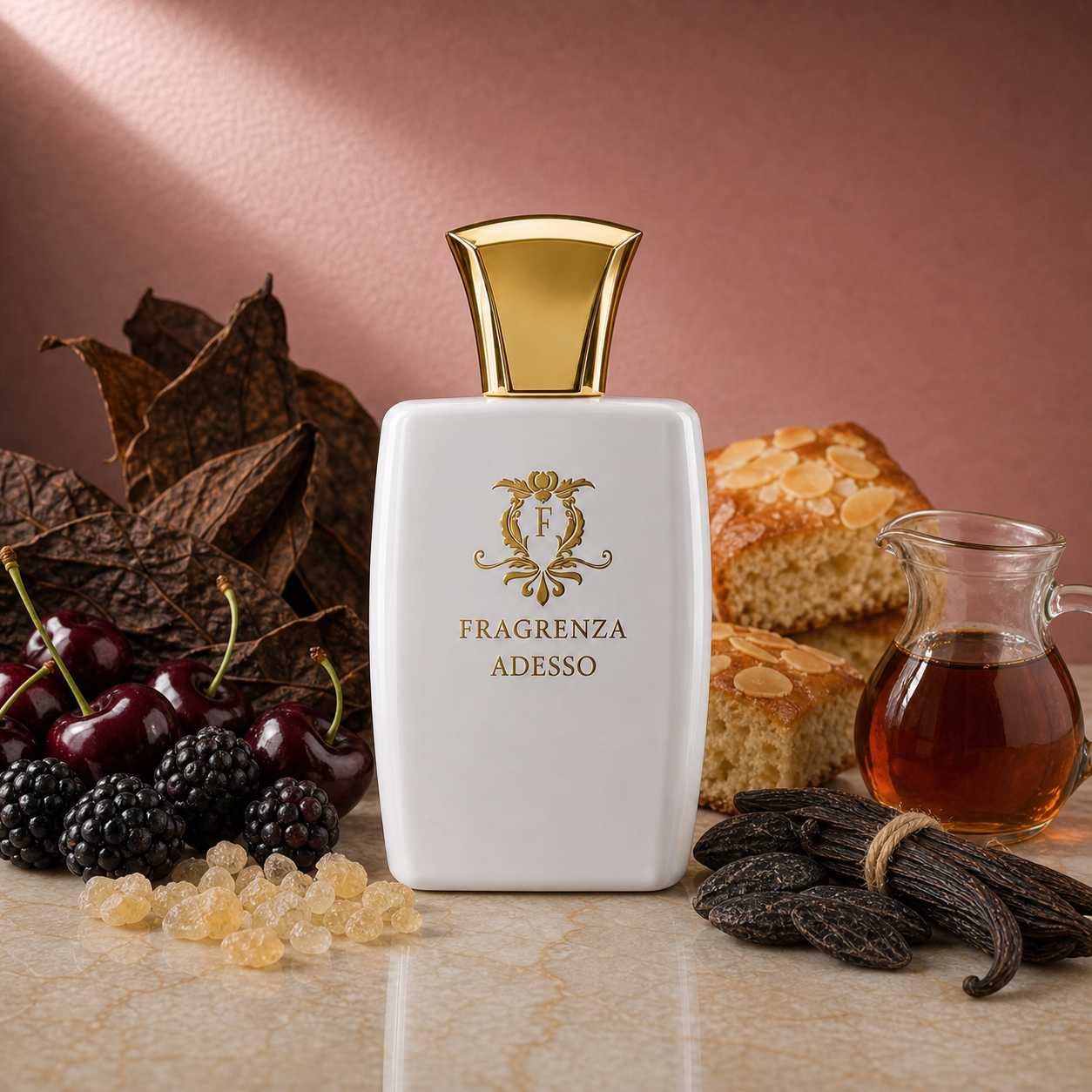
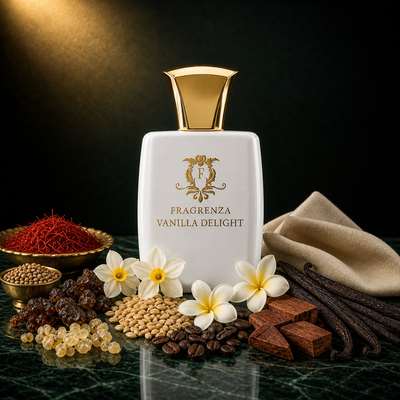
The gourmand-for-men slot
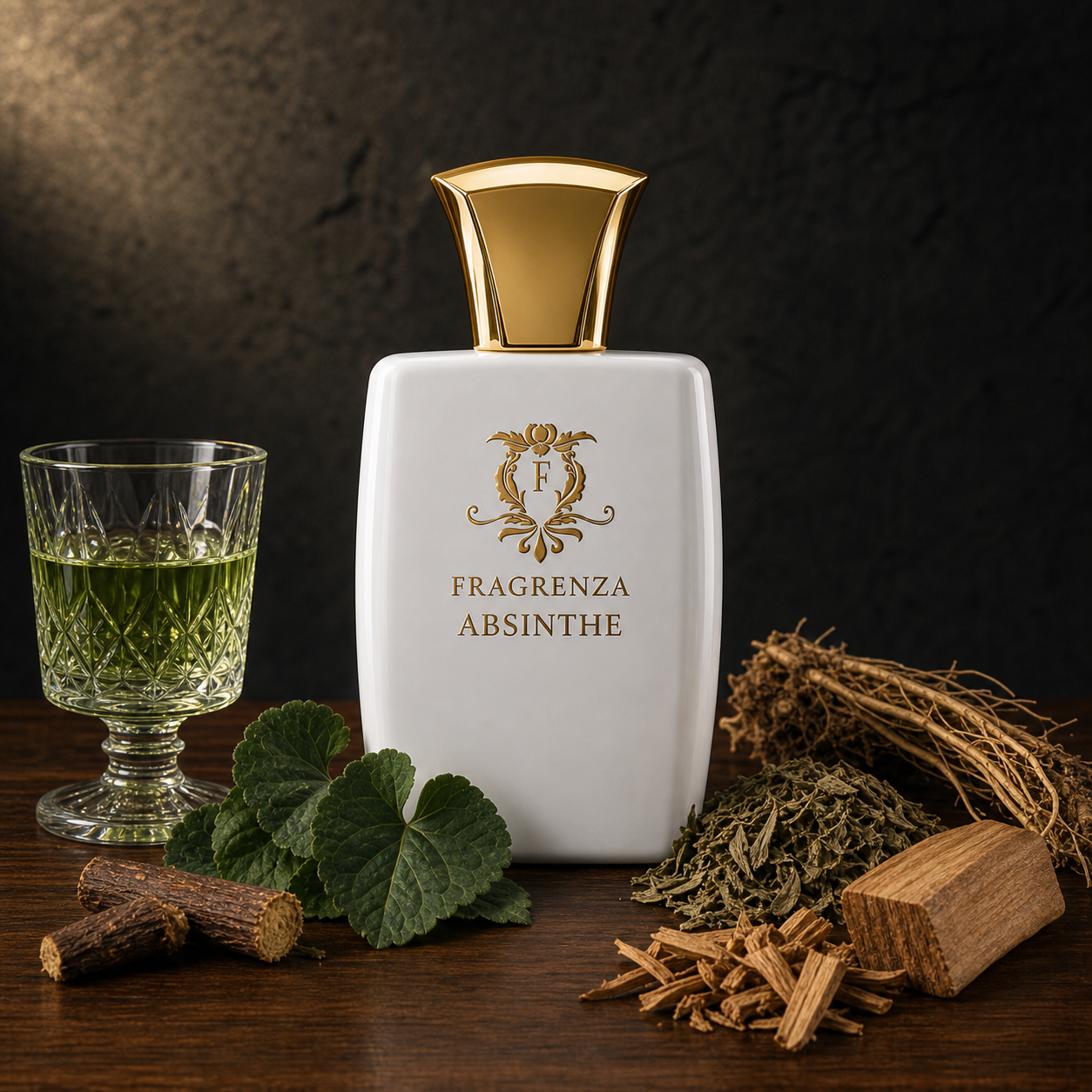
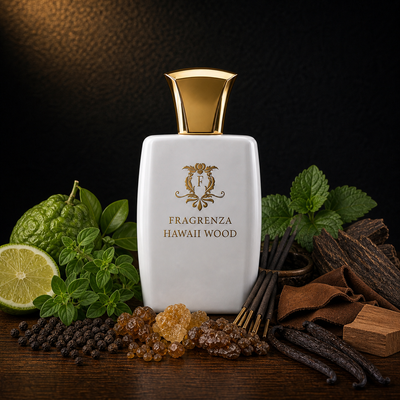
The smoky woods slot
is the answer for anyone who wants depth without going gourmand. Smoky woods, incense, and a quiet oud give it room presence that reads as distinctive rather than loud.
Related reads
- The rise of smellmaxxing
- How to build a fragrance wardrobe in 2026
- Skin scents 2.0
- How to layer fragrances like a perfumer
- The biggest perfume trends of 2026
- What makes a perfume smell expensive
FAQ
What are the biggest men's fragrance trends in 2026?
Modern oud as the default upgrade scent, gourmand-for-men compositions built on dark bases, skin scents going mainstream, fragrance wardrobes replacing the signature scent, the rise of smellmaxxing as a behavior, and extrait de parfum becoming the format of choice. The unifying thread is a more knowledgeable audience buying across multiple categories rather than committing to a single designer bottle.
Are gourmand and sweet fragrances acceptable for men in 2026?
Yes — and this is one of the biggest shifts in the men's market. Vanilla, caramel, coffee, pistachio, and cocoa compositions framed with smoky woods, suede, oud, or tobacco bases sit firmly in masculine territory and represent the fastest-growing men's category. The old "men only wear fresh or smoky" rule no longer reflects how the audience actually shops.
What replaced the aquatic blue cologne category?
Three things, depending on the slot. Modern oud has taken over the premium-upgrade slot. Gourmand-for-men has taken over the warm-and-personal slot. Mossy and aromatic fougère revivals have taken over the fresh-and-clean slot. The blue bottle now competes against three different stories, and the audience under thirty-five has largely moved on from all three of them.
How many fragrances should a man own?
Three to five is the working range for most wearers. A fresh daytime scent, a warmer evening or cooler-weather scent, a darker going-out scent, and a skin scent for low-key wear is the standard four-slot wardrobe. A fifth bottle for a specific season or special occasion rounds it out. Beyond five, you typically end up with overlap rather than range.
Is oud only for special occasions?
No — modern oud is now an everyday category for many wearers. The lighter, green or vanilla-tinted oud styles are wearable to the office, on weekends, and across most casual settings. Heavy traditional dark oud is still better for evenings and cooler weather, but the broader oud category has fully crossed into daily-wear territory in 2026.
What does smellmaxxing actually mean?
It's the deliberate optimization of how you smell — choosing scents by occasion, learning to layer, paying attention to application and longevity, and treating fragrance as a self-presentation skill rather than an afterthought. The term is new; the behavior is the thoughtful, intentional fragrance use that the most-engaged audience has been practicing for years. Our full breakdown is in the smellmaxxing article.
Where this goes next
The men's fragrance audience in 2026 looks more like the women's audience did fifteen years ago — engaged, knowledgeable, plural in its tastes, and willing to spend serious money on perfumery rather than cologne. The brands that win the next decade are the ones that take the audience at its word: more range, better materials, real performance, credible recommendations, and a category that finally treats men as fragrance customers rather than as a "for him" SKU on the back of a shelf.