

Inspired-by alternative
Best Jasmin Rouge Dupe
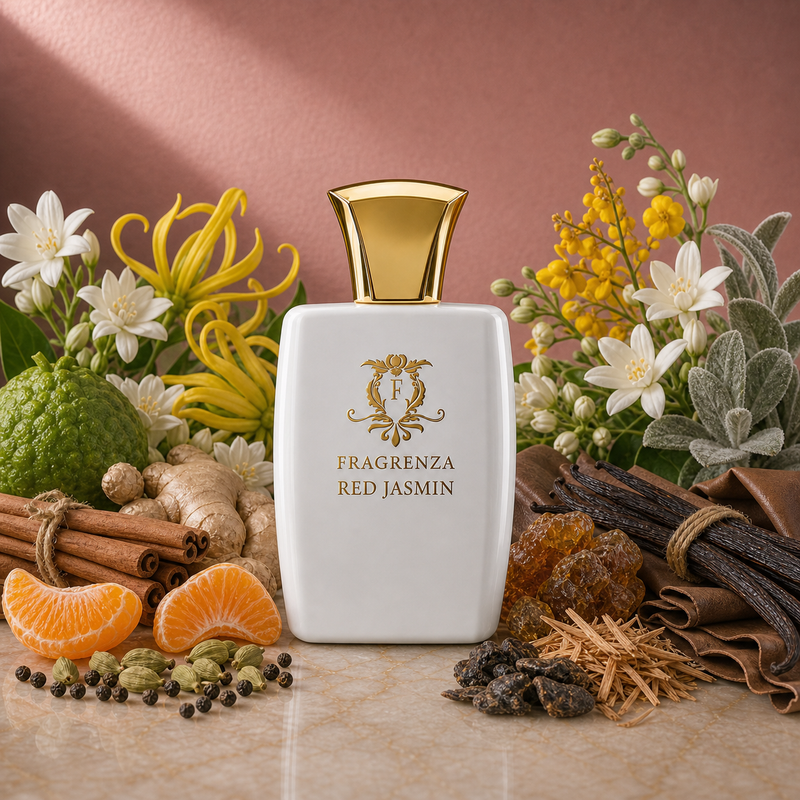
Tom Ford Jasmin Rouge retails for $270. Red Jasmin captures the same scent character at a fraction of the price — same DNA, same 8+ hour wear, same compliments.
Why this dupe
- Captures the same floral character that defines Jasmin Rouge — top, heart, and base notes reflect the original's DNA.
- Eau de Parfum concentration with higher-than-industry-standard fragrance oil — projects and lasts 8+ hours on skin.
- Vegan, cruelty-free, paraben-free formulation. Same wearable scent without the luxury markup.
- Roughly 74% cheaper than Tom Ford's retail — the difference goes back in your wallet, not into brand campaigns and retail markups.
- 4.6★ across 558+ reviews from real customers — see what they're saying on the product page.
About Jasmin Rouge
Jasmin Rouge is a floral perfume for women from Tom Ford that opens with the bright, garden-fresh energy of cinnamon and ginger. At its heart, jasmine brings a romantic, velvety depth that defines the floral character. The dry-down settles into a long-lasting base of amber — soft, lingering, and unmistakably elegant.
On skin, Jasmin Rouge typically delivers excellent longevity (8+ hours) with strong sillage that projects across a room. The price point — $270 at retail — reflects Tom Ford's positioning, packaging, and distribution overhead more than the cost of the formulation itself.
How to wear it
Red Jasmin suits daytime and transitional wear particularly well — brunch, the office, casual evenings. The floral character keeps it approachable rather than overpowering.For best longevity, apply to pulse points (wrists, neck, behind the ears) on moisturised skin.
How we matched it
Our perfumers studied Jasmin Rouge's note structure — the cinnamon opening, the jasmine heart, the amber dry-down — and built Red Jasmin around that same architecture. The aim isn't a molecule-for-molecule clone; it's a faithful interpretation of the scent character at a price the market doesn't normally allow for.
What's the same: the floral family signature, the note progression on skin, the longevity profile (8+ hours on most skin types). Where it can differ: small accord nuances in the first 30 minutes — the most volatile part of any fragrance — and slight projection variation depending on your skin chemistry. We're transparent about that. Your nose will tell you the truth before any review can.
Every Fragrenza fragrance is formulated as Eau de Parfum, vegan, cruelty-free, and paraben-free. The juice does the work; the price reflects the juice, not the brand campaign budget.
Side by side
The original
Tom Ford
Jasmin Rouge
$270
Designer/niche pricing reflects brand positioning, retail markups, and campaign spend — not always the juice itself.
The Fragrenza alternative
Red Jasmin
$69.99
Same floral character, formulated as Eau de Parfum, vegan and cruelty-free, built to last 8+ hours.
What it costs per spray
Tom Ford retail
Jasmin Rouge
$0.45
per spray · ~600 sprays/bottle
Fragrenza
Red Jasmin
$0.11
per spray · ~600 sprays/bottle
A standard atomiser pushes about 0.1ml per spray, so a 60ml bottle delivers around 600 sprays before it's empty. At $69.99, Red Jasmin works out to roughly $0.11 per spray. The Tom Ford original at $270 sits at about $0.45 per spray — same volume, same delivery, very different per-use cost.
Project that across a year of regular wear — three times a week, two sprays per wear, about 312 sprays a year — and Red Jasmin runs roughly $36.39 for the year, against roughly $140.40 for Jasmin Rouge. That's about $104.01 a year staying in your wallet — the difference covering the brand campaigns, retail concession fees, and prestige packaging that don't change what's inside the bottle.
Inside the scent
Inside each note
A closer look at the building blocks behind Jasmin Rouge's scent. Each note plays a specific role across the wear arc — and links to the full Fragrenza collection of fragrances built around it.
Top — first impression
Cinnamon is one of the most beloved spices in the world, harvested from the inner bark of Cinnamomum verum and related species cultivated across Sri Lanka, India, and Southeast Asia. Its warm,...
Ginger root has been one of humanity's most treasured spices for over five thousand years, originating in the tropical rainforests of Southeast Asia before spreading along ancient trade routes to India, the...
Bergamot (Citrus bergamia) is one of perfumery's most beloved and versatile citrus ingredients, grown almost exclusively along the sun-drenched Calabrian coastline of southern Italy. A hybrid believed to descend from the bitter...
Cardamom is one of the world's most ancient and prized spices, cultivated primarily in the lush hills of southern India, Guatemala, and Sri Lanka. Botanically known as Elettaria cardamomum, it is a...
Black pepper (Piper nigrum) is one of humanity's oldest and most traded spices, native to the Malabar Coast of India and cultivated across tropical Asia for over four thousand years. The dried...
The mandarin orange (Citrus reticulata) is the sweetest, most approachable member of the citrus family — a fruit with origins in ancient China, where it was historically reserved for the Imperial court,...
Heart — the character
Among all the ingredients in the perfumer's palette, jasmine stands apart as the undisputed queen of florals. Cultivated across India, Egypt, Morocco, and the Grasse region of southern France, jasmine flowers have...
Ylang-ylang is among the most intoxicating florals in the perfumer's palette — a tropical bloom of extraordinary richness and complexity that has been central to fine fragrance for well over a century....
Neroli is an essential oil obtained by steam distilling the blossoms of the bitter orange tree, Citrus aurantium. Its name is believed to derive from Anne Marie Orsini, Princess of Nerola in...
Lydia broom, known botanically as Genista lydia, is a low-growing shrub native to the rocky hillsides of the Eastern Mediterranean and the Balkans. Come spring, it erupts in vivid cascades of bright...
Clary sage (Salvia sclarea) is a perennial herb native to the Mediterranean basin and parts of Central Asia, prized for centuries in herbal medicine and culinary traditions. Its essential oil, steam-distilled from...
Base — the dry-down
Amber is one of perfumery's most misunderstood terms — and one of its most beloved effects. True amber in fragrance has nothing to do with fossilised tree resin; instead, it refers to...
Woody Notes: The Timeless Foundation of Great PerfumeryWoody notes form the backbone of an enormous proportion of the world's greatest fragrances, spanning everything from classic masculines to modern unisex masterpieces and timeless...
Vanilla (Vanilla planifolia) is native to Mexico, where the Totonac people first cultivated it long before Spanish explorers brought it to Europe in the sixteenth century. The vanilla orchid's seed pods —...
The leather note in perfumery is a crafted accord that evokes the scent of fine cured hide — an aroma with deep cultural associations with luxury, craftsmanship, and sophisticated masculinity. Historically, the...
Labdanum is one of perfumery's oldest and most beloved raw materials, derived from the sticky resin of the Cistus ladanifer shrub native to the Mediterranean basin — particularly the sun-scorched hillsides of...
Frequently asked questions
Is Red Jasmin really a dupe of Jasmin Rouge?
How long does Red Jasmin last on skin?
Is it suitable for women?
What occasions is Jasmin Rouge best for?
Why is Jasmin Rouge so expensive?
Is Red Jasmin vegan and cruelty-free?
What's your return policy?
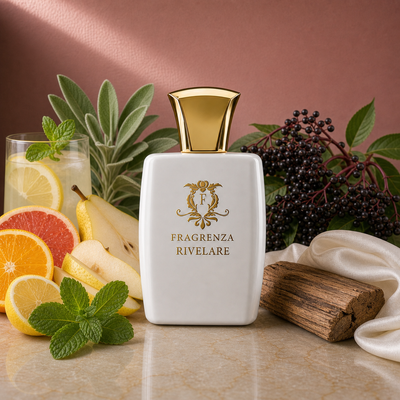
Try it for $9.99
Not sure? Start with the 5ml travel size. Wear it. If it's the Jasmin Rouge dupe you've been looking for, upgrade to the full bottle whenever you're ready.
View Red Jasmin