

Inspired-by alternative
Best Black Orchid Dupe
Tom Ford Black Orchid retails for $140. Chocolat Orchid captures the same scent character at a fraction of the price — same DNA, same 8+ hour wear, same compliments.
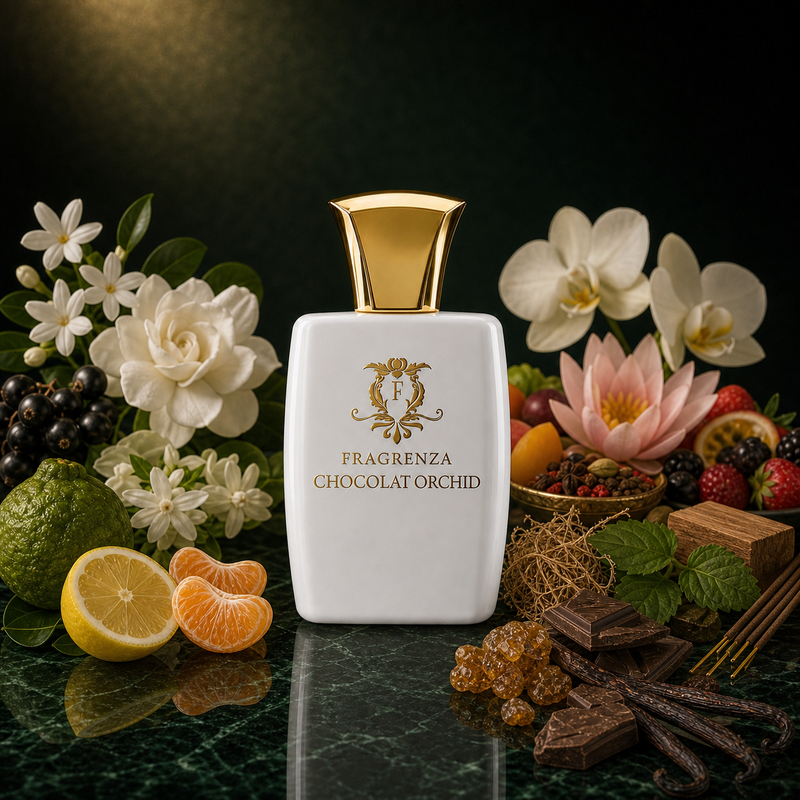
Chocolat Orchid
A Fragrenza alternative to Tom Ford's Black Orchid
Why this dupe
- Captures the same oriental character that defines Black Orchid — top, heart, and base notes reflect the original's DNA.
- Eau de Parfum concentration with higher-than-industry-standard fragrance oil — projects and lasts 8+ hours on skin.
- Vegan, cruelty-free, paraben-free formulation. Same wearable scent without the luxury markup.
- Roughly 50% cheaper than Tom Ford's retail — the difference goes back in your wallet, not into brand campaigns and retail markups.
- 4.0★ across 2 verified Fragrenza reviews — see what real customers say on the product page.
About Black Orchid
Black Orchid is a richly layered perfume for women from Tom Ford that draws you in with the warm, spiced opening of jasmine and gardenia. The oriental heart unfolds around orchid, adding depth and unmistakable sensuality. The dry-down rests on a base of vetiver — dense, enveloping, built to linger.
On skin, Black Orchid typically delivers excellent longevity (8+ hours) with strong sillage that projects across a room. The price point — $140 at retail — reflects Tom Ford's positioning, packaging, and distribution overhead more than the cost of the formulation itself.
How to wear it
Chocolat Orchid is built for evenings, colder months, and occasions where you want to leave a lasting impression. The dry-down develops slowly on skin and rewards close wear.For best longevity, apply to pulse points (wrists, neck, behind the ears) on moisturised skin.
How we matched it
Our perfumers studied Black Orchid's note structure — the jasmine opening, the orchid heart, the vetiver dry-down — and built Chocolat Orchid around that same architecture. The aim isn't a molecule-for-molecule clone; it's a faithful interpretation of the scent character at a price the market doesn't normally allow for.
What's the same: the oriental family signature, the note progression on skin, the longevity profile (8+ hours on most skin types). Where it can differ: small accord nuances in the first 30 minutes — the most volatile part of any fragrance — and slight projection variation depending on your skin chemistry. We're transparent about that. Your nose will tell you the truth before any review can.
Every Fragrenza fragrance is formulated as Eau de Parfum, vegan, cruelty-free, and paraben-free. The juice does the work; the price reflects the juice, not the brand campaign budget.
Side by side
The original
Tom Ford
Black Orchid
$140
Designer/niche pricing reflects brand positioning, retail markups, and campaign spend — not always the juice itself.
The Fragrenza alternative
Chocolat Orchid
$69.99
Same oriental character, formulated as Eau de Parfum, vegan and cruelty-free, built to last 8+ hours.
What it costs per spray
Tom Ford retail
Black Orchid
$0.23
per spray · ~600 sprays/bottle
Fragrenza
Chocolat Orchid
$0.11
per spray · ~600 sprays/bottle
A standard atomiser pushes about 0.1ml per spray, so a 60ml bottle delivers around 600 sprays before it's empty. At $69.99, Chocolat Orchid works out to roughly $0.11 per spray. The Tom Ford original at $140 sits at about $0.23 per spray — same volume, same delivery, very different per-use cost.
Project that across a year of regular wear — three times a week, two sprays per wear, about 312 sprays a year — and Chocolat Orchid runs roughly $36.39 for the year, against roughly $72.80 for Black Orchid. That's about $36.41 a year staying in your wallet — the difference covering the brand campaigns, retail concession fees, and prestige packaging that don't change what's inside the bottle.
Inside the scent
Inside each note
A closer look at the building blocks behind Black Orchid's scent. Each note plays a specific role across the wear arc — and links to the full Fragrenza collection of fragrances built around it.
Top — first impression
Among all the ingredients in the perfumer's palette, jasmine stands apart as the undisputed queen of florals. Cultivated across India, Egypt, Morocco, and the Grasse region of southern France, jasmine flowers have...
The scent of gasoline — petrol in its various refined forms — is one of the most polarizing and strangely compelling notes in contemporary perfumery. Its appeal lies in a paradox: a...
Black Currant — known botanically as Ribes nigrum — is a small, intensely dark berry native to northern Europe and Asia, prized in perfumery for a character that is simultaneously vibrant and...
Lemon (Citrus limon) is one of the most universally recognised and widely used ingredients in the entire history of perfumery. Originally cultivated in South and Southeast Asia and introduced to the Mediterranean...
Bergamot (Citrus bergamia) is one of perfumery's most beloved and versatile citrus ingredients, grown almost exclusively along the sun-drenched Calabrian coastline of southern Italy. A hybrid believed to descend from the bitter...
The mandarin orange (Citrus reticulata) is the sweetest, most approachable member of the citrus family — a fruit with origins in ancient China, where it was historically reserved for the Imperial court,...
Heart — the character
The orchid is one of the most diverse and captivating families of flowering plants on earth, with over 25,000 known species found across every continent except Antarctica. Despite this extraordinary diversity, many...
Spice has been the lifeblood of perfumery since its very origins. The ancient trade routes that carried pepper, cloves, cinnamon, and cardamom across continents were driven as much by the human hunger...
Fuchsia — the flowering shrub of the genus Fuchsia, named after 16th-century German botanist Leonhart Fuchs — is native to Central and South America, with additional species found in New Zealand and...
The lotus flower — sacred across Hindu, Buddhist, and ancient Egyptian traditions — grows in muddy ponds and slow-moving waters throughout Asia and parts of Africa, yet produces blooms of extraordinary purity...
Base — the dry-down
Vetiver is one of perfumery's great foundational ingredients — a note with deep roots, both literally and figuratively. Distilled from the sprawling root system of the Vetiveria zizanioides grass, primarily grown in...
Patchouli, Pogostemon cablin, is one of the most iconic and consequential ingredients in the history of perfumery. Native to tropical Asia — primarily the Philippines, Indonesia, and India — this aromatic herb...
Sandalwood is one of the most treasured aromatic materials in the history of human civilization. Derived primarily from the heartwood of Santalum album (Mysore sandalwood from India) and Santalum spicatum (Australian sandalwood),...
Incense is one of the oldest and most universally revered aromatic substances in human history, woven into the spiritual and cultural fabric of virtually every major civilisation on earth. From the frankincense...
Amber is one of perfumery's most misunderstood terms — and one of its most beloved effects. True amber in fragrance has nothing to do with fossilised tree resin; instead, it refers to...
Dark chocolate — derived from cacao beans (Theobroma cacao) native to the tropical forests of Central and South America — is one of the most universally beloved flavours on earth, and its...
Vanilla (Vanilla planifolia) is native to Mexico, where the Totonac people first cultivated it long before Spanish explorers brought it to Europe in the sixteenth century. The vanilla orchid's seed pods —...
Frequently asked questions
Is Chocolat Orchid really a dupe of Black Orchid?
How long does Chocolat Orchid last on skin?
Is it suitable for women?
What occasions is Black Orchid best for?
Why is Black Orchid so expensive?
Is Chocolat Orchid vegan and cruelty-free?
What's your return policy?
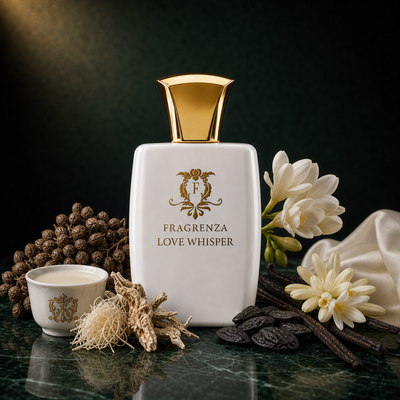
Try it for $9.99
Not sure? Start with the 5ml travel size. Wear it. If it's the Black Orchid dupe you've been looking for, upgrade to the full bottle whenever you're ready.
View Chocolat Orchid