

Inspired-by alternative
Best Champaca Absolute Dupe
Looking for a Champaca Absolute dupe that actually holds up on skin? Champaca Cognac mirrors the original's oriental architecture — same notes, same wear, priced where the formulation cost lands rather than where the brand campaign budget does.
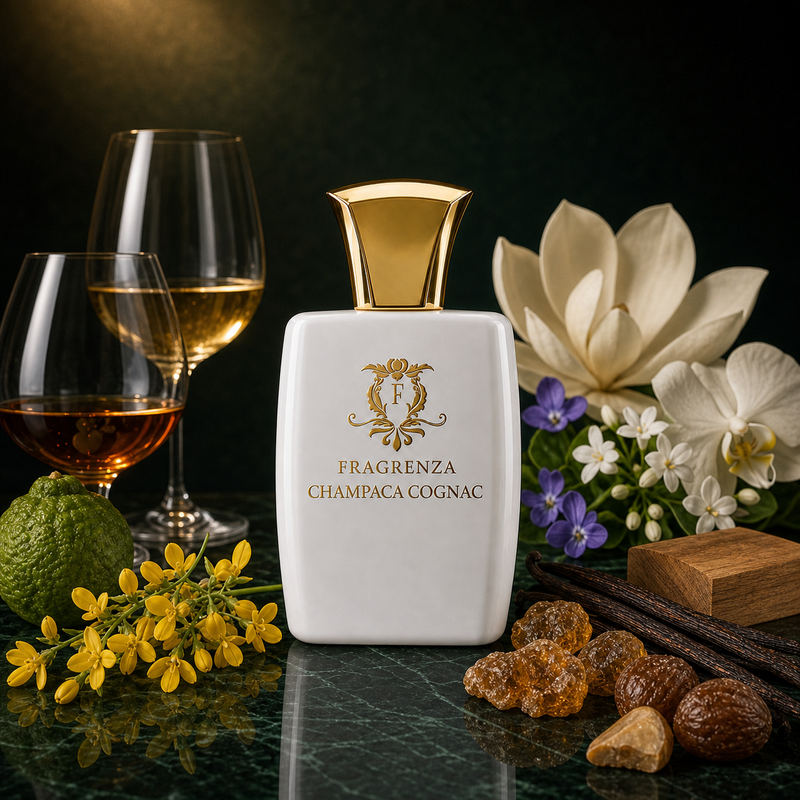
Champaca Cognac
A Fragrenza alternative to Tom Ford's Champaca Absolute
Why this dupe
- Faithful to the oriental signature of Champaca Absolute — note for note, Champaca Cognac is engineered to wear like the original.
- Formulated as Eau de Parfum at a concentration most designer houses reserve for their top tier — 8+ hours on skin, projection people compliment.
- Vegan and cruelty-free, paraben-free, hypoallergenic. The juice is the work; nothing's added that doesn't belong.
- 74% off Tom Ford's retail price. No celebrity endorsement deals, no department-store fees, no retail middlemen — just the formulation.
- 5.0★ across 1 verified Fragrenza reviews — see what real customers say on the product page.
About Champaca Absolute
Champaca Absolute is a richly layered fragrance from Tom Ford that draws you in with the warm, spiced opening of tokaji wine and cognac. The oriental heart unfolds around magnolia, adding depth and unmistakable sensuality. The dry-down rests on a base of vanilla — dense, enveloping, built to linger.
On skin, Champaca Absolute typically delivers excellent longevity (8+ hours) with moderate sillage — noticeable in close quarters. The price point — $270 at retail — reflects Tom Ford's positioning, packaging, and distribution overhead more than the cost of the formulation itself.
How to wear it
Champaca Cognac is built for evenings, colder months, and occasions where you want to leave a lasting impression. The dry-down develops slowly on skin and rewards close wear.For best longevity, apply to pulse points (wrists, neck, behind the ears) on moisturised skin.
How we matched it
To build Champaca Cognac, we reverse-engineered Champaca Absolute: cataloguing the oriental architecture, isolating the tokaji wine top accord, the magnolia heart, the vanilla base. Then we composed our own version using the same ingredient grade most luxury houses work with — just without the layered markups that come after the bottle leaves the perfumer's bench.
Where it lands on skin: the same family character, comparable longevity (8+ hours), comparable sillage. Where it might diverge: a few accord choices in the top 30 minutes — fragrance is partly skin chemistry, and no two skins read a scent identically. That's true for Champaca Absolute too.
Standard across our line: Eau de Parfum concentration, vegan, cruelty-free, paraben-free. We're a perfumery, not a brand-marketing operation. The bottle costs what the juice costs.
Side by side
The original
Tom Ford
Champaca Absolute
$270
Designer/niche pricing reflects brand positioning, retail markups, and campaign spend — not always the juice itself.
The Fragrenza alternative
Champaca Cognac
$69.99
Same oriental character, formulated as Eau de Parfum, vegan and cruelty-free, built to last 8+ hours.
What it costs per spray
Tom Ford retail
Champaca Absolute
$0.45
per spray · ~600 sprays/bottle
Fragrenza
Champaca Cognac
$0.11
per spray · ~600 sprays/bottle
A 60ml bottle averages around 600 sprays at 0.1ml apiece. That puts Champaca Cognac at roughly $0.11 per spray and Champaca Absolute at retail around $0.45 per spray. The atomiser, the volume, the application — identical. The price-per-use is where the brand premium becomes visible.
Multiply that out across a year — three wears a week, two sprays each, around 312 actuations — and you're looking at roughly $36.39 of Champaca Cognac versus roughly $140.40 of Champaca Absolute at retail. About $104.01 a year saved without changing how often you wear it, how you apply it, or what it smells like on you.
Inside the scent
Inside each note
What you smell, and why. A short profile of every note that defines Champaca Absolute's composition — each linking to the wider Fragrenza collection of fragrances built around it.
Top — first impression
Cognac — the celebrated French brandy produced exclusively in the Charente region — carries centuries of craftsmanship in its amber depths. Distilled from white wine grapes and aged in Limousin oak barrels,...
Bergamot (Citrus bergamia) is one of perfumery's most beloved and versatile citrus ingredients, grown almost exclusively along the sun-drenched Calabrian coastline of southern Italy. A hybrid believed to descend from the bitter...
Lydia broom, known botanically as Genista lydia, is a low-growing shrub native to the rocky hillsides of the Eastern Mediterranean and the Balkans. Come spring, it erupts in vivid cascades of bright...
Heart — the character
Magnolia (Magnolia grandiflora and related species) is one of the oldest flowering plants on Earth — a genus that predates bees and has been blooming for over 95 million years. Its large,...
The orchid is one of the most diverse and captivating families of flowering plants on earth, with over 25,000 known species found across every continent except Antarctica. Despite this extraordinary diversity, many...
The violet flower (Viola odorata) has been one of perfumery's most cherished ingredients since ancient Greece and Rome, where garlands of violets were worn at feasts and the blossoms were used medicinally...
Among all the ingredients in the perfumer's palette, jasmine stands apart as the undisputed queen of florals. Cultivated across India, Egypt, Morocco, and the Grasse region of southern France, jasmine flowers have...
Base — the dry-down
Vanilla (Vanilla planifolia) is native to Mexico, where the Totonac people first cultivated it long before Spanish explorers brought it to Europe in the sixteenth century. The vanilla orchid's seed pods —...
Amber is one of perfumery's most misunderstood terms — and one of its most beloved effects. True amber in fragrance has nothing to do with fossilised tree resin; instead, it refers to...
Sandalwood is one of the most treasured aromatic materials in the history of human civilization. Derived primarily from the heartwood of Santalum album (Mysore sandalwood from India) and Santalum spicatum (Australian sandalwood),...
Marron glacé — the French art of candying whole chestnuts in sugar syrup — is one of confectionery's most celebrated traditions, originating in Lyon and Piedmont as far back as the 16th...
Frequently asked questions
Is Champaca Cognac really a dupe of Champaca Absolute?
How long does Champaca Cognac last on skin?
Is it suitable for unisex?
What occasions is Champaca Absolute best for?
Why is Champaca Absolute so expensive?
Is Champaca Cognac vegan and cruelty-free?
What's your return policy?
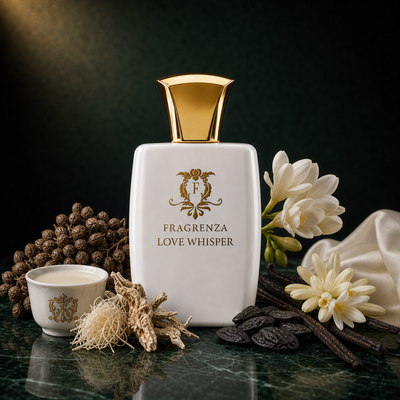
Skip the gamble — try a sample
Fragrance is personal. Start with the 5ml ($9.99) and decide on your own skin before committing to the full bottle. Most customers do.
View Champaca Cognac