

9 Office-Appropriate Perfumes to Smell Polished and Put Together at Work
Nine clean, considered, quietly luxurious fragrances that read polished without ever taking over the meeting room.
By Julia MorettiFragrenza makes several of the alternatives featured in our guides — here’s how we test.
15 min read
A signature fragrance that reflects your personal taste is the most enjoyable kind to wear, but it is not always the right one to wear at work. The office is the trickiest fragrance context most of us encounter: small rooms, shared air, mixed company, and an unwritten rule that anything you put on at 8 a.m. has to still be inoffensive to the colleague sitting next to you at 5 p.m. The wrong choice can be genuinely disruptive — and the right one can quietly reinforce the impression that you have your life together in ways no outfit, on its own, can match.
What you want for the office is a fragrance that reads as clean, considered, and polished without ever announcing itself. Leave the smoky ouds, dramatic dark roses, and tooth-achingly sweet gourmands for evenings and weekends. The compositions that work best at work are the ones built around clean musks, soft florals, transparent woods, and subtle citruses — the perfume equivalent of a freshly pressed white shirt. Below, our edit of nine Fragrenza fragrances that nail this register, organised by what each one does best — plus a longer guide to how to pick, apply, and wear fragrance at work without ever being the person colleagues quietly complain about.
What Makes a Fragrance "Office-Appropriate"
Three things separate an office-appropriate fragrance from one that should stay home until after-hours. The first is projection: how far the scent travels from your skin. Office fragrances should sit close. Two sprays should be barely noticeable to anyone more than an arm's length away. The second is sweetness intensity. Heavy gourmands — vanilla bombs, sugared almonds, cherry-cola compositions — read playful and intimate, both of which clash with most professional contexts. The third is what perfumers call "polarisation": how strongly opinions divide on the scent. Even a beautiful smoky oud or a dramatic tuberose will be loved by half a room and disliked by the other half, and the office is not the place to find out which half your colleagues are in.
The compositions that satisfy all three criteria tend to share a similar architecture: a clean, slightly citrusy or floral opening; a transparent, slightly powdered or woody heart; and a soft musk-or-skin-scent base. Think of it as the fragrance version of "quiet luxury" — expensive-feeling materials, no logos, no statements, an emphasis on close-quarters quality over at-a-distance impact. Once you start applying that filter, the field of options narrows quickly, and a handful of compositions reveal themselves as office-perfect.
9 Office-Appropriate Fragrances to Wear at Work
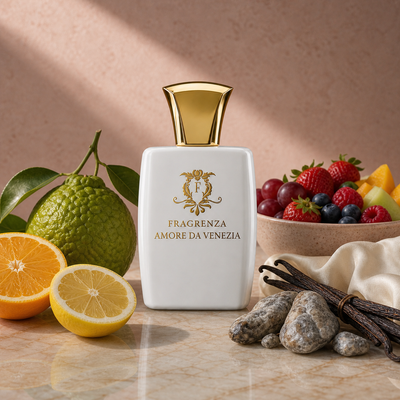
Amore da Venezia — Best citrus. Inspired by Xerjoff Erba Pura. A clean, sun-warmed bergamot and lemon opening softens into a delicate fruit-and-white-musk heart; an instantly likeable composition that almost never registers as too much, even in small meeting rooms.
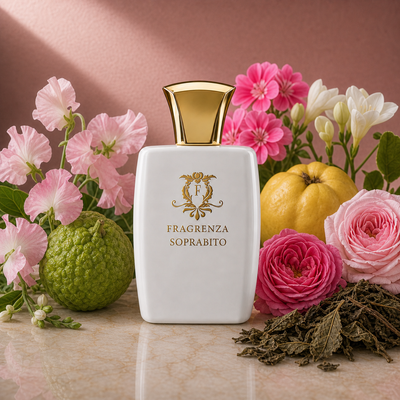
Soprabito — Best lightweight. Inspired by Burberry My Burberry. Freesia, quince, rose centifolia, and a soft geranium-leaf accord; reads like a well-cut beige trench coat in scent form. Endlessly polite and quietly polished.
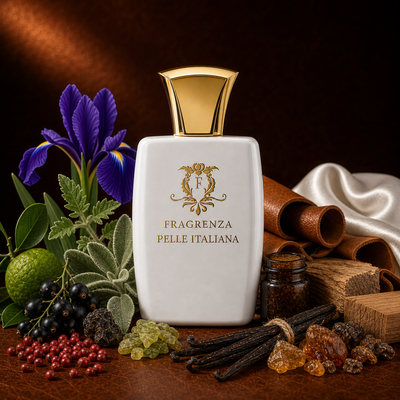
Pelle Italiana — Best powdery. Inspired by Memo Italian Leather. Iris concrete with blackcurrant bud, sandalwood, and a touch of tomato leaf. The closest a perfume gets to smelling like fine suede and clean skin at the same time. Reads expensive and unisex.
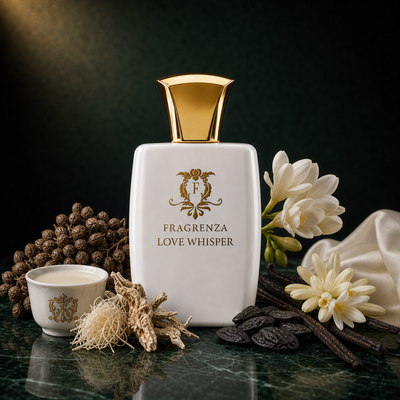
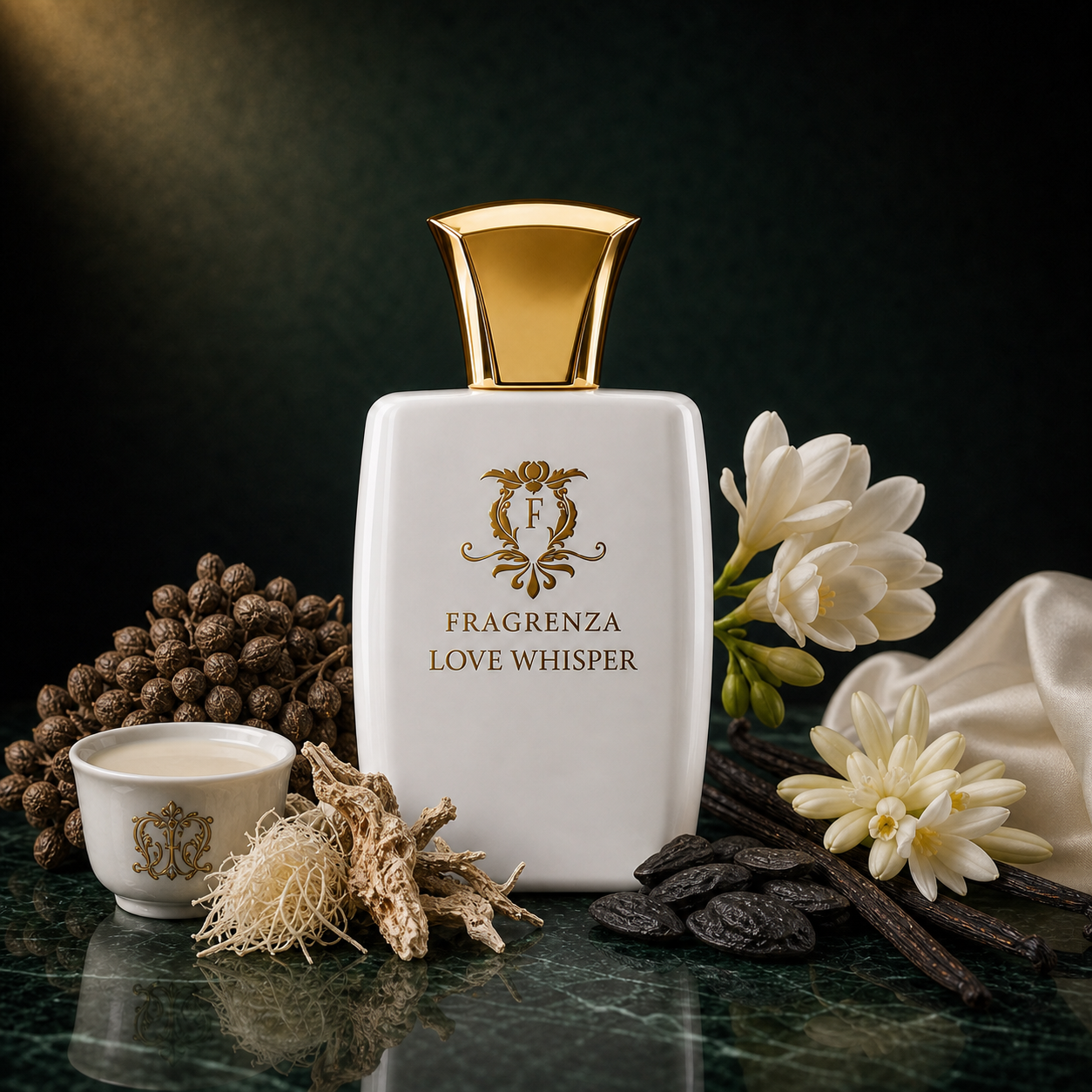
Love Whisper — Best musk. Inspired by Kilian Love, Don't Be Shy. Almond milk, ambrette seed, orris concrete, and a creamy tonka-musk base. Sweet enough to be flattering, dry enough to never feel cloying. A skin-scent that radiates quietly.
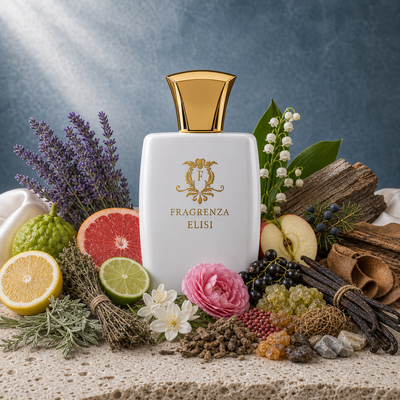
Elisi — Best calming floral. Inspired by Roja Parfums Elysium. Lavender threaded with citrus, pineapple, and a clean musk-jasmine base. Reads as fresh-luxury rather than spa-aromatic, and has a genuinely centring effect on long meeting days.
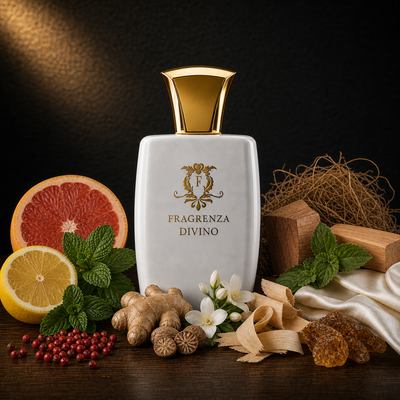
Divino — Best woody. Inspired by Chanel Bleu de Chanel. Sicilian lemon, Haitian vetiver, New Caledonian sandalwood, and a soft cedar base. The cleanest "expensive woody" in the edit; works equally well on any gender and any kind of professional context.
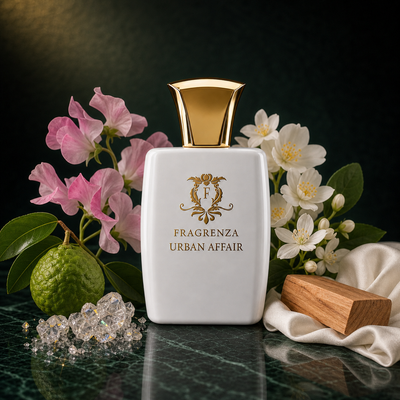
Urban Affair — Best longevity. Inspired by Maison Francis Kurkdjian 724. Aldehydes, sweet pea, jasmine sambac, mock orange, white musk, and sandalwood. A modern, transparent skin-musk that lasts ten hours without ever feeling heavy. The "clean girl" fragrance done right.
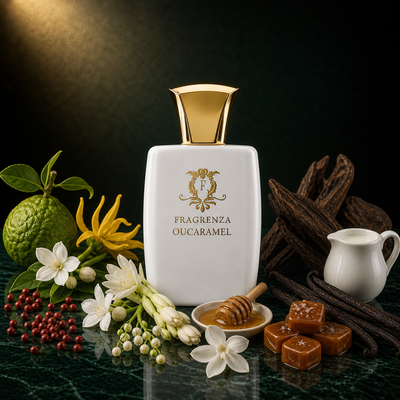
Oucaramel — Best sweet. A gentle milky-honey gourmand with caramel and lily-of-the-valley, balanced by tuberose and ylang-ylang. The rare gourmand that whispers rather than shouts; works at work because the milk-and-caramel accord stays sheer rather than dense.
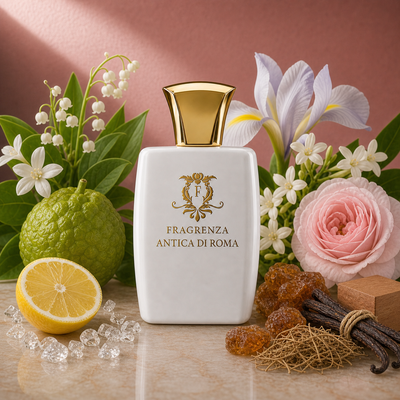
Antica di Roma — Best classic. Inspired by Chanel No.5 L'Eau. The original aldehydic floral DNA in its lightest, most modern incarnation. A clean, soapy, slightly powdered drydown of jasmine, neroli, sandalwood, and white musk. The most universally recognised office signature in the edit.
A Short History of Fragrance at Work
The idea that perfume should be reserved for evenings is a fairly recent cultural convention. For most of the twentieth century, a professional woman wearing Chanel No.5 or Estée Lauder Youth Dew to the office was the norm rather than the exception; the same was true of Old Spice or English Leather on the masculine side. What changed was the rise of the open-plan office in the 1990s and 2000s, which compressed colleagues into shared air at a density not seen since the typing pools of the 1950s. Suddenly, the projection level of a 1970s-era fragrance was genuinely disruptive when twenty people sat within breathing distance of each other for eight hours a day. Workplace fragrance bans started appearing in the late 1990s — Halifax, Detroit, Portland public buildings led the way — and the cultural conversation shifted toward "scent-free" as a default professional standard.
The current correction, which has been building since around 2018, is the recognition that complete scent-free environments are neither realistic nor desirable; everyone walks into the office smelling of something (shampoo, laundry detergent, deodorant, coffee), and the question is not whether to smell of anything but how to smell of something good. The fragrances that work in modern professional contexts are the ones that respect the architecture of the open-plan office while still delivering personal expression. They sit close to the skin, project no more than thirty centimetres, and announce themselves only to the people who choose to stand close. That balance — quiet personal expression, zero shared-air impact — is the entire animating principle behind the picks in this edit.
How Fragrance Affects Professional Perception
The research on how scent affects professional perception is genuinely interesting. Studies on workplace impression formation have consistently found that people associated with pleasant ambient scents — clean, soft, slightly floral or musky — are rated higher on attributes like competence, trustworthiness, and warmth by colleagues and clients than people associated with strong or polarising scents (or with no detectable scent at all). The effect is small per interaction but compounds across the dozens of small encounters that make up a working week. A colleague who consistently smells faintly of clean laundry-musk over six months is, by the end, materially more likely to be invited onto a high-profile project than a colleague who smells of nothing or of an overpowering trophy fragrance.
The mechanism is largely unconscious. People do not deliberately notice that a colleague smells nice; they just feel slightly more positively about the interaction without being able to articulate why. Olfactory information bypasses the higher cognitive filtering that visual and verbal cues go through, and arrives in the limbic system — the brain's emotional centre — almost directly. That is also why scent associations are so persistent and so hard to override. A colleague you associate with a particular soft musk for two years will, on first encountering that same scent elsewhere, feel an immediate flash of "that person." Worn intentionally over time, an office-appropriate signature becomes part of how your colleagues unconsciously remember you. Worn poorly — too strong, too polarising — it becomes part of how they remember you in a less flattering way.
Office Fragrance Etiquette: When a Colleague's Scent Is Too Strong
The other side of office fragrance is dealing with a colleague whose composition is, gently, more than the room can hold. This happens, and it is one of the genuinely awkward situations of modern office life. A few rules of engagement worth knowing. First, never raise it publicly. A colleague who is told in front of others that their perfume is "a lot" will associate the embarrassment with the messenger for years. Second, if you must raise it, do so via the most senior person in HR or your direct manager, and frame it as a health concern (allergy, asthma, migraine) rather than a taste judgement. The HR conversation reframes "I do not like how you smell" as "we should establish a quieter scent culture in our shared space," which is much easier to act on without anyone losing face.
Third, consider whether the problem is the fragrance itself or your own sensitivity. Pregnancy, perimenopause, certain medications, and migraine conditions all dramatically heighten olfactory sensitivity, and what reads as "too much" to you at one period of life may read as perfectly fine at another. If you suspect your sensitivity has changed, opening a window and trying air-purifier solutions before escalating is the kinder first step. Fourth, lead by example. If your own fragrance application is impeccable — two sprays, close-to-skin, on clean shower-fresh skin — colleagues with heavier hands will often calibrate down without ever being told to. The most effective office fragrance culture is one nobody has to legislate, because everyone is already wearing the right amount of the right kind of thing.
How to Apply Fragrance for the Office
Application is where most office-fragrance mistakes happen, not selection. Even a perfectly chosen composition can become disruptive if it is over-applied, applied to the wrong places, or applied at the wrong time of day. The reliable office-application protocol is two sprays, applied to clean skin, thirty minutes before you leave the house. Pulse points work well — inner wrists, inner elbows — but the most overlooked good spot is the back of the neck, where the fragrance warms gradually through the day and is felt mostly by people who actively hug or kiss you. Avoid spraying directly onto clothes; perfume in fabric projects far further than perfume on skin, and a single overzealous spray onto a wool blazer can fill a meeting room.
The other tip worth knowing: do not "top up" fragrance during the work day, especially in shared bathrooms. The reason an evening reapplication feels necessary is that you have stopped smelling your own scent — not because anyone around you has stopped smelling it. Your nose adapts to your own fragrance within thirty minutes of wear and effectively goes blind to it, but everyone else can still smell exactly what they could at 9 a.m. A mid-day spritz is almost always too much for the room. If you genuinely need a refresh — long day, evening event afterwards — apply lightly in a private space and use just one spray.
Office Fragrance Mistakes to Avoid
A few of the most common office fragrance mistakes, and how to avoid them. The first is layering. Layering two fragrances is a beautiful technique for personal expression, but it is a bad idea at work; the combined sillage is almost always greater than either composition alone, and it makes it harder for the people around you to identify the smell as "perfume" rather than as "ambient scent overload." Save layering for weekends and evenings.
The second is wearing trophy fragrances to the office. The big, expensive, statement compositions you save for evenings — your Black Opium, your Tom Ford Tobacco Vanille, your Maison Francis Kurkdjian Baccarat Rouge 540 — are designed to project across rooms. That is their entire point. Wearing them at work fights against the architecture of the perfume itself. A 540 spritz on a Monday at 9 a.m. is a misuse of the composition, not just of the context. Keep trophy fragrances for occasions that warrant trophy projection.
The third is wearing the same fragrance every workday. Even a perfectly chosen office composition becomes mildly fatiguing for nearby colleagues if they smell exactly the same thing five days a week, month after month. Rotate two or three office-appropriate fragrances across the week. The variety is healthier for both you (your nose stays interested) and your colleagues (their noses stay receptive).
How to Build a Three-Bottle Office Rotation
The most useful way to structure an office fragrance wardrobe is the three-bottle rotation. One clean citrus or floral for mornings when you want energy (try Amore da Venezia or Soprabito); one quiet powdery or skin-musk for days when you want to project calm (try Pelle Italiana or Urban Affair); and one slightly warmer woody or floral for cold-weather days or evening meetings (try Divino or Elisi). Rotate them across the week and reach for whichever matches your meeting load and mood that morning.
Three bottles at $69.99 each — the Fragrenza full-size 60 ml — works out to less than the price of a single 100 ml bottle of most of the luxury counterparts that inspired them. And because Fragrenza decants start at $9.99 for 5 ml, you can test the full rotation for under $30 before committing to any bottles. That is, in practice, the single most cost-effective way to build a serious office fragrance wardrobe in 2026: sample three across a fortnight, observe which one you reach for most often, commit to full sizes only after the data is in.
What to Wear at Work by Industry
Office cultures vary, and what reads as appropriate in one sector will read as wrong in another. A few broad guidelines worth knowing.
Finance, law, consulting: the most conservative end of the office spectrum. Lean clean and minimalist. Urban Affair, Pelle Italiana, Antica di Roma, and Soprabito are the safest picks. Avoid anything sweet, gourmand, or with strong floral projection.
Tech, media, creative agencies: looser by convention, more accepting of personality in scent. Elisi, Divino, Amore da Venezia, and Love Whisper all work well; these environments reward fragrance that reads as "considered" rather than as "invisible."
Hospitality, fashion, retail: client-facing roles where your scent is part of the brand impression. Lean into the slightly warmer end — Love Whisper, Oucaramel, Elisi — but keep application light enough that the scent supports rather than overwhelms the customer interaction.
Healthcare, education, hospitality service: contexts where strong fragrances are actively unwelcome (patient sensitivities, child contact, food preparation). Reach for the lightest options in the edit — Antica di Roma, Soprabito, or Urban Affair — and apply only one spray to the inner wrist, not the neck or chest.
Seasonal Adjustments for Office Fragrance
The same composition can read very differently across seasons. Warm weather amplifies projection and sweetness; cold weather compresses both and can make a lighter scent disappear within an hour. A few rules of thumb that hold across most office-appropriate compositions.
In spring and summer, lean toward the lighter, brighter picks: Amore da Venezia, Soprabito, and Antica di Roma all wear beautifully in heat. Reduce your spray count by one (so one spray instead of two) if you are commuting in actual summer temperatures; the radiator effect of warm skin will project the fragrance further than usual. In autumn and winter, lean toward the warmer or more architectural picks: Pelle Italiana, Divino, Elisi, and Love Whisper all have enough body to project in cold weather without ever becoming heavy. Increase your spray count back to two and consider adding a small spritz to the inside of a scarf for slow, steady release through the morning commute.
How to Sample Office Fragrances Properly
Office fragrances are harder to evaluate from a counter sniff than almost any other category. The point of an office composition is the four-to-eight-hour drydown — the quiet, close-to-skin character that emerges only after the bright opening has settled. A two-minute counter sniff will tell you almost nothing about how the perfume actually behaves in a meeting room at 2 p.m.
The reliable sampling protocol is to acquire a 5 ml decant, apply two sprays to clean skin on a normal workday (one wrist, one inner elbow), and evaluate at four checkpoints: thirty minutes (the opening), two hours (the heart), four hours (the early drydown), and at the end of the working day. The four-to-eight-hour checkpoint is the most important; if you still like the fragrance at 5 p.m. and at least one colleague has paid you an unprompted compliment, it has earned a full-bottle purchase. If the scent has disappeared completely by lunchtime, it is too light for office wear and should be reserved for casual contexts. If a colleague has politely opened a window, you have your answer in a different direction.
This is the entire reason the decant tier exists. A 5 ml decant at $9.99 gives you roughly thirty office-day applications — more than enough to confidently commit to a full bottle if the scent works, or to walk away from a $200 mistake at the niche counter if it does not. Treat the decant as a low-cost wear-test, not as a final purchase.
The Quiet Power of an Office-Appropriate Fragrance
A well-chosen office fragrance is one of the most underrated tools in a professional wardrobe. It will not get you a promotion on its own, but it will reinforce — at every meeting, every hallway conversation, every handshake — the impression that you take your presentation seriously. Done right, an office fragrance is invisible at first encounter and gradually noticed only by the people who spend repeated time with you. Those are exactly the people whose impression of you matters most. The fragrance becomes part of how they remember you, and "smells expensive and considered" is one of the most useful associations a colleague can have when your name comes up in their head later.
And because the inspired-by tier compresses the cost of a serious office wardrobe from the $600-to-$900 range (three bottles of luxury niche compositions) down to under $200 (three Fragrenza full bottles), building one is no longer a luxury reserved for senior leadership. The fragrances above are the same compositional quality as their inspirations, made with the same fragrance oils, at a sustainable price that makes daily wear genuinely practical. Start with the three picks that match your industry, sample patiently, and within a month you will have an office wardrobe that handles every meeting, conference, and presentation you walk into for the rest of the year.
All Fragrenza fragrances are cruelty-free, vegan, and made with the same fragrance oils used by the houses that inspired them.