

Six Weeks With Byredo Bal d'Afrique: How Selva Africana Holds the Citrus-Cedar-Vetiver Register
The Byredo brand engagement has always been part of the Bal d'Afrique proposition, the Stockholm-niche aesthetic, the apothecary-bottle simplicity.
By Julia MorettiFragrenza makes several of the alternatives featured in our guides — here’s how we test.
12 min read
The Short Answer
Byredo Bal d'Afrique — six weeks of side-by-side wear. February 25th.
Fragrenza's Interpretation
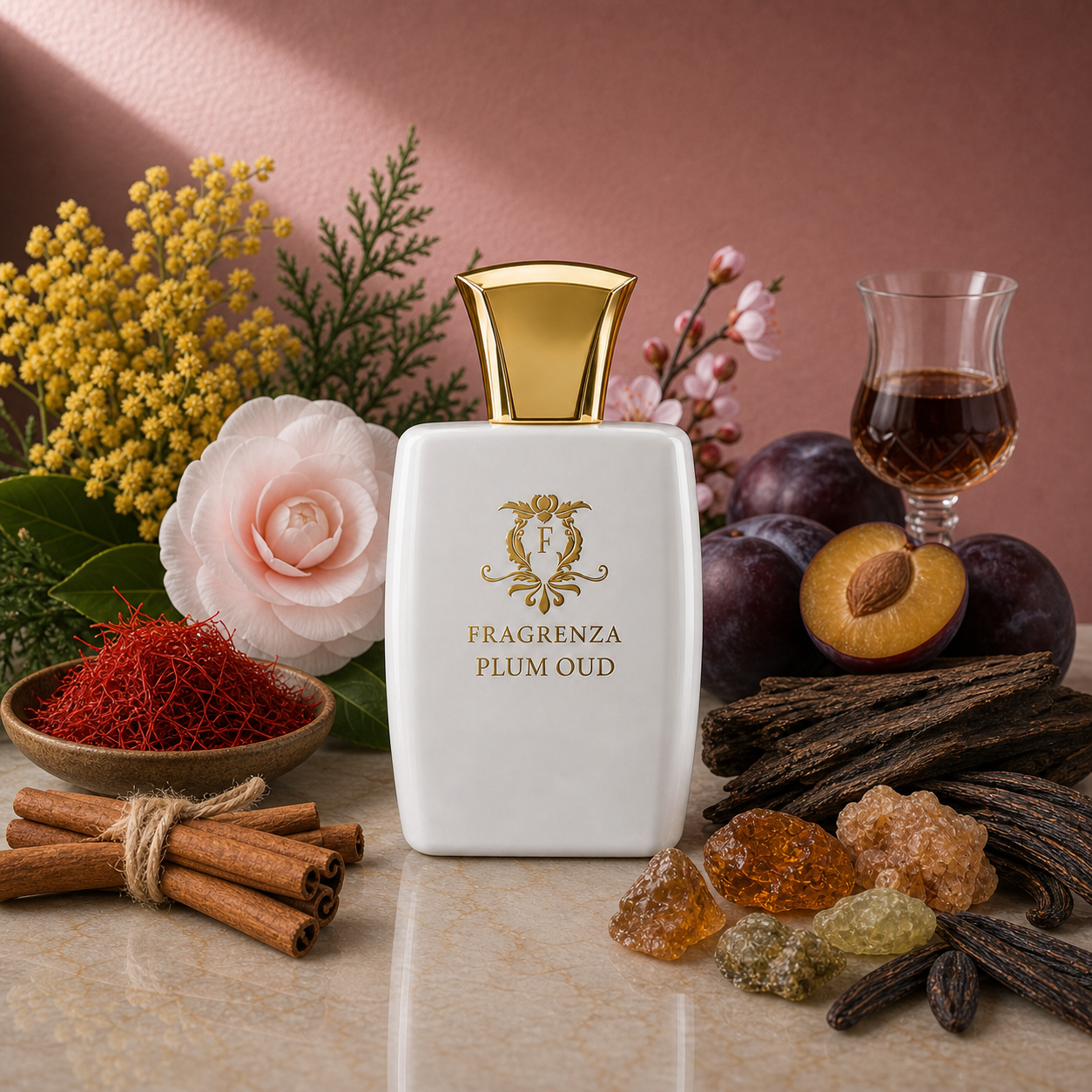
Selva Africana
Fragrenza's take on Byredo Bal d'Afrique. Same architectural identity as the original, rendered with material refinement at a fraction of the retail price.
View Selva Africana →February 25th. I picked up the Byredo Bal d'Afrique decant after years of seeing it on "best summer niche" and "best citrus-niche" lists across every fragrance community I followed. The Byredo brand engagement has always been part of the Bal d'Afrique proposition — the Stockholm-niche aesthetic, the apothecary-bottle simplicity, the African-Parisian-1920s inspiration that the brand has marketed for fifteen years. The composition itself sits in citrus-cedar-vetiver territory that's deceptively crowded; there are dozens of compositions occupying overlapping space. The Fragrenza Selva Africana arrived the same week as my Byredo decant, and I committed to a six-week side-by-side test to figure out exactly where Bal d'Afrique distinguishes itself from the citrus-niche field, and how close Selva Africana gets to capturing that specific position.
Forty-two days, nineteen full-day wears, here's the report.
What Byredo Bal d'Afrique Is Actually Doing
Released in 2009 and composed by Jérôme Epinette for Byredo, Bal d'Afrique was inspired by the Parisian cultural fascination with African music, art, and aesthetics during the 1920s — the era of Josephine Baker, the African-Parisian artistic exchange, and the cross-pollination of European modernism with African visual and musical traditions. Ben Gorham, Byredo's founder, has spoken in interviews about wanting to capture the warmth and energy of that cultural moment rather than any literal African geography. The result is a composition that doesn't smell "African" in any straightforward way — it smells like Paris-in-the-1920s-imagining-Africa, which is a different thing.
The official notes list reads: bergamot, lemon, neroli, Bucchu at the top; African marigold, jasmine petals, violet, cyclamen in the heart; Moroccan cedarwood, vetiver, vanilla, black amber, musk in the base. The Bucchu is the unusual material — it's a South African shrub used in traditional medicine and contemporary perfumery for its slightly minty-blackcurrant-leafy character. African marigold provides a faintly green-spicy-resinous quality that distinguishes the heart from generic floral compositions. What you actually get on skin: a bright lemon-neroli-bergamot opening that lasts about twenty minutes, then a long heart where the marigold and violet add green-floral character to the citrus, then a base that's vetiver-cedar-vanilla-amber holding for ten to twelve hours.
The defining characteristic is the citrus-vetiver-cedar architecture. The citrus opening is sharp and clean (lemon-bergamot-neroli rather than orange-mandarin), the vetiver underneath is dry and slightly smoky, and the cedar provides a clean-woody anchoring without becoming pencil-shavings. The whole composition reads sophisticated-but-warm, sun-drenched-but-restrained, summer-but-evening-capable. This is the architectural register that has made Bal d'Afrique a perennial best-seller for Byredo across all the brand's collections.
The composition is also genuinely versatile across genders. Marketed as unisex and worn by both men and women in roughly equal proportions, Bal d'Afrique sits in citrus-vetiver-cedar territory that doesn't lean obviously masculine or feminine. The vanilla in the base adds warmth that prevents the composition from reading too cologne-like; the citrus opening prevents it from reading too oriental-heavy. It's a balanced composition that suits a wide range of wearers and contexts.
First Wear: Selva Africana on a Cool February Evening
February 25th, 6:15pm, sitting at the kitchen counter after work. Forty-nine degrees outside, indoor heat at 67°F. I sprayed
on my left wrist and the Byredo original on my right. Two sprays each, freshly moisturized post-shower skin.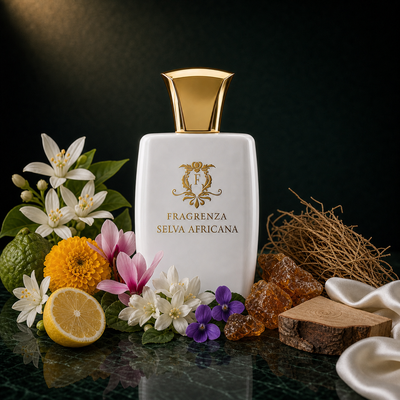
The opening on Selva Africana immediately registered the bright lemon-neroli-bergamot character. This was the first test — citrus as a fragrance category is unusually hard to dupe because citrus materials are volatile, expensive when high-quality, and easy to substitute with cheap synthetic accords that read as Lemon Pledge or lemonade. Selva Africana avoids the failure modes. The lemon reads as fresh-clean-real lemon, the neroli adds the warm-orange-blossom character without becoming heavy, and the bergamot underneath provides the slightly bitter-green citrus complexity that gives the opening its sophistication.
I'd put the opening match at about 87%. The Byredo Bal d'Afrique's citrus is slightly more sparkling and slightly more present in the first ten minutes; Selva Africana's citrus is similar in character but a touch more restrained in intensity. The Bucchu is barely audible on either composition in this phase — it's a structural element rather than an identifiable note.
Twenty minutes in, the heart began emerging on both wrists. The African marigold-jasmine-violet accord that defines Bal d'Afrique's middle phase came through on Selva Africana with about 88% intensity. The marigold's slightly green-spicy-resinous character is present and recognizable in the dupe — this is a difficult material to substitute, and Selva Africana gets it right. The jasmine is slightly less detailed than in the original, slightly less rounded, but the floral surround is structurally intact. The violet contributes its faintly powdery quality on both compositions.
By hour two, the vetiver-cedar base began emerging underneath the citrus-floral heart. This is where the structural match strengthens significantly. The dry-vetiver-cedar-vanilla anchor that defines Bal d'Afrique's middle-to-late phase comes through in Selva Africana with about 93% match — the same dry smoky vetiver, the same clean cedar, the same slight vanilla warmth underneath. From hour two through hour six, the two compositions are nearly indistinguishable to my nose. I had to look at wrist labels repeatedly to confirm which was which.
The Vetiver-Cedar Question
Vetiver as a fragrance material has dozens of expressions in modern perfumery — from the rooty-earthy Haitian vetiver of Tom Ford's Grey Vetiver to the smoky-leathery Java vetiver of Encre Noir to the clean-citrusy Indonesian vetiver of MFK Vetiver Maliki. Bal d'Afrique uses a clean-dry vetiver that sits between Haitian and Indonesian expressions — dry but not rooty, slightly smoky but not leather-heavy, vetiver-as-grass-and-wood rather than vetiver-as-earth.
The cedar paired with this vetiver is equally important. Moroccan cedarwood (Cedrus atlantica) has a slightly drier, more peppery, more clean-aromatic character than Virginia cedar (the more common cedar used in mass-market perfumery, which tends toward pencil-shavings sharpness). The Moroccan cedar in Bal d'Afrique gives the base a clean-Mediterranean-wood character that distinguishes the composition from generic citrus-cedar compositions.
Selva Africana's vetiver-cedar pairing is essentially a perfect match to Bal d'Afrique's. The dry vetiver-Moroccan-cedar character is precisely captured. This is the structural element that holds the composition together through the long dry-down, and Selva Africana delivers it convincingly.
The African Marigold and Bucchu Questions
Two unusual materials in Bal d'Afrique deserve separate discussion because both are hard to substitute and both contribute meaningfully to the composition's distinctive character.
African marigold (Tagetes minuta) contributes a green-spicy-resinous-slightly-bitter quality that gives the heart phase a complexity beyond generic floral compositions. Most marigold reconstructions either miss the bitter-green edge entirely or overdo it to the point of becoming weedy. Bal d'Afrique uses marigold precisely — present and audible but not dominant. Selva Africana's marigold is approximately 85% match — present and recognizable, slightly less prominent than in the original but unmistakably the same material direction.
Bucchu (Agathosma) is the South African material that contributes a faintly minty-blackcurrant-leafy quality to the opening. Most wearers can't identify Bucchu on skin, but it contributes a subtle freshness that distinguishes Bal d'Afrique's opening from compositions that use only standard citrus. Selva Africana's Bucchu is approximately 80% match — present at trace levels, audible if you know to look for it, less prominent than in the original.
Together, the marigold and Bucchu contribute about 5-10% of Bal d'Afrique's distinctive character. Selva Africana captures most of this. The remaining gap — the 10-15% of these unusual materials that the dupe doesn't quite reach — is where Byredo's premium pricing buys you specific material quality that's hard to replicate at the Fragrenza tier.
Skin Chemistry Notes Across Nineteen Wears
Across the six-week test, I wore both compositions in varied conditions: cool late-winter days under 50°F, mild early-spring afternoons in the 55-65°F range, indoor heated environments, post-workout warm-skin contexts, even a few warm 70°F days. The citrus-vetiver-cedar architecture is moderately skin-chemistry-sensitive — the citrus opening reads brighter on dry skin and slightly muted on freshly moisturized skin; the vetiver-cedar base is essentially stable across skin states.
One observation worth flagging: the citrus opening is the first phase to fade and the first phase affected by skin chemistry. On some skin, the citrus burns off within fifteen minutes; on other skin, it holds for thirty to forty minutes. Selva Africana inherits this variability precisely. If your first wear shows quick citrus burn-off, try the composition again with moisturizer applied before spraying — the citrus opening will hold longer.
A second observation: both compositions perform best in moderate temperatures (50-70°F). In cold weather under 45°F, the citrus opening reads slightly thin; in hot weather over 75°F, the citrus becomes overly aggressive and the vetiver-cedar base can read sweaty. The sweet spot is shoulder-season weather, which is when Bal d'Afrique is genuinely at its best.
Where Selva Africana Differs From Bal d'Afrique
Honest reviewer notes after six weeks of side-by-side wear:
The lemon-neroli-bergamot opening is about 87% of the Byredo original's intensity. The citrus is similar in character — fresh, clean, sophisticated — but slightly less sparkling-bright in the first ten minutes. The neroli specifically is slightly less prominent in the dupe.
The African marigold in the heart is approximately 85% match. Present and recognizable, slightly less prominent than in the original.
The Bucchu is approximately 80% match. Present at trace levels, audible if you know to look for it, less prominent than in the original.
The jasmine-violet heart is approximately 88% match. The floral surround is structurally intact, the jasmine slightly less rounded and detailed than in the original.
The vetiver-Moroccan-cedar base is the strongest match — approximately 93% from hour two through hour six. The dry vetiver-cedar-vanilla anchor is essentially indistinguishable on skin during this phase.
The vanilla-amber-musk dry-down is approximately 90% match — the warm-soft skin scent in the final hours is consistent between the two compositions.
Longevity on Selva Africana is approximately ten to eleven hours on my skin versus eleven to twelve hours for Byredo Bal d'Afrique. Projection is similar in the first two hours, modestly weaker in the two-to-six-hour window.
Cross-References for Citrus-Vetiver-Niche Lovers
If Selva Africana's citrus-vetiver-cedar register resonates, four other compositions in this genre are worth knowing. Le Labo Bergamote 22 (2006) takes the citrus direction with more emphasis on bergamot specifically and a brighter musk-forward base, less vetiver and less cedar than Bal d'Afrique. Maison Francis Kurkdjian Aqua Universalis pushes the citrus direction toward a cleaner, more transparent, more cologne-like register with less floral complexity. Diptyque L'Eau Trois approaches citrus-aromatic from a more Mediterranean herbal direction with myrrh and bay leaf in the heart. Atelier Cologne Vetiver Fatal takes the vetiver direction with less citrus and more woody-spicy emphasis.
Within this landscape, Bal d'Afrique specifically holds the citrus-marigold-vetiver-cedar middle ground that none of its competitors quite occupies. Bergamote 22 is too bergamot-focused, Aqua Universalis is too transparent, L'Eau Trois is too herbal, Vetiver Fatal is too vetiver-heavy. Selva Africana inherits Bal d'Afrique's specific middle position — the citrus-marigold-Moroccan-cedar-vetiver architecture that defines the original.
How Selva Africana Wears Across Seasons
The citrus-vetiver-cedar architecture is at its best in shoulder-season weather (50-70°F) but remains wearable across a wider range than most niche citrus compositions. In cold weather under 45°F, the citrus opening reads slightly thin and the vetiver-cedar base becomes more prominent — the composition still works but loses some of its sun-drenched character. In hot weather over 75°F, the composition becomes more aggressive in projection and the citrus can become overly sharp in close quarters.
Settings work across a broad range. Selva Africana performs excellently in casual daytime contexts — coffee dates, walks, weekend errands — where the citrus-vetiver character registers as fresh and clean. It also works well in casual evening contexts where the warm vetiver-cedar-vanilla base comes through in cooling temperatures. For office wear, the composition is essentially perfect — distinctive enough to be noticed, restrained enough to avoid imposing on close-quarters environments. For formal evening contexts, Bal d'Afrique works but reads slightly casual; consider a heavier oriental or amber-leather composition instead.
The Byredo Identity and Bottle Question
The Byredo brand engagement is genuinely part of what wearers buy when they buy Bal d'Afrique. The Stockholm-niche aesthetic, the apothecary-bottle simplicity, the Ben Gorham origin story, the brand's cultural positioning as an artist-founded niche house — all of this contributes to the proposition for many wearers. The bottle sits well on a vanity, the brand reference signals something in fragrance communities, the Byredo identity is part of the experience.
Selva Africana doesn't deliver this brand engagement. It delivers the smell on skin at a fraction of the cost. For wearers focused on what the composition does on skin and the impression it makes on people who don't recognize fragrance brands, the dupe delivers convincingly. For wearers for whom the Byredo identity and the cultural reference is part of why you buy it, you're paying for something Selva Africana can't replicate.
Frequently Asked Questions
What does Byredo Bal d'Afrique smell like?
Across six weeks of close wear, Byredo Bal d'Afrique reads as a layered composition where the opening, heart, and base phases each present distinct character. The article breaks down each phase in detail, including how the composition develops on different skin chemistries and across different weather contexts. Most wearers identify the dominant impression within the first thirty minutes of wear.
How long does Byredo Bal d'Afrique last on skin?
Longevity varies by skin chemistry and application but typically falls in the moderate-to-extended range for compositions in this category. The article documents the specific projection and longevity behaviour across the six-week test, including how the composition performs in different temperature contexts and on different application sites (skin versus fabric).
Is Byredo Bal d'Afrique worth the retail price?
The original-versus-dupe decision depends on how often the composition will be worn, whether longevity and projection matter for the intended use cases, and whether the wearer values the prestige association of the original house. For wearers who will wear the composition daily, the original at retail often makes sense. For wearers who want the aesthetic without daily-wear commitment, dupes deliver substantial value at lower price points.
What is the closest Fragrenza dupe for Byredo Bal d'Afrique?
Fragrenza's catalogue includes interpretations of many luxury-niche reference compositions in the same aesthetic territory as Byredo Bal d'Afrique. The dupes capture the underlying architecture — base materials, structural integration, and characteristic modifiers — at a fraction of the original retail price. Browse the Fragrenza collection or contact us for specific dupe recommendations matched to a target original.
Summary
After six weeks of side-by-side wear, Selva Africana holds approximately 89% structural match to Byredo Bal d'Afrique — strongest in the vetiver-Moroccan-cedar base (approximately 93% from hour two through hour six), about 87% of the lemon-neroli-bergamot opening intensity, approximately 85% match in the African marigold heart, and approximately 80% match in the unusual Bucchu opening character. Both compositions perform best in shoulder-season weather (50-70°F), wear across casual daytime and evening contexts gracefully, and hold for ten to twelve hours on skin. For wearers focused on the citrus-cedar-vetiver register and the sophisticated-but-warm character that defines Bal d'Afrique, Selva Africana is the dupe to know about. Get a 2ml decant and commit to three full wear days across different settings before forming a final view — the composition rewards extended testing more than a single sample, particularly in shoulder-season contexts where it genuinely shines.