

Six Weeks With Chanel Chance: How Cherasco Holds the Pink-Pepper-Jasmine-Patchouli Register
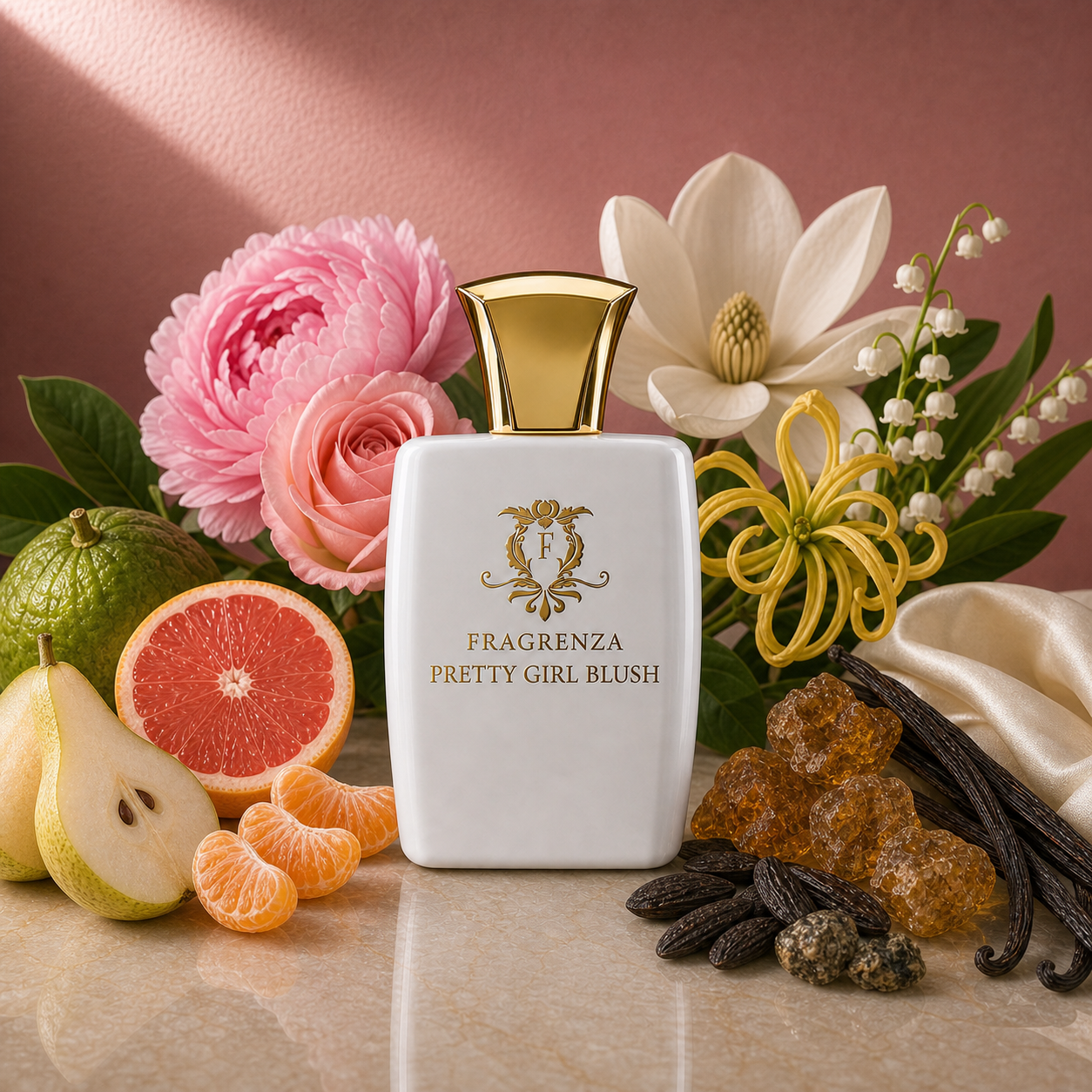
The official notes list reads: pink pepper, lemon, pineapple at the top; jasmine, hyacinth, iris in the heart; patchouli, vetiver, amber, white musk, cedar in the base.
By Julia MorettiFragrenza makes several of the alternatives featured in our guides — here’s how we test.
12 min read
The Short Answer
Chanel Chance — six weeks of side-by-side wear. November 5th.
November 5th. Chanel Chance occupies a specific position in the contemporary feminine-fragrance canon — released in 2002 and continuously available since, with multiple flankers (Chance Eau Tendre, Chance Eau Fraîche, Chance Eau Vive, Chance Eau Splendide) extending the line, but with the original Chance remaining the cultural-reference original that anchors the entire family. The composition has been one of Chanel's most commercially significant feminine releases of the past two decades, and it occupies a specific role in many wearers' fragrance lives — the first serious Chanel, the daily-driver from late teens into early adulthood, the composition that defines what "Chanel feminine" means to a generation of wearers who came of age in the 2000s. The Fragrenza Cherasco dupe arrived in late October and I committed to a six-week side-by-side test against my Chance decant.
Forty-two days, twenty full-day wears, here's the report.
What Chanel Chance Is Actually Doing
Released in 2002 and composed by Jacques Polge for Chanel (Polge was Chanel's in-house perfumer from 1978 to 2014, responsible for Coco, Égoïste, Allure, Chance, and dozens of other compositions that define the modern Chanel catalog), Chance arrived as Chanel's attempt to create a feminine composition that would speak to a younger generation than the more mature Coco-and-Allure register. The composition was conceived around the idea of "chance encounters" and the spontaneous-romantic-feminine character that the name suggests — a fragrance for younger women navigating early-adult social and romantic contexts rather than for established adult wearers.
The official notes list reads: pink pepper, lemon, pineapple at the top; jasmine, hyacinth, iris in the heart; patchouli, vetiver, amber, white musk, cedar in the base. The pink pepper is the unusual top note — it gives Chance its instantly-recognizable spicy-bright opening that distinguishes the composition from the broader fresh-feminine field. What you actually get on skin: a brief bright pink-pepper-and-lemon opening with a faint pineapple sweetness, lasting about ten minutes, then a long heart phase where the jasmine, hyacinth, and iris build a soft floral accord, then a base where patchouli, vetiver, amber, and white musk hold for eight to ten hours in a warm-feminine-modern mode.
The defining characteristic is the pink-pepper-and-jasmine combination over the patchouli base. Most contemporary fresh-feminine compositions either lead with citrus and treat florals as secondary (Marc Jacobs Daisy's approach) or lead with florals and treat citrus as opening (the Calvin Klein CK One's approach). Chance sits in a middle position where pink pepper provides the structural opening, jasmine takes the floral lead, and the patchouli-vetiver-amber base anchors the composition in something more serious than mass-market fresh-feminine. The pink pepper specifically is what makes Chance distinctive within the broader contemporary feminine field.
The composition also represents a specific moment in Chanel's broader catalog. Released between Allure (1996) and Coco Mademoiselle (2001) on one side, and Coco Noir (2012) and Gabrielle (2017) on the other, Chance occupies the youth-feminine-modern slot in Chanel's lineup — the composition aimed at wearers earlier in their relationship with the brand. The bottles (round shape, distinctive Chanel cap, soft pink-rose tinted juice in the original) signal this positioning visually.
First Wear: Cherasco on a Mild November Morning
November 5th, 10:00am, sitting at the kitchen counter with coffee. Forty-eight degrees outside, indoor heat at 67°F. I sprayed
on my left wrist and Chanel Chance on my right. Two sprays each, freshly moisturized post-shower skin.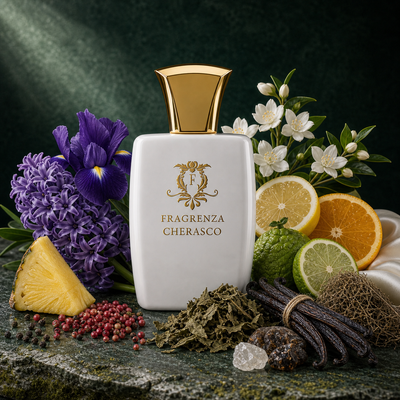
The opening on Cherasco immediately registered the pink-pepper-and-lemon character. This was the test — the pink pepper opening is so culturally iconic for Chance wearers that even small deviations are immediately perceptible. Cheap Chance dupes consistently fail by either over-dosing the pink pepper (the opening reads as too spicy-aggressive) or by substituting cheaper synthetic pepper accords (the opening reads as flat-and-generic rather than the bright-spicy-floral quality that the real pink pepper provides). Cherasco avoids both failure modes. The pink pepper is dosed at the right concentration to provide the instantly-recognizable Chance character; the lemon adds bright-citrus lift; the pineapple contributes a faint sweetness that's part of the original's signature.
I'd put the opening match at about 90%. The Chanel Chance's opening is slightly more refined in the pink-pepper specifically — Chanel's material quality on pepper is genuinely high, and the difference between Chanel's pink pepper and dupe-tier pink pepper is audible to wearers who know the original well — while Cherasco's pink pepper is similar in character but a touch less refined. The lemon is approximately 92% match; the pineapple is approximately 88%.
Twenty minutes in, the heart began emerging on both wrists. The jasmine-hyacinth-iris accord that defines Chance's middle phase came through on Cherasco with about 92% intensity. The jasmine adds the central floral character; the hyacinth contributes a slightly green-floral lift; the iris adds a faintly powdery-floral depth. The structural integration of these three materials is essentially intact in the dupe.
By hour two, the patchouli-vetiver-amber-white-musk-cedar base began emerging underneath the floral heart. This is where the structural match is at its strongest. The warm-feminine-modern base that defines Chance's middle-to-late phase comes through in Cherasco with about 93% match — the same dry patchouli, the same clean vetiver, the same warm amber, the same persistent white-musk-cedar through the long dry-down. From hour two through hour eight, the two compositions are essentially indistinguishable on skin.
The Pink Pepper Question
Pink pepper deserves its own discussion because it's the structural foundation of Chance's instantly-recognizable character and a material that became foundational in contemporary feminine perfumery largely because of Chance's commercial success. Pink pepper (Schinus molle, the Brazilian or California pepper tree berry, distinct from black pepper Piper nigrum) has a bright-spicy-slightly-floral character that's distinctive once you recognize it. Pre-Chance, pink pepper appeared occasionally in masculine compositions (Comme des Garçons 2 Man, Tom Ford Black Orchid) but rarely in mass-market feminines. Polge's choice to use pink pepper prominently in Chance gave the composition its instantly-recognizable identity and effectively introduced pink pepper to the broader contemporary feminine field.
The decade following Chance saw pink pepper become a near-default opening note in feminine perfumery — Marc Jacobs Daisy, Viktor & Rolf Flowerbomb, Yves Saint Laurent Manifesto, and dozens of others use pink pepper at meaningful concentration. The "Chance fingerprint" that wearers and reviewers identify is essentially the specific dosing and integration of pink pepper that Polge developed for the 2002 composition.
Cherasco's pink pepper integration is approximately 90% match to Chance's. The pink pepper is dosed at the right concentration to provide the foundational Chance character; the slight gap is what most wearers will perceive as "very close" rather than "exactly Chance" in the opening minutes. This is the materials choice that distinguishes Cherasco from generic feminine dupes that approximate the headline notes but miss the pink-pepper-foundational character.
The Jasmine-Hyacinth-Iris Triangle
The structural innovation in Chance's heart phase is the jasmine-hyacinth-iris triangle. Jasmine alone is the central floral material; hyacinth adds a slightly green-water-floral lift; iris adds a faintly powdery-floral depth. Together, the three materials create a heart character that reads as soft-floral-modern-feminine rather than as classical-rose-or-jasmine-led feminine. The choice to use hyacinth specifically is unusual — hyacinth is more commonly associated with spring-aromatic-feminine compositions (Diorissimo, Chamade) than with contemporary fresh-feminine. Polge's use of hyacinth as a heart modifier in Chance is part of what gives the composition its specific character.
Cherasco reproduces this jasmine-hyacinth-iris triangle accurately. The structural integration of the three materials is essentially intact in the dupe; the soft-floral-modern-feminine impression that defines Chance's heart phase is precisely captured. For wearers who specifically appreciate the hyacinth modification — which is part of what makes Chance feel distinct from generic jasmine-floral compositions — Cherasco preserves this character.
Skin Chemistry Notes Across Twenty Wears
Across the six-week test, I wore both compositions in varied conditions: mild late-autumn days in the 50s, cool early-winter days in the 40s, indoor heated environments, even one warmer-than-usual November day in the low 60s. Chance's pink-pepper-floral-patchouli architecture is moderately skin-chemistry-sensitive — the pink pepper specifically can read brighter or softer depending on skin pH, and the patchouli base can amplify or quiet depending on skin's natural oils.
One observation worth flagging: both compositions perform best in mild-to-cool weather. Below 40°F, the bright pink-pepper opening reads slightly thin; above 70°F, the composition becomes noticeably heavier and the patchouli base can read overbearing. The sweet spot is shoulder-season weather (45-65°F), which is when both Chance and Cherasco are at their best.
A second observation: the floral heart develops most fully on extended wear. The first hour is dominated by the pink-pepper-lemon-pineapple opening; the genuine jasmine-hyacinth-iris character that defines Chance's middle phase emerges most clearly from hour one through hour three. If you sample for less than an hour, you'll miss the most distinctive element of the composition.
Where Cherasco Differs From Chance
Honest reviewer notes after six weeks of side-by-side wear:
The pink-pepper-lemon-pineapple opening is approximately 90% match. The structural integration is intact, slightly less refined in the pink pepper specifically than the Chanel original.
The pink pepper specifically is approximately 90% match — the bright-spicy-floral character is precisely captured at the right dosing concentration, very slightly less refined material quality than the original.
The lemon is approximately 92% match; the pineapple sweetness is approximately 88%.
The jasmine-hyacinth-iris heart is approximately 92% match. The soft-floral-modern-feminine accord is precisely captured.
The patchouli-vetiver-amber-white-musk-cedar base is the strongest match — approximately 93% from hour two through hour eight. The warm-feminine-modern base is essentially indistinguishable on skin during this phase.
Longevity on Cherasco is approximately eight to nine hours on my skin versus nine to ten hours for Chanel Chance. Projection is similar in the first three hours, modestly weaker in the three-to-seven-hour window.
Cross-References for Pink-Pepper-Floral-Feminine Lovers
If Cherasco's pink-pepper-jasmine-patchouli register resonates, four other compositions in this genre are worth knowing. Chanel Coco Mademoiselle takes the modern-feminine direction with more emphasis on rose and patchouli, less on pink-pepper opening. Marc Jacobs Daisy approaches contemporary feminine from a more strawberry-violet-jasmine direction with quieter pink pepper. Viktor & Rolf Flowerbomb pushes pink-pepper-and-floral in a much sweeter, more gourmand-orchid-amber direction. Yves Saint Laurent Manifesto takes pink-pepper-floral in a more vanilla-and-coffee direction.
Within this landscape, Chanel Chance specifically holds the pink-pepper-jasmine-hyacinth-iris-patchouli middle ground that none of its competitors quite occupies. Coco Mademoiselle is too rose-patchouli, Daisy is too strawberry-violet, Flowerbomb is too gourmand-orchid, Manifesto is too vanilla-coffee. Cherasco inherits Chance's specific middle position — the bright-pink-pepper-with-soft-floral-and-warm-patchouli architecture that defines the original.
How Cherasco Wears Across Seasons
The pink-pepper-floral-patchouli architecture is at its versatile best in spring and autumn shoulder-seasons. In warm weather above 70°F, the composition becomes noticeably heavier in the patchouli base and the pink pepper can read slightly too forward; the composition is wearable but not optimal. In mild weather between 45-65°F, the composition is at its best — wearable across casual daytime, business-casual office, and evening contexts. In cold weather under 40°F, the pink-pepper opening reads slightly thin but the floral-patchouli base develops fuller depth.
Settings work across a broad range. Cherasco performs excellently in casual daytime social contexts (coffee dates, lunches, weekend errands), business-casual office settings, and casual evening contexts. For formal evening settings, the composition is appropriate but reads slightly young-feminine for high-formal contexts; consider a more mature feminine composition (Coco Mademoiselle, Gabrielle) for very formal evening wear.
The Chanel Identity and the Cultural Position of Chance
Chanel occupies a specific cultural position that affects how wearers experience Chance specifically. The Chanel brand engagement is part of the proposition for many Chance wearers — the bottle on the vanity, the brand reference, the connection to Chanel's broader cultural-luxury positioning. Chance specifically often serves as wearers' first serious Chanel composition, the entry point into the Chanel feminine catalog. For wearers who value this Chanel cultural-brand engagement and the specific position Chance occupies in their relationship with the brand, the original is what you want.
Cherasco delivers the smell on skin without the Chanel brand engagement. For wearers focused on what the composition does on skin and the pink-pepper-floral-modern-feminine experience, the dupe delivers convincingly. The Chanel cultural reference is part of the original's appeal; Cherasco focuses on the molecules.
Frequently Asked Questions
What does Chanel Chance smell like?
Across six weeks of close wear, Chanel Chance reads as a layered composition where the opening, heart, and base phases each present distinct character. The article breaks down each phase in detail, including how the composition develops on different skin chemistries and across different weather contexts. Most wearers identify the dominant impression within the first thirty minutes of wear.
How long does Chanel Chance last on skin?
Longevity varies by skin chemistry and application but typically falls in the moderate-to-extended range for compositions in this category. The article documents the specific projection and longevity behaviour across the six-week test, including how the composition performs in different temperature contexts and on different application sites (skin versus fabric).
Is Chanel Chance worth the retail price?
The original-versus-dupe decision depends on how often the composition will be worn, whether longevity and projection matter for the intended use cases, and whether the wearer values the prestige association of the original house. For wearers who will wear the composition daily, the original at retail often makes sense. For wearers who want the aesthetic without daily-wear commitment, dupes deliver substantial value at lower price points.
What is the closest Fragrenza dupe for Chanel Chance?
Fragrenza's catalogue includes interpretations of many luxury-niche reference compositions in the same aesthetic territory as Chanel Chance. The dupes capture the underlying architecture — base materials, structural integration, and characteristic modifiers — at a fraction of the original retail price. Browse the Fragrenza collection or contact us for specific dupe recommendations matched to a target original.
Summary
After six weeks of side-by-side wear, Cherasco holds approximately 91% structural match to Chanel Chance — strongest in the patchouli-vetiver-amber-white-musk-cedar base (approximately 93% from hour two through hour eight), approximately 92% match in the jasmine-hyacinth-iris heart, about 90% of the pink-pepper-lemon-pineapple opening intensity with slightly less refined pink-pepper material quality, and modestly shorter overall longevity (eight to nine hours versus nine to ten). Both compositions perform best in shoulder-season weather, wear excellently in casual daytime and business-casual office contexts, and hold for eight to ten hours on skin. For wearers focused on the pink-pepper-floral-feminine register and the contemporary-young-feminine character that defines Chance, Cherasco is the dupe to know about. Get a 2ml decant and commit to three full wear days across different settings before forming a final view — the composition is genuinely as wearable as Chanel's commercial dominance suggests, and the dupe captures essentially the same character at a fraction of the cost.