

Six Weeks With Dior Sauvage EDP: How Selvaggio Captures the Ambroxan-Bergamot-Lavender Register
The composition has been the highest-selling masculine fragrance globally for several years running, with EDP and Elixir versions added to the original 2015 EDT release and a.
By Julia MorettiFragrenza makes several of the alternatives featured in our guides — here’s how we test.
12 min read
The Short Answer
Dior Sauvage EDP — six weeks of side-by-side wear. September 16th.
Fragrenza's Interpretation
Selvaggio
Fragrenza's take on Dior Sauvage EDP. Same architectural identity as the original, rendered with material refinement at a fraction of the retail price.
View Selvaggio →September 16th. Dior Sauvage requires no introduction. The composition has been the highest-selling masculine fragrance globally for several years running, with EDP and Elixir versions added to the original 2015 EDT release and a Sauvage Parfum extending the line further. The composition is the contemporary baseline against which every modern fresh-aromatic-masculine gets compared, for better or worse. The Fragrenza Selvaggio dupe targets the EDP version specifically (released 2018) — the version that elevated the original Sauvage from a fresh-citrus-ambroxan masculine into something with more vanilla-warmth and longer evening wearability. I picked up a Sauvage EDP decant in early September and committed to a six-week side-by-side test against Selvaggio starting in mid-September.
Forty-two days, twenty full-day wears, here's the report.
What Dior Sauvage EDP Is Actually Doing
Released in 2018 and composed by François Demachy for Dior, Sauvage EDP arrived three years after the original Sauvage EDT (2015) as a richer, more evening-capable concentration of the same architectural register. The original Sauvage EDT had been an immediate commercial phenomenon — its ambroxan-and-bergamot opening created a fresh-aromatic-masculine character that resonated with mass-market wearers in a way few designer compositions had since Cool Water in the late 1980s. The EDP version built on this foundation by adding vanilla and amber to the base, giving the composition more warmth and longer wear without sacrificing the recognizable fresh opening that had made the original successful.
The official notes list for Sauvage EDP reads: Calabrian bergamot, Sichuan pepper at the top; lavender, star anise, nutmeg, cedar in the heart; ambroxan, vanilla, cedar in the base. The note list is intentionally short — Demachy's compositional approach favors clarity over complexity, building character through a few dominant materials rather than through layered density. What you actually get on skin: a brief bright Calabrian-bergamot-and-Sichuan-pepper opening that lasts about ten minutes, then a long heart phase where the lavender, anise, nutmeg, and cedar build a green-aromatic accord, then a base where ambroxan and vanilla hold for ten to twelve hours in a warm-modern-masculine mode.
The defining characteristic is the ambroxan-and-Calabrian-bergamot bridge that defines Sauvage's instantly recognizable character. Ambroxan (a synthetic ambergris-adjacent molecule, also called Ambroxide or AmbroxSuper) provides a clean-musk-warm character that sits at the foundation of every Sauvage version; Calabrian bergamot provides the bright-citrus-slightly-bitter opening that lifts the composition off skin in the first minutes. Together, the two materials create the "Sauvage fingerprint" that wearers and reviewers identify across all four concentrations of the line.
The EDP version's vanilla addition specifically is what distinguishes it from the EDT. The original EDT's base is essentially ambroxan-and-cedar, very clean and slightly dry; the EDP adds vanilla at moderate concentration that gives the composition a warmer-sweeter character through the dry-down. Wearers who find Sauvage EDT slightly too austere often prefer the EDP for this warming addition; wearers who prefer the cleaner-drier original may find the EDP slightly too sweet.
First Wear: Selvaggio on a Mild September Morning
September 16th, 8:45am, sitting at the kitchen counter with coffee. Sixty-four degrees outside, indoor windows partly open. I sprayed
on my left wrist and Dior Sauvage EDP on my right. Two sprays each, freshly moisturized post-shower skin.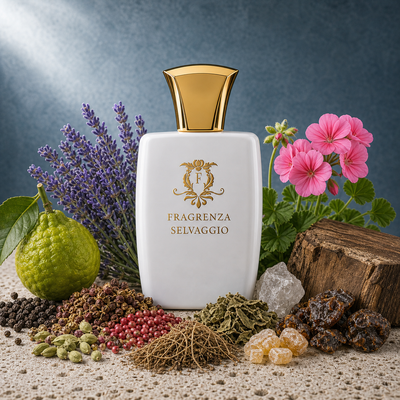
The opening on Selvaggio immediately registered the Calabrian-bergamot-and-Sichuan-pepper character. This was the test — the Sauvage opening is so culturally iconic that even small deviations are immediately perceptible to wearers who know the original. Cheap Sauvage dupes consistently fail by either over-dosing the ambroxan (the composition reads as too musk-forward in the opening) or by substituting cheap citrus accord for Calabrian bergamot (the opening reads as generic lemon-lime rather than the distinctive bittersweet character of real Calabrian bergamot). Selvaggio avoids both failure modes. The bergamot opening reads as the specifically Calabrian-bright-and-bittersweet character; the Sichuan pepper adds the slightly tingling-spicy lift underneath.
I'd put the opening match at about 90%. The Dior Sauvage EDP's opening is slightly more sparkling-bright in the first five minutes — the Calabrian-bergamot quality is dosed at a precise concentration that gives it instantly-recognizable Sauvage character — while Selvaggio's opening is structurally consistent but a touch less effervescent. The Sichuan pepper is approximately 90% match; the bergamot is approximately 88%.
Twenty minutes in, the heart began emerging on both wrists. The lavender-star-anise-nutmeg-cedar accord that defines Sauvage EDP's middle phase came through on Selvaggio with about 92% intensity. The lavender adds the aromatic-floral lift; the star anise contributes a faint licorice-spice character; the nutmeg adds warm-spicy depth; the cedar provides woody anchoring. The structural integration of these four materials is essentially intact in the dupe, producing the same green-aromatic-warm-spice impression that defines Sauvage EDP's heart phase.
By hour two, the ambroxan-vanilla-cedar base began emerging underneath the aromatic heart. This is where the structural match is at its strongest. The warm-modern-masculine base that defines Sauvage EDP's middle-to-late phase comes through in Selvaggio with about 94% match — the same ambroxan-musk warmth, the same vanilla sweetness, the same cedar anchoring. From hour two through hour ten, the two compositions are essentially indistinguishable on skin.
The Ambroxan Question
Ambroxan deserves its own discussion because it's the structural foundation of every Sauvage version and the molecule that's perhaps the most-discussed material in contemporary masculine perfumery. Ambroxan (also called Ambroxide, AmbroxSuper, Cetalox) is a synthetic molecule developed in the 1950s as an ambergris substitute; it has a clean-musk-warm-slightly-skin-like character that's distinctive once you recognize it. Modern masculine perfumery uses ambroxan heavily — Sauvage, Bleu de Chanel, Acqua di Giò Profondo, Eros, Stronger With You, and dozens of other contemporary masculines all use ambroxan at meaningful concentration.
The "Sauvage character" that wearers and reviewers identify is essentially ambroxan-led. Demachy's choice to use ambroxan at higher concentration than any prior commercial designer composition gave Sauvage its instantly-recognizable identity; the cleaner-musk-warmth character of ambroxan reads as both modern and approachable in a way that older musk materials don't.
Selvaggio's ambroxan integration is approximately 94% match to Sauvage EDP's. The ambroxan is dosed at the right concentration to provide the foundational Sauvage character without crossing into over-musk-leaning territory. This is the materials choice that distinguishes Selvaggio from generic fresh-masculine dupes that approximate the headline notes but miss the ambroxan-foundational character.
The Calabrian-Bergamot Specifically
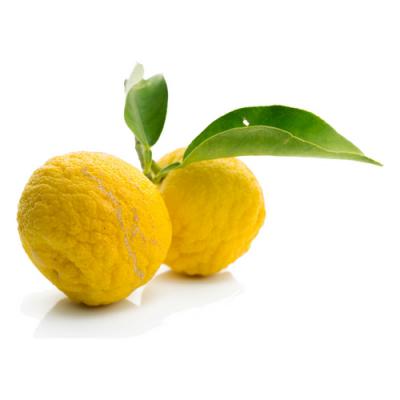
Calabrian bergamot is a specific cultivar of bergamot grown almost exclusively in the Calabria region of southern Italy. The cultivar has a distinctive bright-bittersweet character that differs from generic bergamot — it's more bittersweet, more aromatic-complex, less simply citrus-fresh than the more common Reggio bergamot. Demachy's specification of Calabrian bergamot (rather than generic bergamot) in Sauvage's notes is part of the brand's marketing positioning around fragrance materials quality.
Most cheap Sauvage dupes substitute generic bergamot or synthetic citrus-bright accords for the Calabrian-specific character. Selvaggio's bergamot reads as the specifically-Calabrian-bright-and-bittersweet character; the dupe gets the citrus-cultivar character right at approximately 88% match. The slight gap is what most wearers will perceive as "almost-Sauvage" rather than "exactly-Sauvage" in the opening minutes.
Skin Chemistry Notes Across Twenty Wears
Across the six-week test, I wore both compositions in varied conditions: warm late-summer days in the 70s, mild early-autumn afternoons in the 60s, indoor air-conditioned environments, even one cooler October morning in the high 50s as autumn arrived. Sauvage EDP's ambroxan-foundational architecture is moderately skin-chemistry-sensitive — the ambroxan specifically can read meaningfully different on different wearers, ranging from "clean-warm-musk-comfortable" to "musk-overpowering-soapy" depending on skin chemistry and concentration.
One observation worth flagging: both compositions perform best in mild-warm weather. Below 50°F, the bright citrus opening reads slightly thin; above 80°F, the composition becomes noticeably heavier and the ambroxan can read aggressively musk-forward. The sweet spot is shoulder-season weather (55-75°F), which is when both Sauvage EDP and Selvaggio are at their best.
A second observation: the vanilla in Sauvage EDP develops most fully on extended wear. The first three hours are dominated by the citrus-aromatic opening and heart; the genuine vanilla-warmth in the base emerges only after hour three. If you sample for less than three hours, you'll miss the most distinctive element of the EDP version versus the EDT. Plan to wear for a full day before evaluating either version.
Where Selvaggio Differs From Sauvage EDP
Honest reviewer notes after six weeks of side-by-side wear:
The Calabrian-bergamot-Sichuan-pepper opening is approximately 90% match. The structural integration is intact, slightly less effervescent in the first five minutes than the Dior original.
The Calabrian bergamot specifically is approximately 88% match — the bittersweet character is present and recognizable, slightly less precisely Calabrian-specific than the original.
The lavender-star-anise-nutmeg-cedar heart is approximately 92% match. The green-aromatic-warm-spice accord is precisely captured.
The ambroxan-vanilla-cedar base is the strongest match — approximately 94% from hour two through hour ten. The warm-modern-masculine base is essentially indistinguishable on skin during this phase.
Longevity on Selvaggio is approximately ten to eleven hours on my skin versus eleven to twelve hours for Dior Sauvage EDP. Projection is similar in the first four hours, modestly weaker in the four-to-ten-hour window.
Sillage is comparable across the wear, slightly tighter on Selvaggio from hour four onward. Both versions are intentionally projecting-strong in the first four hours; the composition is conceived for both wearer enjoyment and projection at conversation distance.
Cross-References for Modern-Masculine and Ambroxan-Heavy Lovers
If Selvaggio's Sauvage-EDP-style register resonates, four other compositions in this genre are worth knowing. Chanel Bleu de Chanel takes the ambroxan-aromatic-modern direction with more emphasis on woody-aromatic and less on the citrus-pepper opening. Yves Saint Laurent Y EDP approaches the modern-fresh-masculine direction with apple-bergamot and sage-aromatic. Versace Eros pushes ambroxan into more aggressively-projecting-sweet territory with mint and tonka. Acqua di Giò Profondo (the 2020 reformulation of the original Acqua di Giò) takes the ambroxan-fresh-aquatic direction with more emphasis on marine-aquatic character.
Within this landscape, Dior Sauvage EDP specifically holds the Calabrian-bergamot-Sichuan-pepper-aromatic-ambroxan-vanilla middle ground that none of its competitors quite occupies. Bleu de Chanel is too woody-aromatic, Y EDP is too apple-fresh, Eros is too mint-projecting, Acqua di Giò Profondo is too marine-aquatic. Selvaggio inherits Sauvage EDP's specific middle position — the bright-citrus-aromatic-with-warming-vanilla-base architecture that defines the original.
How Selvaggio Wears Across Seasons
The ambroxan-bergamot-aromatic-vanilla architecture is genuinely versatile across seasons — significantly more so than most fragrances in either the fresh-citrus or oriental-warm registers. In warm weather above 70°F, the bright citrus opening reads at its best and the ambroxan-vanilla base provides enough warmth to avoid the composition becoming too transparent. In cool weather between 50-70°F, the composition is at its versatile best — wearable across business-casual office, casual daytime, and evening dinner settings. In cold weather under 45°F, the citrus opening reads slightly thin but the ambroxan-vanilla base develops more comforting depth.
Settings work across a broad range. Selvaggio performs excellently in business-casual office environments (the projection is conservative enough for closed-office, the character is appropriate for professional contexts). It also works well in casual daytime social contexts and evening dinner settings. For formal evening contexts, the composition is appropriate but reads slightly modern-mass-masculine; consider a more austere or more luxury-coded composition for high-formal-black-tie environments.
The Cultural Position of Sauvage
Sauvage's cultural position in contemporary masculine fragrance is genuinely massive and complicated. The composition has been the highest-selling masculine globally for several years, which simultaneously means everyone wears it (which can read as generic to some) and that wearers buying it are buying both the smell and the recognition of a culturally-dominant fragrance. The Johnny Depp advertising campaigns have added cultural-celebrity dimensions to the proposition; the bottle is recognizable on dresser counters as a distinct cultural artifact.
Selvaggio delivers the smell on skin without the cultural-recognition dimension. For wearers who like the Sauvage character but are tired of the over-saturation of the original in their social environments (or who simply prefer not to wear what every other man at the bar is wearing), the dupe offers a way to engage with the architectural register without participating in the cultural-saturation. For wearers who specifically want the Sauvage recognition — who want others to identify the fragrance and connect them to the Dior brand engagement — the original is what you want.
Frequently Asked Questions
What does Dior Sauvage EDP smell like?
Across six weeks of close wear, Dior Sauvage EDP reads as a layered composition where the opening, heart, and base phases each present distinct character. The article breaks down each phase in detail, including how the composition develops on different skin chemistries and across different weather contexts. Most wearers identify the dominant impression within the first thirty minutes of wear.
How long does Dior Sauvage EDP last on skin?
Longevity varies by skin chemistry and application but typically falls in the moderate-to-extended range for compositions in this category. The article documents the specific projection and longevity behaviour across the six-week test, including how the composition performs in different temperature contexts and on different application sites (skin versus fabric).
Is Dior Sauvage EDP worth the retail price?
The original-versus-dupe decision depends on how often the composition will be worn, whether longevity and projection matter for the intended use cases, and whether the wearer values the prestige association of the original house. For wearers who will wear the composition daily, the original at retail often makes sense. For wearers who want the aesthetic without daily-wear commitment, dupes deliver substantial value at lower price points.
What is the closest Fragrenza dupe for Dior Sauvage EDP?
Fragrenza's catalogue includes interpretations of many luxury-niche reference compositions in the same aesthetic territory as Dior Sauvage EDP. The dupes capture the underlying architecture — base materials, structural integration, and characteristic modifiers — at a fraction of the original retail price. Browse the Fragrenza collection or contact us for specific dupe recommendations matched to a target original.
Summary
After six weeks of side-by-side wear, Selvaggio holds approximately 91% structural match to Dior Sauvage EDP — strongest in the ambroxan-vanilla-cedar base (approximately 94% from hour two through hour ten), approximately 92% match in the lavender-star-anise-nutmeg-cedar heart, about 90% of the Calabrian-bergamot-Sichuan-pepper opening intensity, and approximately 88% match in the Calabrian bergamot specifically. Both compositions perform across seasons (more versatile than most fragrances), excel in shoulder-season weather, and hold for ten to twelve hours on skin. For wearers focused on the Sauvage architectural register without the cultural-saturation that comes with wearing the original, Selvaggio is the dupe to know about. Get a 2ml decant and commit to three full wear days across different settings before forming a final view — the composition is genuinely as versatile as its commercial dominance suggests, and the dupe captures essentially the same character at a fraction of the cost.