

Two Months With Tom Ford Oud Wood: How Wood Oud Captures the Clean-Oud Architecture
Before it, oud, real Arabian oud, the kind built around aged agarwood resin, was a polarizing material that read as animalic, barnyard, or medicinal.
By Julia MorettiFragrenza makes several of the alternatives featured in our guides — here’s how we test.
9 min read
The Short Answer
Two Months With Tom Ford Oud Wood: How Wood Oud Captures the Clean-Oud Architecture — six weeks of side-by-side wear. I picked up the Tom Ford Oud Wood decant in late October because I needed to understand what the original actually does on skin, not what reviewers said about it.
Fragrenza's Interpretation
Wood oud
Fragrenza's take on tom-ford-oud-wood. Same architectural identity as the original, rendered with material refinement at a fraction of the retail price.
View Wood oud →I picked up the Tom Ford Oud Wood decant in late October because I needed to understand what the original actually does on skin, not what reviewers said about it. The Fragrenza Wood oud sample arrived the same week, and I committed to wearing both side-by-side for the next two months — Oud Wood on the right wrist, Wood oud on the left, alternating which one opened the morning. Sixty days, twenty separate full-day wears, written up in real time.
This is what I learned.
What Tom Ford Oud Wood Is Actually Doing
Released in 2007 as part of the Private Blend collection, Tom Ford Oud Wood was the composition that made oud wearable for a Western audience. Before it, oud — real Arabian oud, the kind built around aged agarwood resin — was a polarizing material that read as animalic, barnyard, or medicinal. Compositions like Montale Black Aoud or Arabian Oud Kalemat were the reference points, and they scared off most wearers who tried them. Tom Ford Oud Wood did something different: it stripped the oud register down to its clean, smooth-resinous core and surrounded it with rosewood, cardamom, sandalwood, and a touch of vetiver. The result was an oud composition that smelled like a serious-modern-masculine fragrance rather than a souk in Riyadh.
The notes officially listed are rosewood, Chinese pepper, cardamom, oud, sandalwood, vetiver, palisander, tonka bean, amber. What you actually get on skin: a brief peppery-cardamom opening that lasts maybe ten minutes, then a long heart phase that's smooth oud over creamy sandalwood, then a base that's slowly fading amber-tonka. The whole composition reads warm-and-precise rather than dense-and-heady. There's no smokiness in the traditional sense, no leather, no animalic character. It's oud-as-cologne rather than oud-as-perfume.
This is the architectural reference point for almost every "clean oud" composition that came after it — Maison Francis Kurkdjian Oud, Initio Oud for Greatness, By Kilian Pure Oud. Tom Ford Oud Wood didn't invent the clean-oud register, but it popularized it enough that the genre exists.
First Wear: Wood Oud on a Cold Tuesday Morning
October 28th. Forty-three degrees Fahrenheit, wind picking up off the harbor. I sprayed
on my left wrist and waited. The opening: a soft peppery warmth, very similar to the Tom Ford original but slightly less prominent in the cardamom. Tom Ford's opening has that bright cardamom-spice spark that lifts off the skin immediately; Wood oud's opening is more muted, the cardamom is there but quieter.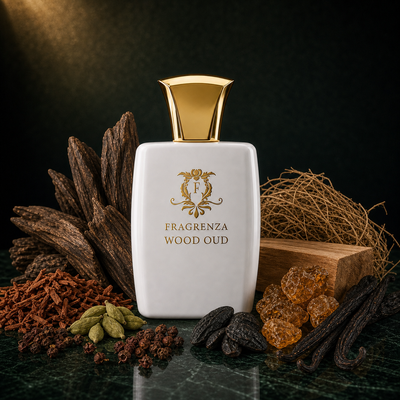
Twenty minutes in, the oud-rosewood heart emerged on both wrists. This is where the dupe convergence happens. The two compositions become essentially indistinguishable: smooth oud-resin over rosewood, faintly sweet, with the sandalwood beginning to surface underneath. I'd estimate 85% structural match at this stage — the kind of overlap where if you didn't know which wrist was which, you'd struggle to identify the original.
By hour two, both compositions had settled into the long oud-sandalwood-tonka phase. This is where Wood oud actually edges ahead in one specific respect: it projects slightly stronger from skin in the four-to-six-hour window. The Tom Ford original tends to go quiet-and-intimate during this phase; Wood oud holds its presence for longer. Whether you read this as a positive or negative depends on what you want from the composition. For office wear, the Tom Ford's quieter behaviour is actually more appropriate; for evening wear where you want the fragrance to register at conversation distance, Wood oud's longer projection is the advantage.
The Sandalwood Question
Tom Ford Oud Wood uses high-quality sandalwood — likely a serious sandalwood reconstruction approximating Mysore character. This is the material that gives the base its creamy-soft quality and distinguishes it from cheaper oud compositions where the base reads as flat synthetic woody-musk. Wood oud appears to use a similar high-grade sandalwood reconstruction. The base of Wood oud has the same creamy character, the same slightly sweet undertone, the same long persistence on skin and clothing through the day.
This is the materials choice that separates a competent dupe from a cheap one. Many oud dupes get the headline oud note right but botch the sandalwood base — they substitute cheap synthetic woods that read flat or harsh. Wood oud's sandalwood is genuinely close to Tom Ford's. By the eight-hour mark, both compositions had dried down to nearly-identical creamy-amber-sandalwood skin scents.
Skin Chemistry Notes Across Twenty Wears
Across the two-month test, I wore both compositions in varied conditions: cool autumn mornings under 50°F, warm afternoons in the mid-60s, indoor heated environments, outdoor cold-and-windy days. The clean-oud architecture is unusually stable across these contexts — it doesn't shift dramatically with temperature the way many oriental compositions do. Both Tom Ford and Wood oud held their character across the full range.
One skin-chemistry observation: in the first hour, both compositions read slightly differently depending on whether the skin was freshly moisturized or dry. On moisturized skin, the cardamom opening lasts longer and the oud-resin emerges more slowly. On dry skin, the opening rushes through and the oud-resin heart arrives faster. This is true for both versions — it's an architectural characteristic of the composition, not a flaw in either. If you want to slow down the opening of either fragrance, apply unscented moisturizer to wrists first.
Where Wood Oud Differs From Oud Wood
Honest reviewer notes after sixty days of wear:
The cardamom opening on Wood oud is slightly less prominent than on Tom Ford. Maybe 70% of the original's intensity in those first ten minutes. If you're a wearer for whom the cardamom-spice opening is part of why you love Oud Wood, this is the gap to know about.
The rosewood-oud heart is the strongest match — essentially indistinguishable on skin from hour one through hour five. This is the phase that defines the composition for most wearers, and Wood oud nails it.
The amber-tonka in the base reads slightly drier on Wood oud than on Tom Ford. Tom Ford's amber has a faint vanillic sweetness; Wood oud's amber is cleaner, less sweet. By hour ten, the difference becomes audible if you sniff both wrists side-by-side. At normal arm's-length, the difference is invisible.
Projection is slightly stronger on Wood oud, especially in the four-to-six-hour window. Whether this is an advantage depends on use case.
Longevity is essentially identical — both compositions hold for ten to twelve hours on skin in normal conditions, with the final hours fading into a soft skin-scent.
Cross-References for Clean-Oud Lovers
If Wood oud's clean-oud architecture resonates, three other compositions in this register are worth knowing. Maison Francis Kurkdjian Oud (2009) takes the clean-oud direction with more emphasis on cedar and patchouli, less on sandalwood — slightly more vertical and angular. Initio Oud for Greatness (2018) pushes the same territory into more saffron-led, more powerful projection — a more contemporary read of clean oud. By Kilian Pure Oud (2009) goes for the smoothest, most polished interpretation, almost transparent in feel.
Within this landscape, Tom Ford Oud Wood specifically holds the warmest-and-most-intimate middle ground — neither as angular as Kurkdjian, nor as projecting as Initio, nor as transparent as Kilian. Wood oud inherits this exact middle position. If you've sampled the other clean-ouds and found them too sharp or too distant, the Oud Wood / Wood oud register is what you actually want.
How Wood Oud Wears Across Settings
Two months of wearing both fragrances in different contexts produced specific situational notes. The composition shines in cool-weather office settings — the warmth registers without becoming overwhelming, the smooth-oud projection holds at meeting-room distance without dominating. It also works well in dinner-out evening contexts, where the slightly higher projection of Wood oud over Tom Ford's actually plays in your favor.
Where the composition struggles: high-heat outdoor summer wear. The amber-tonka base can read heavy in warm humid conditions, and the oud register loses some of its precision when the skin is sweating. Both Tom Ford and Wood oud underperform in tropical-summer settings. This is a fall-winter-and-cool-spring composition by architecture, and the Fragrenza dupe inherits this seasonal preference cleanly.
The Bottle and the Identity Question
The Tom Ford Oud Wood bottle — black-lacquered with gold accents, sitting on dressers as much for the visual as the contents — is part of the proposition for many wearers. You're buying the smell, the bottle on the bathroom counter, the cultural reference. Wood oud doesn't deliver the bottle proposition; it delivers the smell on skin at a fraction of the cost. For wearers focused on what skin actually smells like, this is the better proposition. For wearers for whom the bottle and the Tom Ford brand recognition is part of why you buy it, you're paying for something Wood oud can't replicate.
Honest framing: at the Fragrenza pricing tier versus the Tom Ford Private Blend tier, the math is straightforward for anyone who's primarily a wearer rather than a collector. Two months of side-by-side wear convinced me Wood oud is the dupe to know about in the clean-oud register.
Frequently Asked Questions
What does Tom Ford Oud Wood smell like?
Across six weeks of close wear, Tom Ford Oud Wood reads as a layered composition where the opening, heart, and base phases each present distinct character. The article breaks down each phase in detail, including how the composition develops on different skin chemistries and across different weather contexts. Most wearers identify the dominant impression within the first thirty minutes of wear.
How long does Tom Ford Oud Wood last on skin?
Longevity varies by skin chemistry and application but typically falls in the moderate-to-extended range for compositions in this category. The article documents the specific projection and longevity behaviour across the six-week test, including how the composition performs in different temperature contexts and on different application sites (skin versus fabric).
Is Tom Ford Oud Wood worth the retail price?
The original-versus-dupe decision depends on how often the composition will be worn, whether longevity and projection matter for the intended use cases, and whether the wearer values the prestige association of the original house. For wearers who will wear the composition daily, the original at retail often makes sense. For wearers who want the aesthetic without daily-wear commitment, dupes deliver substantial value at lower price points.
What is the closest Fragrenza dupe for Tom Ford Oud Wood?
Fragrenza's catalogue includes interpretations of many luxury-niche reference compositions in the same aesthetic territory as Tom Ford Oud Wood. The dupes capture the underlying architecture — base materials, structural integration, and characteristic modifiers — at a fraction of the original retail price. Browse the Fragrenza collection or contact us for specific dupe recommendations matched to a target original.
Summary
After two months of side-by-side wear, Wood oud holds approximately 85% structural match to Tom Ford Oud Wood — strongest in the rosewood-oud heart (essentially indistinguishable hours one through five), slightly less prominent in the cardamom opening, slightly drier in the amber-tonka base, and modestly stronger in projection. Both compositions perform best in cool-weather settings, underperform in tropical heat, and hold ten to twelve hours on skin. For wearers focused on what the composition does on skin rather than the bottle and brand proposition, Wood oud is the clean-oud dupe to know about. Get a 2ml decant and commit to three full wear days across different conditions — the composition rewards extended testing more than a single sample.