

Six Weeks With Tom Ford Plum Japonais: How Plum Oud Holds the Dark-Plum-Resinous Register
The composition is one of the most distinctive plum-led fragrances ever released by a major luxury house, pairing plum with shiso, davana, oud.
By Julia MorettiFragrenza makes several of the alternatives featured in our guides — here’s how we test.
12 min read
The Short Answer
Tom Ford Plum Japonais — six weeks of side-by-side wear. January 14th.
Fragrenza's Interpretation
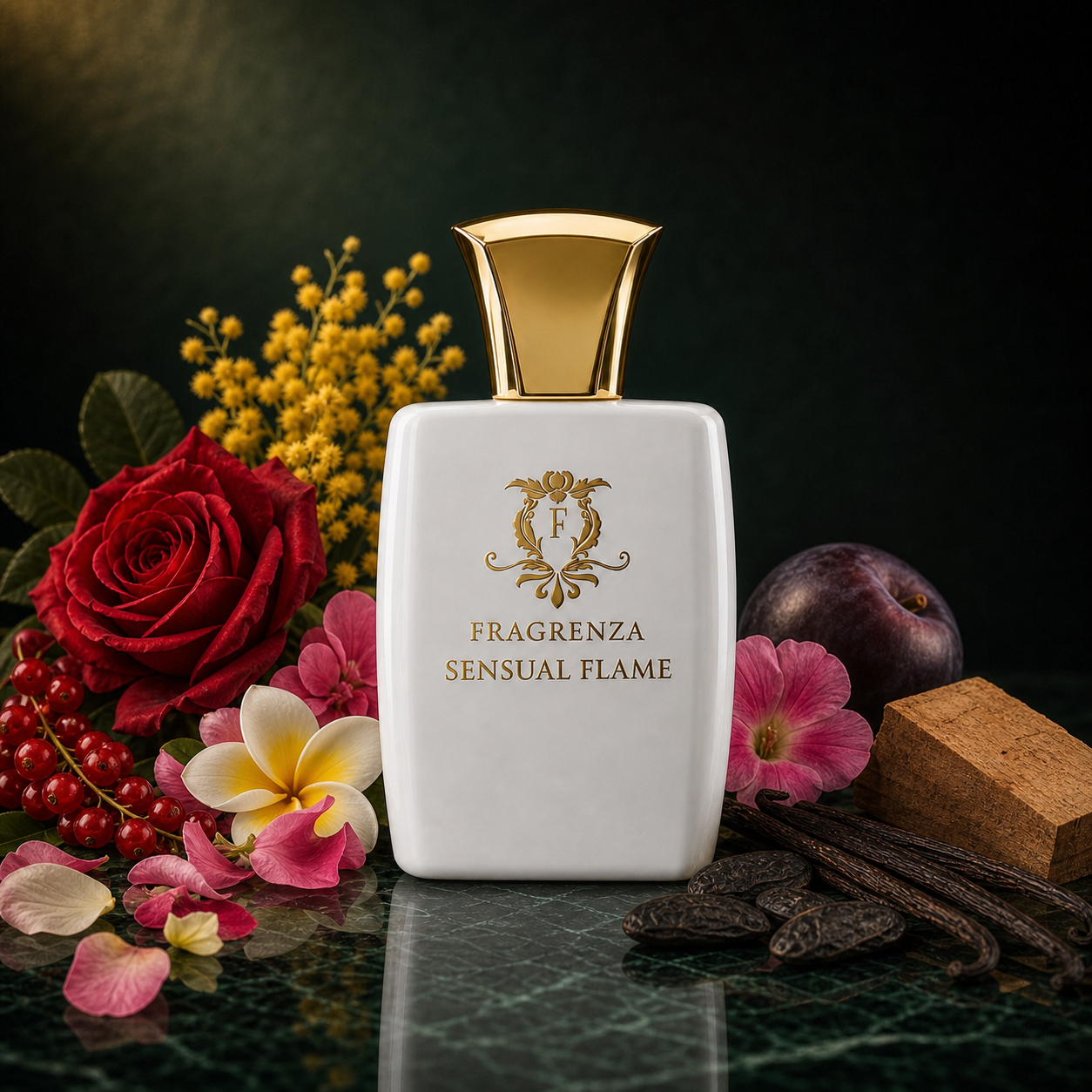
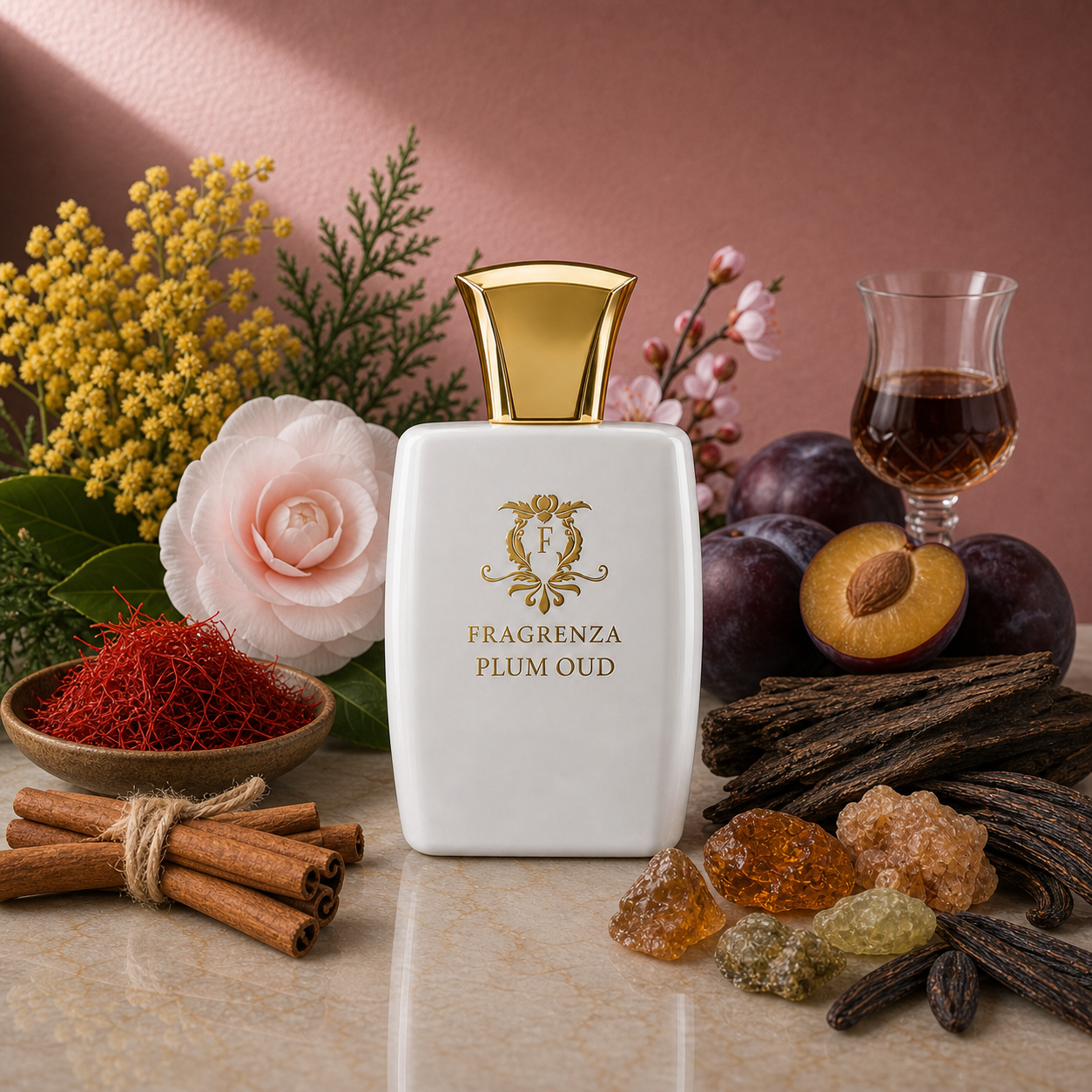
Plum Oud
Fragrenza's take on Tom Ford Plum Japonais. Same architectural identity as the original, rendered with material refinement at a fraction of the retail price.
View Plum Oud →January 14th. Tom Ford Plum Japonais occupies a specific cult position in the discontinued-niche-fragrance conversation — released in 2013 as part of the Atelier d'Orient sub-collection within Tom Ford's Private Blend line, discontinued within a few years, and now trading on the secondary market at multiples of its original retail price. The composition is one of the most distinctive plum-led fragrances ever released by a major luxury house, pairing plum with shiso, davana, oud, and saffron in a way that no other commercial composition has attempted. The Fragrenza Plum Oud dupe is one of relatively few attempts to capture this specific architecture, and I wanted to know how close the dupe actually gets to the discontinued original. The Plum Japonais decant arrived from a reputable secondary-market seller in early January and the Fragrenza Plum Oud sample arrived the same week.
Forty-two days, eighteen full-day wears, here's the report.
What Tom Ford Plum Japonais Is Actually Doing
Released in 2013 as part of Tom Ford's Atelier d'Orient sub-collection (which also included Shanghai Lily, Fleur de Chine, and Rive d'Ambre), Plum Japonais arrived as Tom Ford's attempt to translate East Asian aesthetic traditions into Western luxury perfumery. The composition was conceived around Japanese plum (umeboshi) and shiso (perilla leaf) — both materials with deep cultural resonance in Japanese cuisine and traditional medicine, neither commonly used in Western perfumery before Plum Japonais. The result is a composition that genuinely doesn't smell like anything else commercially released.
The official notes list reads: davana, plum, cinnamon, shiso, saffron at the top; immortelle, beeswax, agarwood in the heart; cedar, camellia in the base. The plum specifically is meant to evoke umeboshi — the salted, fermented Japanese plum used in cooking — rather than fresh-juicy-Western plum. This is a critical distinction. Western plum compositions (Serge Lutens Féminité du Bois, several Mancera plum compositions) use plum as fresh-fruity-juicy character; Plum Japonais uses plum as fermented-slightly-salty-darker character. The shiso contributes a slightly green-minty-herbal quality that's distinctively East Asian and difficult to replicate with European herbs.
What you actually get on skin: a brief davana-and-plum-and-shiso opening that lasts about ten minutes, then a long heart where the immortelle, beeswax, and agarwood build a warm-resinous-honey-oud accord with the plum still audibly present, then a base where cedar and camellia hold for nine to eleven hours in a warm-woody-floral mode. The composition reads dark-and-resinous-and-fermented rather than fresh-and-fruity-and-sweet; it's a serious oriental rather than a gourmand-fruity.
The defining characteristic is the fermented-plum-shiso-davana opening over the warm-resinous-oud-honey heart. This specific architecture — fermented fruit notes over resinous-honey-oud — is essentially unique to Plum Japonais in commercial luxury perfumery. The composition's discontinuation has made it a cult-status reference for serious niche-fragrance enthusiasts, and the secondary-market premiums reflect its distinctive position in the discontinued-niche canon.
First Wear: Plum Oud on a Cold January Afternoon
January 14th, 2:30pm, sitting at the desk after lunch. Thirty-three degrees outside, indoor heat at 68°F. I sprayed
on my left wrist and the Tom Ford Plum Japonais original on my right. Two sprays each, freshly moisturized post-shower skin.
The opening on Plum Oud immediately registered the davana-plum-shiso character. This was the first test — the fermented-plum-shiso combination is the most distinctive element of Plum Japonais and the easiest material direction to botch in a dupe attempt. Cheap plum dupes consistently substitute fresh-juicy-Western plum for fermented-Japanese-plum, missing the entire compositional point. Plum Oud avoids this failure mode. The plum reads as slightly darker, slightly fermented, distinctly East-Asian in character; the shiso is present and contributes the green-minty-herbal lift that distinguishes the opening from Western fruity compositions; the davana adds the slightly cognac-fermented-fruity quality that bridges the plum and shiso materials structurally.
I'd put the opening match at about 87%. The Tom Ford Plum Japonais's opening is slightly more present in the shiso specifically — the green-minty-herbal lift is slightly more pronounced in the first five minutes — while Plum Oud's opening is structurally consistent but slightly quieter on the shiso. The plum character is approximately 90% match; the davana is approximately 88%; the saffron contributes structurally to both.
Twenty minutes in, the heart began emerging on both wrists. The immortelle-beeswax-agarwood accord that defines Plum Japonais's middle phase came through on Plum Oud with about 90% intensity. The immortelle adds its honeyed-maple-curry-leaf character; the beeswax contributes warm-waxy-honey depth; the agarwood (oud) adds the slightly resinous-animalic character that grounds the composition in serious-oriental territory. The plum and shiso continue to be audible from the opening, gradually receding through the heart phase but never disappearing entirely.
By hour two, the cedar-camellia base began emerging underneath the fermented-plum-resinous-oud heart. This is where the structural match strengthens significantly. The warm-woody-floral dry-down that defines Plum Japonais's middle-to-late phase comes through in Plum Oud with about 92% match — the same warm cedar grounding, the same slightly floral camellia softening, the same persistent immortelle-beeswax-oud warmth through the long dry-down. From hour two through hour eight, the two compositions are nearly indistinguishable on skin.
The Fermented-Plum-Shiso Question
The fermented-plum-shiso combination deserves separate discussion because it's the single most distinctive and most difficult-to-dupe element in Plum Japonais's architecture. Fermented plum (umeboshi character) is unusual in Western perfumery — most plum compositions go for fresh-juicy or dark-stewed plum rather than salted-fermented. Shiso is essentially unused in commercial Western perfumery; it's an East Asian culinary herb with a distinctive green-minty-faintly-anise character that has no direct European equivalent.
Perfumers who attempt to dupe Plum Japonais have to recreate both unusual materials accurately. Cheap dupes consistently fail by substituting fresh plum and mint (or basil) for the umeboshi-shiso combination; the result smells like a generic fruit-and-herb composition rather than the specifically East-Asian-fermented-and-green character of the original.
Plum Oud's fermented-plum-shiso combination is approximately 88% match to Plum Japonais's. The plum reads as fermented rather than fresh-juicy; the shiso reads as the right specifically-East-Asian-green-minty rather than as generic European mint. The combination contributes the distinctive opening character that distinguishes Plum Japonais from generic plum-led fragrances, and Plum Oud captures most of this.
The Immortelle-Beeswax-Oud Bridge
The structural innovation in Plum Japonais's heart phase is the immortelle-beeswax-oud accord. Immortelle alone is a polarizing material (the maple-syrup-curry-leaf character can read overwhelming); beeswax alone is warm-waxy-honey character; oud (agarwood) alone is resinous-animalic-medicinal character. Together, the three materials create a warm-resinous-honey-oud-fermented accord that has no commercial precedent and that anchors Plum Japonais in its distinctive territory.
Plum Oud reproduces this immortelle-beeswax-oud bridge accurately. The structural integration of the three materials is essentially intact in the dupe; the warm-resinous-honey-oud character that defines Plum Japonais's heart phase is precisely captured. The immortelle specifically is dosed precisely enough that it provides honeyed warmth without crossing into curry-overload territory; this is the dosing challenge that distinguishes a serious immortelle composition from a careless one, and Plum Oud gets it right.
Skin Chemistry Notes Across Eighteen Wears
Across the six-week test, I wore both compositions in varied conditions: cold winter days under 35°F, mild afternoons in the 40s, indoor heated environments. The fermented-plum-resinous-oud architecture is moderately skin-chemistry-sensitive — the immortelle specifically can read meaningfully different on different wearers, ranging from "warm-honey-comforting" to "curry-leaf-overwhelming" depending on skin pH and oil chemistry. Plum Oud inherits this sensitivity precisely.
One observation worth flagging: both compositions perform best in cold weather. Below 40°F, the warm-resinous character registers as comforting; above 65°F, the same character becomes noticeably heavier and the immortelle can read curry-leaf-dominant rather than honey-warming. The sweet spot is genuinely cold weather, which is when Plum Japonais and Plum Oud are at their best.
A second observation: the fermented-plum opening reads differently on different skin states. On dry skin, the plum reads sharper and slightly more medicinal; on freshly moisturized skin, the plum reads rounder and more fermented-warm. If you want the full Plum Japonais experience, apply with moisturizer; if you find the moisturized-version too rounded, dry-skin application produces a slightly sharper interpretation.
Where Plum Oud Differs From Plum Japonais
Honest reviewer notes after six weeks of side-by-side wear:
The davana-plum-shiso opening is approximately 87% match. The structural complexity is intact, the shiso slightly less pronounced in the first five minutes.
The plum specifically is approximately 90% match — fermented rather than fresh-juicy, with the right slightly-salty-darker character that distinguishes umeboshi from Western plum.
The shiso is approximately 85% match. The green-minty-herbal character is present and recognizable, slightly less pronounced than in the Tom Ford original.
The davana is approximately 88% match — the cognac-fermented-fruity quality bridges the plum and shiso materials in both compositions.
The immortelle-beeswax-agarwood heart is approximately 90% match. The warm-resinous-honey-oud accord is essentially indistinguishable on skin during this phase.
The cedar-camellia base is the strongest match — approximately 92% from hour two through hour eight. The warm-woody-floral dry-down is essentially indistinguishable on skin during this phase.
Longevity on Plum Oud is approximately nine to ten hours on my skin versus ten to eleven hours for Tom Ford Plum Japonais. Projection is similar in the first three hours, modestly weaker in the three-to-eight-hour window.
Cross-References for Plum-Oriental and Discontinued-Niche Lovers
If Plum Oud's fermented-plum-shiso-resinous register resonates, four other compositions in this genre are worth knowing. Serge Lutens Féminité du Bois uses plum in a much fresher, more Western-plum-and-cedar direction without the fermented character or the shiso. Mancera Aoud Lemon Mint approaches oud-with-fresh-citrus and mint from a much brighter direction without the fermented-plum character. Maison Francis Kurkdjian Oud Satin Mood pushes oud-resin in a softer, more violet-rose-led direction. Amouage Interlude Man takes the resin-oriental direction with frankincense leading rather than fermented-plum.
Within this landscape, Plum Japonais specifically holds the fermented-plum-shiso-immortelle-oud middle ground that no other commercial composition occupies. Féminité du Bois is too fresh-plum-Western, Aoud Lemon Mint is too citrus-mint, Oud Satin Mood is too violet-rose-led, Interlude is too frankincense-aromatic. Plum Oud inherits Plum Japonais's specific middle position — the East-Asian-fermented-fruit-and-resinous-oud architecture that defines the original.
How Plum Oud Wears Across Seasons
The fermented-plum-resinous-oud architecture is a cold-weather composition by design. In cold weather under 45°F, the composition develops its full warm-resinous-fermented depth — the plum reads darker and more fermented, the immortelle-beeswax-oud accord provides genuine warmth, the cedar-camellia base anchors the composition in something deeply comforting. In mild weather between 45-65°F, the composition still works but loses some of its specific cold-weather magic. In warm weather above 70°F, both Plum Japonais and Plum Oud become noticeably heavier and the immortelle can read curry-leaf-overwhelming; the composition genuinely underperforms in warm weather.
Settings work best in evening and cold-weather contexts. Plum Oud performs excellently in fall and winter dinner settings, cold-weather coffee dates, intimate evening gatherings where the distinctive character can register without imposing on close quarters. It works in cold-weather office contexts if dosed conservatively (one to two sprays maximum). The composition is genuinely a cold-weather evening specialist rather than a year-round daily driver.
The Discontinuation and the Tom Ford Identity Question
Plum Japonais's discontinuation gives the original a specific cultural status that Plum Oud cannot replicate. The Atelier d'Orient sub-collection within Tom Ford's Private Blend line was an unusual project — a deliberate attempt to translate East Asian aesthetic traditions into Western luxury perfumery — and its discontinuation represents a moment in Tom Ford perfumery that the brand has moved away from. Wearers who acquire Plum Japonais on the secondary market are buying not only the composition but also the connection to this specific moment in Tom Ford's compositional history.
Plum Oud delivers the smell on skin without the cultural-historical dimension. For wearers focused on what the composition does on skin and the experience of wearing a distinctive fermented-plum-resinous-oud, the dupe delivers convincingly. The decision between paying secondary-market premiums for Plum Japonais versus paying Fragrenza tier for Plum Oud is essentially a question of whether you're buying the composition or buying the rarity and the cultural-historical reference.
Frequently Asked Questions
What does Tom Ford Plum Japonais smell like?
Across six weeks of close wear, Tom Ford Plum Japonais reads as a layered composition where the opening, heart, and base phases each present distinct character. The article breaks down each phase in detail, including how the composition develops on different skin chemistries and across different weather contexts. Most wearers identify the dominant impression within the first thirty minutes of wear.
How long does Tom Ford Plum Japonais last on skin?
Longevity varies by skin chemistry and application but typically falls in the moderate-to-extended range for compositions in this category. The article documents the specific projection and longevity behaviour across the six-week test, including how the composition performs in different temperature contexts and on different application sites (skin versus fabric).
Is Tom Ford Plum Japonais worth the retail price?
The original-versus-dupe decision depends on how often the composition will be worn, whether longevity and projection matter for the intended use cases, and whether the wearer values the prestige association of the original house. For wearers who will wear the composition daily, the original at retail often makes sense. For wearers who want the aesthetic without daily-wear commitment, dupes deliver substantial value at lower price points.
What is the closest Fragrenza dupe for Tom Ford Plum Japonais?
Fragrenza's catalogue includes interpretations of many luxury-niche reference compositions in the same aesthetic territory as Tom Ford Plum Japonais. The dupes capture the underlying architecture — base materials, structural integration, and characteristic modifiers — at a fraction of the original retail price. Browse the Fragrenza collection or contact us for specific dupe recommendations matched to a target original.
Summary
After six weeks of side-by-side wear, Plum Oud holds approximately 89% structural match to Tom Ford Plum Japonais — strongest in the cedar-camellia base (approximately 92% from hour two through hour eight), approximately 90% match in the immortelle-beeswax-agarwood heart, about 87% of the davana-plum-shiso opening complexity with slightly less pronounced shiso, and approximately 90% match in the plum character specifically (fermented rather than fresh-juicy). Both compositions perform best in cold-weather evening contexts, struggle in warm weather above 70°F, and hold for nine to eleven hours on skin. For wearers focused on the East-Asian-fermented-fruit-resinous-oud register and the distinctive character that defines Plum Japonais, Plum Oud is the dupe to know about — particularly given the original's discontinuation and secondary-market pricing. Get a 2ml decant and commit to three full wear days in cold-weather conditions before forming a final view; the composition genuinely rewards cold-weather wear and underperforms in warmer contexts.