
Perfumes Similar to Burberry Touch for Men
Burberry Touch for Men is a quietly confident masculine from 2000 that has aged better than almost anything from its era
By Julia MorettiFragrenza makes several of the alternatives featured in our guides — here’s how we test.
14 min read
Burberry Touch for Men is a quietly confident masculine from 2000 that has aged better than almost anything from its era. It opens with artemisia and violet leaf for a clean, slightly green freshness, moves through a spiced heart of nutmeg and white pepper, and settles into a cedarwood-tonka bean base that is warm without being heavy. The overall impression is understated, elegant, and unmistakably well-crafted — a fragrance that lets quality speak quietly rather than loudly.
The best alternatives share that same restraint: clean, slightly spiced, smooth-based masculines that reward attention rather than demanding it. Here's the honest breakdown.
Bleu de Chanel EdT (8/10)
Bleu de Chanel EdT is the closest mainstream alternative to Burberry Touch's clean, refined masculine sensibility. Both are built on a woody-aromatic foundation with a spiced citrus opening, both avoid sweetness or excessive projection, and both read as exactly the kind of fragrance a well-dressed, thoughtful man would reach for. Bleu de Chanel is more complex and more cedar-incense-forward in its dry-down; Touch is lighter and more violet-leaf-green. The DNA family is clearly shared.
- Top Notes: Grapefruit, Mint, Pink Pepper, Aldehydes
- Heart Notes: Ginger, Nutmeg, Iso E Super, Jasmine
- Base Notes: Cedar, Vetiver, Incense, Sandalwood, Labdanum
- Similarity: 8/10
- Longevity: 6–8 hours
- Sillage: Moderate
Hugo Boss Bottled EdT (7/10)
Hugo Boss Bottled shares Burberry Touch's era, its clean masculine DNA, and its approach of using spice and warm woods without going loud or sweet. Both fragrances are woody-aromatic with a spiced mid-section and a sandalwood-vetiver base; Bottled leans slightly warmer and more apple-cinnamon in its opening while Touch goes greener with artemisia and violet leaf. Both have aged well, both remain versatile daily masculines, and both earn their place in the category of fragrances that smell genuinely good without explanation.
- Top Notes: Apple, Plum, Lemon, Bergamot
- Heart Notes: Cinnamon, Cloves, Geranium, Violet
- Base Notes: Sandalwood, Vanilla, Cedar, Vetiver
- Similarity: 7/10
- Longevity: 6–8 hours
- Sillage: Moderate
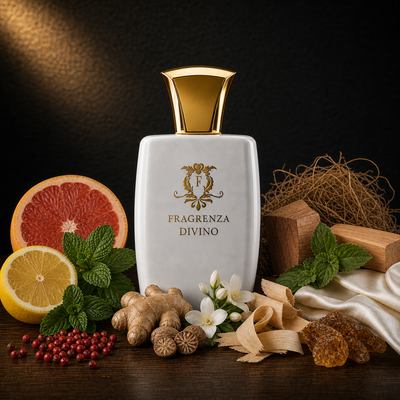
Divino (6/10)
Fragrenza's Divino — a close match to Bleu de Chanel — shares Burberry Touch's clean-woody masculine architecture at a higher intensity. Divino brings more cedar, more incense, and a deeper overall structure compared to Touch's lighter violet-leaf-nutmeg construction, but both occupy the same fundamental DNA family of restrained, woody-aromatic masculines. Divino is the more projection-oriented choice; Touch rewards proximity. For those who love Touch but want more longevity and presence, Divino is the natural step up.
- Top Notes: Grapefruit, Mint, Pink Pepper, Aldehydes
- Heart Notes: Ginger, Nutmeg, Iso E Super, Jasmine
- Base Notes: Cedar, Vetiver, Incense, Sandalwood, Labdanum
- Similarity: 6/10
- Longevity: 8–12 hours
- Sillage: Moderate to strong
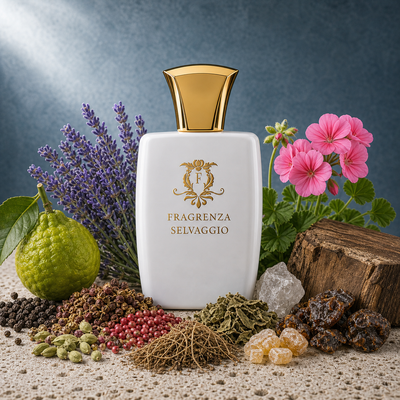
Selvaggio (5/10)
Fragrenza's Selvaggio — a close match to Dior Sauvage — shares Burberry Touch's masculine DNA family but amplifies everything considerably: more projection, more ambroxide, more sillage. Touch is quiet and elegant; Selvaggio announces itself. The connection is in the broad woody-aromatic masculine category that both inhabit, and in the lavender-pepper spice that both use, though Selvaggio leans on it far harder. For Touch fans who want to occasionally wear something with more presence and impact, Selvaggio is the natural escalation.
- Top Notes: Calabrian Bergamot, Black Pepper, Pink Pepper, Rosemary
- Heart Notes: Lavender, Sichuan Pepper, Geranium, Patchouli
- Base Notes: Ambroxan, Cedar, Labdanum, Vetiver
- Similarity: 5/10
- Longevity: 10–14 hours
- Sillage: Strong
Guerlain Vetiver – A Tangential Choice (4/10)
Guerlain Vetiver is a tangential choice for Burberry Touch fans — a beautifully constructed classic masculine from 1961 that shares Touch's DNA of understated quality and restrained elegance. Vetiver is earthier, drier, and more classically structured, with its tobacco-vetiver-citrus construction feeling a generation older than Touch's modern violet-leaf-spice approach. The shared quality is restraint: both fragrances are made for men who believe that quality doesn't need to announce itself.
- Top Notes: Lemon, Bergamot, Mandarin Orange, Petitgrain
- Heart Notes: Vetiver, Tobacco, Geranium, Nutmeg
- Base Notes: Vetiver, Tobacco, Oakmoss, Sandalwood
- Similarity: 4/10
- Longevity: 6–8 hours
- Sillage: Moderate
Our Pick
Bleu de Chanel EdT is the closest modern match to Burberry Touch for Men — both are clean, woody-aromatic, quietly confident masculines that reward being worn rather than being smelled from across the room. Divino captures the same DNA with more presence and longevity, making it the ideal Fragrenza companion for days when you want Touch's sensibility with stronger performance.
The Specific Architecture of Burberry Touch for Men
Understanding what makes Burberry Touch for Men distinctive helps with evaluating alternatives meaningfully. Every recognizable composition has a specific compositional architecture — the way materials are layered, the proportions used, the relationships between phases. Dupes that genuinely capture this architecture differ from dupes that merely approximate the general aromatic category.
For Burberry Touch for Men specifically, the architectural identity involves both the headline notes (what most reviewers describe) and the supporting materials (the less-visible elements that give the composition its specific character). A dupe that nails the headline notes but uses generic supporting materials produces something that smells similar in the opening but loses character over wear time. A dupe that captures both layers produces a more complete match.
The Material Quality Dimension
Beyond architectural match, material quality affects how the composition develops on skin. Premium luxury-niche compositions use higher-grade base materials — better synthetic musks, more complex amber accords, more refined woody supports. These materials cost more to produce but contribute meaningfully to the late-phase character.
Serious dupes typically invest in base material quality at meaningful concentration. Budget dupes use generic base materials that all smell similar to each other regardless of opening character. The distinction shows in 4-6 hour wear evaluation — serious dupes still feel like the original's territory; budget dupes feel like generic perfume regardless of which original they're nominally inspired by.
The 2026 Material Market for Burberry Touch for Men
The dupe market for Burberry Touch for Men has shifted alongside broader perfumery trends. Several recent material developments affect how alternatives perform:
Modern synthetic musk technology has matured substantially over the past decade. Compositions that once required animal-derived musks for specific character can now achieve the same effect with synthetic alternatives that are vegan-compatible and consistently available. This has made high-quality dupes more accessible because supplier costs for premium base materials have decreased.
Climate change pressures on natural material sourcing (especially for florals from specific regions) have created supply variability that affects luxury original compositions. Some luxury references have been reformulated to address material availability issues, meaning some current luxury bottles smell different from the same composition produced 5-10 years ago. Dupe compositions that target the current luxury reference may differ from dupes that target older formulations.
IFRA (International Fragrance Association) restrictions on allergenic materials continue tightening. This affects both original luxury compositions and dupes, generally pushing both toward more synthetic-heavy formulations. The net effect is that the quality gap between luxury and serious-dupe compositions has narrowed somewhat — both categories now operate under similar material constraints.
Building a Collection That Includes Burberry Touch for Men
For wearers wanting to include Burberry Touch for Men-aesthetic compositions in a serious collection, the practical approach involves several decisions:
Full bottle of the original vs serious dupe: depends on wear frequency and budget priorities. Wearers who'll use the composition daily justify the original investment more easily; wearers who'll use it occasionally favor the dupe approach.
Multiple variants vs single signature: some categories support meaningful collection-building (oriental, gourmand, woody) where multiple variants on a theme provide useful variety. Other categories work better as single signatures.
Sample exploration before commitment: 5ml samples at $9.99 typical pricing make exploration affordable. Wearing 3-5 samples across multiple days before committing to a full bottle produces better collection outcomes than impulse purchasing.
The Practical Wear Strategy
Compositions in the Burberry Touch for Men category have specific wear-context fits. Understanding when to wear specific compositions improves the actual experience — wearing the right composition for the context is more important than wearing the most expensive composition in your collection regardless of context.
For our broader coverage of how individual compositions perform across multiple contexts and wear scenarios, browse our six-week reviewer test catalog. For broader category navigation and inspiration-by mapping, see our complete dupe index.
Burberry Touch for Men and the Late-1990s/Early-2000s Masculine Tradition
Burberry Touch for Men launched in 2000 and represents a specific moment in late-twentieth-century commercial masculine perfumery development that deserves additional examination. The late 1990s and early 2000s produced a substantial wave of commercial masculine fragrance launches that targeted the broader fresh-clean-elegant aesthetic territory between the heavier oriental-aromatic masculine tradition that dominated the 1980s and the more aggressively projecting fresh-aquatic masculine category that emerged later in the 2000s. Touch for Men sits within this transitional moment, with the broader compositional approach combining classical masculine architectural sophistication with the broader cleaner-fresher commercial trend that subsequent contemporary masculine perfumery continued to develop.
What distinguishes Touch for Men within this transitional moment is the specific artemisia-violet-leaf-nutmeg-cedar-tonka architecture that produces a recognisably restrained-elegant emotional register few competing commercial masculine alternatives match as completely. The composition has aged remarkably well across more than two decades of continuous availability, with the broader compositional approach reading as recognisably contemporary despite the substantial broader masculine perfumery development across the intervening period.
The Burberry Fragrance Catalogue and the Touch Family
Burberry as a fragrance brand has built a substantial commercial catalogue across multiple decades, with the broader brand identity emphasising British heritage combined with contemporary commercial accessibility. The Burberry fragrance catalogue includes various Touch line entries (Touch for Men, Touch for Women, and various flankers across the broader Touch family), various My Burberry line entries, the broader Brit line, the more recent Hero line, and various other Burberry fragrance entries that collectively define the contemporary Burberry commercial position.
The Touch for Men specifically participates in the broader Burberry masculine catalogue position that targets accessible-luxury masculine wear contexts. The composition's continued availability across more than two decades of production reflects the genuine architectural quality of the original 2000 launch combined with the sustained commercial appeal that the broader composition has built across multiple consumer demographics. For wearers building wardrobes with Burberry awareness, Touch for Men represents one of the most consistently architecturally accomplished entries within the broader contemporary Burberry catalogue.
The Artemisia-Violet-Leaf Opening and Its Distinctive Position
The artemisia and violet leaf opening that anchors Touch for Men deserves examination because the specific combination is relatively unusual within contemporary commercial masculine perfumery. Artemisia (commonly known as wormwood, though Touch for Men uses non-toxic culinary variants rather than the absinthe-grade variants discussed in the L'Heure Verte article in this series) provides a specific green-aromatic-bitter character that distinguishes the broader composition from purely citrus-anchored commercial masculine alternatives. Violet leaf provides the green-aromatic-watery character that has been discussed extensively in the Marc Jacobs Daisy article in this series.
The combination produces an opening that reads as recognisably green-aromatic-elegant rather than as conventional fresh-citrus or fresh-aquatic. The broader commercial masculine market has continued to develop the green-aromatic-masculine territory across the past two decades, with subsequent compositions like various Bottega Veneta masculine entries, certain Diptyque masculine compositions, and various Maison Margiela Replica masculine entries occupying adjacent positions within the broader green-aromatic-masculine category that Touch for Men helped establish at the commercial mainstream tier.
The Nutmeg-Pepper-Cedar-Tonka Architectural Body
The nutmeg and white pepper heart that supports Touch for Men's opening provides the spicy-warm architectural body that bridges the green-aromatic opening to the woody-warm base. The nutmeg treatment leans toward the warm-aromatic variant rather than the more aggressive spicy variant, providing supporting warmth without competing with the broader cedar-tonka base for aromatic prominence. The white pepper supporting element adds the architectural depth that distinguishes Touch for Men's heart from more conventional masculine alternatives that use simpler aromatic supporting elements.
The cedar and tonka bean base provides the architectural foundation that gives Touch for Men its sustained-wear character. The cedar treatment leans toward the dry-architectural variant that anchors most contemporary masculine compositions, with the cedar character providing the woody-architectural body without bringing heavier woody-warm character that would compromise the broader restrained-elegant aesthetic register. The tonka bean supporting element provides the warm-coumarin character that bridges the cedar architecture to the broader skin-close projection that the composition's sustained-wear character requires.
Wear Context: When Touch for Men Functions at Its Best
Burberry Touch for Men is a year-round, daytime-to-evening, casual-to-formal masculine composition that performs reliably across a broader range of wear contexts than many contemporary commercial masculine alternatives permit. The moderate-projection restrained-elegant character that defines the composition produces wear-context versatility that wearers building wardrobes around the broader fresh-aromatic-woody masculine aesthetic appreciate. The composition handles temperate weather (roughly five to twenty-five degrees Celsius) particularly well, with the architectural restraint avoiding the heat-amplification problems that affect heavier masculine alternatives.
The contexts where Touch for Men is less optimal are also worth knowing. Formal evening occasions that warrant substantial trophy-fragrance presence find the moderate restrained-elegant character slightly under-substantial relative to the social register that heavier alternatives can deliver. Very casual settings make the composition feel overdressed, with the architectural-elegant character reading as intentional fragrance choice that is wrong for contexts calling for either fresh-clean or fragrance-free presentation. Signature-fragrance contexts sometimes find Touch for Men too widely available to function as memorable personal-brand fragrance, though the composition's continued cultural recognition across more than two decades provides substantial established-classic positioning that some wearers specifically value.
How Inspired-By Alternatives Sit Around Touch for Men
Touch for Men itself operates at accessible-commercial pricing that makes daily wear sustainable for most consumers without requiring inspired-by alternatives specifically for economic reasons. The role of inspired-by alternatives in the Touch for Men context is to extend the broader fresh-aromatic-woody masculine aesthetic into adjacent territories rather than to provide dramatic economic access to the Touch for Men aesthetic itself.
For wearers building wardrobes around the broader fresh-aromatic-woody masculine aesthetic, the practical approach is typically to acquire Touch for Men directly from standard fragrance retail or one of the adjacent commercial masculine alternatives, with the broader Fragrenza catalogue providing useful coverage of more architecturally-ambitious compositions in adjacent masculine territories at the upper-designer adjacent tier. The combination of accessible-commercial Touch for Men with broader Fragrenza coverage provides comprehensive masculine wardrobe utility at sustainable economic terms.
The Broader Aged-Classic Commercial Masculine Wardrobe
For wearers building wardrobes that include aged-classic commercial masculine compositions like Touch for Men, the broader category includes substantial diversity across multiple specific positions. Cool Water (1988, the original aquatic-fresh masculine), Acqua di Gio (1996, the broader Mediterranean-fresh standard), Le Male (1995, the lavender-vanilla commercial classic), Joop Homme (1989, the substantial-oriental classic), and various other aged-classic commercial masculine compositions collectively define the broader category. Each composition occupies a specific position within the broader aged-classic landscape, and selective acquisition across multiple specific positions produces more interesting wardrobes than redundant accumulation within any single position.
The wardrobe-building principle that applies across the broader aged-classic commercial masculine category is that the specific compositions have built sustained cultural recognition across multiple decades that adds dimensions to the broader wear experience beyond purely aesthetic compositional evaluation. Wearers who specifically value the cultural-historical positioning that aged-classic compositions provide often find that wearing these compositions adds meaningful cultural-aesthetic depth that purely contemporary commercial masculine alternatives typically lack.
Sampling Strategy for Aged-Classic Commercial Masculine Compositions
Aged-classic commercial masculine compositions like Touch for Men are typically easy to sample because the broader commercial distribution makes them readily available through standard fragrance retail. For wearers specifically comparing Touch for Men against adjacent aged-classic commercial alternatives and against the broader contemporary commercial masculine market, side-by-side sampling provides useful comparative information about which specific positions within the broader category best match individual preferences.
The reliable sampling protocol remains the standard one for the broader commercial masculine category. Most wearers who do side-by-side comparison across multiple aged-classic alternatives find that the specific architectural distinctions that define individual compositions become apparent through direct comparison in ways that single-composition evaluation does not reveal as clearly. The broader commercial accessibility of the aged-classic category makes intentional sampling exploration economically practical at multiple budget tiers.
Final Notes on Touch for Men and the Aged-Classic Masculine Investment
Burberry Touch for Men is one of the most architecturally accomplished aged-classic commercial masculine compositions, with the specific green-aromatic-woody architectural register that has aged remarkably well across more than two decades of continuous production. The composition deserves serious consideration for wearers exploring the broader fresh-aromatic-woody masculine category, particularly wearers who value architectural restraint over substantial-projection trophy-fragrance positioning.
For wearers exploring the broader aged-classic commercial masculine category, sampling Touch for Men alongside adjacent compositions and against the broader contemporary commercial masculine market provides useful comparative information across the broader category. The combination of selective Touch for Men acquisition with adjacent commercial masculine alternatives and broader Fragrenza coverage of related territories produces wardrobes that combine sophisticated aesthetic capability with sustainable daily-wear economics. The aged-classic commercial masculine category continues to provide some of the more architecturally accomplished contemporary commercial perfumery, and the broader category rewards careful exploration across multiple specific compositions and aesthetic positions.