

10 Perfumes Similar to Ascot Moon by Xerjoff
Ascot Moon opens with the warmth of cardamom and soft spice before settling into a rich amber-tonka drydown that's neither sweet nor heavy, just deeply, comfortably warm
By Julia MorettiFragrenza makes several of the alternatives featured in our guides — here’s how we test.
8 min read
Ascot Moon opens with the warmth of cardamom and soft spice before settling into a rich amber-tonka drydown that's neither sweet nor heavy — just deeply, comfortably warm. The Tonkin musk in the base adds a skin-close animalic quality that feels both vintage and utterly contemporary. This is an evening masculine Oriental at its most assured: no pyrotechnics, just exceptional materials arranged with confidence.
Part of our Xerjoff Dupes guide.
What Makes Ascot Moon Special
What distinguishes Ascot Moon from the crowded amber-Oriental space is its balance — it's warm without being cloying, spiced without being aggressive, and musky without being synthetic. The Tonkin musk (a rare, delicately animalic material) gives the base an almost alive quality that cheaper musks simply can't replicate. The cardamom opening has a cool edge that contrasts pleasantly with the warmth building below it, and the amber-tonka drydown has genuine sophistication: creamy, warm, and long-lasting without the artificial sweetness that afflicts lesser versions of this accord. Ascot Moon is the fragrance you reach for when you want to smell expensive without drawing attention to why.
1. Parfums de Marly Herod — 9/10 Similarity
Herod is the closest mainstream referent for Ascot Moon's amber-spice-tobacco territory — the cinnamon-vanilla-pipe tobacco accord wrapped in amber and cardamom reads as a more overtly smoky take on the same DNA. Both fragrances prize warmth and longevity above all else and both perform best in the cold months. Herod pushes harder on the tobacco and cinnamon, making it spicier and smokier where Ascot Moon is cleaner and more musk-focused. The PdM price is substantial and the sillage can be overwhelming indoors.
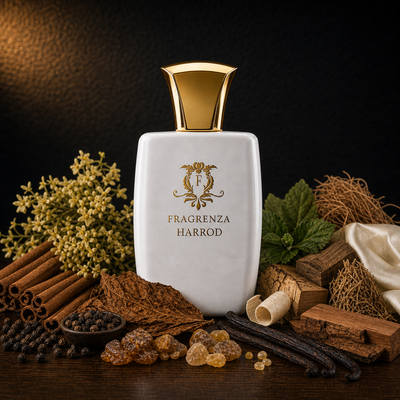
2. Fragrenza Harrod
Harrod delivers the spiced tobacco-vanilla-amber richness of Herod with genuine conviction — the cinnamon-spice heart is well-rendered and the amber base has the warmth and depth that Ascot Moon fans will recognise immediately. Excellent projection and cold-weather longevity.
3. Tom Ford Tobacco Vanille — 8/10 Similarity
Tobacco Vanille shares Ascot Moon's tonka-vanilla-amber architecture and the same cold-weather comfort-scent appeal. The Tom Ford is denser and more overtly sweet — vanilla pushed to the foreground rather than woven into the background like Ascot Moon's more restrained tonka. Both fragrances excel at that enveloping, warm-blanket quality that makes orientals so compelling in autumn and winter. Tobacco Vanille lacks Ascot Moon's Tonkin musk sophistication and feels heavier and less precise in its execution.
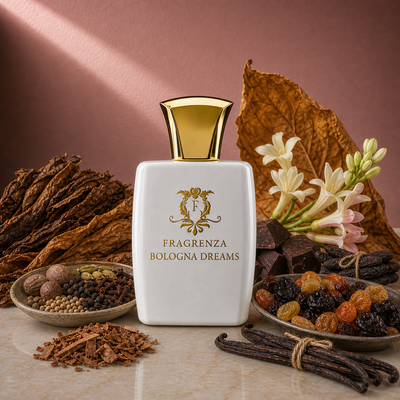
4. Fragrenza Bologna Dreams
Bologna Dreams captures the tobacco-vanilla-tonka richness with the same crowd-pleasing warmth and impressive longevity. An excellent cold-weather companion for Ascot Moon fans who want the amber-vanilla comfort signature at an accessible price point.
5. Viktor & Rolf Spicebomb — 7/10 Similarity
Spicebomb shares the cardamom-spice opening that launches Ascot Moon and adds a tobacco-leather-amber base that parallels Ascot Moon's warmer drydown. The Viktor & Rolf is drier and more leather-forward, with less of the tonka creaminess that characterises Ascot Moon's base. Spicebomb's performance is excellent and its projection bold; the spice-tobacco axis creates genuine kinship with Ascot Moon's character even if the execution diverges. At Spicebomb's more accessible price point it overperforms as a casual alternative.
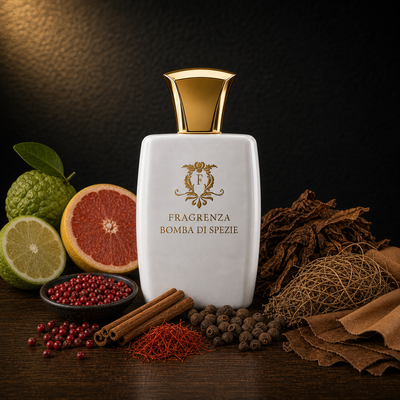
6. Fragrenza Bomba Di Spezie
Bomba Di Spezie brings the cardamom-spice-tobacco-amber Spicebomb signature with bold projection and warm longevity that suits every cold-weather occasion. The spice construction is well-done and the amber base has a depth that pairs naturally with Ascot Moon fans' palate.
7. Mancera Red Tobacco — 6/10 Similarity
Red Tobacco shares the amber-spice foundation with Ascot Moon and adds saffron and rose for additional warmth and complexity. The Mancera is more robustly oriental — denser, darker, and more overtly smoky than the refined restraint of Ascot Moon's Tonkin musk drydown. Fans of rich amber-spice perfumery will find familiar territory here even as the Mancera's directness contrasts with Ascot Moon's sophisticated understatement. Strong performance at a competitive niche price point.
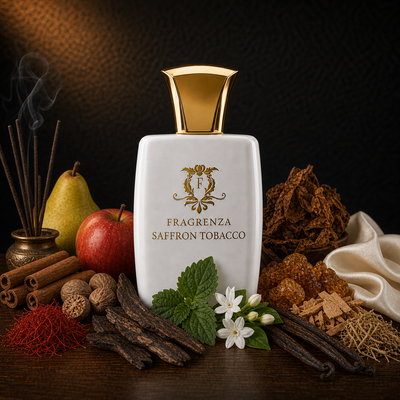
8. Fragrenza Saffron Tobacco
Saffron Tobacco delivers the amber-saffron-tobacco warmth with excellent longevity and a depth that naturally complements the oriental richness of Ascot Moon's base character. A versatile cold-weather rotation piece for anyone exploring amber orientals.
9. Yves Saint Laurent La Nuit de L'Homme — 5/10 Similarity
La Nuit de L'Homme shares the cardamom heart and the warm, masculine, evening-wear ambition with Ascot Moon. The YSL is drier and more aromatic — cedar, vetiver, and lavender take it toward a sophisticated fougère rather than the amber-musk Oriental that defines Ascot Moon's base. The cardamom is the clearest point of kinship: both fragrances use it as the opening salvo before diverging in their drydowns. La Nuit is more versatile and accessible as a daily driver; Ascot Moon is deeper and more rewarding for dedicated evening wear.
10. Dior Fahrenheit — 4/10 Similarity
Fahrenheit arrives here on its atmospheric kinship with Ascot Moon rather than specific note matches — both fragrances share the quality of smelling like no other fragrance in the world, and both appeal to lovers who tire of the conventional. Fahrenheit's violet-petrol-leather construction is a universe away from Ascot Moon's amber-tonka-cardamom warmth, but the sense of occasion, the evening masculinity, and the polarising individuality are common threads. A recommendation for Ascot Moon fans curious about other unconventional masculines rather than DNA-adjacent alternatives.
Why Dupes Can Match Ascot Moon by Xerjoff
The technical answer for why dupe compositions can effectively match luxury references like Ascot Moon by Xerjoff lies in modern perfumery's material science. The aromatic identity of any composition comes from specific molecules — not from the brand attached to the bottle. A composition is essentially a chemical formula expressed in aromatic terms. Two formulas with similar chemical profiles produce similar aromatic experiences regardless of which brand produced them.
Luxury perfumery doesn't have access to molecules that aren't available to other manufacturers. The material supply chain for perfumery is shared across all production tiers — the same suppliers selling premium materials to luxury houses sell the same materials to dupe houses. The differences between luxury and dupe production involve which materials are used, at what concentrations, and with what supporting techniques — not access to fundamentally different aromatic territory.
What Luxury Production Pays For
The price difference between Ascot Moon by Xerjoff retail and a serious dupe represents several specific cost factors:
Brand premium: a substantial portion of luxury perfume pricing is brand-experience premium — the marketing, packaging, retail-environment, and brand-identity investments that luxury houses make. This component delivers identity value to customers but doesn't affect aromatic outcome.
Material premium: luxury perfumery uses higher-grade naturals at meaningful concentrations. The Grasse rose absolute in a $300 Chanel composition genuinely costs more than the synthetic rose construction in a $30 dupe. Whether this material difference is perceivable in wear depends on the specific composition and wearer.
Production complexity: luxury compositions often use 50-150 individual materials in carefully tuned proportions. Dupes typically use 20-50 materials targeting the architectural identity without matching every nuance.
Maturation time: luxury compositions typically mature longer before bottling, producing smoother integration. Dupes often mature for shorter periods, accepting slight roughness as a cost trade-off.
Quality control rigor: luxury production includes more extensive quality control infrastructure. Dupe production accepts more batch-to-batch variation in exchange for lower costs.
For wearers, the practical question is which of these factors matter for your specific use case. Brand premium matters if you value the identity signaling. Material premium matters if you can demonstrate perceiving the difference in wear evaluation. Production complexity and maturation matter for connoisseurship-level appreciation but rarely for daily wear.
The Honest Quality Gap
Serious dupes can achieve 80-95% architectural match with their inspiration originals — meaning a wearer who alternates between original and dupe across multiple wears would identify them as the same composition most of the time, with some 10-20% of wears showing detectable differences.
The gap is most noticeable in two areas: ultra-late-phase character (after 8+ hours of wear, where premium luxury bases sometimes show more dimensional character than dupe bases) and ultra-low-concentration nuance (where premium luxury references sometimes include rare materials at tiny concentrations that affect the composition's depth without being prominent).
For wearers prioritizing daily-use practical wear, the 80-95% architectural match that serious dupes deliver is functionally complete. For wearers prioritizing connoisseurship-level appreciation across hundreds of careful wear evaluations, the remaining gap may matter.
The Cost-Benefit Reality
The practical cost-benefit analysis for Ascot Moon by Xerjoff-aesthetic compositions favors the dupe approach for most wearers:
A wearer committed to Ascot Moon by Xerjoff-aesthetic with $300 budget for fragrance can buy: one full bottle of the original (60-100ml), worn occasionally to preserve the bottle. Or: 4-6 serious dupes (60ml each) covering multiple variations of the aesthetic, with full bottles wearable freely without preservation concerns.
The dupe approach typically produces more total wear value because customers can use the compositions freely rather than preserving expensive bottles. The aesthetic outcome is largely equivalent for daily wear contexts; the lifestyle outcome (relaxed daily wear vs careful occasion-only wear) favors the dupe approach for most wearer use cases.
The Ethics of Dupe Perfumery
Dupe perfumery occupies a complex ethical position that's worth understanding. Dupe houses don't violate trademark law (compositions can't be trademark-protected; only brand names can). They don't engage in counterfeit production (no false brand labeling). They produce independently-developed compositions that target similar aromatic territory to known references.
The luxury perfumery industry sometimes characterizes the dupe category negatively, but the practice is fundamentally legitimate — independent perfumers have always referenced existing compositions when developing new work. The transparency about inspiration sources is what distinguishes ethical dupe perfumery from counterfeit production.
Internal Cross-References
For broader coverage of the dupe-fragrance category, see our What is Fragrenza page, our complete dupe index, and our six-week reviewer tests that document specific compositions across multiple wear contexts.