

10 Perfumes Similar to Memo Paris Sherwood: Earthy Woody Scents
Memo Paris Sherwood opens with the quiet drama of a forest at dusk: juniper berry and pomelo cast a green, resinous light over a warm cardamom and nutmeg heart, while rosewood…
By Julia MorettiFragrenza makes several of the alternatives featured in our guides — here’s how we test.
8 min read
Memo Paris Sherwood opens with the quiet drama of a forest at dusk: juniper berry and pomelo cast a green, resinous light over a warm cardamom and nutmeg heart, while rosewood and saffron add depth and a hint of spiced luxury. There is nothing rushed about Sherwood — it unfolds slowly, each element earning its place as the composition develops from sharp and herbal to warm and earthy. This is a fragrance built for contemplation: complex enough to reward attention, and confident enough to wear without explanation.
What Makes Sherwood Special
Memo Paris has a gift for fragrance as landscape, and Sherwood is one of their most successful evocations. The juniper-and-pomelo combination feels genuinely forest-like rather than merely woody, and the cardamom-and-nutmeg heart gives the composition an aromatic warmth that prevents it from tipping into pure forest abstraction. The saffron thread running through the base adds an unexpected luxury note that differentiates Sherwood from simpler green-woody compositions. Its limitation is that this level of nuance doesn't always project — Sherwood rewards those close enough to smell it properly, which isn't always everyone in the room.
1. Amouage Epic Man
Epic Man shares Sherwood's most specific DNA: pink pepper, cardamom, and nutmeg in the opening feed into a myrrh-and-geranium heart before landing on an oud-and-cedarwood base. The aromatic-spice architecture is closely related to Sherwood's construction, and both fragrances have the same quality of revealing themselves slowly over hours of wear. Epic Man is denser, more assertive, and more explicitly oriental; Sherwood is lighter and more evocative of landscape. But the shared vocabulary of warm spices over a woody base is immediately recognisable.
Amouage pricing and Epic Man's considerable intensity make it a significant commitment, and its strong projection requires careful calibration for office or close-quarter environments.
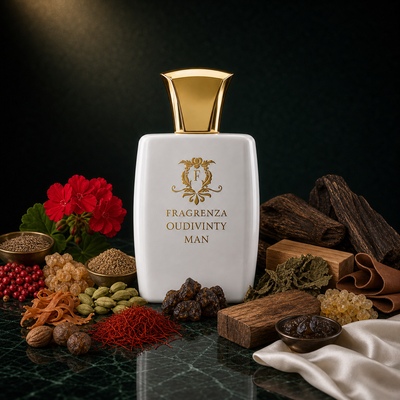
2. Fragrenza Alternative: Oudivinty Man
Oudivinty Man captures Amouage Epic Man's warm, spiced-oriental architecture with impressive depth and longevity. The cardamom-and-spice opening is well-rendered, the oud base provides the same earthy richness as the Amouage original, and the overall composition fits Sherwood's forest-spice brief with satisfying precision.
3. Tom Ford Oud Wood
Oud Wood connects with Sherwood through the rosewood and cardamom notes — both of which appear prominently in each composition, providing a direct structural link. Where Sherwood uses these notes to evoke a northern forest atmosphere, Oud Wood uses them as the framing for its oud-and-sandalwood oriental. The result is a related but distinctly different fragrance: Oud Wood is smoother, more linearly polished; Sherwood is more textured and atmospheric. Both are studies in the intersection of spice and wood.
Oud Wood's measured projection can occasionally feel understated for its price point, and its very familiar character in the oud category has somewhat diminished its distinctiveness over time.

4. Fragrenza Alternative: Woodoud Intense
Woodoud Intense amplifies Oud Wood's rosewood-and-cardamom foundation with stronger projection and more assertive depth, giving it a presence closer to Sherwood's atmospheric intensity. The spice notes are well-integrated and the oud base provides excellent staying power at an accessible price.
5. Memo Paris Irish Leather
Irish Leather is Sherwood's closest stablemate in the Memo Paris house — both fragrances are built around the evocation of wild, untamed landscapes, and both use juniper berry as a central green-resinous note. Irish Leather's leather-and-mate accord takes the composition in a more rugged, outdoor direction where Sherwood goes warmer and spicier, but the shared house aesthetic and the direct juniper connection make them natural companions. For wearers who love Sherwood's forest character, Irish Leather is the wilder, more open-air version of the same sensibility.
Memo Paris pricing positions both fragrances as aspirational purchases for regular wear, and Irish Leather's leather note can be challenging for wearers who prefer purely aromatic compositions.
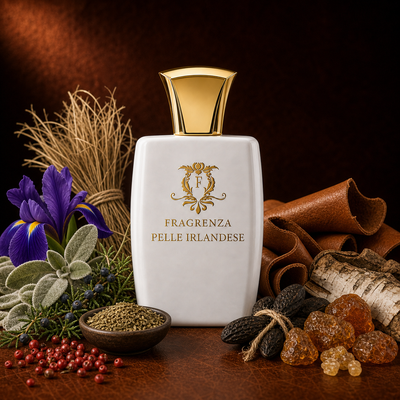
6. Fragrenza Alternative: Pelle Irlandese
Pelle Irlandese captures Irish Leather's wild, green-leather landscape character with the same juniper-forward openness and a faithfully rendered leather accord. It's an excellent companion piece to Sherwood for wearers who want both the warm-spiced and the green-wild expressions of Memo Paris' nature-inspired aesthetic.
7. Amouage Bracken Man
Bracken Man shares Sherwood's commitment to evoking green, woodland landscapes in fragrance form. Cypress, lavender, and nutmeg over a patchouli-and-sandalwood base creates a composition that is fresher than Sherwood but inhabits the same general territory of aromatic forest masculinity. The nutmeg connection is direct — both fragrances use it to give their green compositions a warm, spiced quality that anchors them in autumn rather than spring. Bracken Man is more overtly citrus-led; Sherwood is richer and more resinous.
Amouage pricing makes Bracken Man a dedicated purchase, and its somewhat brisk, fresh character can feel insufficient for cold-weather occasions where Sherwood's richer warmth is better suited.
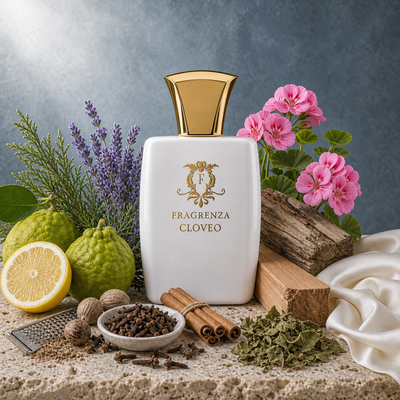
8. Fragrenza Alternative: Cloveo
Cloveo translates Bracken Man's green, aromatic woodland character into an accessible daily format. The nutmeg-and-herb opening is crisp and well-executed, the woody base provides the same grounded, earthy quality, and the overall composition fits the forest-masculine brief that connects Bracken Man to Sherwood's olfactive universe.
9. Byredo Black Saffron
Black Saffron earns 5/10 by sharing three of Sherwood's most specific notes: juniper berry, saffron, and pomelo appear in both compositions, creating a direct structural link that makes the comparison unusually precise. Byredo's execution pairs these notes with leather and cashmere woods rather than Sherwood's cardamom and rosewood, resulting in a darker, more urban interpretation of the same green-spiced saffron brief. Both fragrances are sophisticated, understated, and reveal themselves slowly — but they arrive at different emotional destinations.
10. Serge Lutens Chêne
Chêne scores 4/10 as a tangential recommendation for Sherwood's deep, wooded atmosphere. Serge Lutens' tribute to oak — rum, oak, cedar, beeswax, and spices — shares Sherwood's fundamental ambition of creating a fragrance that smells genuinely, unmistakably of forest. The approaches are different: Chêne goes to the forest floor, dark and slightly damp; Sherwood stands at the treeline, spiced and elevated. But for wearers who love Sherwood's woodland soul and want to explore a rawer, more resinous interpretation of the same landscape, Chêne is a compelling companion.
Why Dupes Can Match Memo Paris Sherwood
The technical answer for why dupe compositions can effectively match luxury references like Memo Paris Sherwood lies in modern perfumery's material science. The aromatic identity of any composition comes from specific molecules — not from the brand attached to the bottle. A composition is essentially a chemical formula expressed in aromatic terms. Two formulas with similar chemical profiles produce similar aromatic experiences regardless of which brand produced them.
Luxury perfumery doesn't have access to molecules that aren't available to other manufacturers. The material supply chain for perfumery is shared across all production tiers — the same suppliers selling premium materials to luxury houses sell the same materials to dupe houses. The differences between luxury and dupe production involve which materials are used, at what concentrations, and with what supporting techniques — not access to fundamentally different aromatic territory.
What Luxury Production Pays For
The price difference between Memo Paris Sherwood retail and a serious dupe represents several specific cost factors:
Brand premium: a substantial portion of luxury perfume pricing is brand-experience premium — the marketing, packaging, retail-environment, and brand-identity investments that luxury houses make. This component delivers identity value to customers but doesn't affect aromatic outcome.
Material premium: luxury perfumery uses higher-grade naturals at meaningful concentrations. The Grasse rose absolute in a $300 Chanel composition genuinely costs more than the synthetic rose construction in a $30 dupe. Whether this material difference is perceivable in wear depends on the specific composition and wearer.
Production complexity: luxury compositions often use 50-150 individual materials in carefully tuned proportions. Dupes typically use 20-50 materials targeting the architectural identity without matching every nuance.
Maturation time: luxury compositions typically mature longer before bottling, producing smoother integration. Dupes often mature for shorter periods, accepting slight roughness as a cost trade-off.
Quality control rigor: luxury production includes more extensive quality control infrastructure. Dupe production accepts more batch-to-batch variation in exchange for lower costs.
For wearers, the practical question is which of these factors matter for your specific use case. Brand premium matters if you value the identity signaling. Material premium matters if you can demonstrate perceiving the difference in wear evaluation. Production complexity and maturation matter for connoisseurship-level appreciation but rarely for daily wear.
The Honest Quality Gap
Serious dupes can achieve 80-95% architectural match with their inspiration originals — meaning a wearer who alternates between original and dupe across multiple wears would identify them as the same composition most of the time, with some 10-20% of wears showing detectable differences.
The gap is most noticeable in two areas: ultra-late-phase character (after 8+ hours of wear, where premium luxury bases sometimes show more dimensional character than dupe bases) and ultra-low-concentration nuance (where premium luxury references sometimes include rare materials at tiny concentrations that affect the composition's depth without being prominent).
For wearers prioritizing daily-use practical wear, the 80-95% architectural match that serious dupes deliver is functionally complete. For wearers prioritizing connoisseurship-level appreciation across hundreds of careful wear evaluations, the remaining gap may matter.
The Cost-Benefit Reality
The practical cost-benefit analysis for Memo Paris Sherwood-aesthetic compositions favors the dupe approach for most wearers:
A wearer committed to Memo Paris Sherwood-aesthetic with $300 budget for fragrance can buy: one full bottle of the original (60-100ml), worn occasionally to preserve the bottle. Or: 4-6 serious dupes (60ml each) covering multiple variations of the aesthetic, with full bottles wearable freely without preservation concerns.
The dupe approach typically produces more total wear value because customers can use the compositions freely rather than preserving expensive bottles. The aesthetic outcome is largely equivalent for daily wear contexts; the lifestyle outcome (relaxed daily wear vs careful occasion-only wear) favors the dupe approach for most wearer use cases.
The Ethics of Dupe Perfumery
Dupe perfumery occupies a complex ethical position that's worth understanding. Dupe houses don't violate trademark law (compositions can't be trademark-protected; only brand names can). They don't engage in counterfeit production (no false brand labeling). They produce independently-developed compositions that target similar aromatic territory to known references.
The luxury perfumery industry sometimes characterizes the dupe category negatively, but the practice is fundamentally legitimate — independent perfumers have always referenced existing compositions when developing new work. The transparency about inspiration sources is what distinguishes ethical dupe perfumery from counterfeit production.
Internal Cross-References
For broader coverage of the dupe-fragrance category, see our What is Fragrenza page, our complete dupe index, and our six-week reviewer tests that document specific compositions across multiple wear contexts.