

10 Perfumes Similar to Not Another Cherry by Fine'ry
Not Another Cherry by Fine'ry lives up to its provocative name by treating cherry differently, through davana, an herb with a naturally fruity-cherry quality that reads more…
By Julia MorettiFragrenza makes several of the alternatives featured in our guides — here’s how we test.
8 min read
Not Another Cherry by Fine'ry lives up to its provocative name by treating cherry differently — through davana, an herb with a naturally fruity-cherry quality that reads more complex and diffuse than a simple cherry accord. Lavandin adds a slightly sharp, aromatic edge; orange blossom contributes a white floral sweetness; marshmallow and vanilla close the composition in the softest, most comforting drydown imaginable. The result is cherry filtered through a lens of herbs and flowers rather than cherry as a straight fruit note — approachable, contemporary, and deceptively well-constructed for its price.
What Makes Not Another Cherry Special
The key to Not Another Cherry's success is the davana-and-lavandin combination. Davana produces cherry and apricot-like facets with skin chemistry, making each wearing slightly different and uniquely personal. The lavandin — sharper and more camphoraceous than true lavender — prevents the marshmallow-vanilla base from becoming cloying, keeping the fragrance on the right side of gourmand. Orange blossom bridges the fruity and floral worlds elegantly. For a Fine'ry price point this is genuinely clever fragrance construction that rewards wearing throughout the day.
1. Tom Ford Lost Cherry — 9/10 Similarity
Lost Cherry is the luxury standard for what Not Another Cherry does at the accessible end — a cherry fragrance of genuine complexity and depth, using cherry liqueur, almond, and Turkish rose to create something both more intense and more refined than Fine'ry's approach. Both fragrances share the fruity-floral-warm base structure; Lost Cherry adds boozy richness and almond depth that Not Another Cherry's lighter, aromatic approach doesn't attempt. The primary distinction is intensity and construction quality — and price. At $395 for 50ml, the Tom Ford demands that the occasion justify the investment.
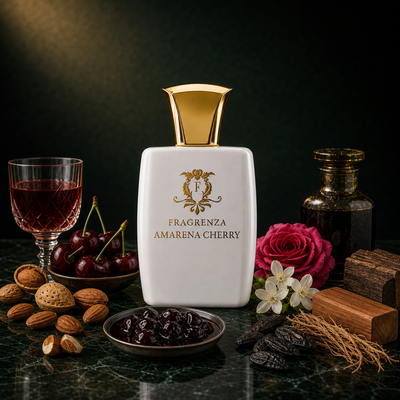
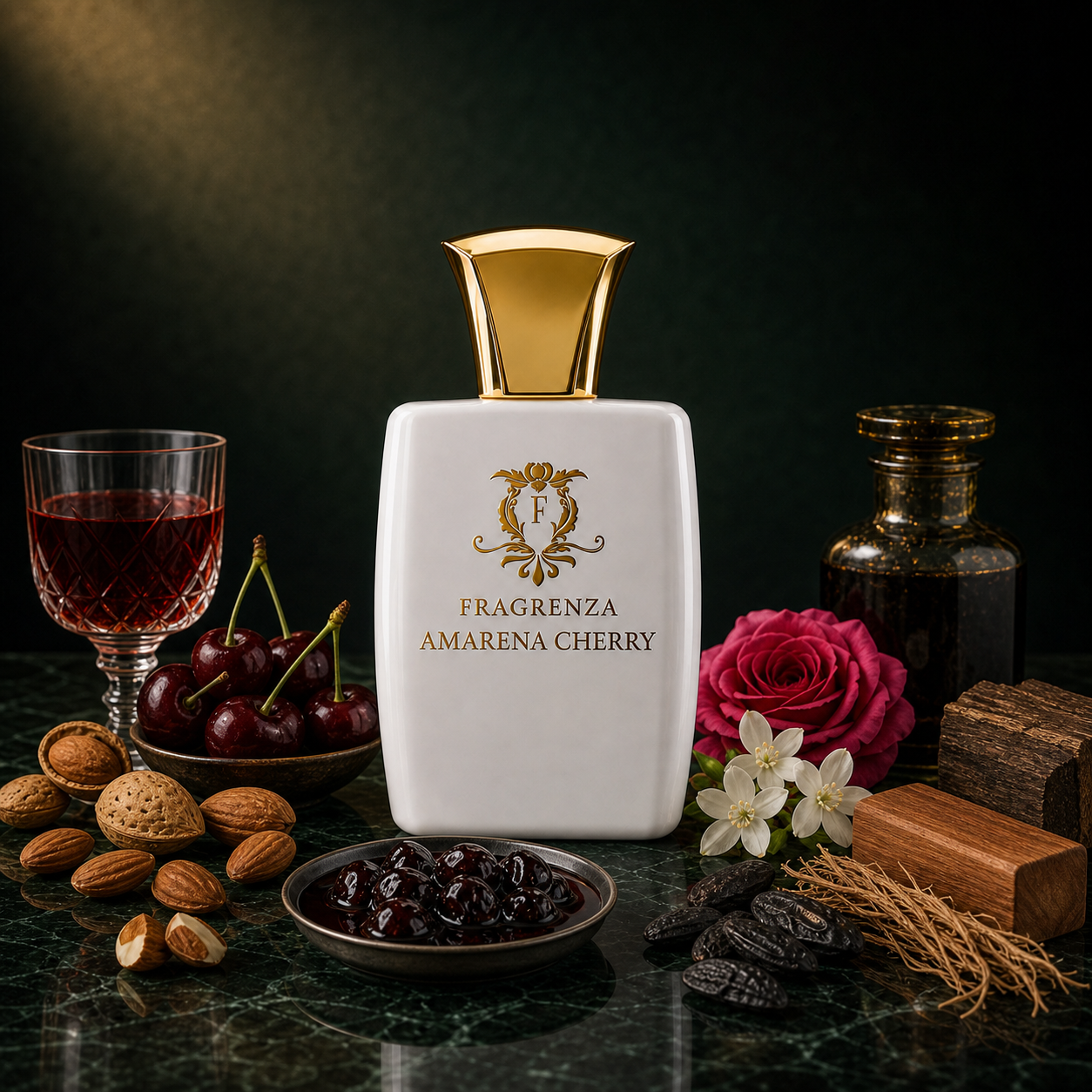
2. Fragrenza Amarena Cherry
Amarena Cherry delivers the Lost Cherry complexity — cherry liqueur richness, almond warmth, vanilla depth — at a price that makes exploring the boozy-cherry end of the spectrum genuinely accessible. For Not Another Cherry fans curious what luxury cherry perfumery tastes like, Amarena Cherry is the most direct path there.
3. Kilian Love, Don't Be Shy — 8/10 Similarity
Love, Don't Be Shy shares Not Another Cherry's marshmallow-and-vanilla soul with exceptional precision. The Kilian's orange blossom and marshmallow accord is one of the most iconic sweet-floral combinations in contemporary niche perfumery, and its overlap with Fine'ry's orange blossom-and-marshmallow base is direct and meaningful. Both fragrances aim at a warmth that stops short of gourmand by keeping florals present in the heart, and both achieve comforting sweetness without becoming sticky or cloying. The Kilian is more expansive and longer-lasting — at a price that reflects the luxury positioning.

4. Fragrenza Fearless Love
Fearless Love captures the orange blossom-marshmallow-vanilla warmth of Love, Don't Be Shy with excellent projection and that same comforting, enveloping sweetness. The most direct everyday companion for Not Another Cherry fans who want the orange blossom-marshmallow axis without the Kilian price.
5. Viktor & Rolf Flowerbomb — 7/10 Similarity
Flowerbomb shares the floral-sweet-jasmine structure with Not Another Cherry's white floral heart, and both fragrances use orange blossom and vanilla to create warmth and intimacy. The Viktor & Rolf is denser and more projection-heavy, adding rose and patchouli that push it in a slightly darker direction than Fine'ry's airy approach. The orange blossom-to-warm-base trajectory is a common thread, and both work in the same occasions and attract the same admirers. Flowerbomb's ubiquity has become a limitation for anyone seeking a genuinely individual signature.
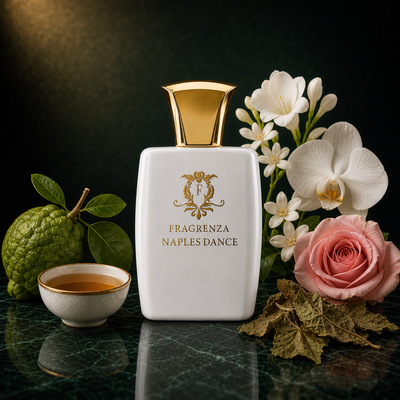
6. Fragrenza Naples Dance
Naples Dance brings the jasmine-tuberose-white floral intensity of Flowerbomb with excellent projection and the same warm, enveloping musk base. An excellent option for Not Another Cherry fans who want more white floral depth in their rotation at an accessible price.
7. Kayali Lovefest Burning Cherry 48 — 6/10 Similarity
Lovefest Burning Cherry 48 shares Not Another Cherry's cherry core and the warm vanilla-tonka base that both fragrances resolve into, but the Kayali takes cherry in a smokier, more adult direction. Saffron and jasmine add a sophisticated richness that Fine'ry's lavandin-and-marshmallow approach doesn't attempt. Both use cherry as their emotional starting point and both resolve into warm, skin-close comfort — the journey between opening and drydown is simply very different in character and occasion-appropriateness.
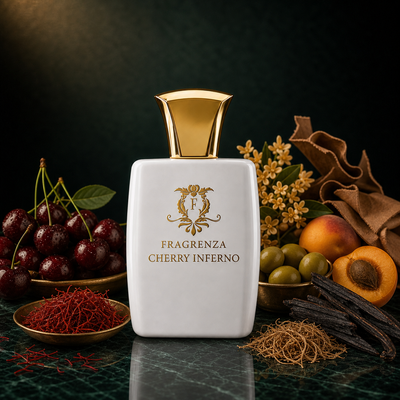
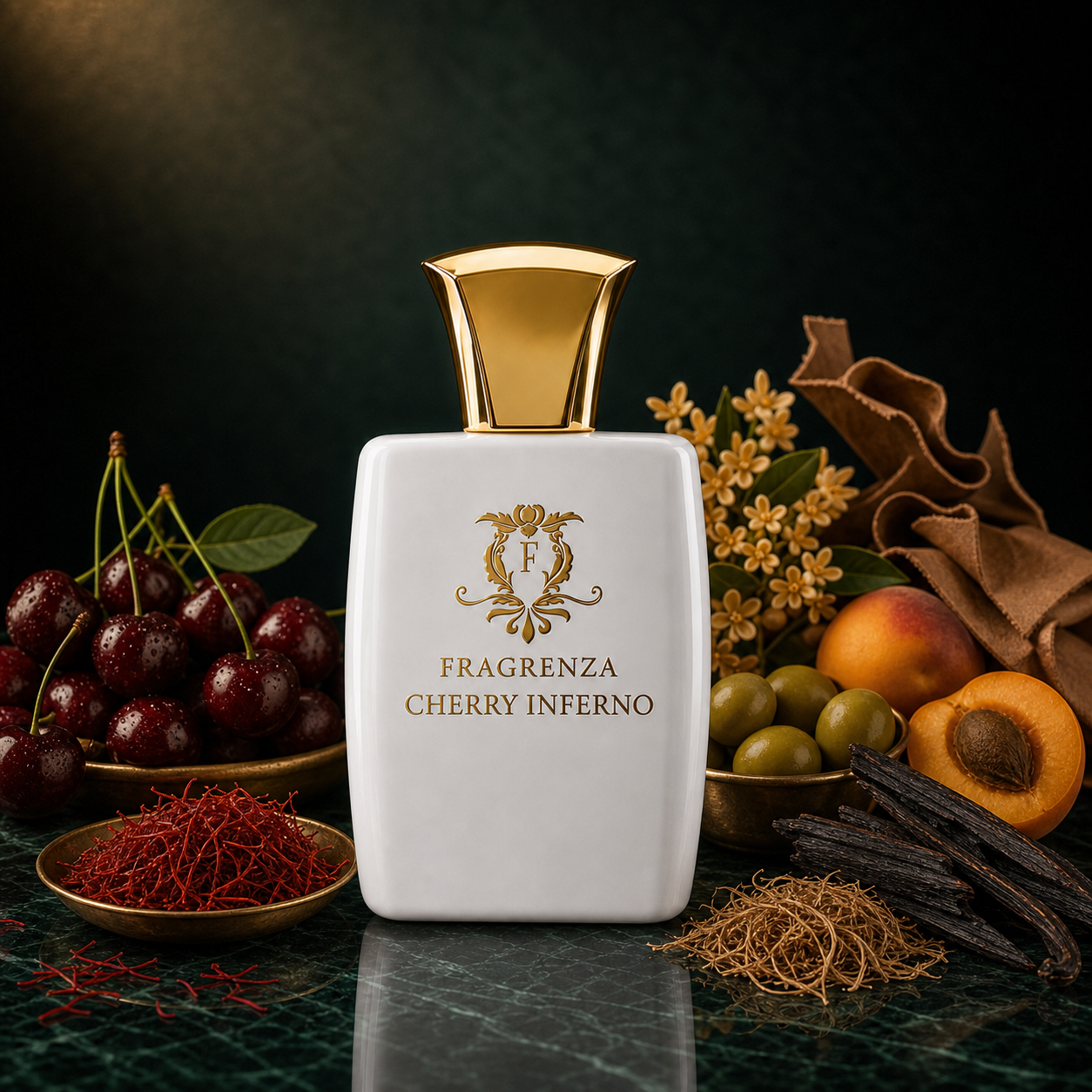
8. Fragrenza Cherry Inferno
Cherry Inferno delivers the smoky, warming cherry intensity of Lovefest Burning Cherry with excellent projection and lasting depth. For Not Another Cherry fans who want to explore the darker, more sophisticated end of cherry perfumery, Cherry Inferno provides that experience with impressive longevity.
9. YSL Black Opium — 5/10 Similarity
Black Opium connects to Not Another Cherry through the orange blossom and vanilla notes that anchor both fragrances' white-floral warmth. The YSL's coffee-and-patchouli darkness is entirely absent from Fine'ry's lighter approach, and the davana cherry of Not Another Cherry finds no direct echo in Black Opium's gourmand-coffee construction. What both share is an orange blossom-to-vanilla-musk trajectory that creates a similar kind of approachable, modern feminine warmth. Black Opium is darker and more evening-appropriate; Not Another Cherry is brighter and more versatile across occasions.
10. Marc Jacobs Daisy Love — 4/10 Similarity
Daisy Love shares the same youthful, approachable sweetness that makes Not Another Cherry so wearable — the cloudberry-and-driftwood accord creates a fruity-fresh quality with some of the same airy charm as Fine'ry's davana-and-marshmallow combination. But the fragrances diverge completely in their specifics: there's no marshmallow, no orange blossom, no lavandin, no vanilla warmth in the Daisy Love drydown. Both appeal to the same mood — optimistic, cheerful, versatile everyday feminines — but the sensory DNA is at most tangentially related. A recommendation for mood kinship rather than note overlap.
Why Dupes Can Match Not Another Cherry by Fine'ry
The technical answer for why dupe compositions can effectively match luxury references like Not Another Cherry by Fine'ry lies in modern perfumery's material science. The aromatic identity of any composition comes from specific molecules — not from the brand attached to the bottle. A composition is essentially a chemical formula expressed in aromatic terms. Two formulas with similar chemical profiles produce similar aromatic experiences regardless of which brand produced them.
Luxury perfumery doesn't have access to molecules that aren't available to other manufacturers. The material supply chain for perfumery is shared across all production tiers — the same suppliers selling premium materials to luxury houses sell the same materials to dupe houses. The differences between luxury and dupe production involve which materials are used, at what concentrations, and with what supporting techniques — not access to fundamentally different aromatic territory.
What Luxury Production Pays For
The price difference between Not Another Cherry by Fine'ry retail and a serious dupe represents several specific cost factors:
Brand premium: a substantial portion of luxury perfume pricing is brand-experience premium — the marketing, packaging, retail-environment, and brand-identity investments that luxury houses make. This component delivers identity value to customers but doesn't affect aromatic outcome.
Material premium: luxury perfumery uses higher-grade naturals at meaningful concentrations. The Grasse rose absolute in a $300 Chanel composition genuinely costs more than the synthetic rose construction in a $30 dupe. Whether this material difference is perceivable in wear depends on the specific composition and wearer.
Production complexity: luxury compositions often use 50-150 individual materials in carefully tuned proportions. Dupes typically use 20-50 materials targeting the architectural identity without matching every nuance.
Maturation time: luxury compositions typically mature longer before bottling, producing smoother integration. Dupes often mature for shorter periods, accepting slight roughness as a cost trade-off.
Quality control rigor: luxury production includes more extensive quality control infrastructure. Dupe production accepts more batch-to-batch variation in exchange for lower costs.
For wearers, the practical question is which of these factors matter for your specific use case. Brand premium matters if you value the identity signaling. Material premium matters if you can demonstrate perceiving the difference in wear evaluation. Production complexity and maturation matter for connoisseurship-level appreciation but rarely for daily wear.
The Honest Quality Gap
Serious dupes can achieve 80-95% architectural match with their inspiration originals — meaning a wearer who alternates between original and dupe across multiple wears would identify them as the same composition most of the time, with some 10-20% of wears showing detectable differences.
The gap is most noticeable in two areas: ultra-late-phase character (after 8+ hours of wear, where premium luxury bases sometimes show more dimensional character than dupe bases) and ultra-low-concentration nuance (where premium luxury references sometimes include rare materials at tiny concentrations that affect the composition's depth without being prominent).
For wearers prioritizing daily-use practical wear, the 80-95% architectural match that serious dupes deliver is functionally complete. For wearers prioritizing connoisseurship-level appreciation across hundreds of careful wear evaluations, the remaining gap may matter.
The Cost-Benefit Reality
The practical cost-benefit analysis for Not Another Cherry by Fine'ry-aesthetic compositions favors the dupe approach for most wearers:
A wearer committed to Not Another Cherry by Fine'ry-aesthetic with $300 budget for fragrance can buy: one full bottle of the original (60-100ml), worn occasionally to preserve the bottle. Or: 4-6 serious dupes (60ml each) covering multiple variations of the aesthetic, with full bottles wearable freely without preservation concerns.
The dupe approach typically produces more total wear value because customers can use the compositions freely rather than preserving expensive bottles. The aesthetic outcome is largely equivalent for daily wear contexts; the lifestyle outcome (relaxed daily wear vs careful occasion-only wear) favors the dupe approach for most wearer use cases.
The Ethics of Dupe Perfumery
Dupe perfumery occupies a complex ethical position that's worth understanding. Dupe houses don't violate trademark law (compositions can't be trademark-protected; only brand names can). They don't engage in counterfeit production (no false brand labeling). They produce independently-developed compositions that target similar aromatic territory to known references.
The luxury perfumery industry sometimes characterizes the dupe category negatively, but the practice is fundamentally legitimate — independent perfumers have always referenced existing compositions when developing new work. The transparency about inspiration sources is what distinguishes ethical dupe perfumery from counterfeit production.
Internal Cross-References
For broader coverage of the dupe-fragrance category, see our What is Fragrenza page, our complete dupe index, and our six-week reviewer tests that document specific compositions across multiple wear contexts.