

The Best Floral Fragrances for 2026: How to Find Your Signature Summer Bloom
From rose and peony to jasmine, iris, and orange blossom — the 24 picks our editors keep reaching for this season.
By Julia MorettiFragrenza makes several of the alternatives featured in our guides — here’s how we test.
17 min read
Summer is officially the season of florals — and not just the kind in your garden. Whether you are loyal to a heady jasmine, dreaming of a peony in full bloom, or chasing the soft powder of an iris, there has never been a better moment to find your signature flower. The floral family is so vast that "floral" barely narrows anything down; the magic is in figuring out which flower, in which mood, on which kind of day. A perfume built around rose will not feel anything like one built around lavender, and the same flower can read clean, dirty, soapy, narcotic, or fruity depending on what surrounds it.
Florals are also the oldest and most-studied category in perfumery. The first recognisably "modern" fragrances of the late nineteenth century — Guerlain Jicky, Houbigant Fougère Royale, Coty L'Origan — were built around floral hearts, and almost every famous fragrance archetype since has had at least one flower at its centre. That long history means perfumers have an unusually rich palette to draw from: distilled essential oils, solvent-extracted absolutes, modern molecules that reproduce the scent of "mute" flowers like peony or cherry blossom, and headspace technology that captures the smell of a living bloom rather than a cut one. The best floral fragrances on the market today combine several of these techniques to produce flowers that smell more lifelike, more transparent, and more wearable than anything our grandmothers had access to.
At Fragrenza we build our entire catalogue around the question of which luxury fragrance you actually want to wear every day — and then offer an inspired-by version of it at a fraction of the price. Everything below starts at $9.99 for a 5 ml decant and tops out at around $69.99 for a full 60 ml bottle, which means you can sample your way through six different flowers for less than the cost of one designer bottle. Below, our edit of the best floral fragrances to spritz this summer, organised by the bloom at the heart of each one — followed by a longer guide on how to build a floral wardrobe, when to wear each flower, and how to sample properly so the bottle you commit to is the right one.
The Best Rose Fragrances
Rose is the most over-indexed flower in perfumery and also the most misunderstood. Forget the dusty, soapy rose of your grandmother's vanity — modern rose compositions lean fruity, jammy, transparent and dewy, or smoky and oud-laced, depending on the variety and the era. Damask rose is the lush, jammy variety most often grown in Bulgaria and Turkey; Centifolia (the "May rose") is honeyed and softer and is most famously farmed in Grasse for the great French houses; Turkish rose is the dark, spicy, head-turning option that anchors most of the niche luxury releases of the last decade.
The chemistry of rose is also unusually complex. A single rose absolute contains hundreds of aromatic molecules, including damascones (the warm, fruity ones), citronellol (the lemony-fresh ones), geraniol (the powdery, soapy ones), and phenylethyl alcohol (the soft, honeyed ones). Perfumers can dial any of these up or down to build a rose that reads as rosé wine, as Turkish delight, as a freshly cut stem, or as a dried potpourri. Our four favourite roses right now cover the full range, from the airy citrus-rose of Ancient Syracuse to the smoky-spicy depth of Antica di Roma.

Ancient Syracuse — inspired by Chanel Allure Sensuelle. A rose-jasmine-amber that feels modern, warm, and dressed-up without being heavy. Good for office wear and weekend dinners alike.
Wild Palermo — inspired by Xerjoff Erba Pura. A jammy fruit-rose with a sun-warmed Mediterranean energy; best in late afternoon and golden hour. Reads expensive without trying.
Verona Fame — inspired by Nina Ricci Ricci Ricci. A pink-rose-patchouli with playful fruit and a romantic, slightly retro charm. The most overtly feminine pick of the four.
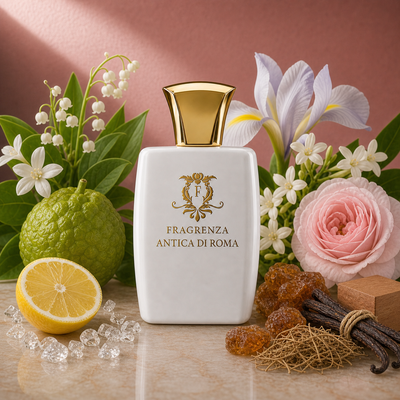
Antica di Roma — inspired by Chanel No.5 L'Eau. A clean, almost airy rose-aldehyde that wears beautifully in heat. The classicist option for anyone who wants rose without sweetness.
If you are new to rose, start with Ancient Syracuse or Wild Palermo — both are easy entry points that will not feel grandmother-coded. Once you have committed to the idea of wearing rose, Antica di Roma is the next graduation: a more architectural composition that rewards repeated wear.
The Best Lavender Fragrances
Lavender used to read as either nostalgic-British (think drawer sachets and Yardley dusting powder) or sharply fougère-masculine in the Drakkar Noir tradition. The 2020s reset has given us a third option: lavender as a clean, almost gender-neutral aromatic, paired with citrus, musk, or vanilla for a quiet luxury effect. It is herbal, calming, and surprisingly elegant once it leaves the fougère ghetto behind.
The reason lavender has had a renaissance is partly that perfumers have started using high-altitude French lavender (the variety grown around Provence at 800 metres and above) rather than the cheaper hybrid lavandin that dominated mass-market perfumery for decades. High-altitude lavender has more linalool and less camphor, which gives it a cleaner, sweeter, more powdery profile — closer to actual lavender flowers than to lavender-scented soap. Once you smell the difference, it is hard to go back. These four push lavender in different directions — from the crisp marine-lavender of Elisi to the spiced, leathery Erba Speziata.
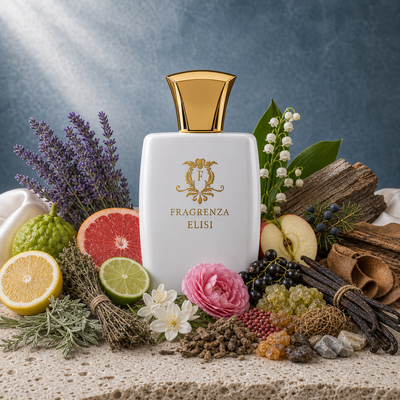
Elisi — inspired by Roja Parfums Elysium. A bright, citrusy lavender with sparkling pineapple and clean musk; reads as fresh-luxury rather than barber-shop. The most universally flattering pick of the four.
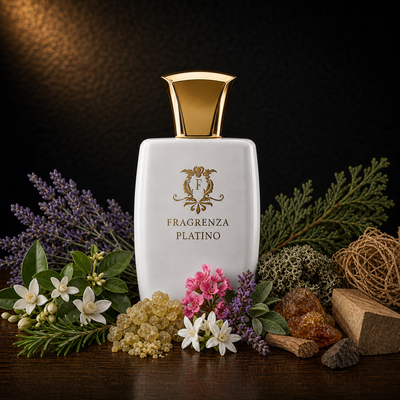
Platino — inspired by Chanel Platinum Égoïste. A polished lavender-rosemary with smooth woods; quietly confident and very wearable. A vintage-leaning option that has aged extremely well.
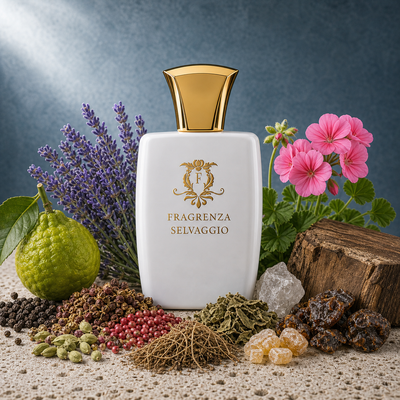
Selvaggio — inspired by Dior Sauvage. Lavender plus that famous ambroxan punch — fresh, modern, signature-friendly. The most commercially recognisable of the four.
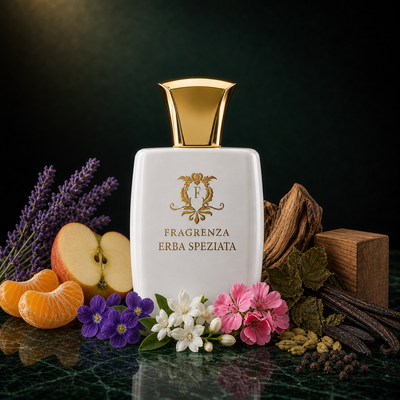
Erba Speziata — inspired by Parfums de Marly Layton. Lavender threaded with cardamom, apple, and creamy vanilla; warm and a little decadent. Surprisingly versatile across seasons.
Lavender is one of the easiest florals to layer — it sits politely under almost any vanilla, citrus, or musk composition without competing. If you already own a sweet gourmand, try spritzing Elisi or Platino lightly on top to add freshness without changing the character of your existing scent.
The Best Peony Fragrances
Peony is technically a "mute" flower — it does not give up its scent easily, and what you smell in a perfume bottle is almost always a reconstruction. There is no commercially viable peony absolute or essential oil; perfumers build the note from synthetic molecules, with rose, lychee, freesia, and apple often used in support to round out the bouquet. That gives perfumers room to play. Modern peony compositions tend to be bright, fruity, slightly transparent, and very joyful, which is exactly what you want when temperatures rise.
Peony also has cultural associations that shape how perfumers treat it. In Chinese tradition it is a symbol of prosperity and femininity, and many of the most popular peony-anchored launches of the last decade have leaned into a soft, pink, almost romantic mood — bridal, wedding-day, "first date" energy. If you find traditional white floral perfumes too heady for daily wear, peony is often the easier substitute: lighter, fresher, more transparent, and far easier to pull off in an office. These four range from the crystal-fresh Pisa Reflection to the romantic, slightly sweeter Adeline.
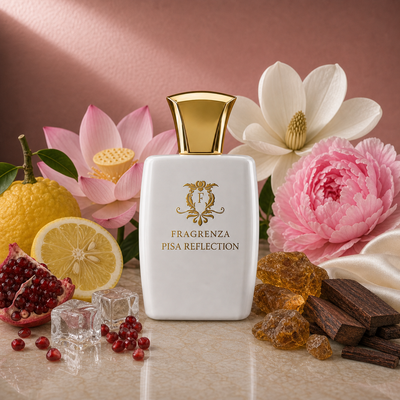
Pisa Reflection — inspired by Versace Bright Crystal. Peony, pomegranate, and a sheer musky base; one of those scents that feels universally flattering. The safest gift-pick for someone whose taste you do not yet know.
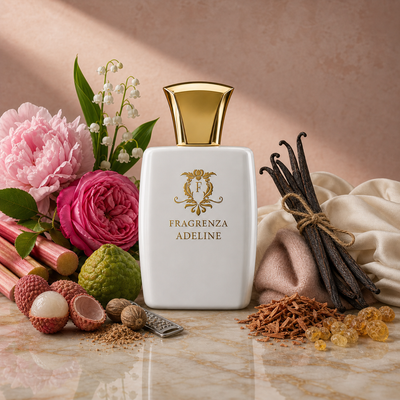
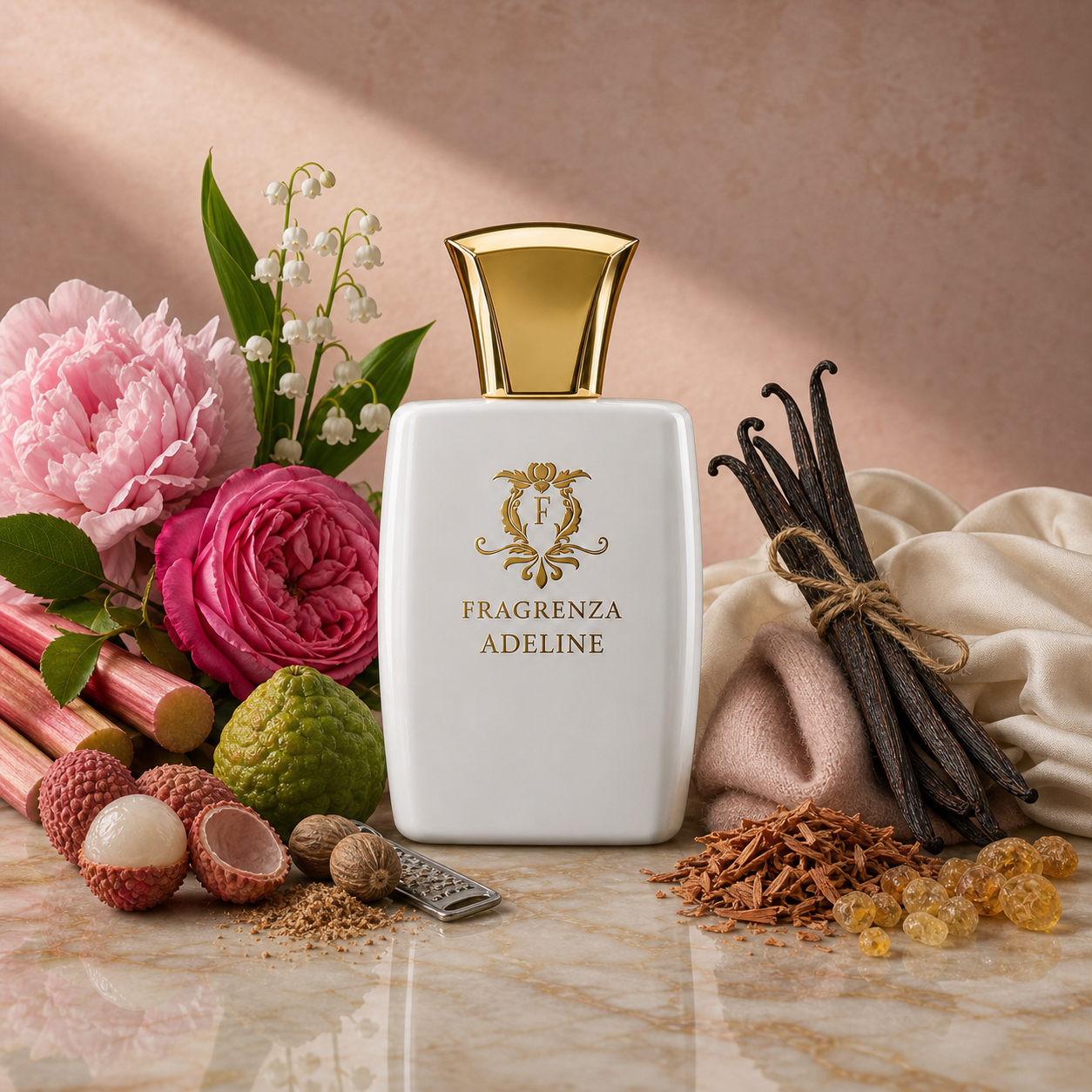
Adeline — inspired by Parfums de Marly Delina. The famous lychee-rose-peony combination, with a creamy vanilla-musk drydown. Probably the most-complimented composition on the entire site.
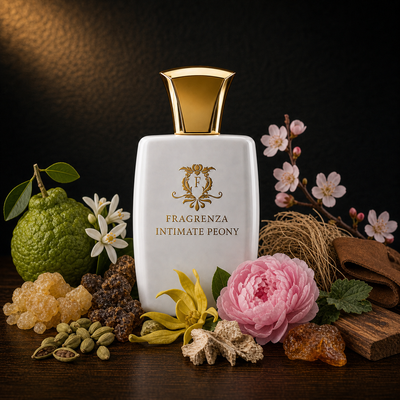
Intimate Peony — a softer, closer-to-the-skin peony with a quiet sensuality; perfect for office and dinner alike. The most introverted of the four.

Pretty Girl Blush — a sweet, fruity, peony-anchored composition with a sugary tonka base; reads younger and playful. Good for daytime and casual occasions.
Peony works in almost any season, but it is at its absolute best in late spring and early summer when the flowers themselves are blooming and the cultural association reinforces the scent. If you can only own one floral all year, a good peony is probably the most versatile single choice.
The Best Jasmine Fragrances
If rose is the most beloved flower in perfumery, jasmine is the most opulent. It takes thousands of hand-picked blossoms — between 3,500 and 4,000 flowers, depending on the source — to produce a single millilitre of jasmine absolute, which is why the note tends to live in luxury and niche releases. Sambac jasmine, the variety most associated with Asian perfumery and tea, is greener and slightly fruitier; Grandiflorum (or "Egyptian") jasmine, the variety grown in Egypt and India for European houses, is heavier, more indolic, and more narcotic. Both have an animalic quality at high concentration that perfumers either embrace (to make a scent feel sensual and lived-in) or tame with green and citrusy supporting notes (to make it feel cleaner and more daytime-friendly).
The good news for the rest of us: a well-built inspired-by version captures the same heady, narcotic floral depth at a fraction of the cost. Modern synthetics can reproduce most of the key jasmine molecules — hedione for the fresh-floral lift, indole for the animalic backbone, methyl jasmonate for the green-creamy roundness — at a quality level that was only available in the most expensive niche compositions a decade ago. From the sweet praline-jasmine of Belle di Verona to the dramatic, dark Catania Crush, these four cover the full jasmine spectrum.

Belle di Verona — inspired by Lancôme La Vie Est Belle. Iris, jasmine, and praline — feminine, gourmand, and one of the most universally complimented compositions on the site. The easiest entry point into jasmine for anyone who finds white florals overwhelming.
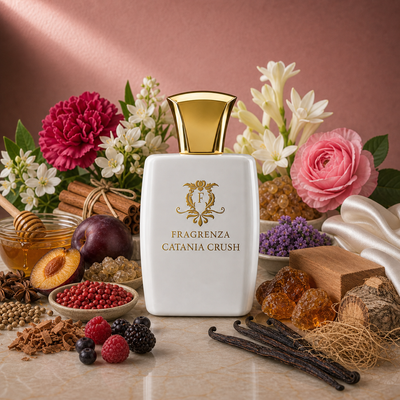
Catania Crush — inspired by Dior Poison. Dramatic, dark jasmine and tuberose with a spicy, almost gothic charge; not for the faint-hearted. A statement scent.
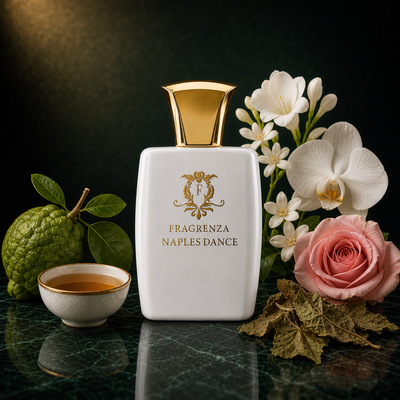
Naples Dance — inspired by Viktor&Rolf Flowerbomb. A bouquet of jasmine, rose, and orchid wrapped in patchouli and vanilla; bold and instantly recognisable. Probably the most clubby of the four.
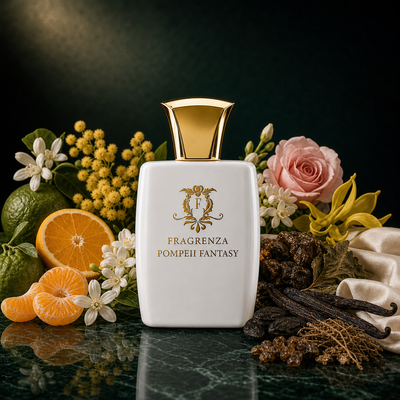
Pompeii Fantasy — inspired by Chanel Coco Mademoiselle. Jasmine and rose over a chypre-patchouli base; the polished, grown-up option.
Jasmine is a "trophy" floral — it rewards being worn intentionally. If you spritz it in the morning before a meeting, you will feel it on yourself all day, and people around you will pick it up across a room. That is what you want from a jasmine. If you want something quieter, peony or iris will serve you better.
The Best Orange Blossom and Neroli Fragrances
Orange blossom and neroli both come from the bitter orange tree (Citrus aurantium), but they smell quite different because of how they are extracted. Neroli, named after the seventeenth-century Princess of Nerola who popularised it, is steam-distilled and reads greener, brighter, and a touch bitter — the citrus-cologne option that anchors classic eau de colognes. Orange blossom is solvent-extracted from the same flowers, but the absolute that results is warmer, honeyed, and slightly indolic — the romantic, white-floral option that turns up in luxury feminine launches like Tom Ford Neroli Portofino, Serge Lutens Fleurs d'Oranger, and Jo Malone Orange Blossom.
Both lend themselves beautifully to warm-weather wear because the citrus skeleton inside the flower keeps the composition feeling light even when the floral heart is rich. Orange blossom and neroli also blend exceptionally well with honey, vanilla, ambergris, and powdery musks — which is why most of the great Mediterranean-inflected luxury fragrances of the last twenty years have at least a touch of one or the other. These four lean toward the sweeter, sun-soaked side of the spectrum, from the playful Sicily Aqua to the woody-warm Selva Africana.
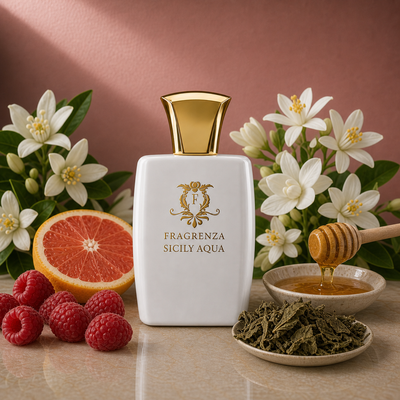
Sicily Aqua — inspired by Paco Rabanne Lady Million. Bright neroli over a honeyed amber-patchouli base; a sparkling-evening kind of scent. The most overtly party-coded of the four.
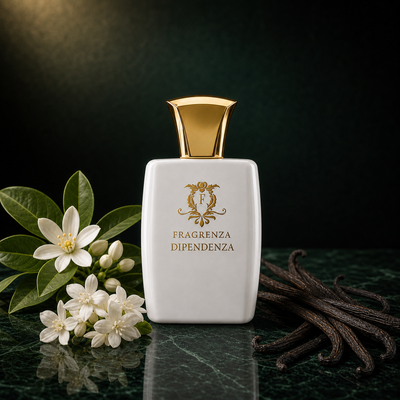
Dipendenza — inspired by Dior Addict. A rich, sweet orange-blossom-vanilla with a slightly addictive boudoir warmth.
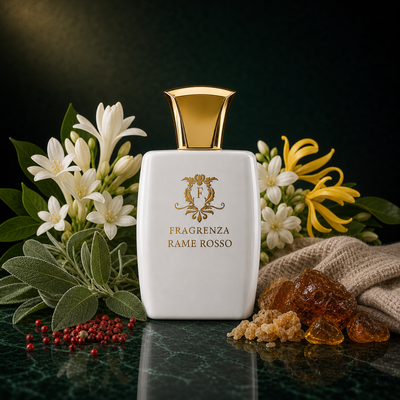
Rame Rosso — inspired by Giorgio Armani Sì. Orange blossom, blackcurrant, and patchouli; modern, refined, and very polished. The most office-appropriate of the four.
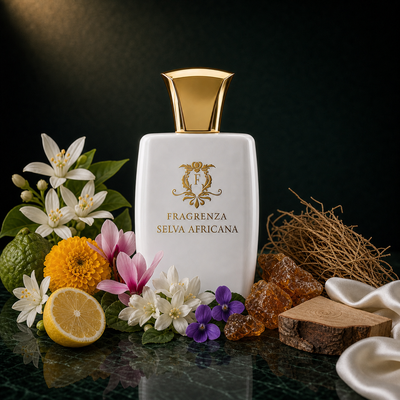
Selva Africana — inspired by Byredo Bal d'Afrique. Neroli with violet, cedarwood, and vetiver; a cooler, more grown-up take on white florals. The most unisex of the four.
If you live somewhere genuinely hot, orange blossom and neroli are the floral category most worth investing in — they project beautifully on warm skin without ever turning cloying. If you are based somewhere temperate, treat them as a spring-summer rotation and lean into rose, iris, or jasmine for the rest of the year.
The Best Iris Fragrances
Iris is the powder note of perfumery — soft, slightly cool, with a quality somewhere between fresh linen, vintage lipstick, and warm skin. It is one of the most expensive raw materials in the industry: the prized "orris butter" comes from the rhizomes (not the flowers) of Iris pallida or Iris germanica, which must be harvested, dried, and aged for three to five years before they yield the irones that perfumers want. A kilo of high-quality orris butter can cost more than a kilo of gold, which is why high-iris compositions tend to sit firmly in the luxury tier.
Inspired-by versions are how most people get to wear iris regularly without saving up for it. Modern iris reconstructions use a combination of natural orris with synthetic irones and supporting notes (carrot seed, violet, ambrette) to deliver the same powdery, slightly metallic, oddly skin-like character at a much more sustainable cost. Iris is also one of the most flattering florals on actual skin — it tends to read as "your skin but better" rather than as an applied perfume, which is why it has become a quiet favourite in the minimalist-luxury world. Our four picks cover the range from the airy, suede-soft Florence Shine to the bold, dressed-up Prima Vista.
Florence Shine — inspired by Tom Ford Ombré Leather. A suede-iris-cardamom with a magnetic, slightly sensual feel; reads luxurious without trying too hard. The most modern of the four.
Cherasco — inspired by Chanel Chance. Iris and jasmine layered with citrus and pink pepper; sparkling, optimistic, and easy to wear daily.
Prima Vista — inspired by Parfums de Marly Oriana. Iris with red berries and creamy musks; full-bodied and made for evening.
Pelle Irlandese — inspired by Memo Irish Leather. Iris and leather with a smoky, slightly herbal edge; a quieter masculine-leaning option that wears beautifully on anyone.
If you are someone who tends to find perfume "too much," iris is almost always the right answer. It sits close to the skin, projects modestly, and lasts surprisingly well without ever overwhelming a room.
How to Build a Floral Wardrobe
The single most useful thing you can do for your fragrance collection is stop thinking about "your one signature scent" and start thinking about a wardrobe. Most people who care about fragrance own between four and eight bottles, organised the same way they organise clothes: by season, by occasion, by mood. The benefit of an inspired-by catalogue like Fragrenza is that building that wardrobe stops being financially intimidating — six bottles at $69.99 is less than one bottle of most niche luxury launches.
The simplest way to start a floral wardrobe is to pick one flower from three different "moods" and rotate. A clean, daytime floral (try Elisi or Florence Shine), a romantic, complimenting floral (Adeline or Belle di Verona), and a dramatic, evening floral (Catania Crush or Wild Palermo). That three-bottle starter set covers most of your wear contexts, and once you know which mood you reach for most often, you can deepen that direction with a second bottle.
The other organising principle worth knowing is seasonal. Roughly: orange blossom, neroli, and peony shine in spring and summer; jasmine and rose work year-round but lean evening in cooler months; lavender and iris are the most all-weather picks because they sit so politely on the skin. If you live somewhere with real seasons, having at least one floral in each temperature bracket is the easiest way to avoid the "I have nothing to wear" feeling that fragrance wearers occasionally hit in August or January.
How to Layer Florals
Layering — wearing two fragrances together — is the most underrated technique in fragrance wardrobing. Florals layer particularly well because the family is built on hundreds of overlapping aromatic molecules; a rose and a jasmine, worn together, will often smell more like a real garden than either one alone. The trick is to pair compositions that share a backbone (musk, vanilla, citrus) but contrast at the floral heart, so the layered result reads as more dimensional rather than muddy.
A few combinations we have tested and like: Elisi + Florence Shine for a crystalline, suede-soft late-spring scent; Adeline + Pisa Reflection for an extra-feminine peony-rose-lychee bouquet; Catania Crush + Antica di Roma for a dramatic jasmine-rose evening composition that reads expensive and a little dangerous; Selva Africana + Pelle Irlandese for a unisex neroli-leather-iris combination that is unusually good on warm skin. Layer light to heavy (spray the lighter composition first, then the deeper one) and keep total spray count to four or five so the result projects without overwhelming.
How to Sample a Floral Properly
Florals develop more on skin than almost any other category, which means a counter-sniff at a store is the worst possible way to evaluate one. The opening five minutes of a floral perfume are dominated by top notes (citrus, aldehydes, green leaves) that mostly disappear within the first hour; the heart of the fragrance — the actual flower — only emerges around the thirty-minute mark and continues to develop for another two to four hours.
The reliable sampling protocol is simple. Acquire a 5 ml decant of any composition you are seriously considering. Apply two sprays to clean skin (one on the wrist, one on the inner elbow) in a low-fragrance environment — not in a perfume shop, not after applying scented lotion, and ideally not on a day when you are also wearing strongly scented clothes. Evaluate at the thirty-minute, two-hour, four-hour, and eight-hour marks. The four-to-eight-hour window is the most important: that is when you find out what the perfume actually smells like on your specific skin, and whether you still like it after the initial novelty has worn off.
If you still like it at the eight-hour mark — and ideally if someone else has complimented it during the day — buy the full bottle. If you do not, the $9.99 you spent on the decant has saved you from a $200 mistake, and you can move on to the next candidate. This is the entire reason the decant tier exists, and it is the single most cost-effective thing you can do to build a fragrance collection that actually gets worn.
How to Choose Your Signature Floral
Florals are not one thing. If you already love sweet, gourmand compositions, peony and jasmine will feel familiar — try Adeline or Belle di Verona first. If you lean clean and minimalist, head straight to iris (Florence Shine) or lavender (Elisi). If you want something that turns heads, rose (Wild Palermo) and dark jasmine (Catania Crush) will do exactly that. And if you live somewhere warm and want a flower that projects beautifully in heat, orange blossom and neroli (Sicily Aqua or Selva Africana) will outperform every other floral category.
For anyone genuinely starting from zero, the most reliable path is to pick one composition from each of three categories — say Florence Shine (iris, clean), Adeline (peony, romantic), and Catania Crush (jasmine, dramatic) — wear each one for a full day, and pay attention to which one your friends and partner comment on. That feedback loop is more useful than any blogger's opinion, including ours.
And because every Fragrenza fragrance starts at $9.99 for a 5 ml decant, the safest way to find your signature is to sample three or four flowers, wear them for a full day each, and see which one your friends start asking about. That is, in our experience, the only sampling protocol that actually works.
All Fragrenza fragrances are cruelty-free, vegan, and made with the same fragrance oils used by the houses that inspired them.