Five Fragrance Mistakes You Are Almost Certainly Making (and How to Fix Them) in 2026
Most fragrance disappointments aren't about the fragrance, they're about how it's worn
By Julia MorettiFragrenza makes several of the alternatives featured in our guides — here’s how we test.
8 min read
Most fragrance disappointments aren't about the fragrance — they're about how it's worn. The same bottle that smells extraordinary on someone else can perform poorly on you for reasons that have nothing to do with skin chemistry and everything to do with mistakes that are easily fixed once you know what they are. This guide walks through the five most common, most damaging fragrance mistakes that wearers make, and the simple corrections that turn them around.
If you've ever felt like a fragrance "didn't last" on you, projected too loudly, or smelled different from when you sampled it, one or more of these mistakes is probably the cause. The good news: each fix is simple, free, and immediately effective. Master these five corrections and the fragrances already in your collection will outperform the more expensive bottles your friends own.
Mistake One: Over-Spraying
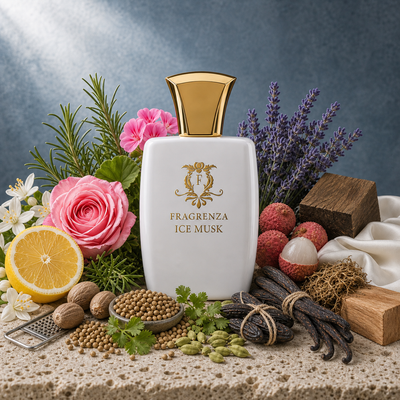
The most common fragrance mistake, by a significant margin, is over-application. Most wearers spray two or three times more than necessary, often because they can't smell the fragrance well on themselves after a few minutes and assume it has faded. It hasn't — olfactory adaptation is the brain's habit of tuning out persistent smells, and it affects the wearer's nose specifically while everyone else around them can still smell the fragrance clearly.
Ice Musk is a useful case study. The fragrance has a clean, slightly cool, musky-skin signature that projects beautifully at conversational distance from a two-spray application. At a four or five-spray application, the same fragrance crosses into elevator-filling territory, where the clean musk signature becomes overwhelming in close quarters. The fragrance doesn't change; the dose changes the experience. The fix is the 30-minute rule: spray once or twice, wait 30 minutes, and only add more if you genuinely can't perceive the fragrance at all. Most of the time, you don't need more. For more, see our pulse-point guide.
Mistake Two: Spraying onto Clothing Instead of Skin
The second most common mistake is spraying directly onto a shirt, jacket, or scarf rather than onto skin. The reasoning often makes intuitive sense — "if I spray on my shirt, the fragrance will last longer because it's protected from washing off" — but the result is consistently disappointing. Fabric absorbs the fragrance without allowing it to develop with skin chemistry, which is why the same fragrance smells flatter on clothing than on skin.
Skin is the correct application surface for every modern fragrance. The natural warmth of the body opens the heart and base notes over the course of the wear, producing the architectural development the perfumer designed. Clothing application bypasses this entirely. Additionally, some fragrance notes — leather, smoky woods, heavy gourmands — can persist on wool, silk, and cashmere for weeks, eventually shifting character in unflattering ways as they oxidize on the fabric. Spray onto skin first; if you want to add a hint to clothing, do it sparingly and only on hardy fabrics.
Mistake Three: Rubbing the Wrists After Spraying
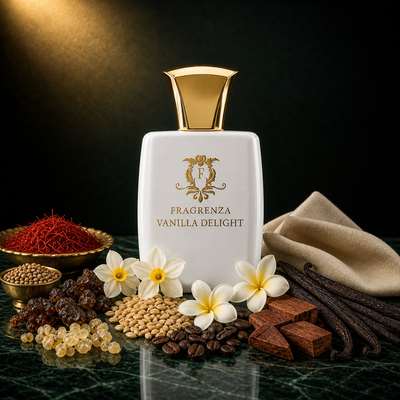
The wrist-rubbing reflex comes from a generation of fragrance advice that wrongly assumed rubbing helped the fragrance develop. In reality, rubbing breaks down the top notes by accelerating volatilization unevenly, which can shorten the opening phase by 30 to 50 percent and shift the fragrance's character. The friction also heats the alcohol and volatilizes the lighter molecules faster than they would naturally release.
Vanilla Delight is a fragrance where this mistake shows up clearly. The warm, creamy vanilla signature relies on a slow development over the first thirty minutes — the opening softens, the heart blooms, the base settles. Rub the wrists after application, and you compress that development into the first five minutes, losing the architectural arc that gives the fragrance its character. The fix is simple: spray and let the fragrance dry on its own. If you've sprayed both wrists, gently touch them together once — don't rub back and forth.
Mistake Four: Wearing the Wrong Fragrance for the Context
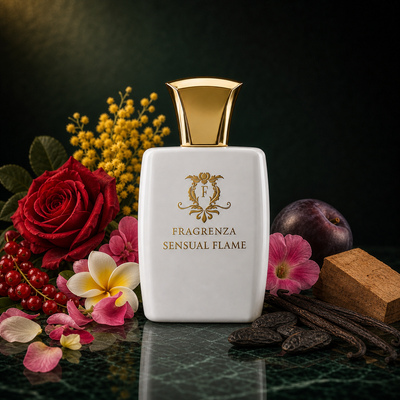
Wearing Sensual Flame — a warm, sensual, slightly heady floral oriental — to a daytime business meeting is a context mismatch. The fragrance is beautifully built, but the projection and emotional register are designed for evening intimacy, not for boardroom professionalism. The same wearer who'd be praised for Sensual Flame on a date night might be perceived as inappropriately scented at the office.
The fix is context literacy. Office and daytime contexts call for fresher, cleaner, more restrained fragrances. Evening and intimate contexts can support warmer, more sensual, more diffusive compositions. Most fragrance disappointments labeled "too much" or "too strong" are actually context mismatches — the fragrance is fine, but the occasion doesn't support it. Build a small wardrobe that covers your actual lifestyle rather than wearing one signature scent everywhere. For more, see our occasions guide.
Mistake Five: Poor Storage
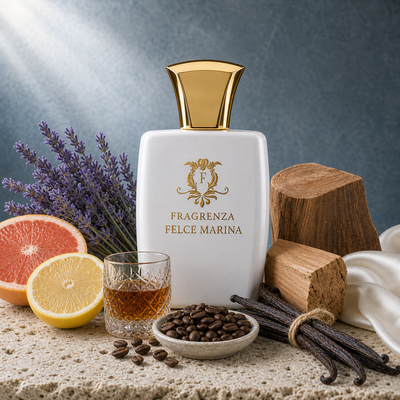
The fifth common mistake happens before you even spray — it's how you store the bottle. Most wearers keep their fragrances in bathroom cabinets or on vanities exposed to direct sunlight, where the combination of heat, humidity, and UV light slowly degrades the composition. The result is a fragrance that smells noticeably different two years after purchase than it did when you opened the box.
Fresh aromatic compositions like Felce Marina are particularly vulnerable to poor storage. The bright, slightly marine top notes oxidize and lose their lift when exposed to heat and light, and the fragrance can shift from fresh and crisp to flat and slightly chemical in as little as 18 months under bad storage conditions. The fix is keeping fragrances in their original boxes, in a dark, cool, dry place — a dresser drawer or closet shelf is ideal. Avoid bathrooms, sunny windowsills, and anywhere near a radiator. For more on storage, see our storage guide.
How to Audit Your Fragrance Practice
The simplest way to identify which of these mistakes is affecting you is a self-audit. For one week, pay close attention to your application ritual. How many sprays do you use? Do you apply to clothing or skin? Do you rub your wrists? Are you wearing the same fragrance to office and evening contexts? Where are your bottles stored?
Most wearers find they're making two or three of these mistakes simultaneously, and the cumulative effect is significant. Fix all of them, and you'll find that the fragrances already in your collection perform better than you remembered. The fragrance isn't the problem; the practice usually is.
Common Sub-Mistakes Worth Knowing
Beyond the five major mistakes, several smaller habits compound the problem. Applying immediately before leaving the house (instead of 20 to 30 minutes before) means everyone smells the alcoholic opening rather than the settled heart. Using heavily scented body washes, shampoos, and lotions creates a competing olfactory environment that buries the fragrance. Spraying onto dry skin without moisturizer underneath shortens wear time by up to 40 percent on dry-skinned wearers.
These secondary issues amplify the major mistakes. A wearer who over-sprays AND applies to clothing AND rubs the wrists AND wears heavily scented hygiene products is fighting their fragrance on four fronts simultaneously, and no amount of fragrance quality will overcome that combined drag. Strip back to fundamentals: skin application, moisturized, pulse-point focused, 20-minute pre-departure timing, unscented hygiene products.
Related Reads
- Seven rules for applying fragrance
- Where to apply your perfume
- Perfume storage tips
- Different fragrances for different occasions
- Fragrance etiquette
- How to apply men's fragrance
Frequently Asked Questions
How do I know if I'm over-spraying?
If you can clearly smell your own fragrance 30 minutes after applying, you've probably over-sprayed. The wearer's nose adapts faster than other people's, which means by the time the projection feels normal to you, it's usually 25 to 50 percent stronger than what others perceive. The two-spray rule is the safest starting point for most modern EDPs.
Can I fix a fragrance that's been ruined by poor storage?
Once a fragrance has oxidized, the chemical changes are permanent — there's no way to reverse them. The best you can do is use the remaining bottle for clothing application (where the shifted character matters less) or stop using it entirely if the change is severe. Prevention is the only real fix; store new bottles correctly from day one.
Is it bad to spray fragrance on my hair?
Alcohol-based fragrances can dry out hair over time, especially fine or color-treated hair. The safer technique is to spray the fragrance onto a brush and then brush through, or apply to the back of the neck near the hairline and let movement transfer the scent to hair. Direct application is acceptable occasionally but not as a daily practice.
Why does my fragrance smell different at the end of the day than it did in the morning?
That's normal and expected. Fragrances are designed to develop in three phases — opening, heart, and base — and the late-day skin scent is the base phase, which is intentionally different from the opening. If the change feels dramatic or unpleasant, you may have ingredient sensitivity, or the fragrance may be performing differently with your skin chemistry than the perfumer designed.
How long should I wait between applying moisturizer and fragrance?
Five to ten minutes is the sweet spot. Apply unscented moisturizer to pulse points, wait until the moisturizer has fully absorbed (the skin should feel slightly tacky but not wet), then apply fragrance. The moisturizer creates a slight oil layer that fragrance molecules bind to, extending wear time without interfering with the fragrance's natural development.
Can I mix two fragrances?
Yes, but carefully. Successful fragrance layering requires compatible note structures — a citrus EDT layered with a warm vanilla EDP can work beautifully, while two heavy oud-based fragrances layered together will fight each other for attention. Start with one fragrance on the chest and the other on the inner wrists to keep them slightly separated, and adjust from there.
The Bottom Line
The five most common fragrance mistakes — over-spraying, applying to clothing, rubbing the wrists, wearing the wrong fragrance for context, and poor storage — are also the easiest to fix. None of them require buying new bottles or learning complex techniques. They require attention to the practice rather than the product. Audit your habits, correct the fundamentals, and you'll find that the fragrances already in your collection deliver experiences you didn't know they were capable of.