

Amyris in Perfumery: The West Indian Sandalwood Note
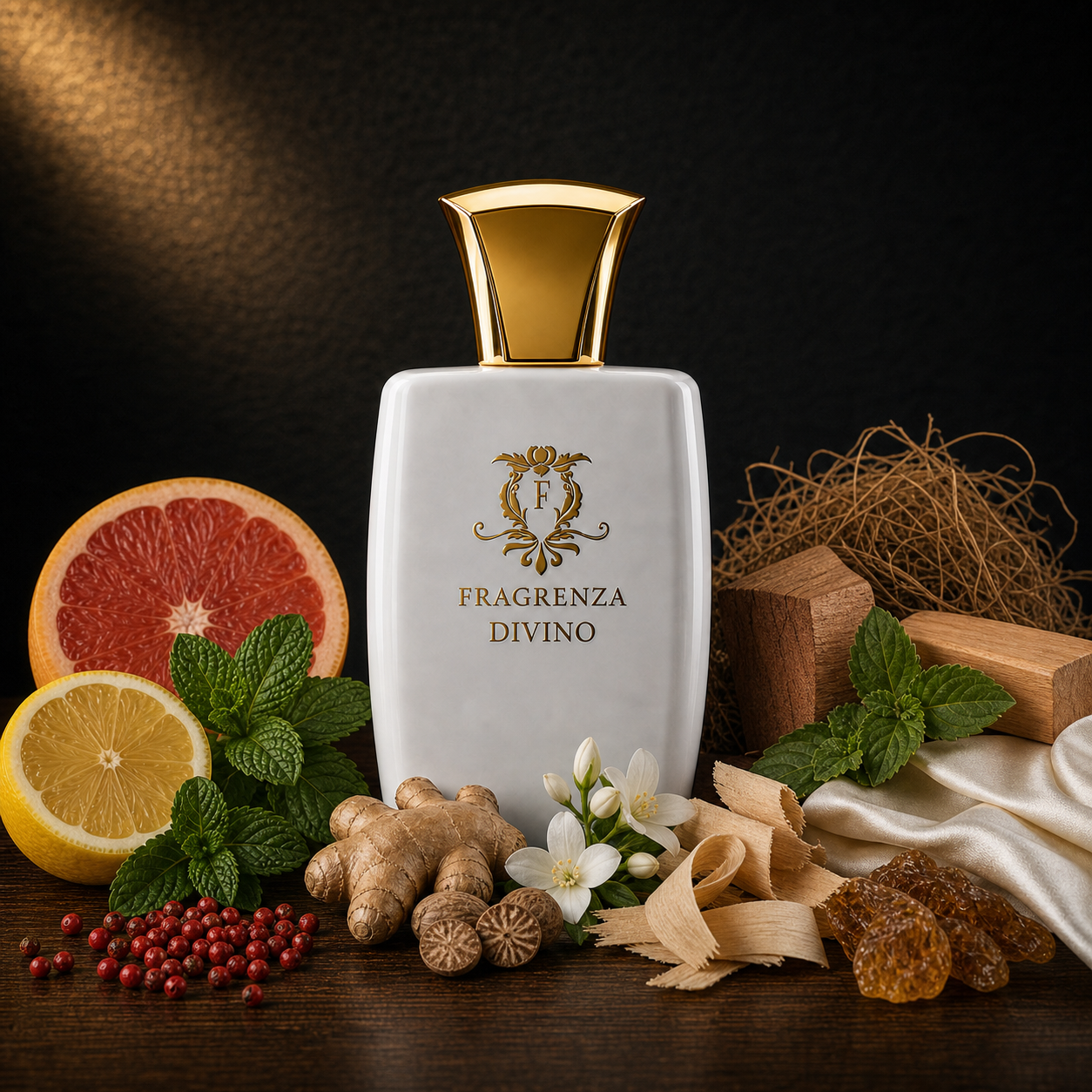
Amyris is a dry, anchored woody base: bark-bright on opening, resin-warm at the heart, settled and slow through the dry-down.
By Julia Moretti 5 min read
What Does Amyris Smell Like?
Amyris is one of those fragrance ingredients that inspires curiosity the moment you encounter its name. Sometimes called West Indian sandalwood or Caribbean sandalwood — though it is not a true sandalwood at all — amyris is derived from Amyris balsamifera, a flowering tree native to Haiti and other parts of the Caribbean. The essential oil distilled from its wood and branches has a soft, creamy, slightly smoky quality that sits in the general neighbourhood of true sandalwood but with its own distinct character: drier, less milky, with a faint rubber or resin quality that true sandalwood lacks, and a subtle smokiness that gives it a more austere edge.
At first contact, amyris oil reads as warm and balsamic — smoothly woody with a slight sweetness and what many describe as a faint vanilla or caramel undertone. It has none of the sharp or aggressive qualities that some woods bring to fragrance compositions: no camphor, no abrasive dryness, no resinous heaviness. Instead it offers a quiet, even warmth that works behind other ingredients to soften, smooth and extend their wear. This unobtrusive quality is both amyris's greatest virtue and the reason it is less often celebrated than the more assertive woods that share its ecological niche in perfumery.
History and Origins: Haiti, Trade and Traditional Use
The amyris tree has a long history of use in Haiti, where the densely resinous wood has been harvested for centuries as a source of fuel and light. The wood is so rich in volatile oils that torches made from amyris branches — known locally as candlewood — were a traditional source of illumination long before the introduction of petroleum-based fuels. The essential oil was first commercially exploited in the nineteenth century, when its similarity to true sandalwood — combined with its far greater availability and lower cost — made it attractive to fragrance manufacturers seeking alternatives or adulterants for the increasingly expensive East Indian sandalwood.
This history as a sandalwood adulterant is part of why amyris has historically been somewhat looked down upon in fine perfumery, associated with economy and substitution rather than genuine quality. The picture has changed considerably in recent decades, as perfumers have recognised that amyris has virtues of its own that are distinct from its resemblance to sandalwood. Its excellent fixative properties, its compatibility with almost any other fragrance material and its smooth, long-lasting character have made it a staple of modern formulation, used not as a lesser substitute but as a material with its own considered place in the perfumer's vocabulary.
Chemistry: Valerianol, Eudesmol and a Rich Sesquiterpene Profile
Amyris essential oil has a relatively simple but interesting chemical composition dominated by sesquiterpene alcohols. Valerianol (also known as valerenol) is the single most abundant component, typically accounting for between 20 and 45 percent of the oil. Eudesmol isomers — alpha, beta and gamma forms — are the next major constituents, followed by elemol and various related sesquiterpene compounds. Interestingly, several of these compounds, particularly the eudesmol isomers, are also found in true sandalwood (Santalum album and S. spicatum), which partly explains the olfactory kinship between the two materials.
The absence of the characteristic alpha- and beta-santalols that give genuine sandalwood its distinctive creaminess means that amyris, while woody and smooth, lacks the intensely milky, almost fatty quality of the best Indian or Australian sandalwood. The valerianol component contributes the dry, slightly rooty quality that distinguishes amyris, and the eudesmols provide the warm, amber-like smoothness. Altogether the oil is less complex than sandalwood but highly functional — a reliable, stable material with good natural fixative properties and excellent blending versatility.
Amyris as a Fixative and Base Note
In practical perfumery, amyris functions primarily as a base note and fixative. Its relatively low volatility means that it persists on skin well after top and middle notes have faded, forming part of the foundation of a fragrance's drydown. Its neutrality — the quality of not insisting too loudly on its own character — makes it an excellent fixative partner for more assertive ingredients. Perfumers use amyris to extend the life of expensive naturals like rose absolute and jasmine, to smooth the transitions in complex woody accords, and to add a warm, balsamic quality to compositions that might otherwise feel too linear or one-dimensional in their drydown.
The material is particularly useful in modern reconstitutions of sandalwood-heavy compositions, where genuine Mysore sandalwood is either unavailable or prohibitively expensive. A blend of amyris, synthetic santalols, cedar and vetiver can approximate the warm woodiness of historical sandalwood-based compositions, even if it cannot fully replicate the unique creaminess of the finest Indian material. Amyris also appears frequently in bases for oriental fragrances, where its balsamic warmth complements resinous and spicy top notes.
Famous Fragrances and Note Interactions
Amyris is rarely featured as a named note in mainstream fragrance advertising — it is very much a background player, the kind of ingredient that is present in dozens of well-known compositions without ever being mentioned in the marketing. This is not unusual for base note materials of its type: the consumer is meant to feel the warmth and longevity it contributes without necessarily being aware of the source. Certain niche houses do feature amyris more prominently, particularly those with a focus on natural or naturalistic perfumery where the specific character of each material is part of the narrative.
Among the interactions that work especially well: amyris with vanilla creates a warm, softly sweet woody base of great accessibility; amyris with tonka bean and coumarin produces a soft, balsamic drydown used in many classic masculine and unisex compositions; amyris with labdanum creates a warm, ambery, slightly leathery base that sits at the heart of many oriental structures. The material's fundamental adaptability means that experienced noses will encounter it across fragrance families: in fresh aquatics where it adds a woody anchor, in florals where it provides depth without heaviness, and in orientals where it contributes its characteristic smooth warmth.
Wearing Amyris: Wardrobe Context
Because amyris is principally a base note and fixative rather than a featured top note, fragrances where it plays a prominent role tend to have the characteristics typical of woody base materials: considerable longevity, good projection in warm weather, and a drydown arc that becomes progressively warmer and more intimate as time passes. Compositions built around amyris-type woodiness are versatile enough for year-round wear, though they perform particularly well in the cooler months when the warm, balsamic quality of the base reads as comforting rather than heavy.
For those exploring the woody fragrance category, amyris-prominent compositions offer a gentler, more accessible introduction than the more austere or challenging wood materials like vetiver or birch tar. The softness and creaminess of amyris means that woody fragrances featuring it prominently tend to feel approachable and skin-friendly from the very beginning of wear. Tom Ford Oud Wood demonstrates the kind of smooth, creamy wood-oriental territory that amyris-type materials help create — the sense of warmth and comfort that distinguishes the best woody fragrances from merely dry or arid compositions.