

Sandalwood in Perfumery: The Eternal Wood at the Heart of Fragrance
Sandalwood is a foundational raw material in the woody family, a note every fragrance lover should learn to recognise on skin.
By Julia Moretti 6 min read
Sandalwood: The Foundation Stone of Fine Fragrance
If there is one ingredient that connects the perfumery of ancient India to the most celebrated luxury fragrances of the twenty-first century, it is sandalwood. This slow-growing tree, native primarily to India and Australia, produces one of the most coveted raw materials in all of fragrance: a dense, creamy, milky wood with a warmth that is both sensuous and serene, an ingredient that has been used in incense, ritual, medicine, and perfumery for at least four thousand years.
Sandalwood is not a dramatic ingredient. It does not announce itself with the sharpness of pepper or the heady sweetness of jasmine. It works more subtly than that, laying down a smooth, warm foundation on which other notes can shine, extending the life of a fragrance on the skin, and adding a depth and richness that is felt more than consciously noticed. This is why great perfumers have always used it liberally: not as a statement ingredient but as an architectural one, a material that holds everything together and gives the whole composition a quality of cohesion and elegance.
What Does Sandalwood Smell Like?
The smell of genuine Mysore sandalwood — the gold standard of sandalwood materials, from the southern Indian state of Karnataka — is extraordinarily beautiful and complex. It is warm and woody, with a pronounced creaminess that distinguishes it from all other wood materials. There is a milky quality, almost like warm dairy, that is not at all heavy but rather soft and enveloping. Beneath this is a sweetness that is not sugary but more like the sweetness of warm skin, and an animalic undertow that is very subtle but that gives the wood its characteristic sensuality.
The best sandalwood has a meditative quality. It is both grounding and uplifting, intimate and serene. It does not project aggressively but rather radiates warmth from the skin, creating a close, personal sillage that rewards proximity. This intimate, skin-close quality has made sandalwood the preferred choice for an enormous range of religious and ceremonial uses across cultures: it is burned as incense in Hindu temples, Buddhist monasteries, and Sufi shrines, and its associations with meditation, prayer, and spiritual practice give it an emotional depth that few other fragrance materials can match.
A History of Sandalwood in Perfumery
The use of sandalwood in fragrance dates back at least to the Vedic period of ancient India, where it was mentioned in sacred texts as one of the most precious of aromatic materials. The Sanskrit name ‘chandana’ appears in texts dating to the third and fourth centuries BCE, and sandalwood paste was — and remains — a central element of Hindu ritual practice, applied to religious statues, burned in temples, and used in elaborate ceremonial preparations.
From India, sandalwood trade routes spread both east and west. To the east, it became equally central to Chinese and Japanese incense traditions. To the west, Arab traders carried it to the Persian Gulf and from there into the wider Middle Eastern perfumery tradition, where it became a staple of the attar-making craft. By the medieval period, sandalwood was known across Europe as a luxury material of great value, and it began to appear in European perfumery alongside the more familiar local aromatics.
The nineteenth century saw the development of industrial-scale distillation of sandalwood oil in Mysore, and the resulting essential oil — clean, creamy, and long-lasting — became one of the most important base materials in the emerging modern perfumery industry. The great oriental fragrances of the early twentieth century — Guerlain's Shalimar chief among them — used Mysore sandalwood as a fundamental structural element, and its presence in these classics is inseparable from their enduring beauty.
Sandalwood Varieties and Extraction
The crisis in Mysore sandalwood supply that developed in the late twentieth century, due to decades of overharvesting and government restrictions, has significantly altered the economics and practices of sandalwood use in perfumery. Today, genuine Mysore sandalwood oil is extraordinarily expensive and is used only in the most prestigious formulations. Several alternative sandalwood sources have emerged to fill the gap, most notably Australian sandalwood (Santalum spicatum and Santalum album grown in Western Australia) and various Pacific Island varieties.
Australian sandalwood has a drier, slightly spicier character than the Indian original, with less of the creamy milkiness that makes Mysore so distinctive. It is a perfectly respectable material but acknowledged by most expert perfumers to be a different effect from the Mysore original. New Caledonian sandalwood is another alternative with its own particular character.
Alongside natural sandalwood materials, the perfumery industry has developed an impressive range of synthetic sandalwood molecules that capture specific facets of the natural. Javanol, produced by Givaudan, is widely considered the most faithful synthetic equivalent of Mysore sandalwood and is used extensively in contemporary fragrance. Bacdanol provides a drier, more cedarwood-like sandalwood effect. Ebanol offers a creamy, sweet aspect. These synthetics allow perfumers to compose specific sandalwood characters with great precision and consistency.
The primary aroma compounds in natural sandalwood oil are alpha-santalol and beta-santalol, which together account for the majority of the oil's characteristic scent. Both are sesquiterpene alcohols — relatively heavy, slow-evaporating molecules that account for sandalwood's exceptional longevity on the skin and its role as a natural fixative.
Sandalwood in Famous Fragrances
Sandalwood appears in so many great fragrances that listing them risks becoming an exercise in comprehensiveness rather than selection. But certain works stand out for the exceptional way they showcase the material. Guerlain's Shalimar, conceived by Jacques Guerlain in 1925, is built on a base of sandalwood and vanilla in combination with labdanum and civet that remains one of the most beautiful and influential accords in the history of fragrance. The sandalwood here is creamy, warm, and enveloping, providing the perfect complement to the vanilla's sweetness and the civet's animalic intensity.
Tom Ford Oud Wood places sandalwood alongside oud, rosewood, and cardamom in a composition that beautifully illustrates how sandalwood can operate as a bridge between different wood materials, its creaminess softening the oud's medicinal bite and providing the fragrance's characteristic smooth, luxurious feel. It is a masterclass in the use of sandalwood as a structural element rather than merely a background filler.
In mainstream fragrance, La Vie Est Belle uses sandalwood as a key component of its warm, gourmand base, where it provides a woody counterpoint to the iris and praline notes of the heart. The sandalwood here is modern and polished, contributing to the fragrance's accessible elegance without ever drawing attention to itself.
Note Interactions: Sandalwood's Great Partnerships
Sandalwood's supreme gift as a fragrance ingredient is its exceptional compatibility with almost every other material in the perfumer's palette. It is, in the truest sense, a universal harmoniser — an ingredient that makes everything around it smell better without imposing its own character on the composition.
With rose, sandalwood creates one of the most beloved accords in all of perfumery. The creaminess of the wood supports and deepens the flower's warmth while the rose's freshness prevents the sandalwood from becoming too heavy. With vanilla, sandalwood creates a warm, gourmand-adjacent accord that is deeply comforting without being cloying. And with musk, it creates a skin-like warmth that is among the most intimate and sensual combinations in fragrance.
Sandalwood with iris is a particularly sophisticated pairing, the cool powderiness of the iris finding in sandalwood's warmth the perfect complement. Sandalwood with vetiver creates a layered wood accord with both depth and freshness. And sandalwood with amber and spice is the classic oriental base, responsible for the characteristic warmth of everything from Shalimar to the most contemporary designer orientals.
Sandalwood in the Fragrance Wardrobe
Sandalwood-forward fragrances occupy the broadest possible territory in the fragrance wardrobe, precisely because sandalwood is so versatile. A light, fresh sandalwood — combined with citrus, green notes, or transparent musks — can be a perfectly wearable summer fragrance. A deeper, creamier sandalwood in an oriental base is ideal for autumn and winter evenings. This flexibility is one of sandalwood's most practically valuable qualities for the fragrance enthusiast.
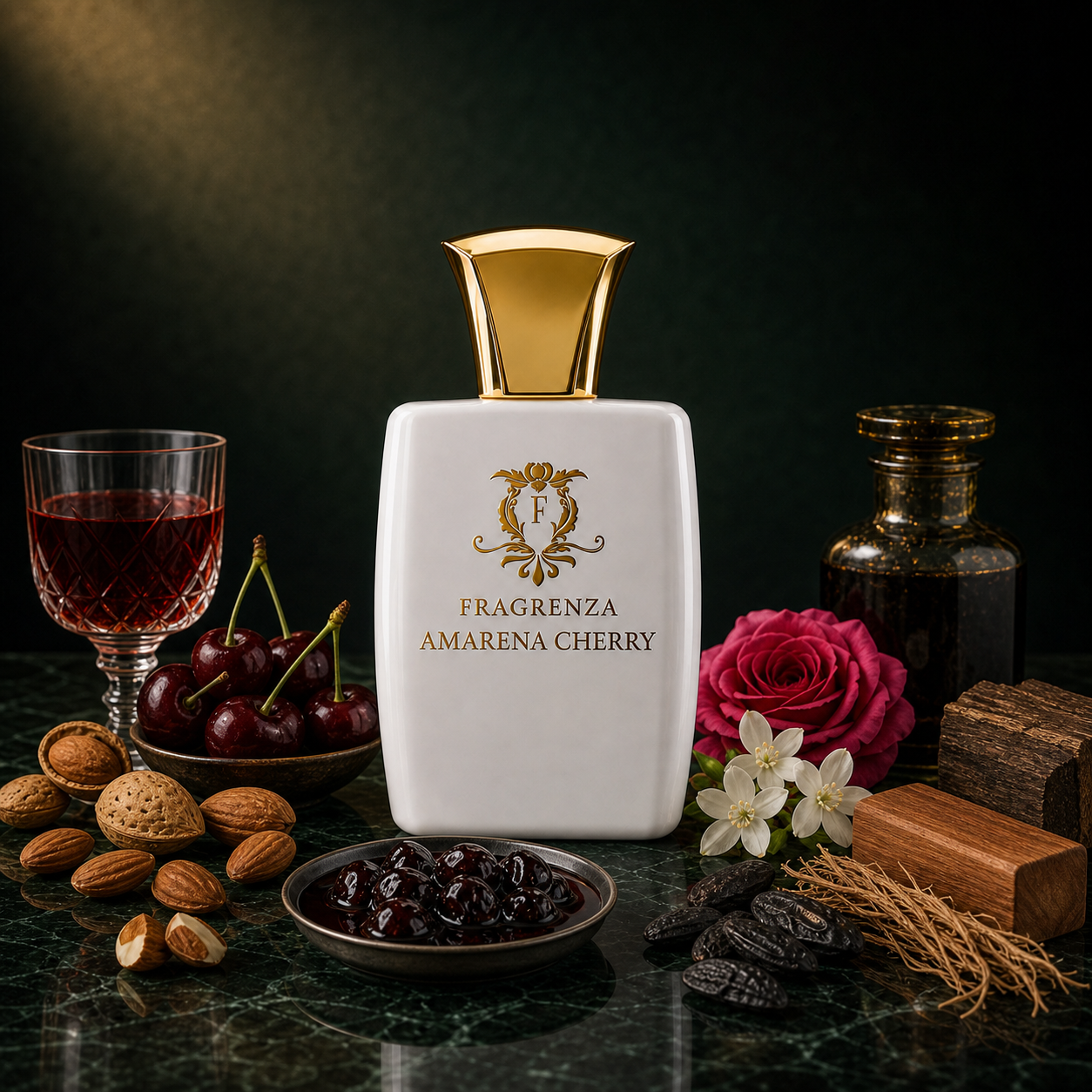
The woody fragrance collection at Fragrenza includes a number of compositions in which sandalwood plays a central or significant role, from smooth contemporary interpretations to richer, more classical oriental expressions. For anyone building a serious fragrance wardrobe, sandalwood in one of its many forms should feature prominently — not because it is fashionable but because it is, and always has been, fundamental.