Angelica in Perfumery: The Earthy, Musky Root Behind Great Fragrance
Angelica archangelica yields two distinct materials: the dry, musky, cellar-damp root absolute and the brighter peppery-citric seed oil, and perfumers choose between them for very different effects.
By Julia Moretti 6 min read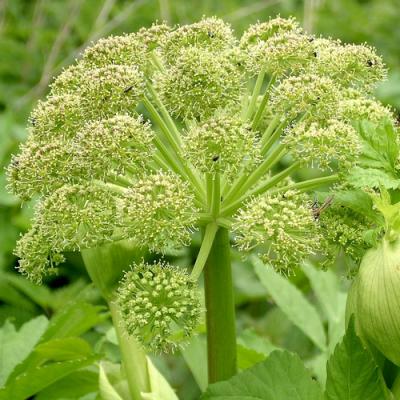
What Does Angelica Smell Like?
Angelica is one of the most peculiarly beautiful ingredients in the perfumer's palette: a material that defies easy categorisation, sitting across the intersections of green, earthy, musky and softly spicy in a way that no other single ingredient quite replicates. Derived from Angelica archangelica — a tall, hollow-stemmed biennial plant native to Northern and Central Europe and naturalised across much of the temperate world — angelica yields two distinct fragrance materials: an essential oil from the roots and an oil from the seeds, each with a markedly different character and each offering distinct creative possibilities to the perfumer.
Angelica root absolute is the more complex and challenging of the two. At opening it has a green, slightly bitter quality reminiscent of celery or parsley, but with a darker, earthier undertone that quickly becomes apparent: something damp and rooty, like soil after rain or the inside of an old cellar. As it develops, a distinctly musky quality emerges — dry, slightly animalic, with none of the sweetness associated with floral musks. This dryness is angelica root's most distinctive quality: it is a musk without sweetness, a warmth without softness, an earthiness that feels ancient rather than merely agricultural. Many perfumers describe it as smelling of the root systems of old forests, or of fur, or of something unidentifiably alive.
Angelica Seed vs. Root: Two Distinct Materials
The distinction between angelica root and angelica seed is important for understanding how the material is used in fragrance. Angelica seed oil, distilled from the small, ridged seeds of the plant, is considerably lighter, more volatile and more citrusy than the root. Its dominant impression is of a slightly spicy, peppery citrus with herbal nuances — it shares some characteristics with juniper berry, which is botanically distant but olfactorily adjacent, and with dill and other umbelliferous herbs. The seed oil is frequently used in colognes and aromatic fougeres as a supporting top note, adding a slightly exotic, botanical quality to conventional citrus openings.
Root oil and root absolute are the materials that serious perfumers find most interesting. The root material is obtained by steam distillation or solvent extraction from the dried roots, which have been used in food flavouring (notably in liqueurs like Chartreuse and gin botanicals) and traditional medicine for centuries. The resulting perfumery material is dark, complex, and must be used with the kind of restraint appropriate to materials of great olfactory strength. A tiny quantity in a composition can shift the entire register: from the sweet and floral toward something earthier, more ambiguous and more compelling.
Key Aroma Chemicals in Angelica
The aroma profile of angelica root oil is produced by a complex mixture of compounds. The most significant include alpha- and beta-phellandrene (contributing the green, slightly pepper-citrus freshness), various macrocyclic musks including cyclohexadecanolide (known as exaltolide, a key compound), pentadecanolide and other lactones that provide the root's characteristic musky warmth. The macrocyclic musk lactones in angelica root are among the most fascinating aspects of its chemistry: these large-ring lactone molecules are structurally similar to the macrocyclic musks found in musk deer and civet, which explains why angelica root has such an unmistakably animalic, musky quality despite being an entirely plant-derived material.
Exaltolide (pentadecanolide) in particular is a compound with a fascinating history in perfumery: it was the first macrocyclic musk to be identified and commercially synthesised, in the early twentieth century, and it remains an important perfumery material in its own right. The presence of these macrocyclic lactones in angelica root is part of what gives it such extraordinary fixative properties — the root oil and absolute dramatically extend the longevity of compositions in which they appear, anchoring more volatile materials to the skin for hours beyond what they would otherwise achieve. This quality makes angelica root a prized fixative in the arsenal of any natural or naturalistic perfumer.
History in Perfumery: From Herbalism to High Art
The use of angelica in fragrance has a long and distinguished history. The plant was known to mediaeval European herbalists as a panacea of almost mythological power — its association with the Archangel Michael is reflected in its Latin name, Angelica archangelica — and it was used in plague preventatives, liqueurs, candied confections and medicinal preparations long before anyone thought of it as a perfumery material. As European perfumery developed through the Renaissance and into the great era of Eau de Cologne in the eighteenth century, angelica seed became a standard ingredient in the complex botanical blends that characterised the genre.
In the era of modern fine fragrance, angelica root found its most celebrated applications in the chypre and oriental families. Its earthy, musky depth makes it an ideal complement to the oakmoss and labdanum base of a chypre, adding an additional layer of green-musky complexity that enriches what might otherwise be an overly sweet or floral structure. In orientals and gourmand structures, the root's earthy darkness provides contrast to the sweetness of vanilla and resinous notes. Several landmark fragrances of the twentieth century feature angelica as a key structural element, though it is rarely listed prominently in marketing materials.
Note Interactions: What Pairs With Angelica
Angelica root's earthy, musky, mildly animalic quality places it in productive dialogue with several categories of perfumery material. With iris — itself a rooty, carrot-like material with its own musky qualities — angelica root creates a complex, deeply earthy accord of great sophistication, used in certain iconic chypre and green compositions to create an impression of cold, stony earth. With vetiver, it deepens the already rich, rooty character of that material while adding a greener dimension.
With citrus notes, particularly bergamot and grapefruit, angelica seed oil creates sparkling, botanical openings that feel simultaneously familiar and slightly strange — the freshness of citrus made more interesting by the herb's complexity. With labdanum and oakmoss, angelica root participates in the classic chypre base structure, its musky contribution adding dimension to the mossy-amber foundation. Among florals, lily and lily of the valley have a particular affinity with angelica's green, slightly watery character, creating a wet-flower, cool-green accord of considerable elegance.
Wearing Angelica: Context and Wardrobe Placement
Fragrances featuring angelica prominently tend to have an unusual quality — they do not smell entirely familiar on first encounter, which can be initially disorienting but ultimately deeply rewarding for those who are open to being surprised by their perfume. The rooty, musky earthiness of angelica root gives compositions a sense of depth and antiquity that is particularly effective in cooler weather, when the note's warmth registers without any risk of heaviness. In summer heat, heavily angelica-based compositions can take on an unexpectedly animalic quality that is not to all tastes.
For the collector or enthusiast seeking something genuinely distinctive, compositions built around angelica represent some of the most interesting territory in contemporary niche perfumery. They tend to be unisex in register — the earthiness of the root places them beyond conventional gender coding — and they reward attentive wearing. Among the broader range of woody and earthy fragrances, angelica-prominent compositions occupy a category all their own: neither conventionally beautiful nor challenging for its own sake, but genuinely complex in the way that only a few truly great perfumery materials can produce.