

Tree Moss in Perfumery: The Dark, Resinous Lichen
Tree moss is a fresh, herbaceous note prized by perfumers, a note every fragrance lover should learn to recognise on skin.
By Julia Moretti 4 min read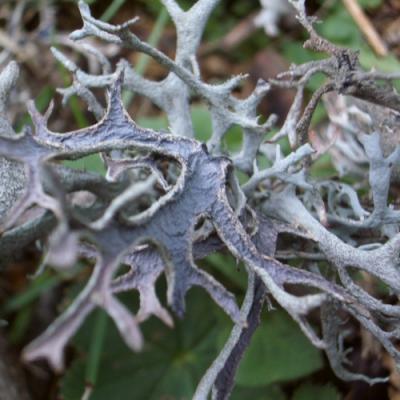
What Is Tree Moss and How Does It Smell?
Tree moss in perfumery refers primarily to the aromatic material derived from Pseudevernia furfuracea, a lichen species that grows on the bark of conifers — primarily firs, pines, and spruces — across Europe, North Africa, and parts of Asia. It is closely related to oakmoss (Evernia prunastri), the more famous lichen that has been central to the chypre and fougere fragrance families for over a century, and the two materials share a family resemblance in their dark, earthy, forest-floor character while exhibiting distinct individual profiles.
The smell of tree moss absolute is deep, complex, and immediately evocative of the natural world at its most primal. Where oakmoss tends toward the green, marine, and slightly metallic, tree moss is darker, more resinous, and more consistently earthy. There is a quality to tree moss that recalls damp conifer bark after rain — a particular combination of wood resin, decaying plant matter, and the cool mineral smell of forest stone. Beneath this initial impression lies a warm, balsamic depth that makes tree moss considerably more sensual than its appearance as grey-green crusty patches on tree bark might suggest. A slightly woody, faintly phenolic quality in the dry-down connects tree moss to leather and to the smoky aspects of incense, giving it a range of base note associations that makes it unusually versatile.
History of Tree Moss in Perfumery
The use of tree-growing lichens in perfumery is ancient. Archaeological evidence from Egypt and the Near East suggests that Pseudevernia and related species were used in aromatic preparations at least as far back as the early Bronze Age. In ancient Egypt, dried tree moss was used as packing material for aromatic spice shipments and was likely used directly in incense preparations. Greek and Roman perfumers were familiar with the material.
In the modern fine perfumery tradition, tree moss became significant in the mid-twentieth century as French perfumers explored the full range of natural materials available for creating the earthy, complex base notes required by the classic chypre architecture. While oakmoss received most scholarly and commercial attention, tree moss was used in many classic French compositions as a complementary or alternative earthy foundation. Its darker, more resinous character made it particularly useful in masculine fragrances and in oriental-chypre hybrids where the cleaner quality of oakmoss might be too bright.
The story of tree moss in contemporary perfumery is inseparable from the controversy surrounding oakmoss and the regulatory restrictions imposed on both materials by the International Fragrance Association (IFRA) due to their atranol and chloroatranol content. Tree moss absolute is subject to similar regulatory scrutiny as oakmoss, and its use in modern commercial fragrance is significantly restricted. The full context of this regulatory situation is explored in our comprehensive guide to oakmoss.
Extraction and Key Molecules
Tree moss absolute is produced by solvent extraction of the dried lichen collected from conifer bark. Collection occurs primarily in Morocco, Turkey, and the Balkans. The resulting absolute is a dark brown to greenish-brown, viscous material with an intensely concentrated aromatic character. Key aromatic compounds include atranol and chloroatranol — the sensitizing molecules responsible for regulatory restrictions — alongside evernic acid, resinous terpenic compounds, and various phenolic constituents. The overall aromatic profile is darker, more balsamic, and less marine than oakmoss. Synthetic alternatives use combinations of evernyl methyl ether, orcinol, and moss-adjacent earthy molecules to approximate the natural material.
Famous Fragrances and Note Interactions
Tree moss has appeared in many of the great French chypres of the twentieth century alongside oakmoss as part of complex earthy base accords. Its combination with labdanum creates the balsamic-earthy foundation of classic chypre. With vetiver, it deepens into richly woody earthiness. With patchouli, it contributes to a complex mossy-earthy base of powerful tenacity. In more contemporary contexts, tree moss works well with incense materials including myrrh and benzoin, which share its slightly phenolic, resinous character.
The classical chypre structure — bergamot opening, rose and jasmine heart, labdanum and tree moss base — remains one of the great architectural achievements of fine perfumery. Several celebrated masculine fougeres from Caron and Guerlain have used tree moss as a component of their complex woody-aromatic base accords. Contemporary niche fragrances seeking to recreate pre-regulatory restriction depth frequently use tree moss in combination with synthetic moss materials.
Tree Moss in the Fragrance Wardrobe
Fragrances in which tree moss plays a significant role are emphatically not casual, easy-going compositions. They make genuine demands on the wearer: for attention, for tolerance of complexity, for willingness to live with a note that is earthy and resolutely non-pretty in any conventional sense. In return, they offer depth and age — a genuine sense of connection to the natural world at its most primal — that no other fragrance family can replicate.
Within the niche fragrance world, tree moss and mossy chypre fragrances represent some of the most historically significant and technically accomplished compositions. For serious fragrance collectors, experiencing the chypre tradition with its extraordinary interplay of bright top notes, complex floral heart, and deep mossy base is an essential part of fragrance education. The broader territory of woody and earthy fragrances offers many excellent entry points for those new to this rewarding aromatic family.