

Cedar in Perfumery
Cedrol gives Juniperus virginiana its pencil-shaving dryness, Cedrus atlantica its creamier woody-floral profile, and Juniperus ashei its sharper camphor edge.
By Julia Moretti 7 min read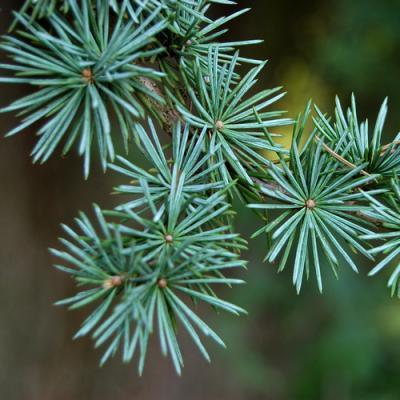
Cedar: The Foundation Stone of Woody Perfumery
If there is one wood that has defined masculine fragrance more than any other, it is cedar. Dry, clean, slightly resinous, with a pencil-shaving quality that is immediately recognisable and universally appealing, cedarwood has been a cornerstone of fine fragrance for well over a century. It provides the structural backbone of countless compositions across multiple fragrance families — fougères, orientals, chypres, fresh aromatic, and woody itself — lending longevity, depth, and an archetypal masculinity that has proven extraordinarily enduring in changing fragrance fashions.
The term "cedar" in perfumery actually encompasses several distinct botanical species, each producing wood materials with somewhat different aromatic characters. The most important are Virginian cedar (Juniperus virginiana, technically a juniper rather than a true cedar), Atlas cedar (Cedrus atlantica, from the mountains of Morocco), and Texas cedarwood (Juniperus ashei). Each has its own aromatic nuance: Virginian cedar is dry and pencil-like; Atlas cedar is softer, creamier, slightly woody-floral; Texas cedarwood is sharper and more camphoraceous. Together, these materials constitute the "cedar" that appears on fragrance note pyramids and that most wearers associate with the word.
The Chemistry of Cedar: Cedrol and Related Compounds
The characteristic scent of cedar derives from a complex mixture of sesquiterpene hydrocarbons and their oxygenated derivatives. Cedrol, a sesquiterpene alcohol found across multiple cedarwood species, is the primary aromatic compound responsible for the warm, woody, slightly sweet quality that defines the cedar family. It is a molecule of enormous tenacity — one of the reasons cedar is so valued as a base note material — and its warm, enveloping quality on dry skin is one of the most pleasant aspects of wearing a cedarwood-based fragrance.
Alpha-cedrene and beta-cedrene are the terpene hydrocarbons that accompany cedrol in most cedarwood oils, contributing a drier, more resinous character that provides the pencil-shaving quality most associated with the note. Thujopsene, another terpene present particularly in Atlas cedarwood, adds a softer, slightly floral dimension that distinguishes this variety from the drier Virginian cedar. The combination of these molecules — and the specific ratios in which they appear in different cedar species — creates the range of cedar characters available to perfumers, from the driest and most resinous to the softer, creamier expressions of Atlas cedar. A broader exploration of the wood family can be found in the guide to sandalwood in perfumery.
Cedar Through History: From Ancient Forests to the Flacon
Cedar's history as an aromatic material is ancient and extraordinary. The cedar forests of Lebanon, from which the biblical Cedars of Lebanon (actually Cedrus libani) were harvested, were prized throughout the ancient Near East for their aromatic wood — used in construction, furniture, and the burning of incense in religious ceremonies. The Egyptians used cedarwood oil in embalming preparations, taking advantage of the wood's natural preservative properties. The Greeks and Romans burned cedar in their temples and used the wood to construct their most prized buildings, understanding that the aromatic resins in the wood protected against insects and decay.
In the modern era of fine fragrance, cedarwood became established as a fundamental base note material in the late nineteenth and early twentieth centuries, when perfumers were developing the structural vocabulary of the great Western fragrance traditions. The fougère — that quintessentially masculine fragrance family built on lavender, coumarin, and oakmoss — used cedarwood as a supporting structural note from its earliest iterations. As the century progressed and fragrance structures became more sophisticated, cedar's role grew: it became both a structural element and an expressive note in its own right, appreciated for its own aromatic character rather than merely its functional contribution to longevity and projection.
Famous Fragrances Featuring Cedar
The list of celebrated fragrances built around cedar is essentially a roll call of modern fragrance history. Bleu de Chanel demonstrates how cedar can anchor a sophisticated modern masculine composition — the dry, clean quality of the wood providing structure and longevity for the fresh citrus and aromatic top notes while the sandalwood and amber of the base add warmth. Dior Sauvage uses cedar alongside ambroxan to create its characteristic dry, airy, expansive woody quality — the cedar providing depth and structure to a composition that achieves its enormous projection through the interaction of multiple high-impact ingredients.
Tom Ford Oud Wood showcases how cedar interacts with more exotic wood materials — the dryness of the cedar providing a counterpoint to oud's animalic richness and the composition's overall exotic character. For wearers building a wardrobe centred on the woody fragrances collection, cedar-forward compositions provide the most versatile and reliably wearable option in the wood family.
Note Interactions: What Cedar Works With
Cedar's clean, dry character gives it exceptional versatility in fragrance composition. In the top notes, it pairs beautifully with citrus materials — bergamot and cedar together create a particularly satisfying accord of bright freshness and dry, woody depth that has been a mainstay of masculine fragrance for decades. Lavender and cedar is another classic pairing, the herbal freshness of the lavender contrasting with the dry wood in a way that is effortlessly elegant and timeless. The article on lavender in perfumery covers this pairing in detail.
At the heart level, cedar interacts beautifully with rose — the combination of dry, clean wood and the richness of rose absolute creating compositions of extraordinary balance and sophistication. Iris and cedar is another pairing of great elegance, the powdery, rooty quality of iris finding a natural counterpart in the dry, clean character of the wood. In the base, amber, vanilla, and sandalwood all work seamlessly with cedar, providing warmth and sweetness that round off the dryness of the wood without overwhelming it. Vetiver and cedar together create particularly masculine, earthy compositions with impressive depth and longevity.
Wardrobe Context: Cedar Across the Seasons
Cedar is one of the most genuinely year-round fragrance materials available. Its dry, clean character means it never feels oppressive in warm weather, while its depth and longevity make it equally effective in the cooler months. A cedar-based fragrance is one of the most reliable choices for professional environments — clean, sophisticated, and never intrusive. For evening wear, cedar's natural elegance makes it a perfect structural note in more complex compositions that combine it with richer, darker base materials.
The note's essentially masculine character does not prevent it from appearing in important women's fragrances, where cedar provides structure, length, and a dry, sophisticated modernity. Cedar in women's fragrance is increasingly valued as a counterpoint to the sweetness of floral and gourmand notes — a grounding element that prevents compositions from becoming saccharine and adds a note of intelligent restraint. For wearers in either the men's fragrances or women's fragrances categories, cedar-based compositions represent some of the most wearable and reliably satisfying options in the entire fragrance landscape.
Synthetic Cedar: Iso E Super and the Modern Woody Revolution
The story of cedar in contemporary perfumery cannot be told without reference to Iso E Super — arguably the most important synthetic woody material of the twentieth century and a molecule whose influence on modern fragrance is impossible to overstate. Developed by IFF in the 1970s, Iso E Super is not precisely a cedar molecule, but its abstract, woody, slightly metallic character — sometimes described as "cedar on steroids" — shares the dry, clean quality of natural cedarwood while operating at an entirely different level of intensity and tenacity. It is the molecule primarily responsible for the characteristic "smells like a forest" quality that defines many contemporary masculine woody fragrances.
The relationship between natural cedar materials and Iso E Super in contemporary perfumery is complex and interesting. Many modern fragrances use both — the natural cedar providing authenticity and botanical complexity, the Iso E Super providing scale and projection that natural materials cannot match. Together, they create a woody impression that is simultaneously familiar and larger-than-life, recognisably cedar-based yet amplified beyond what any natural forest could produce. For wearers who want to understand this modern woody aesthetic, Dior Sauvage is perhaps the single most instructive example — a composition in which abstract woody materials like Iso E Super work in concert with natural cedar elements to create an impression of vast, airy, almost landscape-scale woody freshness that has proven irresistibly appealing to millions of wearers worldwide.
Sustainable Sourcing of Cedar in Contemporary Perfumery
As the fine fragrance industry has become more conscious of its environmental footprint, the sourcing of cedarwood has come under increased scrutiny. Virginian cedarwood (Juniperus virginiana) and Texas cedarwood (Juniperus ashei) are harvested from trees that are sometimes considered invasive species in their growing regions, making their cultivation and harvest less environmentally problematic than some other natural materials. Atlas cedarwood, from the Moroccan mountains, is subject to increasing regulation as the wild stands of Cedrus atlantica come under pressure from climate change and overexploitation. The shift toward plantation-grown and certified sustainable sources of cedarwood — alongside the development of high-quality synthetic alternatives — reflects the industry's growing awareness that the natural materials it depends on must be managed responsibly if they are to remain available for future generations of perfumers. For fragrance lovers who care about sustainability, seeking out fragrances that carry credible natural sourcing credentials is an increasingly meaningful way to engage with these issues.