
Chocolate in Perfumery: The Gourmand Note That Changed Modern Fragrance
Chocolate sits as a slow, soft gourmand anchor: sugar-warm, cream-soft, low-lit, lingering close to skin past the heart.
By Julia Moretti 10 min read
The gourmand note that changed modern perfumery
Chocolate is one of perfumery’s most evocative materials. Warm, rich, slightly bitter, faintly sweet, with a depth that immediately reads as comfort, indulgence, and luxury, chocolate has anchored a meaningful share of contemporary fragrance composition since the early 1990s. Where vanilla brings creamy sweetness and almond brings powdery marzipan warmth, chocolate brings something darker and more grown-up: the smell of melted cocoa, dark roasted cocoa beans, the slightly bitter-sweet edge of high-percentage chocolate, the warmth of dessert and the complexity of fermentation in the same breath.
This is the guide to chocolate as a perfumery material. What chocolate actually is in fine fragrance, the chemistry of the cocoa accord, the cultural moment that brought chocolate into mainstream perfumery, the famous fragrances that put chocolate to work, the Fragrenza compositions that use the gourmand cocoa register, and how to think about chocolate in your own wardrobe.
What chocolate is in perfumery
Chocolate as a perfumery material is delivered through several different aromatic forms. Cocoa absolute is a viscous, dark brown extraction made from solvent extraction of fermented and roasted cocoa beans (Theobroma cacao). The natural absolute carries the warm, slightly bitter, complex character of dark chocolate — the closest perfumery has to a literal extraction of cocoa. The material is expensive, has limited stability, and is used selectively in fine fragrance for its authentic chocolate character.
The synthetic palette around chocolate is broader and more flexible. Pyrazines contribute the roasted, slightly nutty character of cooked cocoa. 2,3-dimethylpyrazine in particular delivers the distinctly chocolate-like aroma of dark chocolate. Vanillin and ethyl maltol add the sweet-warm dessert facet. Theobromine and related captives provide the slightly bitter character that distinguishes dark chocolate from milk chocolate. Most contemporary chocolate-direction compositions use cocoa absolute alongside several synthetic captives to deliver the desired register.
The reconstruction can lean in different directions. Dark, slightly bitter, dry chocolate (closer to high-percentage cacao). Milk chocolate (sweeter, creamier, more vanilla-forward). White chocolate (vanilla and cocoa butter without the dark cocoa solids). Praline (with hazelnut and caramel character). Each register requires different proportions in the formulation.
What chocolate actually smells like in perfume
Chocolate as a perfumery accord has a warm, rich, faintly bitter character with a sweet undertone and considerable depth. Dark chocolate compositions read drier, more bitter, and more complex; milk chocolate compositions read sweeter, creamier, and more dessert-like. The slightly fermented quality that distinguishes great chocolate from chocolate flavoring is what gives the perfumery accord aromatic interest beyond mere sweetness.
The wear on skin reads warm, indulgent, slightly powdery, with a clear edible quality that distinguishes chocolate-direction compositions from purer floral or woody perfumery. Chocolate is one of the most evocative notes in fine fragrance because the smell triggers strong sensory associations — warmth, comfort, indulgence, intimacy — that few other materials can match. The note rarely overpowers a composition; it more often sits at the heart or base, contributing depth and richness without dominating the overall structure.
Chocolate has natural compositional affinities with several other gourmand and aromatic materials. The note works particularly well with vanilla, patchouli, tonka bean, coffee, almond-direction materials, and amber bases.
Cultural and compositional history
Chocolate has a relatively short formal history in fine perfumery, despite the material’s long use in food culture. Cocoa was a luxury aromatic in eighteenth-century Spanish and French courts, but its adoption in fine fragrance largely waited for the twentieth century. The note appeared occasionally in mid-twentieth-century compositions but did not become a structural staple until the contemporary gourmand revolution that began in the early 1990s.
The pivotal moment was Mugler Angel (1992), composed by Olivier Cresp and Yves de Chiris. Angel placed chocolate-praline character at the heart of a fruity-patchouli-vanilla structure and effectively created the modern gourmand category. The composition was commercially polarizing at launch but became culturally foundational — it established that chocolate, traditionally a food note, could anchor a serious feminine fragrance and find a wide audience.
The decade that followed saw chocolate enter compositions across the perfumery spectrum. Thierry Mugler’s own flankers extended the chocolate-patchouli register. Rochas Tocade and a long list of mainstream feminine fragrances borrowed Angel’s structural template. Niche perfumery used chocolate more selectively — in compositions like Serge Lutens Borneo 1834 (chocolate and patchouli), Tom Ford Black Orchid (dark fruity-chocolate truffle character), and various Maison Francis Kurkdjian works. Today chocolate is a structural staple of feminine, masculine, and unisex fine perfumery.
Famous chocolate-direction fragrances
Several compositions deserve study because they show what chocolate can do at the structural center of a fragrance. Mugler Angel (1992) is the canonical chocolate-praline-patchouli reference and remains the most commercially successful chocolate-direction fragrance ever made. Serge Lutens Borneo 1834 (2005) places dark chocolate alongside patchouli and labdanum in one of the most refined niche interpretations of the chocolate register. Tom Ford Black Orchid (2006) uses dark cocoa-truffle character at the heart of an oriental structure.
In the masculine and unisex space, several Le Labo, Kilian, and Maison Francis Kurkdjian compositions use chocolate-direction materials to deliver gourmand depth without entering full feminine territory. Mugler A*Men (1996) was an early masculine reference for chocolate-and-coffee-and-tobacco that anchored the men’s gourmand category. The dessert-direction fragrances of the 2010s and 2020s — from various niche houses — have continued to refine chocolate’s role in fine perfumery, with darker, drier, less sugary interpretations gaining ground over the candied chocolate of the 1990s and 2000s.
Chocolate direction in the Fragrenza line
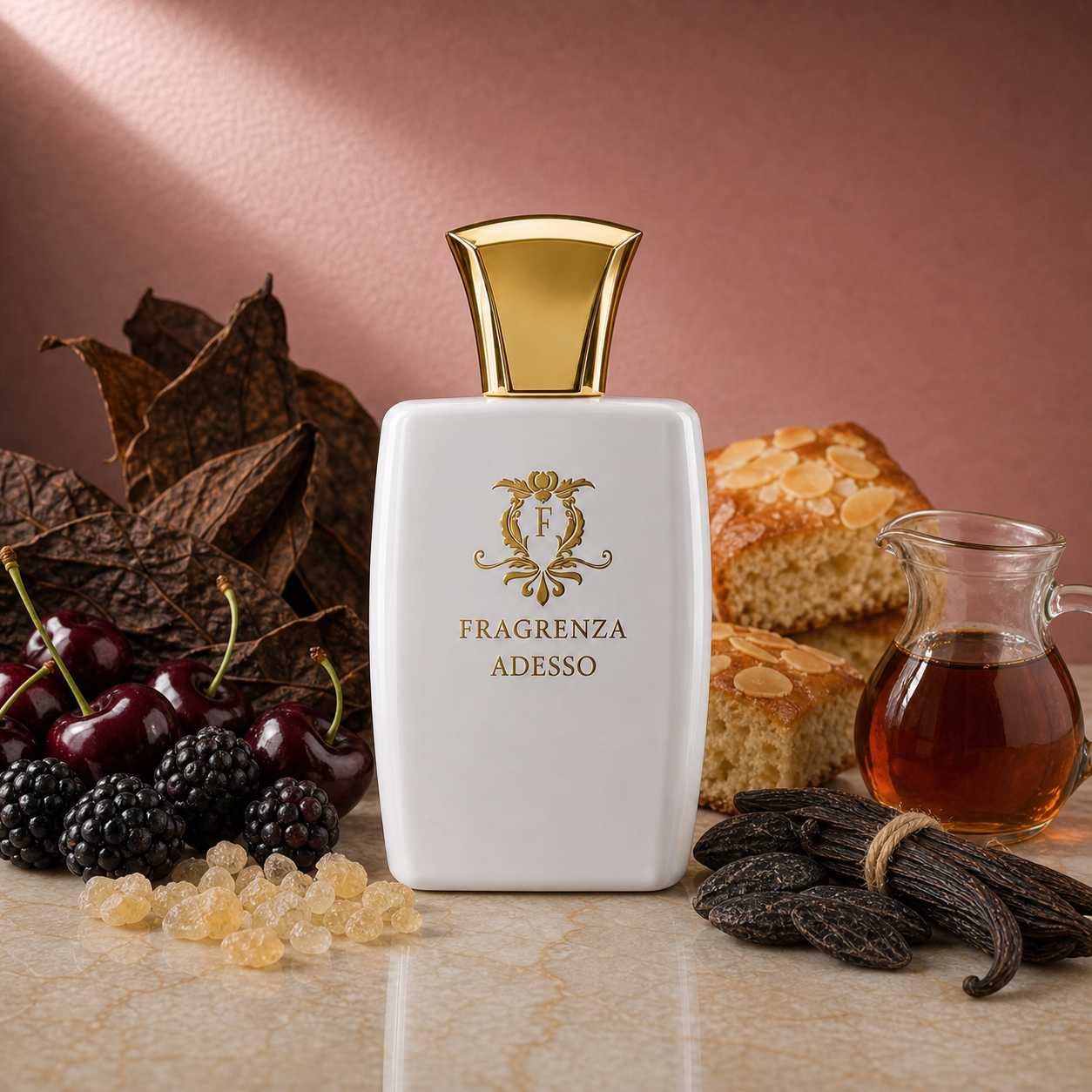
Several Fragrenza compositions place chocolate or cocoa at the structural center of the wear.
is the most directly relevant — the base places dark chocolate alongside coffee, patchouli, tonka bean, vanilla, and cedar in one of the most explicit cocoa-direction compositions in the line. The chocolate character is anchored by patchouli and bridged by coffee, the structural pattern Mugler Angel established and contemporary compositions still build on. uses cocoa in the base alongside woody notes, dried fruits, vanilla, amber, and tobacco — the chocolate-and-tobacco register that masculine and unisex gourmand perfumery has explored for thirty years.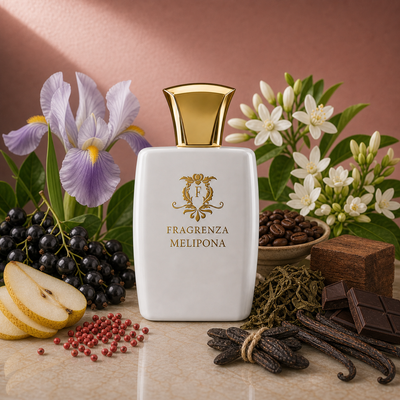
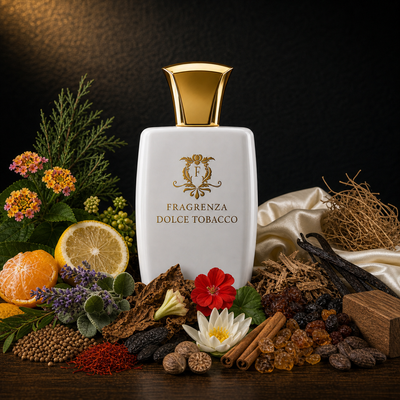
In the warm gourmand-caramel direction,
places caramel and oud alongside vanilla and milky notes — a sweeter, creamier register adjacent to milk-chocolate gourmand structures. And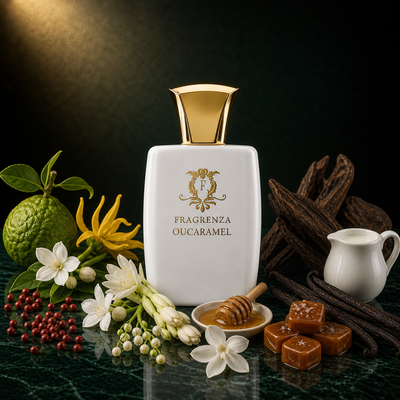
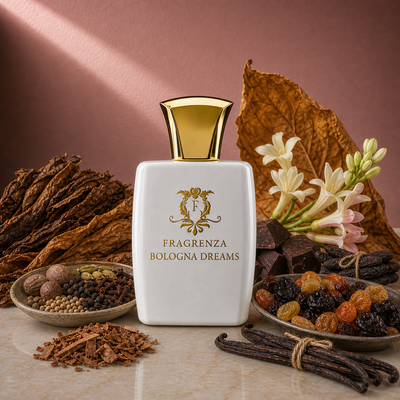
For more on related gourmand materials, see our entries on vanilla, tonka bean, and benzoin — each part of the broader warm-gourmand vocabulary modern perfumery draws on.
How chocolate interacts with other notes
Chocolate is one of the most compositionally generous materials in modern perfumery. Its depth, warmth, and edible quality bridge between many different aromatic categories.
With patchouli, chocolate forms the structural backbone of contemporary gourmand perfumery. The earthy patchouli grounds the rich chocolate; the chocolate humanizes the heavy patchouli. Mugler Angel established the pattern and a generation of contemporary compositions has built on it.
With vanilla and gourmand bases, chocolate creates the dessert-and-cream register that defines a meaningful share of modern feminine and unisex perfumery. The combination is the structural template of countless compositions.
With coffee and roasted notes, chocolate amplifies its own slightly roasted, slightly bitter character into a fuller mocha accord. Several contemporary compositions use this pairing to deliver a more grown-up, less candied chocolate register.
With tobacco, chocolate forms the warm-luxe register that masculine and unisex gourmand perfumery has refined over the past two decades. Tobacco brings dry-aromatic sophistication; chocolate brings warm-edible depth. The combination reads as evening, intimacy, and indulgence.
With rose, chocolate adds gourmand depth to a classical floral register. The combination is unexpected but works, particularly in contemporary niche compositions where rose-and-chocolate or rose-and-cocoa accords push the floral into modern territory.
With chili, cardamom, and warm spices, chocolate creates the aromatic-spicy register that several niche compositions have explored. The spice prevents the chocolate from reading as too sweet; the chocolate prevents the spice from reading as too dry.
Chocolate in the modern wardrobe
Chocolate-direction compositions wear especially well in autumn and winter, where the warm gourmand character settles comfortably into cooler air and the heavier base materials project at full depth. The category is the natural habitat of evening wear, intimate occasions, and cool-weather environments where heavy perfumery has space to breathe. Spring and summer wear is more constrained — chocolate’s richness can feel out of register against bright sunshine, though lighter milk-chocolate or cocoa-direction compositions wear better in warm weather than dark-chocolate-and-amber heavy structures.
The note carries no inherent gender coding, despite chocolate’s strong feminine association in 1990s mainstream perfumery. Mugler A*Men, several niche cocoa-direction works marketed to men, and a long list of contemporary unisex gourmand compositions show what chocolate can do across registers. The structural function of the note is the same; only the surrounding materials shift the perceived gender of the composition.
Application is conventional: pulse points, light spray, allow the heart and base to develop. Chocolate-direction notes generally express most clearly in the heart and base of a composition, becoming most prominent thirty to ninety minutes into the wear and persisting through the dry-down. The note rewards patience — the full chocolate character may not arrive until the top notes have settled.
Frequently asked questions
What does chocolate smell like in perfume?
Warm, rich, slightly bitter, faintly sweet, with a depth that reads as comfort and indulgence. Dark chocolate compositions are drier and more complex; milk chocolate compositions are sweeter and creamier. The slightly fermented edge of high-quality cocoa is what distinguishes serious chocolate-direction perfumery from mere chocolate flavoring.
Is chocolate a natural perfumery material?
Cocoa absolute is a natural extraction from fermented and roasted cocoa beans, but it is expensive and has limited stability. Most contemporary chocolate-direction compositions combine cocoa absolute with synthetic captives (pyrazines, vanillin, ethyl maltol, theobromine derivatives) to deliver the desired register at scale. Both natural and synthetic chocolate materials are common in fine perfumery.
What is the difference between dark chocolate, milk chocolate, and praline in perfumery?
Compositional formulation. Dark chocolate accords lean toward bitter pyrazines, less vanilla, and warm-dry base materials — reading as serious and grown-up. Milk chocolate accords add more vanilla and creamy materials — reading as sweeter and softer. Praline accords incorporate hazelnut and caramel character alongside cocoa — reading as confectionery dessert. The choice of register dramatically shifts how the wear reads.
Is chocolate a feminine note?
Conventionally coded feminine in mainstream 1990s perfumery thanks to Mugler Angel’s commercial success, but the note has no inherent gender coding. Mugler A*Men and a long list of contemporary masculine and unisex gourmand compositions use chocolate as a structural element. Modern niche perfumery treats chocolate as a fully gender-neutral material.
What season is chocolate best for?
Autumn and winter for the warm gourmand register, where the rich character and warm base materials project at full depth in cooler air. Spring works well for lighter milk-chocolate or chocolate-and-rose compositions. Summer is the most constrained season — heavy chocolate-amber compositions can feel oppressive in hot weather, though lighter cocoa-direction structures can work comfortably year-round.
What perfumes use chocolate well?
Mugler Angel (1992) is the canonical chocolate-praline-patchouli reference. Serge Lutens Borneo 1834 (2005) places dark chocolate alongside patchouli and labdanum in a refined niche interpretation. Tom Ford Black Orchid (2006) uses dark cocoa-truffle at the heart. Mugler A*Men (1996) was an early masculine chocolate-coffee-tobacco reference. Various contemporary niche houses have refined the chocolate register over the past decade with darker, drier, less sugary interpretations.
Why does perfumery chocolate smell different from real chocolate?
Because perfumery chocolate is a stylized aromatic accord built from natural and synthetic materials chosen for their aromatic interest, not literal extraction. The accord amplifies the cocoa-and-roast character that gives chocolate its compositional identity while suppressing the dairy-and-sugar components that dominate finished food. The result smells like the idea of chocolate rather than the literal melted bar — closer to the smell of a high-percentage dark chocolate bar than to a Hershey kiss.
The structural importance of chocolate
Chocolate transformed fine perfumery in the early 1990s and has anchored a meaningful share of contemporary fragrance composition ever since. The note’s combination of warmth, richness, slight bitterness, and edible-comfort character makes it useful across categories, decades, and gender registers. Whether you are wearing a classical chocolate-praline-patchouli feminine like Mugler Angel, a contemporary dark-cocoa-and-amber niche composition, a chocolate-and-coffee mocha gourmand, or a chocolate-and-tobacco warm masculine, the note is doing structural work that few other materials can match. Three decades of fine perfumery has built around it.