Quince in Perfumery: The Tart, Cooked-Fruit Note Between Apple and Pear
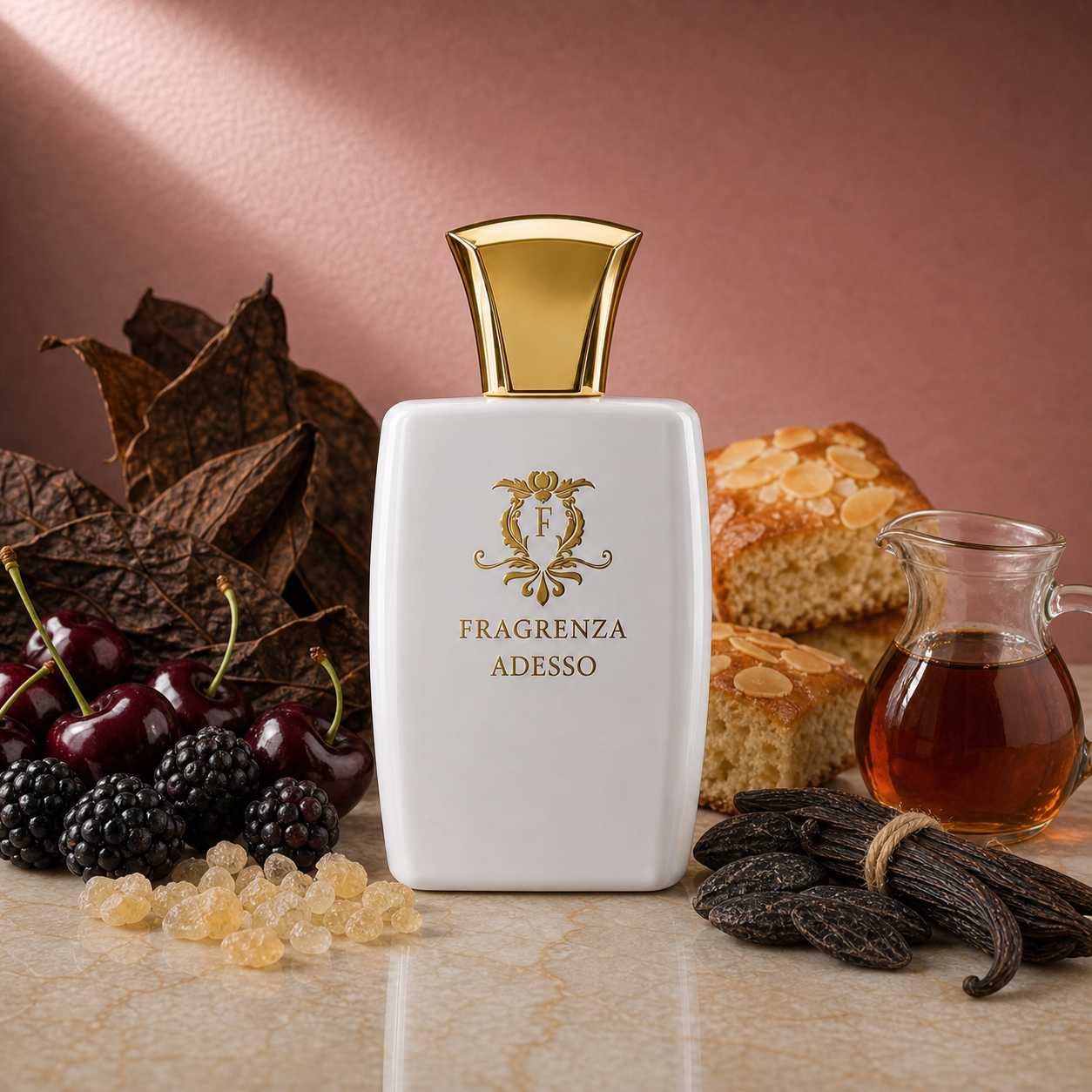
Quince is a juicy, peel-bright fruit: sun-jam opening, ripe-bright midsection, with a soft sugared echo through the dry-down.
By Julia Moretti 6 min read
The pome fruit at the edge of pear and apple
Quince is one of perfumery’s least-known but quietly important fruity materials. Slightly tart, faintly fruity, with a distinctly autumnal character that sits between apple and pear, quince contributes the cool-tart-honeyed facet that distinguishes contemporary fruity-floral compositions from purely peach- or apple-led structures. The fruit is rarely the headline note on a fragrance bottle, but quince-direction materials show up structurally in dozens of modern compositions where perfumers want fruity character with a slightly more grown-up, slightly more tart-cooked register than fresh pome fruits provide.
This is the guide to quince as a perfumery material. What quince actually is in fine fragrance, the chemistry of the tart-cooked-fruit character, the cultural moment that brought quince into contemporary perfumery, the famous fragrances that put quince to work, the Fragrenza compositions that use the quince register, and how to think about the note in your own wardrobe.
What quince is in perfumery
Quince (Cydonia oblonga, the rare pome fruit related to apples and pears) cannot be extracted as a perfumery material at fine-fragrance quality. The fresh fruit contains too little volatile aromatic content for steam distillation or solvent extraction to yield commercially viable oil. The quince accord that appears in fine perfumery is reconstructed from a small set of synthetic captives that together evoke the tart-cooked-fruit character of the fruit at peak ripeness or after compote-cooking.
The reconstruction typically uses combinations of small fruity esters, lactones in the gamma- and delta- families, and specific aldehydes that contribute the slightly tart-cooked-fruity character. Quince captives developed by major aroma-chemical houses deliver the most direct quince facet alongside related pome-fruit captives that bring apple and pear character into the accord.
Like nearly all fruit notes other than citrus, quince is an aromatic construction. The accord stylizes the most interesting facets of the fruit while suppressing the green-watery character that dominates raw fresh quince.
What quince actually smells like
Quince in fine fragrance reads as the tart-honeyed-cooked-fruit character of compote-stewed quince — closer to quince paste or quince jelly than to the raw fruit, which has a peculiar astringent character that does not translate well to perfumery. The accord sits between apple and pear, with a more autumnal, more cooked-warm character than either.
The wear on skin reads cool, slightly tart, faintly honeyed, with a quiet sweetness underneath that distinguishes quince from purely tart materials. Quince is rarely the headline note on a fragrance bottle, but where you see “cooked fruit,” “autumn fruit,” or specific niche-perfumery references, quince-direction materials are usually contributing structurally.
Cultural and compositional history
Quince has a long culinary history (Roman cookbooks include quince paste recipes; Mediterranean cuisine uses quince extensively) but only entered fine perfumery in the contemporary era. The fruit appeared occasionally in mid-twentieth-century compositions but emerged as a recognized perfumery accord in the 2000s and 2010s niche space.
Various contemporary niche compositions place quince at the structural opening of fruity-floral compositions. Diptyque, Atelier Cologne, and several independent perfumers have used quince-direction captives to deliver autumnal-fruity character without committing to full apple or pear identity. The contemporary moment treats quince as a sophisticated alternative to mainstream fruity materials — recognizable enough to feel familiar, unusual enough to feel niche.
Quince in the Fragrenza line
Several Fragrenza compositions use quince-adjacent fruity character at the structural center.
places peach, mandarin, and orange in the opening with a heart of white flowers, rose, cinnamon, and clove, supported by sandalwood, tonka, and cashmere musks — the soft fruity-floral-warm register where quince-direction character lives in modern compositions.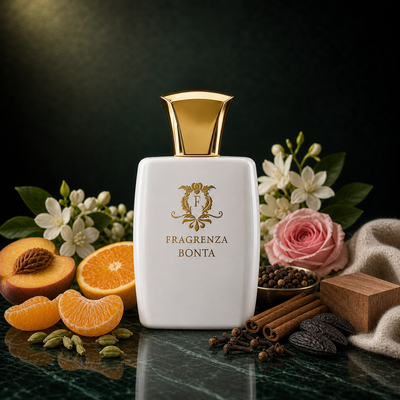
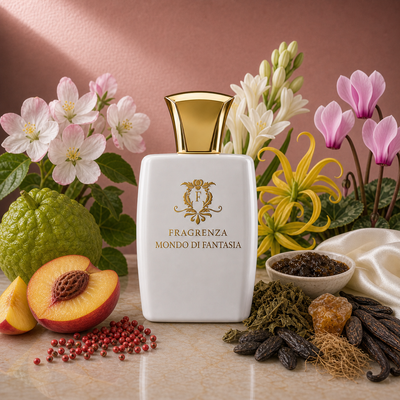
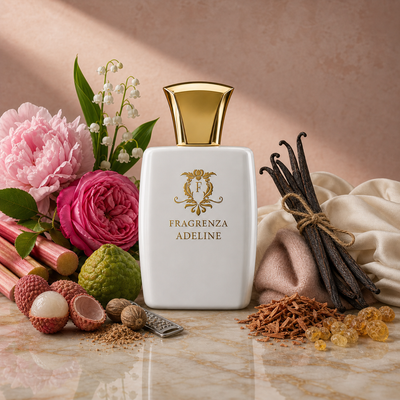
places nectarine and apple blossom in the opening alongside pink pepper, tuberose, ylang ylang, and cyclamen in the heart, with patchouli, benzoin, castoreum, tonka, vanilla, vetiver, and musk at the base — the pome-fruit-and-floral-with-depth register that quince-adjacent compositions inhabit. (Adeline) uses lychee and rhubarb at the opening alongside bergamot and nutmeg, with a Turkish rose, lily of the valley, and peony heart — an adjacent tart-pink-fruity register.
And
places hyacinth and pineapple in the opening alongside iris, jasmine, and pink pepper in the heart, with vetiver, patchouli, musk, amber, and vanilla at the base — the tropical-fruity-with-floral register that bridges quince perfumery into broader pome-fruit territory.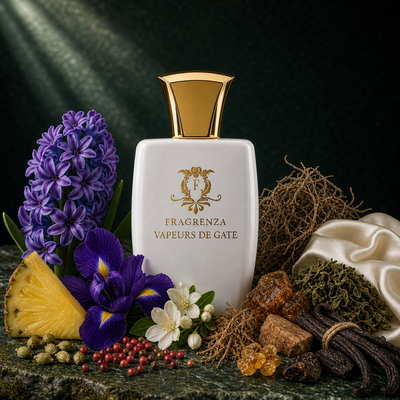
For more on related fruity perfumery, see our entries on apple, pear, and peach.
How quince interacts with other notes
Quince is compositionally generous. Its tart-honeyed-cooked-fruit character pairs well with several material families.
With apple, pear, and other pome fruits, quince extends and complicates the orchard-fruit accord into a richer compote-direction structure.
With rose and other florals, quince adds an autumnal fruity counterpoint to classical floral structures. Several contemporary niche fruity-floral compositions use this pairing.
With vanilla and gourmand bases, quince creates the compote-and-cream register that anchors a small but growing share of contemporary niche gourmand perfumery.
With clean musks and light woods, quince extends into the soft fruity-musk-woody register that contemporary luxury perfumery has refined.
With cinnamon and warm spices, quince creates the autumnal-spice register that several contemporary fall-and-winter compositions inhabit.
Quince in the modern wardrobe
Quince compositions wear especially well in autumn, where the cooked-fruit register matches the season’s mood. The category extends comfortably into spring for lighter quince-and-floral compositions and into winter for richer quince-and-amber structures. Summer is the most constrained season for the note.
Quince carries no inherent gender coding. Contemporary unisex compositions use quince freely as a structural fruity element. The note is functionally gender-neutral in modern niche perfumery.
Application is conventional: pulse points, light spray. Quince-direction notes generally express most clearly in the opening and gradually integrate with heart and base materials through the wear.
Frequently asked questions
What does quince smell like in perfume?
Tart, faintly honeyed, with a distinctly cooked-fruit character that sits between apple and pear. The accord reads as autumnal compote rather than fresh fruit, with a slightly more grown-up character than mainstream pome-fruit accords.
Is quince a natural perfumery material?
No — like most non-citrus fruits, quince cannot be extracted directly at fine-fragrance quality. The accord is reconstructed from synthetic captives including fruity esters, gamma- and delta-lactones, and branded quince-direction captives developed by major aroma-chemical houses.
What is the difference between quince and apple or pear in perfumery?
Quince is more tart, more honeyed, more clearly cooked-character; apple is fresher and more crisp; pear is sweeter and more juicy. The three pome-fruit accords are sometimes used together to build complex orchard-fruit structures but are not interchangeable.
Is quince a feminine note?
Conventionally coded toward feminine through fruity-floral marketing, but the note has no inherent gender coding. Modern niche perfumery uses quince freely across unisex compositions.
What season is quince best for?
Autumn, by a meaningful margin. The cooked-fruit register matches the season’s aromatic mood. The category extends into spring and winter through different surrounding materials.
What perfumes use quince well?
Various contemporary niche compositions place quince at the structural opening of fruity-floral or fruity-amber compositions. Diptyque, Atelier Cologne, and several independent perfumers have used quince-direction captives in modern luxury perfumery.
Why does perfumery quince smell more like compote than fresh quince?
Because raw quince has a peculiar astringent character that does not translate well to fine fragrance. The perfumery accord stylizes the cooked-honeyed character that quince develops after compote-cooking, which is more aromatically interesting and reads more clearly as “quince” to most wearers.
The structural place of quince
Quince is one of contemporary perfumery’s quieter but most distinctive fruity additions. The note brings something specific that mainstream apple, pear, or peach cannot quite deliver, and contemporary perfumers have developed a sophisticated palette around it. Whether you are wearing a contemporary niche fruity-floral, a quince-and-rose modern feminine, or a fall-and-winter compote-direction gourmand, the quince materials are doing structural work that distinguishes the composition from purely mainstream fruity perfumery.