

Hay in Perfumery: The Warm, Coumarinic Note That Smells Like Sunlit Summer
Hay is a centrepiece of the modern gourmand family. Learn how perfumers use it, what it smells like on skin, and the fragrances that wear it best.
By Julia Moretti 6 min read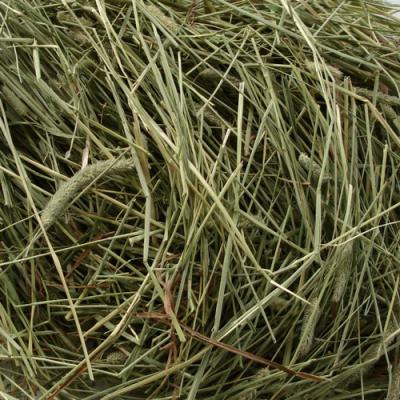
The Smell of Dried Grass: Hay as an Olfactory Concept
There is a particular sensory pleasure in the smell of newly dried hay on a warm summer afternoon: the sweetness of sun-warmed grass, the dusty warmth of dried clover, the faint vanilla-like quality of slowly drying plant material, and beneath it all a gentle, slightly grassy bitterness that keeps the whole from being cloying. It is one of the most universally recognisable and broadly appealing outdoor scents, and in perfumery it has been captured, synthesised, and deployed in some of the most successful and enduring fragrances ever created.
Hay is, in perfumery terms, primarily a coumarin-forward note. The hay accord's characteristic sweet, almost vanilla-like, slightly grassy and almondy character is dominated by coumarin and its close relative dihydrocoumarin, which appear naturally in sweet vernal grass (Anthoxanthum odoratum), sweet clover (Melilotus officinalis), and woodruff (Galium odoratum) — the plants whose drying releases these aromatic compounds and creates the characteristic hay smell. When these plants wilt and ferment slightly, enzymatic processes release the coumarin from its inactive glycoside precursor, and the warm, sweet scent develops.
Botanical Sources: The Plants Behind the Note
Sweet vernal grass is perhaps the most important botanical source of the hay note in perfumery. Native to Europe but naturalised across much of the world, it is the grass whose distinctive scent makes freshly cut meadows smell so evocative. The coumarin it contains is released on wilting, giving newly mown hay its characteristic sweetness that intensifies as the grass dries.
Sweet clover (Melilotus officinalis and Melilotus alba) is another primary source — the coumarin content of dried sweet clover can be remarkably high, and the plant has been used medicinally and aromatically for centuries. The smell of dried sweet clover is perhaps the most direct botanical analogue to the hay accord used in perfumery: warm, sweet, vanilla-almond, with a slightly herbal undertone that adds interest without complexity.
Woodruff (Galium odoratum), the small European woodland herb traditionally used to flavour May wine in Germany, is another classic source of coumarin and contributes a slightly greener, more woodland-herb facet to hay-type notes. Its use in traditional German spring celebrations gives it a cultural resonance that some perfumers have drawn on in compositions evoking a specifically Central European pastoral character.
Coumarin and Dihydrocoumarin: The Molecules That Define Hay
As discussed in detail in our article on tonka bean — the primary natural source of coumarin used in modern perfumery — coumarin's smell is one of the most beautiful and recognisable in fragrance: sweet, vanilla-like, slightly grassy-almondy, warm and balsamic with a quiet complexity that rewards close attention. In hay-type accords, coumarin functions as the central molecule, supported by grassy materials, herbal notes, and the clean, dry sweetness of dihydrocoumarin.
Dihydrocoumarin (melilotol) differs from coumarin in being slightly sweeter, creamier, and less green. It lacks coumarin's hay-like facets but contributes a warmth and roundness that deepens the accord. The combination of coumarin and dihydrocoumarin at appropriate ratios creates the classic hay accord — not purely one or the other, but a blend that achieves the full dimensionality of the real material.
Herniarin (7-methoxycoumarin), a coumarin derivative found in chamomile and other plants, contributes a slightly more herbal, green facet with a dry, clean quality. Umbelliferone, another coumarin derivative, has a slightly different sweet-herbal character and appears in small quantities in various hay-related plant materials. These supporting molecules collectively give the hay note its depth and its ability to interact productively with the wide range of other ingredients it encounters in complex compositions.
Hay in Perfumery History: The Fougère Connection
The hay note's most important historical role in perfumery is its contribution to the fougère (fern) fragrance family. When Paul Parquet created Houbigant's Fougere Royale in 1882 — arguably the most influential fragrance ever made in terms of its structural legacy — he used coumarin (derived in part from the same hay-associated plants discussed above) as a central element of the composition. The fougère accord of lavender, oakmoss, and coumarin captured perfectly the scent of a sun-drenched meadow in high summer, the hay-like warmth of coumarin providing the sweetness that holds the accord together.
This structure has been the template for masculine perfumery ever since. Brut, Paco Rabanne Pour Homme, Azzaro Pour Homme, Drakkar Noir — each of these enormously successful fragrances is built on a version of the fougère accord, and in each, the coumarinic hay note plays a central structural role. The association between hay and masculinity in fragrance culture is so deep that it is almost invisible — we experience it as "clean" or "classic" or "timeless" without necessarily connecting it to its pastoral origins.
In women's fragrance, hay has been used differently — more often as a warm, dry, slightly powdery base note that provides comfort and sweetness without the full fougère structure. The powdery oriental tradition, which includes some of the most commercially successful women's fragrances in history, owes much of its characteristic warmth and softness to coumarinic hay-type materials.
Famous Fragrances Featuring Hay Notes
Beyond the great fougères, hay as an explicit note has appeared in a number of celebrated compositions. Guerlain's Jicky — created in 1889 and widely considered the first modern fine fragrance — uses coumarin alongside lavender and vanilla in a composition whose hay-like warmth was revolutionary for its time and remains compelling more than a century later.
Serge Lutens's Chene (Oak) and various Comme des Garcons incense compositions have explored the interface between hay, wood, and dry botanical notes in ways that illuminate the note's darker, more austere possibilities. Spicebomb by Viktor & Rolf uses warm aromatic spices and hay-adjacent materials to create a composition of memorable masculine warmth. Among more accessible contemporary choices, Parfums de Marly Layton builds its signature warm-aromatic freshness on a foundation that includes coumarinic notes that speak directly to the hay tradition.
Hay's Relationships with Other Perfumery Notes
Hay's most natural and celebrated relationship is with lavender — the pairing at the heart of the fougère family. Lavender's cool, herbal, slightly medicinal quality provides the perfect contrast to hay's warm sweetness, and together they create an accord that is simultaneously fresh and comforting, outdoorsy and approachable. This is among the most enduring and successful aromatic partnerships in all of perfumery.
With tobacco, hay finds a warm, dry aromatic partnership that feels masculine, meditative, and slightly nostalgic. Both notes are dry and slightly sweet, with a warmth that rewards quiet attention rather than demanding immediate reaction. The combination appears in many of the most admired pipe tobacco and traditional masculine compositions. With vanilla, hay achieves an almost confectionery warmth — the two sweet, coumarinic-adjacent notes combining in a gourmand-adjacent accord that feels comforting and effortlessly beautiful.
With vetiver, hay creates a fascinating dry-grassy accord — the vetiver's smoky earthiness contrasting with the hay's warm sweetness to produce something that evokes a dry, sun-baked grassland at the end of summer. This combination appears in various niche and artisanal compositions and represents one of the more interesting under-explored pairings in the aromatic-dry family.
Wardrobe Context: When Hay Notes Earn Their Place
Hay-forward fragrances are warm-weather and transitional-season scents at heart, though the coumarinic warmth of the best hay-based compositions ensures they also work beautifully in cool autumn weather when the memory of a summer just ended is still fresh and resonant. They are fundamentally comforting fragrances — not exciting or challenging in the way that some niche compositions aspire to be, but deeply satisfying in a way that proves more durable than novelty.
In a fragrance wardrobe, a hay-forward scent occupies the register of the deeply wearable and quietly distinguished. These are not statement fragrances, but they are compositions that improve acquaintance and that reward the nose that pays attention. Whether encountered in a classic fougère from the designer range or a more experimental niche composition, the hay note's warmth, sweetness, and naturalness give it a timeless appeal that makes it one of the most reliable and beloved notes in the perfumer's entire palette.