

Cedar Leaf in Perfumery: Green, Crisp, and Quietly Powerful
Cedar leaf is a foundational raw material in the woody family, a note every fragrance lover should learn to recognise on skin.
By Julia Moretti 6 min read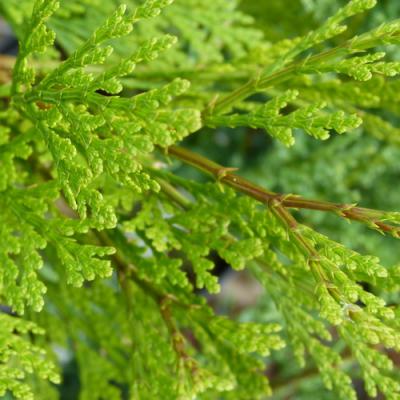
Not the Wood, But the Foliage: Understanding Cedar Leaf
When most fragrance lovers think of cedar in perfumery, their mind goes immediately to cedarwood — that warm, dry, pencil-shaving accord that forms the backbone of countless woody and oriental compositions. Cedar leaf is something entirely different, and the distinction is worth understanding. Where cedarwood is warm and slightly creamy, cedar leaf is sharply green, cold, almost bracing — the olfactory equivalent of crushing a sprig of conifer foliage between your fingers on a cold morning. It is one of the great green notes in perfumery, and its role in shaping some of the most admired fragrances of the twentieth and twenty-first centuries has been significant.
The term cedar leaf in perfumery most commonly refers to the essential oil distilled from the foliage of the eastern white cedar, Thuja occidentalis — sometimes called arborvitae, or tree of life — though oils from other cedrus and chamaecyparis species are occasionally employed. The scent is unmistakably green and coniferous: fresh, slightly medicinal, with a cool camphoraceous quality underpinned by a woody-herbal persistence that anchors it firmly in the aromatic-woody family.
Botanical Origins and Geographic Distribution
Thuja occidentalis is native to eastern North America, where it grows in cool, moist forests from the Great Lakes region south through the Appalachians. Indigenous peoples of the region have long used the foliage medicinally — boiling it into teas for respiratory complaints and employing it as a steam treatment — and European settlers quickly adopted both the medicinal and aromatic properties of the tree. The essential oil has been produced commercially since the nineteenth century, primarily in Canada and the northeastern United States.
A related oil, sometimes confused with or used as a substitute, comes from Chamaecyparis thyoides (Atlantic white cedar) and from various juniper species. Each yields an oil with a slightly different character: juniper-derived materials tend toward a fruitier, more delicate greenness, while Thuja-derived cedar leaf oil is bolder and more camphoraceous. The distinctions matter in perfumery, where the specific character of an ingredient can shift an entire composition's emotional register.
The oil is produced by steam-distillation of fresh or partially dried foliage, typically in autumn when the concentration of key aromatic compounds is highest. Yield is relatively modest, which partly explains why synthetic replacements and related isolates have become important tools for perfumers seeking the cedar-leaf effect without the supply constraints of the natural material.
Key Molecules: Thujone, Alpha-Pinene, and Beyond
The defining molecule of Thuja occidentalis leaf oil is alpha- and beta-thujone, a pair of related monoterpenoid ketones that deliver the sharp, almost mentholated, herbal-coniferous quality that is cedar leaf's signature. Thujone is a powerful and assertive molecule — in high concentrations it has neurotoxic properties, which is why perfumers use it carefully and why synthetic cedar-leaf accords sometimes avoid it in favour of safer aromatic alternatives. But used at appropriate levels, thujone's contribution to green-aromatic compositions is irreplaceable.
Alpha-pinene and beta-pinene, the same monoterpenes found in cedarwood and in numerous coniferous essential oils, provide the connecting thread between cedar leaf and the broader aromatic-woody family. Their dry, resinous quality grounds the sharper thujone character, preventing cedar leaf from feeling purely medicinal and anchoring it firmly in a recognisable forest-floor context.
Fenchone — the same ketone that gives fennel its cool, herbal bitterness — is also present in some cedar leaf oils, reinforcing the herbal dimension and adding an interesting connection to the aromatic-culinary family. Bornyl acetate, a molecule associated with pine and fir, contributes a clean, slightly sweet, almost powdery-woody facet that softens the sharper notes and extends the drydown into warmer, more comfortable territory.
Cedar Leaf in Perfumery History
Cedar leaf oil has been used in perfumery since at least the mid-nineteenth century, when it became commercially available as a byproduct of the timber industry. Its earliest applications were largely functional — in insect-repelling cedar chest liners, in mothballs, and in the cleaning preparations that gave rise to the association between cedar and fresh, clean domesticity that persists in popular consciousness today.
The transition to fine fragrance came through the aromatic-herbal family, where cedar leaf's green-coniferous quality was welcomed as a naturalistic contrast to the warmer, more conventional floral materials that dominated Victorian perfumery. By the early twentieth century, it was appearing in the green and chypre compositions that would define the modernist turn in perfumery — Chanel No. 19, Vent Vert, and their contemporaries drew on a palette of green notes of which cedar leaf was an important member.
In the latter half of the twentieth century, the development of sophisticated synthetic conifer materials somewhat reduced the direct use of Thuja-derived cedar leaf oil in fine fragrance, but the character it represents — cold, green, coniferous, freshly cut — remained a cornerstone of the aromatic-fresh and aromatic-woody families that have dominated masculine perfumery for decades.
Famous Fragrances and the Cedar-Leaf Effect
The influence of cedar leaf extends well beyond fragrances that explicitly list it as an ingredient. The cold, green-coniferous opening that characterises many of the great aromatic compositions of the twentieth century owes a debt, acknowledged or otherwise, to cedar leaf's particular contribution.
Christian Dior's Fahrenheit — one of the most distinctive and polarising masculine fragrances ever created — deploys violet leaf, gasoline accord, and coniferous-green notes including materials related to cedar leaf in a composition that feels simultaneously cold and warm, vegetal and mineral. The green-aromatic accord at Fahrenheit's heart is very much of the cedar-leaf family.
In the niche world, various compositions have showcased coniferous foliage more directly. Tom Ford Oud Wood balances woody warmth with coniferous and aromatic green facets that feel cedar-leaf-adjacent, demonstrating how this note can bridge the gap between cold-green and warm-woody registers within a single composition. Many of the best woody fragrances in contemporary perfumery employ a version of this balance.
Note Interactions: Cedar Leaf in the Composition
Cedar leaf's versatility as a blending note is one of its great strengths. Its relationship with violet leaf is particularly important in green-accord construction: both notes are sharply green and slightly metallic, and their combination produces a cold, luminous quality that has defined a certain type of elegant, intellectual fragrance from Dior to contemporary niche houses. The two notes reinforce each other's freshness while their respective character differences — cedar leaf's coniferous woodiness versus violet leaf's watery cucumber facets — add complexity.
With lavender, cedar leaf produces a classic aromatic-herbal accord reminiscent of the great fougères — cool, slightly medicinal, masculine in the broadest sense of the word. The combination is not exclusively masculine — many of the great green chypres worn historically by women incorporate similar pairings — but it has been most consistently associated with confident, outdoorsy masculinity.
In deeper, warmer compositions, cedar leaf provides a valuable contrast note — a point of cool green clarity within a dense resinous or ambery base. Its interaction with sandalwood is particularly rewarding: the creamy warmth of sandalwood set against the crisp coldness of cedar leaf produces an accord that feels both luxurious and alive, neither too sweet nor too austere.
Wardrobe Context: Wearing Cedar Leaf
Fragrances built around cedar leaf occupy a distinctive position in the wardrobe. Their clean, green-aromatic character makes them natural choices for cool-weather wear — the cold, coniferous quality feels perfectly at home in autumn and winter, where it evokes forest walks, mountain air, and freshly laundered wool rather than tropical warmth or sun-warmed skin.
In terms of occasion, cedar-leaf fragrances tend toward versatility. They are sharp enough to command attention in professional settings, naturalistic enough for outdoor activities, and complex enough to reward close-distance wear in intimate situations. They occupy the same emotional register as a well-cut wool overcoat or a pair of clean leather brogues — classic, precise, understated.
Within the modern fragrance wardrobe — whether you are building a collection of designer favourites or exploring the broader landscape of aromatic perfumery — a cedar-leaf composition offers something that many fresher, more instantly appealing fragrances do not: a kind of self-possessed quiet confidence that improves with familiarity. Cedar leaf rewards the nose that takes time to understand it, which is perhaps the highest compliment that can be paid to any ingredient.