

Best Tom Ford Jasmin Rouge Dupes 2026: The Five Spicy-Jasmine Picks
Tom Ford Jasmin Rouge has been one of the more polarising entries in the Private Blend collection since its 2011 launch.
By Julia MorettiFragrenza makes several of the alternatives featured in our guides — here’s how we test.
9 min read
The Short Answer
Best Tom Ford Jasmin Rouge Dupes 2026: The Five Spicy-Jasmine Picks — six weeks of side-by-side wear. Tom Ford Jasmin Rouge has been one of the more polarising entries in the Private Blend collection since its 2011 launch.
Tom Ford Jasmin Rouge has been one of the more polarising entries in the Private Blend collection since its 2011 launch. It opens with a bright burst of bergamot and mandarin, then commits — really commits — to a heart of jasmine grandiflorum, ylang-ylang, cinnamon, and cardamom that reads as both intensely floral and warmly spiced, before settling on a base of amber, leather, vanilla, and labdanum. The result is a fragrance that wears its convictions: jasmine isn't a top note here, it's the whole proposition, and the spice frame is dialed up high enough to push the composition into Eastern oriental territory rather than European designer-floral.
At around $390 for 50ml, Jasmin Rouge sits in the Tom Ford Private Blend tier — accessible only as a special-occasion fragrance for most wearers. The five Fragrenza picks below cover the spicy-jasmine architectural register at $9.99, with each pick approaching the jasmine + spice + oriental DNA from a slightly different angle.
The Private Blend Line and Where Jasmin Rouge Fits
Tom Ford's Private Blend collection launched in 2007 with Tobacco Vanille, Black Orchid, and a handful of other compositions that defined the brand's niche-luxury positioning. The line is now nearly two dozen fragrances strong, and Jasmin Rouge (2011) marked Tom Ford's commitment to genuine indolic florals at a moment when most designer fragrances were retreating into clean-musky territory. Perfumer Rodrigo Flores-Roux built the composition around jasmine grandiflorum — the heavier, more indolic cousin of jasmine sambac — and pushed the spice frame to a level uncommon in mass-market florals.
The strategic point of Jasmin Rouge within the Private Blend line is that it's the indolic-floral position — distinct from Black Orchid's chocolate-floral, Velvet Orchid's softer rendition, or Café Rose's saffron-rose. Tom Ford wanted a flagship for wearers who specifically wanted jasmine at full volume, and Jasmin Rouge has held that role for over a decade. For Fragrenza to convince in this register, the dupe needs to commit to the same jasmine intensity and spice frame.
What Makes Jasmin Rouge Distinctive
Three structural elements define Jasmin Rouge's signature:
- Jasmine grandiflorum as the structural heart — not the more common jasmine sambac (which reads lighter), but grandiflorum which carries genuine indolic depth.
- Cinnamon + cardamom warming the floral — pushing it from European-floral toward Eastern-oriental territory.
- Leather + amber base anchoring the indolic floral — preventing the jasmine from floating away into pure sweetness.
The five picks below each capture some combination of these elements.
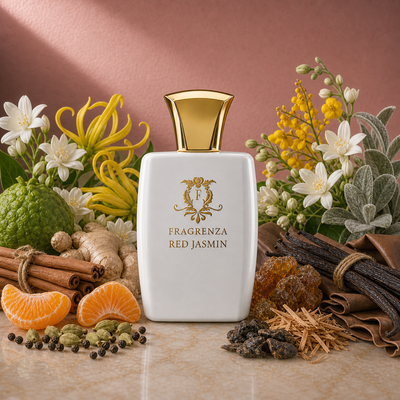
1. Red Jasmin — The Direct Interpretation
Red Jasmin is built directly around the Jasmin Rouge architecture: jasmine + ylang-ylang at the heart, cinnamon + cardamom warming the floral, and an amber + leather + vanilla base anchoring it. The jasmine is grandiflorum-style rather than sambac (richer, more indolic), the spices are dialed prominently, and the base depth carries the composition through the day. If you're looking for Jasmin Rouge's specific emotional register at the most accessible price, Red Jasmin is the structural cousin.
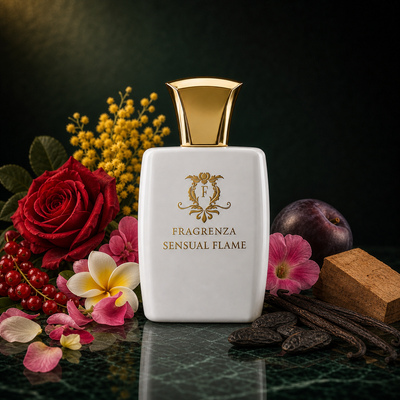
2. Sensual Flame — The Jasmine-Tuberose Variant
Sensual Flame approaches the indolic-floral register from a more layered angle. Red currant and Bulgarian rose open, with jasmine + frangipani + tuberose carrying the heart, and tonka + sandalwood + vanilla in the base. The jasmine is genuinely the architectural anchor, but the supporting white florals add a creamier, more lactonic dimension than Jasmin Rouge's leaner spicy register. If you love Jasmin Rouge's jasmine commitment but want more white-floral lushness, Sensual Flame is the variant pick.
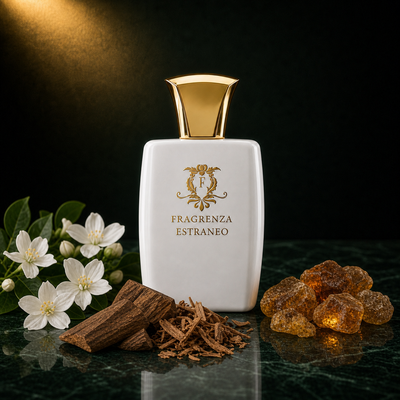
3. Estraneo — The Jasmine-Cashmeran Sambac Variant
Estraneo takes the jasmine theme in a different direction — jasmine sambac (the lighter, cleaner sister of grandiflorum) over a cashmeran + amber base creates a fragrance that reads warmer and more enveloping than the source. Compared to Jasmin Rouge's indolic intensity, Estraneo is smoother and more contemporary — the same jasmine family in a Skin Scents 2.0 register. Good pick for those who find Jasmin Rouge slightly too aggressive and want the jasmine signal in a more wearable wrapper.
4. Chloris Gardenia — The White-Floral Variant
Chloris Gardenia pivots the white-floral commitment from jasmine to gardenia, adding a more solar-floral dimension while keeping the indolic intensity that Jasmin Rouge readers expect. The opening is bright (pear + bergamot + gardenia), the heart is dense (gardenia + jasmine + tuberose + ylang-ylang), and the base is warm (patchouli + sandalwood + amber). For Jasmin Rouge fans curious about white-floral neighbours, Chloris Gardenia offers the same emotional intensity in a different flower.

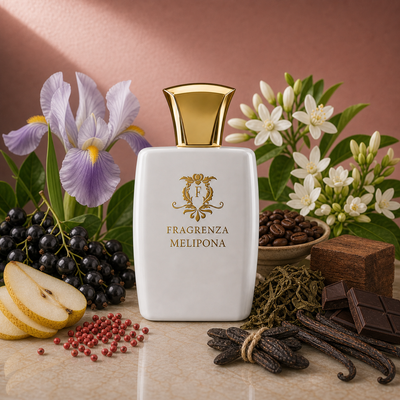
5. Melipona — The Modern-Floral Crossover
Melipona is the most architecturally distant of the five but still architecturally adjacent — iris + pear + pink pepper at the top, with jasmine + magnolia + coffee + chocolate in the heart, settling on a creamy vanilla-tonka base. Compared to Jasmin Rouge's spicy-indolic intensity, Melipona is softer, more contemporary, and reads as Skin Scents 2.0 — the contemporary opposite of Jasmin Rouge's full-volume traditional floral. For those who love Jasmin Rouge but want something quieter for everyday wear, Melipona is the contemporary counterpart.
How Jasmin Rouge Sits in the Spicy-Jasmine Lineage
Worth situating Jasmin Rouge and its Fragrenza cousins within the broader spicy-jasmine universe. Robert Piguet Fracas (1948) is the genre's grandmother — a tuberose-jasmine bomb that defined heady white-floral intensity for decades. Yves Saint Laurent Opium (1977) brought spice into the indolic-floral conversation with its clove-cinnamon-mandarin overture. Frédéric Malle Carnal Flower (2005) pushes tuberose-jasmine to clinical heights and made the modern niche white-floral category respectable again.
What distinguishes Jasmin Rouge from these other spicy-jasmine compositions is the deliberate Eastern-oriental tilt — the cinnamon-cardamom frame steers the composition away from European designer-floral aesthetics and toward attar-influenced territory. The Fragrenza picks each catch different parts of this lineage: Red Jasmin holds Jasmin Rouge's exact Eastern-oriental position, Sensual Flame nods to Fracas's white-floral lushness, Estraneo lifts the jasmine into Skin Scents 2.0 contemporary, Chloris Gardenia pivots the flower to gardenia, and Melipona moves the jasmine into modern iris-floral territory.
How to Choose Between the Five
For Jasmin Rouge's specific character at the most faithful: Red Jasmin. For white-floral lushness in the same family: Sensual Flame. For a softer, contemporary jasmine: Estraneo. For gardenia as a white-floral cousin: Chloris Gardenia. For an everyday-wearable contemporary variant: Melipona.
How to Wear and Layer
Jasmin Rouge and its family wear best in cool-to-temperate weather. The indolic intensity benefits from skin warmth without becoming heavy in heat. Two pumps from 6-8 inches is plenty — these are projection-confident compositions. For office contexts, layer with a clean musk underneath to soften the indolic dimension. For evening, wear at full strength and let the spice frame develop on skin.
Frequently Asked Questions
Is Red Jasmin a faithful Tom Ford Jasmin Rouge dupe?
Red Jasmin preserves the structural DNA — jasmine + spice + amber-leather — at high fidelity. Specific molecular composition differs (different jasmine sources, different amber alternatives), but the emotional register is the same family. Most wearers find them indistinguishable in side-by-side wear.
How does Red Jasmin compare to other jasmine fragrances?
The jasmine in Red Jasmin is genuinely the heart anchor (not a top-note flourish) and is supported by a cinnamon-cardamom spice frame plus amber-leather base. Pure-jasmine fragrances like Carnal Flower stay lighter; Red Jasmin commits to the spiced-oriental dimension.
How long does Red Jasmin last?
8-10 hours of clear wear, 12+ hours of skin-close residue. Strong projection in hours 1-3, then settles into intimate. Consistent with Jasmin Rouge's longevity profile.
Is Red Jasmin unisex?
Jasmin Rouge skews feminine by Tom Ford's tradition, but indolic-spicy jasmines wear well on anyone comfortable with intense floral signatures. The five picks here range from openly feminine (Sensual Flame) to comfortably unisex (Estraneo, Melipona).
Can I wear Red Jasmin to the office?
At full strength, Jasmin Rouge family fragrances are above-the-line for most office contexts due to projection. At half-strength application or paired with a musk underlayer, they wear cleanly all day. For more office-appropriate variants, Estraneo or Melipona are gentler.
Jasmine Grandiflorum vs Jasmine Sambac
Most jasmine fragrances use jasmine sambac — the lighter, fresher jasmine variant grown primarily in India. Jasmin Rouge uses jasmine grandiflorum, grown primarily in Grasse, France and Egypt — heavier, more indolic, more classically European. The two are botanically distinct (Jasminum grandiflorum and Jasminum sambac) and produce noticeably different fragrance experiences when used at the heart of a composition.
Grandiflorum has a richer, more honey-tinged character with stronger indolic undertones — the slightly animalic dimension that traditional jasmine compositions are built around. Sambac is cleaner, more transparent, less indolic, often described as "white tea" or "fresh jasmine." Jasmin Rouge committing to grandiflorum is part of what gives the composition its classical-Eastern character rather than the lighter contemporary-floral feel that sambac compositions deliver.
Red Jasmin uses a grandiflorum-style jasmine accord, which is why the architectural feel of the composition is consistent with Jasmin Rouge rather than with sambac-led contemporary alternatives. The supporting picks in this article each take different approaches to jasmine — Sensual Flame uses a more lactonic white-floral approach, Estraneo uses a sambac-cashmeran direction, and Chloris Gardenia pivots to gardenia entirely.
Where Jasmin Rouge Sits in the Private Blend Line
Tom Ford's Private Blend line is split into several thematic clusters: the warmer orientals (Tobacco Vanille, Oud Wood, Plum Japonais), the leather compositions (Tuscan Leather, Ombre Leather), the dark florals (Black Orchid, Velvet Orchid, Champaca Absolute), and the niche-feminine entries (Jasmin Rouge, Rose Prick, Café Rose). Each cluster targets a distinct buyer; within the feminine-floral cluster, Jasmin Rouge is the most committed jasmine entry and the one that has held its position in the line for the longest.
Among the feminine-floral Private Blend entries, Jasmin Rouge is also the most polarising. Rose Prick (2020) was a more accessible launch with broader appeal. Café Rose (2014) leans gourmand-rose. Jasmin Rouge's indolic intensity is the deliberate niche statement. The Fragrenza dupe Red Jasmin captures this position; Sensual Flame, Estraneo, and Chloris Gardenia provide the lateral moves into adjacent floral territories.
Summary
Tom Ford Jasmin Rouge has held its flagship position in the Private Blend line for over a decade because the composition genuinely commits to indolic jasmine in a way most mass-market florals don't. Red Jasmin is the closest Fragrenza interpretation, preserving the jasmine-cinnamon-cardamom-amber architecture that gives Jasmin Rouge its specific Eastern-oriental character. The four supporting picks each move the jasmine theme into adjacent registers — Sensual Flame toward white-floral lushness, Estraneo toward Skin Scents 2.0 contemporary, Chloris Gardenia toward gardenia-floral neighbours, Melipona toward modern iris-jasmine. Whether Jasmin Rouge itself justifies its Private Blend tier or whether the Fragrenza alternatives cover enough of the same emotional space is a question best answered on skin — sample two or three picks across different wear contexts before committing.