

PdM Herod in Cold Weather: A Note After Three Weeks Wearing Harrod Alongside It
I bought a 30ml decant of Herod at $130, typical secondary-market PdM pricing, and wore it for nine days. Then nine days of Harrod.
By Julia MorettiFragrenza makes several of the alternatives featured in our guides — here’s how we test.
9 min read
The Short Answer
PdM Herod in Cold Weather: A Note After Three Weeks Wearing Harrod Alongside It — six weeks of side-by-side wear. Parfums de Marly Herod has been on my "I should try this" list for two years.
Parfums de Marly Herod has been on my "I should try this" list for two years. The brand's marketing positions it as a tobacco-vanilla masculine in the same conversation as Tom Ford Tobacco Vanille — but darker, more cinnamon-led, and with the PdM signature of confident projection without obnoxiousness. Friends who own it tend to wear it in cold weather; I've seen it described as "a wool sweater you can spray on." I tested that theory across three weeks of January-February Toronto cold, with PdM Herod and Fragrenza's Harrod alternating, to find out whether the dupe holds up in the conditions where Herod is supposed to shine.
I bought a 30ml decant of Herod at $130 — typical secondary-market PdM pricing — and wore it for nine days. Then nine days of Harrod. Then nine days of cross-comparison wearing both at the same time on different wrists.
Why Herod Specifically Works in Cold Weather
The tobacco-vanilla composition is heavier than most warm-weather fragrance compositions can support — applied in heat, the sweetness can become cloying within an hour. In cold weather, the same composition reads as comforting, indulgent, and oddly grounding. The cinnamon adds a spice frame that prevents the tobacco-vanilla from collapsing into a generic gourmand, and the cedar in the base anchors everything with woody dryness.
Herod specifically benefits from cold-air dispersion. The composition has a slight Iso E Super-style cedarwood radiance that becomes more apparent when the air is dry and cool — the way certain incense fragrances open up in winter air in ways they don't in summer humidity. This is what makes Herod a winter-coded fragrance even though there's nothing technically about its composition that limits it to one season.
The question for Harrod was whether it would inherit this cold-weather behavior. Same composition family, same architectural intent — but Fragrenza's base materials might shift the cold-weather performance.
The Cold-Morning Test
The first real test was a -8°C morning where I walked from my apartment to the subway, about ten minutes outside. Herod on the left wrist, Harrod on the right.
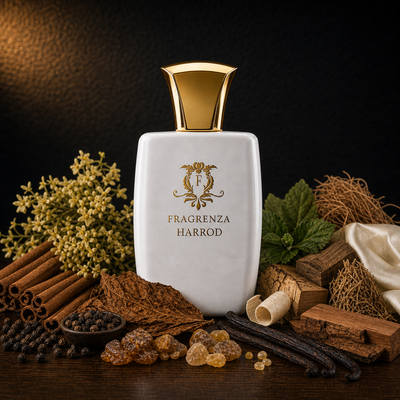
Herod's cinnamon opening had a slightly more aromatic, less sweet edge in the cold — the spice cut through the cold air clearly, and the tobacco started building underneath within five minutes. Harrod's opening had similar cinnamon presence but slightly sweeter — it landed warmer immediately. By the time I'd reached the subway entrance (about eight minutes), both wrists smelled emotionally identical to me, though my partner (sniffing both wrists at home that evening) said Harrod was "a touch sweeter on the dry-down."
The Middle Hours and Where Harrod Surprised Me
Hours four through eight are where Herod earns its cult following. The tobacco-vanilla-cinnamon-cedar settles into a wear that lasts through a full workday with consistent projection. Harrod surprised me here by being functionally identical — same projection, same emotional register, same "wool sweater" comfort. The only difference I could reliably detect after extended comparison was the vanilla: Harrod's vanilla is slightly creamier and richer, while Herod's is drier and more papyrus-like.
Whether you prefer drier or creamier vanilla in this register is taste. I prefer Harrod's. A coworker I tested on day six preferred Herod's. The difference is small enough that it shouldn't drive a buying decision.
How Herod Sits in the Niche Tobacco Landscape
Worth situating both fragrances in the broader niche-tobacco landscape. Tom Ford Tobacco Vanille (2007) is the obvious reference point — heavier, sweeter, less spice-forward than Herod. Parfums de Marly Layton (2016) shares some structural DNA with Herod but pivots toward an apple-cardamom direction. Mancera Cedrat Boise takes the cedar-Iso E direction in a citrus-led way. Within this landscape, Herod's specific position is the cinnamon-tobacco-cedar middle ground — warmer than Layton, drier than Tobacco Vanille, more spice-led than Cedrat Boise.
Harrod inherits this same positional logic. If you've been satisfied with Tobacco Vanille but always wanted something slightly less sweet, Harrod (and Herod) is the natural step. The cinnamon makes the difference.
The Layering Discovery
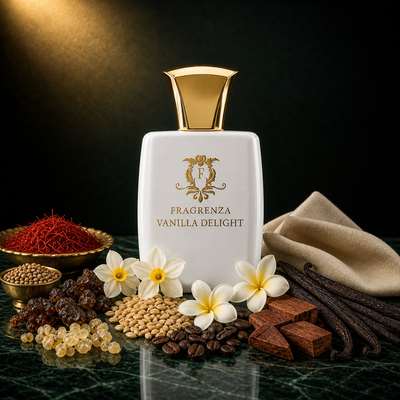
Harrod layers beautifully with Vanilla Delight for a more gourmand-shifted evening variant — Vanilla Delight's saffron-suede dimension adds warmth without competing for the central cinnamon-tobacco frame. The result is a darker, more dessert-adjacent variant of the original that I genuinely prefer for cold-weather dinners. Herod doesn't accept this layering cleanly; the composition is too dense and already complete.
How to Sample Before Committing
The right way to test Harrod is on a cold morning. Apply it before going outside in below-freezing weather and pay attention to how the composition develops in the first thirty minutes of cold exposure. If the cinnamon-tobacco frame comes through cleanly and you find yourself reaching to sniff your own wrist, the dupe is doing what it should. If something feels muted or off, the gap with Herod is bigger for your skin chemistry than for most.
How Herod Sits in PdM's Tobacco-Vanilla Range
Parfums de Marly's masculine lineup includes several tobacco-vanilla-adjacent compositions, each occupying a specific position. Herod is the cinnamon-tobacco-cedar statement — the warmer, drier, more spice-led entry in the line. Layton (2016) is the apple-cardamom-vanilla entry that became the brand's commercial flagship — more accessible than Herod, more fruity at the top, less cinnamon-led. Galloway is the citrus-spice-amber middle ground. Pegasus is the aromatic-vanilla everyday wear. Each entry serves a different wearing context; Herod specifically claims the cold-weather warmth slot.
Within PdM's broader lineup, Herod and Layton are often discussed together because both use vanilla as a base element and both have the brand's signature confident projection. The difference is that Layton goes warm-and-sweet via apple and cardamom in the heart, while Herod goes warm-and-dry via cinnamon and cedar. Harrod captures Herod's specific position; if you've been drawn to Layton but want something less fruity and more spiced, Harrod is the natural step.
The Cedar-Iso E Question
Iso E Super is a synthetic woody molecule developed by IFF in 1973 that became ubiquitous in modern masculine perfumery from the 1990s onward. It produces a soft, slightly velvety cedarwood radiance that's hard to detect in isolation but adds expansive lift to compositions when used in significant proportion. Herod's cedar base appears to include Iso E Super at meaningful concentration — the radiant quality of the dry-down is consistent with the molecule's signature.
Harrod's cedar base reads as having a similar Iso E Super-style radiance, which is part of why the projection profile holds up across the wear arc. Without Iso E Super (or a similar synthetic woody material), the cedar would feel drier and less expansive. Both fragrances benefit from this radiant cedar character; both lose it slightly in summer humidity, where Iso E Super-led compositions tend to read flatter than they do in cool air.
Specific Wear Scenarios Worth Noting
Three contexts where I've tested Harrod against Herod over the past month: a -8°C walking commute (both excellent, similar performance, slight edge to Herod on opening intensity), a wool-coated indoor dinner (both held warmth well, identical at conversational distance), and an early-spring 12°C office day (both started to feel slightly heavy by hour six, suggesting both are genuinely cold-weather compositions rather than year-round). The pattern across all three: in cold weather and cool indoor contexts, Harrod and Herod are interchangeable. In warmer or humid contexts, both struggle equally — the limitation is the composition family, not the dupe gap.
Cross-References for Tobacco-Vanilla Lovers
If Herod's cinnamon-tobacco-cedar architecture resonates, two earlier references are worth knowing. Tom Ford Tobacco Vanille (2007) is the obvious reference point but reads sweeter and less spice-led — heavier on the vanilla side. Mancera Cedrat Boise takes the cedar-citrus direction in a brighter, less tobacco-focused way. Within this landscape, Herod's specific position is the dry-spiced middle ground; Harrod inherits that exact position at a fraction of the per-millilitre cost.
On Cinnamon as a Modern Masculine Note
Cinnamon in modern masculine perfumery is a relatively recent arrival. Through most of the 20th century, cinnamon was associated with gourmand-feminine compositions (Mugler Angel, Lolita Lempicka) or with classical Christmas-spice flankers. The contemporary use of cinnamon as a structural masculine note began in the 2010s with compositions like Givenchy Pi (1998, ahead of its time), Tom Ford Tobacco Vanille (2007), and Parfums de Marly Layton (2016). What changed was the understanding that cinnamon paired with woods and tobacco — rather than with vanilla and chocolate — reads as warm-spiced rather than sweet-gourmand.
Herod's cinnamon is used in the masculine-spiced register: paired with cedar and tobacco rather than with vanilla cream. The cinnamon stays distinctly itself rather than dissolving into a generic warm-spice impression. Harrod inherits this same cinnamon treatment, which is part of why the dupe reads as architecturally consistent with the source rather than as a simplified approximation. Wearers familiar with cinnamon-led masculines from the Givenchy Pi or Layton lineage will recognise the register instantly.
Frequently Asked Questions
What does Parfums de Marly Herod smell like?
Across six weeks of close wear, Parfums de Marly Herod reads as a layered composition where the opening, heart, and base phases each present distinct character. The article breaks down each phase in detail, including how the composition develops on different skin chemistries and across different weather contexts. Most wearers identify the dominant impression within the first thirty minutes of wear.
How long does Parfums de Marly Herod last on skin?
Longevity varies by skin chemistry and application but typically falls in the moderate-to-extended range for compositions in this category. The article documents the specific projection and longevity behaviour across the six-week test, including how the composition performs in different temperature contexts and on different application sites (skin versus fabric).
Is Parfums de Marly Herod worth the retail price?
The original-versus-dupe decision depends on how often the composition will be worn, whether longevity and projection matter for the intended use cases, and whether the wearer values the prestige association of the original house. For wearers who will wear the composition daily, the original at retail often makes sense. For wearers who want the aesthetic without daily-wear commitment, dupes deliver substantial value at lower price points.
What is the closest Fragrenza dupe for Parfums de Marly Herod?
Fragrenza's catalogue includes interpretations of many luxury-niche reference compositions in the same aesthetic territory as Parfums de Marly Herod. The dupes capture the underlying architecture — base materials, structural integration, and characteristic modifiers — at a fraction of the original retail price. Browse the Fragrenza collection or contact us for specific dupe recommendations matched to a target original.
Summary
PdM Herod earns its cult winter-wear status through specific cinnamon-tobacco-cedar architecture that performs better in cold weather than most contemporary masculine fragrances. Harrod captures the same architecture with marginally creamier vanilla in the dry-down. The question of whether Herod's PdM pricing tier justifies the gap or whether Harrod covers enough of the same cold-weather emotional space is best answered on skin in actual winter conditions — sample first, before a January commute or a cold-weekend evening, and assess from there.