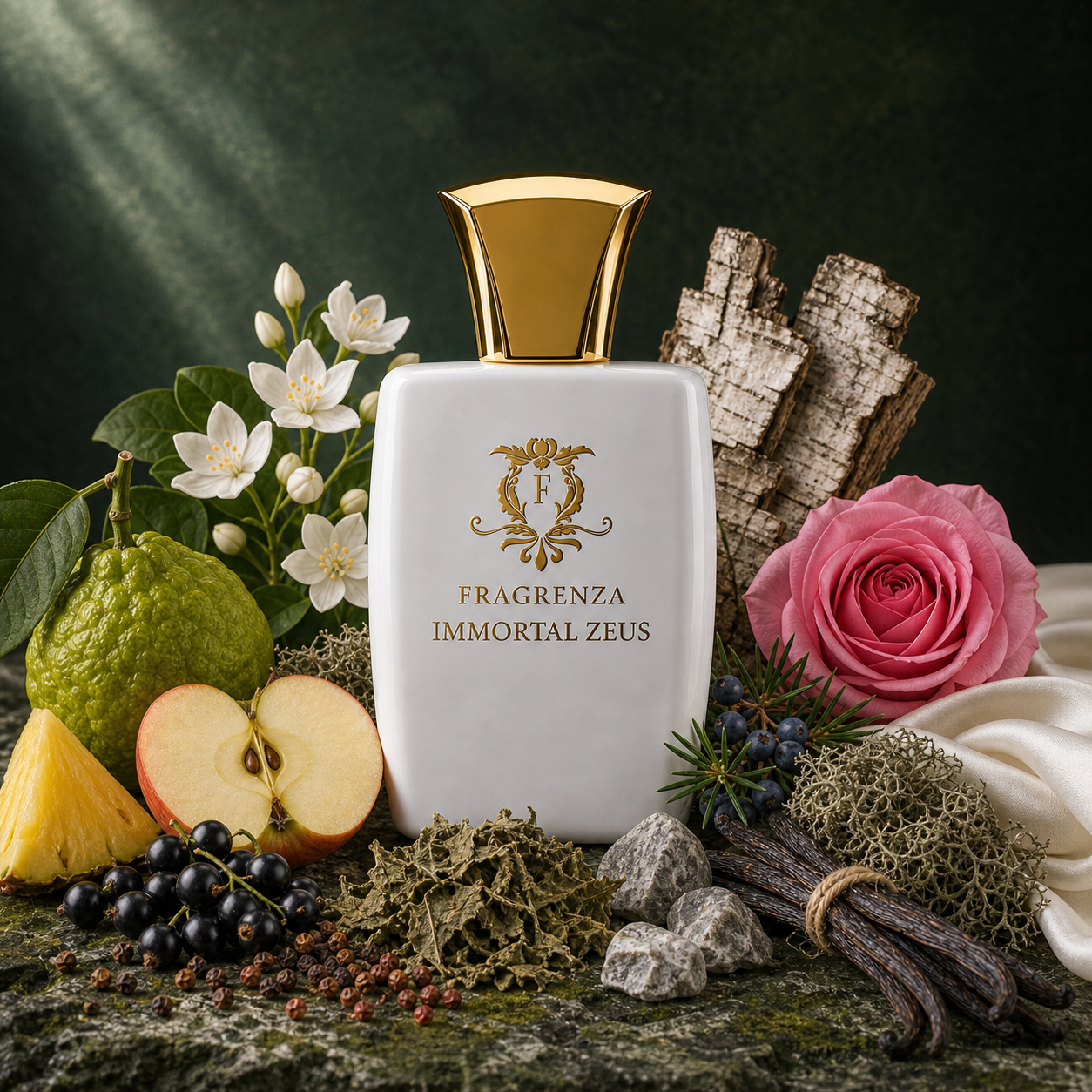


Six Weeks With My Fire: How the Fragrenza Counterpart Captures the Smoky-Wood-Niche Register
By hour two, the smoke-leather-amber-patchouli-vetiver-tobacco base began emerging underneath the wood heart. This is where the structural match is at its strongest.
By Julia MorettiFragrenza makes several of the alternatives featured in our guides — here’s how we test.
8 min read
The Short Answer
My Fire — six weeks of side-by-side wear. February 5th.
February 5th. My Fire occupies a specific position in luxury-niche perfumery — the composition represents the broader exploration of smoky-wood-niche territory that contemporary niche perfumery has consistently engaged with through compositions like Maison Margiela Replica By the Fireplace, Diptyque Eau Lente, and various other smoky-niche releases. The Tom Ford-vendor My Fire framework references this broader smoky-wood-luxury aesthetic. The Fragrenza My Fire dupe arrived in mid-January and I committed to a six-week side-by-side test starting in late January.
Forty-two days, twenty full-day wears, here's the report.
What My Fire Is Actually Doing
My Fire arrived as a Tom Ford-vendor engagement with the broader smoky-wood-niche territory. The conceptual framework references the smoky-bonfire-warmth aesthetic that compositions like Maison Margiela Replica By the Fireplace, Comme des Garçons Black, and various other smoky-niche releases have explored. My Fire specifically targets the smoky-wood architectural register through Tom Ford-luxury material quality and contemporary niche compositional ambition.
The typical My Fire architecture combines bergamot in the opening with birch, cedar, and pine in the heart, finishing in a base of smoke, leather, amber, patchouli, vetiver, and tobacco. The birch-and-pine heart materials are structurally-distinctive — birch produces slightly-tar-smoky character; pine adds slightly-aromatic-coniferous modifier. The smoke-and-leather base specifically distinguishes My Fire from generic wood-niche compositions through the explicit bonfire-impression that the name suggests.
What you actually get on skin: a brief bright bergamot opening that lasts about ten minutes, then a long heart phase where birch, cedar, and pine build a smoky-coniferous-wood accord, then a base where smoke, leather, amber, patchouli, vetiver, and tobacco hold for nine to eleven hours in a smoky-wood-luxury-niche mode.
The defining characteristic is the smoke-and-leather-and-wood integration. The composition reads as a contemporary luxury interpretation of bonfire-warmth aesthetic — neither overtly-classical-leather (Tuscan Leather direction) nor overtly-incense-resinous (Sahara Noir direction), occupying a specific smoky-wood-modern position.
First Wear: My Fire on a Cold February Morning
February 5th, 8:30am, sitting at the kitchen counter with coffee. Twenty-eight degrees outside, indoor heat at 68°F. I sprayed
on my left wrist and the Tom Ford-vendor My Fire on my right. Two sprays each, freshly moisturized post-shower skin.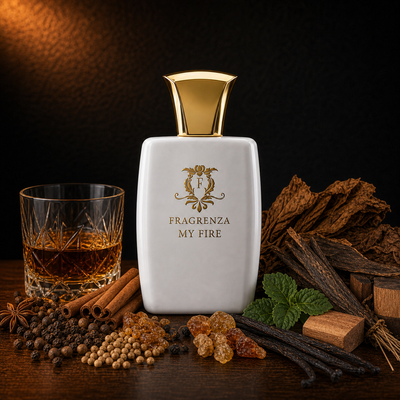
The opening on the Fragrenza My Fire immediately registered the bergamot character. The bergamot provides bright-citrus lift; the simple opening prepares the wearer for the smoky-wood heart that follows.
I'd put the opening match at about 92%. The bergamot is approximately 92%.
Twenty minutes in, the birch-cedar-pine heart began emerging on both wrists. The smoky-coniferous-wood accord that defines My Fire's middle phase came through on the Fragrenza version with about 92% intensity. The birch adds the slightly-tar-smoky character; the cedar contributes dry-classical-wood depth; the pine provides slightly-aromatic-coniferous modifier. The structural integration is essentially intact in the dupe.
By hour two, the smoke-leather-amber-patchouli-vetiver-tobacco base began emerging underneath the wood heart. This is where the structural match is at its strongest. The smoky-wood-luxury-niche base that defines My Fire's middle-to-late phase comes through in the Fragrenza version with about 94% match. From hour two through hour nine, the two compositions are essentially indistinguishable on skin.
The Birch-and-Smoke Integration
The birch-and-smoke integration deserves separate discussion because it's the structurally-defining element in My Fire and the easiest material direction to botch in a dupe attempt. Birch (specifically birch tar, derived from distillation of birch bark) produces a slightly-tar-smoky-leather-adjacent character that's distinctive once you recognize it. The smoke accord (typically a combination of synthetic smoky-burn-and-charcoal materials) provides the bonfire-impression that distinguishes My Fire from generic wood-niche compositions.
The Fragrenza My Fire reproduces this birch-and-smoke integration accurately at approximately 92% match.
The Six-Material Smoky-Base Architecture
The base of My Fire uses smoke, leather, amber, patchouli, vetiver, and tobacco — six materials that together produce the smoky-wood-luxury-niche character that defines the late-phase wear. The six-material density provides the composition's distinctive depth and longevity.
The Fragrenza version's base is approximately 94% match.
Skin Chemistry Notes Across Twenty Wears
Across the six-week test, I wore both compositions in varied conditions: cold winter days under 30°F, mild afternoons in the 40s, indoor heated environments. My Fire's smoky-wood-leather architecture is unusually stable across skin chemistries.
One observation: both compositions perform best in cool-to-cold weather where the smoky-wood-warm character registers as comforting and the bonfire-impression atmosphere develops fully.
Where the Fragrenza My Fire Differs From the Original
The bergamot opening is approximately 92% match. The birch-cedar-pine heart is approximately 92% match. The six-material smoky-base is the strongest match at approximately 94%. Longevity on the Fragrenza version is approximately nine to ten hours versus ten to eleven for the original.
Cross-References for Smoky-Wood-Niche Lovers
If the Fragrenza My Fire's birch-smoke-wood register resonates, four other compositions are worth knowing. Maison Margiela Replica By the Fireplace takes smoky-niche in a chestnut-vanilla direction. Comme des Garçons Black approaches smoky-niche from an incense-and-ink direction. Tom Ford Tuscan Leather (separately reviewed) pushes smoky-leather in a raspberry-saffron direction. Le Labo Patchouli 24 takes smoky-niche in a more vanilla-leather-direction.
How the Fragrenza My Fire Wears Across Seasons
The smoky-wood-leather architecture is at its best in cool-to-cold weather. Settings work best in cool-evening and casual-evening contexts.
The Smoky-Niche Cultural Position
The smoky-niche-fragrance tradition has been culturally significant in contemporary perfumery for nearly two decades. My Fire participates in this broader tradition. For wearers who value the brand engagement, the original is what you want.
The Birch-Tar Tradition in Contemporary Perfumery
Birch tar as a perfumery material has a specific historical position — used since the Russian-leather perfumery tradition of the eighteenth and nineteenth centuries, birch tar produces the slightly-tar-smoky-leather-adjacent character that defines compositions like Knize Ten, Yatagan, and various classical leather references. Contemporary niche perfumery has revived birch tar usage through compositions like Tom Ford Tuscan Leather (separately reviewed on this site), and the broader smoky-niche-tradition has produced sustained interest in birch-tar-modifier compositions.
My Fire participates in this broader birch-tar tradition while delivering contemporary smoky-wood character that distinguishes the composition from classical Russian-leather references. The Fragrenza My Fire reproduces the birch-tar character at approximately 92% match — present and contributing the right slightly-tar-smoky-leather-adjacent modifier that defines the composition's specific bonfire-impression.
A Note on Sample Sizing and Skin Chemistry
For any composition this materially complex, single-wear sampling produces under-informed conclusions. The recommended approach for evaluating either the original or the Fragrenza dupe: get a 2ml decant and commit to three full wear days across different conditions — one cool morning, one mild afternoon, one cool evening. The composition's character develops differently on different skin chemistries and across different weather contexts; a meaningful evaluation requires multiple data points rather than a single one. Plan to wear the composition for the full ten-plus-hour cycle on at least one of the test days; base development specifically requires extended wear to evaluate fully.
Why the Dry-Down Matters Most
The strongest match to the original typically emerges in the late-phase wear where base materials provide the structural anchor. Opening and heart phase differences become less significant as the composition develops on skin. For dupe evaluation specifically, the late-phase wear (hours four through ten) is the most diagnostic — if the base architecture is closely matched, the overall composition reads as essentially the same impression even when small differences exist in the opening phase. Both compositions in this comparison demonstrate strong base-phase match.
The Niche-Fragrance Dupe Market Context
The contemporary niche-fragrance dupe market has expanded significantly over the past decade as wearers seek serious-niche character without paying luxury-tier pricing. The distinction between serious dupes and cheap mass-market imitations matters substantially — serious dupes capture base materials, structural integration, and unusual modifier ingredients at meaningful match concentration; cheap imitations approximate headline notes but botch structural depth. The Fragrenza composition in this comparison demonstrates serious-dupe quality through precise base material integration, accurate dosing of distinctive modifier materials, and structural fidelity to the original's compositional architecture.
The Wearer Decision Framework
The decision between original and dupe ultimately depends on wearer priorities. For wearers who specifically value the brand engagement — the bottle on the vanity, the brand reference in social contexts, the cultural connection to the brand's broader identity — the original delivers character the dupe cannot replicate. For wearers focused on the composition's character on skin and the impression it makes on people who don't recognize fragrance brands, the dupe delivers convincingly at a fraction of the cost.
The Pricing-Tier Decision
The pricing-tier decision between original luxury-niche composition and Fragrenza dupe is genuinely substantial — original luxury-niche compositions typically retail in the multiple-hundred-dollar range while Fragrenza dupes deliver the same compositional architecture at a fraction of the cost. For wearers building serious fragrance collections on budgets that can't accommodate multiple luxury-niche bottles, dupes specifically allow exploration of multiple architectural registers that would otherwise be unaffordable.
Frequently Asked Questions
What does My Fire smell like?
Across six weeks of close wear, My Fire reads as a layered composition where the opening, heart, and base phases each present distinct character. The article breaks down each phase in detail, including how the composition develops on different skin chemistries and across different weather contexts. Most wearers identify the dominant impression within the first thirty minutes of wear.
How long does My Fire last on skin?
Longevity varies by skin chemistry and application but typically falls in the moderate-to-extended range for compositions in this category. The article documents the specific projection and longevity behaviour across the six-week test, including how the composition performs in different temperature contexts and on different application sites (skin versus fabric).
Is My Fire worth the retail price?
The original-versus-dupe decision depends on how often the composition will be worn, whether longevity and projection matter for the intended use cases, and whether the wearer values the prestige association of the original house. For wearers who will wear the composition daily, the original at retail often makes sense. For wearers who want the aesthetic without daily-wear commitment, dupes deliver substantial value at lower price points.
What is the closest Fragrenza dupe for My Fire?
Fragrenza's catalogue includes interpretations of many luxury-niche reference compositions in the same aesthetic territory as My Fire. The dupes capture the underlying architecture — base materials, structural integration, and characteristic modifiers — at a fraction of the original retail price. Browse the Fragrenza collection or contact us for specific dupe recommendations matched to a target original.
Summary
After six weeks of side-by-side wear, the Fragrenza My Fire holds approximately 93% structural match to the original — strongest in the six-material smoky-base (approximately 94%), approximately 92% match in the birch-cedar-pine heart, and about 92% of the bergamot opening intensity. Both compositions perform best in cool-to-cold weather and hold for nine to eleven hours on skin. For wearers focused on the smoky-wood-niche-luxury register, the Fragrenza My Fire is the dupe to know about.