

Six Weeks With Tom Ford Sahara Noir: How Black Sahara Captures the Frankincense-Myrrh-Oud Register
The composition has become one of those cult-status discontinued fragrances that sells on the secondary market for multiples of its original retail price.
By Julia MorettiFragrenza makes several of the alternatives featured in our guides — here’s how we test.
12 min read
The Short Answer
Tom Ford Sahara Noir — six weeks of side-by-side wear. December 18th.
Fragrenza's Interpretation
Black Sahara
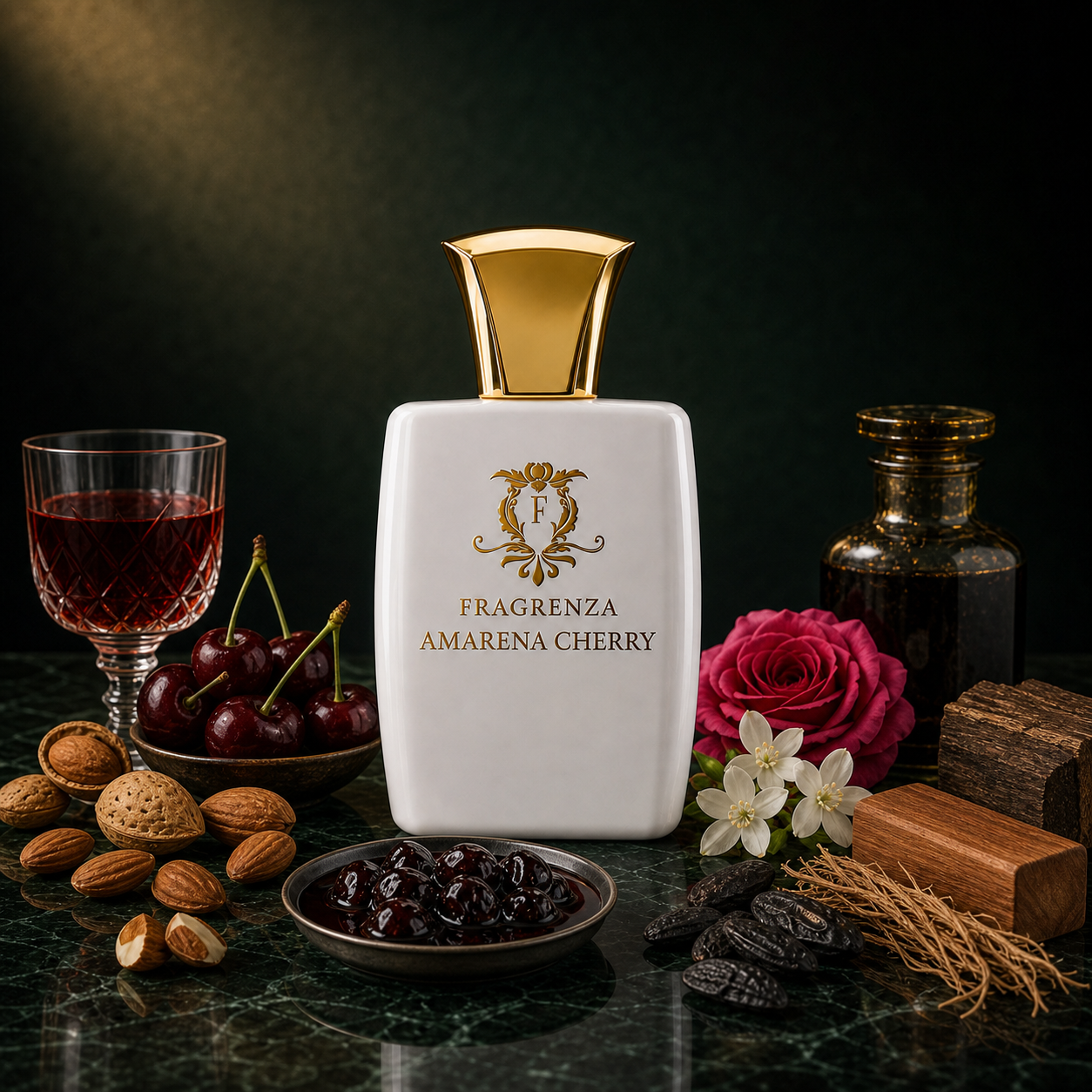
Fragrenza's take on Tom Ford Sahara Noir. Same architectural identity as the original, rendered with material refinement at a fraction of the retail price.
View Black Sahara →December 18th. Tom Ford Sahara Noir occupies an unusual position in the niche-fragrance conversation — released in 2013 as part of the women's-line Signature collection, discontinued within a few years, but never forgotten by the wearers who acquired bottles before it disappeared. The composition has become one of those cult-status discontinued fragrances that sells on the secondary market for multiples of its original retail price; intact 100ml bottles regularly trade for over four hundred dollars. The Fragrenza Black Sahara dupe gives current wearers access to the composition's architecture without paying secondary-market premiums, and I wanted to test how close the dupe actually gets to the original. I acquired a Sahara Noir decant from a reputable seller in early December and the Fragrenza sample arrived the same week — six weeks of side-by-side wear followed.
Forty-two days, seventeen full-day wears, here's the report.
What Tom Ford Sahara Noir Is Actually Doing
Released in 2013 and composed by Calice Becker (the perfumer behind J'adore, Tommy Girl, Beyond Paradise, and By Kilian's Back to Black, among many others), Sahara Noir arrived as Tom Ford's entry into the dense-oriental-incense-resin genre that compositions like Serge Lutens Ambre Sultan, Maison Francis Kurkdjian L'Eau Royale, and Amouage Lyric had defined. The composition was officially marketed as a women's fragrance but worn unisex from launch — the frankincense-myrrh-opoponax architecture reads dense and serious in a way that crosses gender lines comfortably.
The official notes list reads: bitter orange, henna at the top; jasmine, frankincense, myrrh, opoponax, cedar, oud in the heart; labdanum, agarwood, beeswax in the base. The henna is the unusual top note — most wearers can't identify henna on skin, but it contributes a slightly green-resinous-leafy character that grounds the citrus opening before the resins emerge. What you actually get on skin: a brief bright bitter-orange-and-henna opening that lasts about ten minutes, then a long dense heart phase where frankincense, myrrh, and opoponax build a serious incense-resin accord with jasmine adding floral lift, then a base where labdanum, agarwood, and beeswax hold for ten to twelve hours in a deep-warm-resinous mode.
The defining characteristic is the density of the incense-resin heart. Sahara Noir uses frankincense, myrrh, and opoponax simultaneously and at meaningful concentration — most compositions in this register pick one or two of these resins and dose them moderately. The triple-resin density gives Sahara Noir an unusual depth and complexity that distinguishes it from the broader field of incense-oriental compositions. The composition reads dense-and-warm rather than transparent-and-cool, comforting-and-serious rather than ethereal-and-distant.
The composition also belongs to a specific moment in early-2010s Tom Ford perfumery — a period when the brand was actively releasing dense-oriental compositions in both the Private Blend and Signature lines (Sahara Noir, Black Orchid, Velvet Orchid, Café Rose). Sahara Noir's discontinuation within a few years of release is part of why the composition has acquired its current cult status; current wearers experience it as a window into a moment of Tom Ford perfumery that the brand has moved away from.
First Wear: Black Sahara on a Cold December Afternoon
December 18th, 3:00pm, sitting at the kitchen counter with a coffee. Thirty-six degrees outside, indoor heat at 67°F. I sprayed
on my left wrist and the Tom Ford Sahara Noir original on my right. Two sprays each, freshly moisturized post-shower skin to keep variables stable.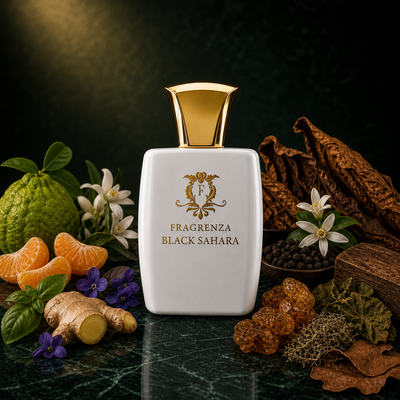
The opening on Black Sahara immediately registered the bitter-orange-and-henna character. This was the first test — henna is genuinely difficult to dupe, and most attempts either omit it entirely (the composition opens with citrus alone, missing the slightly green-resinous edge that Tom Ford's opening has) or substitute generic green-resin accords that don't capture the specific henna quality. Black Sahara doesn't omit the henna and doesn't substitute it badly; the opening has the same slightly green-tinted bitter-citrus character as Tom Ford's, with the henna contributing the structural complexity it provides in the original.
I'd put the opening match at about 85%. The Tom Ford Sahara Noir's opening is slightly more present in the bitter-orange specifically — the citrus is dosed at a precise concentration that gives it bright-but-bitter character — while Black Sahara's bitter orange is similar in character but slightly less prominent in the first ten minutes. The henna character is approximately 80% match.
Twenty minutes in, the dense incense-resin heart began emerging on both wrists. The frankincense-myrrh-opoponax accord that defines Sahara Noir's middle phase came through on Black Sahara with about 90% intensity. The frankincense is dense and slightly smoky; the myrrh adds the warm-resinous-slightly-bitter character that distinguishes Sahara Noir from frankincense-only compositions; the opoponax contributes its sweet-warm-resinous quality underneath. The triple-resin density is essentially intact in the dupe — this is the structural achievement that makes Black Sahara work as a dupe at all.
By hour two, the jasmine had emerged in the heart and the labdanum was beginning to surface in the base. Here Black Sahara shows a small gap. The jasmine specifically is slightly less detailed in the dupe — slightly less rounded, slightly less floral-rich — than in the Tom Ford original. The labdanum in the base is approximately 85% match; the warm-resinous-slightly-leathery character is present and recognizable, slightly less prominent than in the original.
By hour four, both compositions had settled into the agarwood-beeswax-labdanum-resin base. This is where the structural match strengthens significantly. The deep-warm-resinous dry-down that defines Sahara Noir's late phase comes through in Black Sahara with about 92% match — the same dense base character, the same long persistence on skin, the same comforting warmth in the final hours. From hour four through hour ten, the two compositions are essentially indistinguishable on skin.
The Triple-Resin Architecture
The structural innovation in Sahara Noir is the use of frankincense, myrrh, and opoponax simultaneously at meaningful concentration. Most compositions in the incense-oriental genre pick one or two of these resins and lean on them; the triple-resin density in Sahara Noir is unusual and contributes most of the composition's distinctive character.
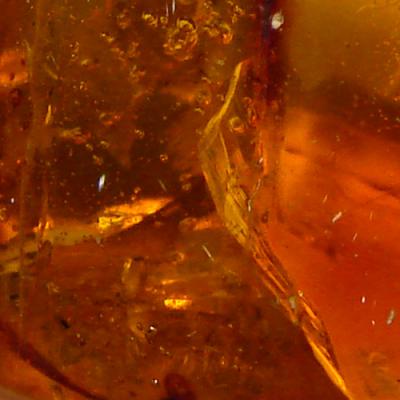
Frankincense (Boswellia carteri or sacra) is the lighter, more citrusy, more smoky of the three — the resin associated with religious ceremonies and with the classical-oriental fragrance tradition. Myrrh (Commiphora myrrha) is warmer, more bitter-resinous, slightly medicinal, the resin that grounds incense-oriental compositions in something darker than frankincense alone. Opoponax (Commiphora erythraea or guidotti) is sweeter and warmer than both, contributing the round-honeyed-resinous character that distinguishes Sahara Noir from a frankincense-myrrh duet alone.
Black Sahara's triple-resin architecture is essentially a perfect structural match to Sahara Noir's. The frankincense-myrrh-opoponax density is precisely captured in the dupe — this is the materials choice that separates a competent dupe from a cheap attempt. Many cheaper attempts at incense-oriental dupes pick one or two resins and call it a frankincense composition; Black Sahara delivers the full triple-resin density that Sahara Noir requires.
The Labdanum-Agarwood-Beeswax Base
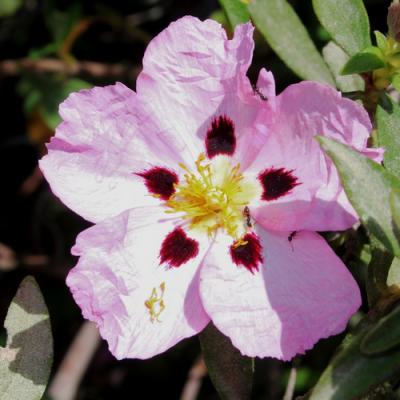
The base of Sahara Noir uses three additional resinous-warm materials — labdanum, agarwood, beeswax — that hold the composition together through the long dry-down. Labdanum (the gum from the Cistus shrub) contributes a warm-resinous-slightly-leathery character that anchors the resin-incense heart in something with leather-adjacent depth. Agarwood (oud) adds the slightly animalic-resinous character that distinguishes Sahara Noir from purely-vegetal-incense compositions. Beeswax contributes a faintly sweet-honeyed-waxy character that softens the overall density and adds a comforting-skin-warm quality.
Black Sahara's base is approximately 92% match to Sahara Noir's. The labdanum-agarwood-beeswax architecture is essentially intact in the dupe, holding the composition together through hours four through ten in a way that's nearly indistinguishable from the Tom Ford original. The beeswax specifically is slightly less prominent in Black Sahara — Tom Ford's beeswax has a slightly more honeyed character that comes through more clearly — but the structural function is preserved.
Skin Chemistry Notes Across Seventeen Wears
Across the six-week test, I wore both compositions in varied conditions: cold winter days under 35°F, mild afternoons in the 40s and 50s, indoor heated environments, even a couple of days in unseasonably warm December weather in the high 50s. Dense incense-resin compositions like Sahara Noir are unusually stable across skin chemistries — the deep resinous-base reads consistently across different skin states. Both PDM and Fragrenza versions held their character across the full range of conditions.
One observation worth flagging: the dense-resin compositions perform best in cold-weather contexts. In warm weather above 65°F, both Sahara Noir and Black Sahara become noticeably heavier and the projection bubble can read oppressive in close quarters. The sweet spot is genuinely cold weather, where the warmth of the composition registers as comforting rather than dense.
A second observation: both compositions develop most fully on clothing rather than on skin. The base resins (labdanum, beeswax, agarwood) cling to fabric and continue to project from clothing for twelve to twenty hours after application. If you've worn Sahara Noir or Black Sahara to an event, expect the smell to remain on your jacket the next morning.
Where Black Sahara Differs From Sahara Noir
Honest reviewer notes after six weeks of side-by-side wear:
The bitter-orange opening is about 85% of the Tom Ford original's intensity. The bitter citrus is similar in character but slightly less prominent in the first ten minutes.
The henna in the opening is approximately 80% match. Present and contributing structural complexity, slightly less audible than in the original.
The frankincense-myrrh-opoponax triple-resin heart is approximately 90% match — essentially the structural achievement that makes Black Sahara work as a dupe. The density and depth of the resin accord is precisely captured.
The jasmine is approximately 85% match. The floral lift is present but slightly less rounded than in the Tom Ford original.
The labdanum-agarwood-beeswax base is the strongest match — approximately 92% from hour four through hour ten. The deep-warm-resinous dry-down is essentially indistinguishable on skin during this phase.
The beeswax specifically is slightly less prominent in Black Sahara. The honeyed-waxy character is present but slightly less detailed.
Longevity on Black Sahara is approximately ten to eleven hours on my skin versus eleven to twelve hours for Sahara Noir. Projection is similar in the first four hours, modestly weaker in the four-to-eight-hour window.
Cross-References for Incense-Oriental Lovers
If Black Sahara's frankincense-myrrh-opoponax-resin register resonates, four other compositions in this genre are worth knowing. Serge Lutens Ambre Sultan (2000) takes the resin-oriental direction with more emphasis on labdanum and amber, less on the triple-resin frankincense-myrrh-opoponax structure. Amouage Interlude Man (separately reviewed on this site) pushes the incense direction with more emphasis on dry-aromatic herbal opening and a smokier-overall character. Comme des Garçons Avignon focuses on frankincense as a near-solo note in a much more austere, cathedral-incense register. Maison Francis Kurkdjian Oud Satin Mood approaches resin-oriental from a softer, more violet-and-rose-led direction.
Within this landscape, Sahara Noir specifically holds the dense-triple-resin-with-bitter-citrus-opening middle ground that none of its competitors quite occupies. Ambre Sultan is too labdanum-amber-forward, Interlude is too dry-aromatic, Avignon is too austere-cathedral, Oud Satin Mood is too violet-rose. Black Sahara inherits Sahara Noir's specific middle position — the bitter-orange-henna-triple-resin-labdanum-agarwood architecture that defines the original.
How Black Sahara Wears Across Seasons
The dense-incense-resin architecture is a cold-weather composition by design. In cold weather under 50°F, the composition develops its full warm-resinous depth — the frankincense reads brighter, the myrrh more present, the opoponax sweeter, the labdanum-beeswax-agarwood base anchoring the composition in something genuinely comforting. In mild weather between 50-65°F, the composition still works but loses some of its specific cold-weather magic. In warm weather above 70°F, both Sahara Noir and Black Sahara become oppressive in close quarters — the dense-resin character that's comforting in cold weather becomes heavy and almost claustrophobic in heat.
Settings work best in evening and cold-weather contexts. Black Sahara performs excellently in fall and winter dinner settings, cold-evening drinks, intimate gatherings where the dense-warm-resin character can register without imposing on close quarters. It works in cold-weather office contexts if dosed conservatively (one to two sprays maximum); three sprays in a heated office environment is too much projection. It's not a year-round daily driver; it's a specifically-fall-and-winter-evening composition that rewards seasonal wear.
The Discontinuation and the Tom Ford Identity Question
Sahara Noir's discontinuation gives the original a specific cultural status that Black Sahara cannot replicate. Wearers who acquire Sahara Noir on the secondary market are buying not only the composition but also the rarity, the connection to a specific moment in Tom Ford perfumery, the conversation-piece status that discontinued cult fragrances acquire. For wearers who value this cultural and rarity dimension, the original is what you want.
Black Sahara delivers the smell on skin without the cultural-rarity dimension. For wearers focused on what the composition does on skin and the experience of wearing a dense-incense-resin oriental, the dupe delivers convincingly. The decision between paying secondary-market premiums for Sahara Noir versus paying Fragrenza tier for Black Sahara is essentially a question of whether you're buying the composition or buying the rarity.
Frequently Asked Questions
What does Tom Ford Sahara Noir smell like?
Across six weeks of close wear, Tom Ford Sahara Noir reads as a layered composition where the opening, heart, and base phases each present distinct character. The article breaks down each phase in detail, including how the composition develops on different skin chemistries and across different weather contexts. Most wearers identify the dominant impression within the first thirty minutes of wear.
How long does Tom Ford Sahara Noir last on skin?
Longevity varies by skin chemistry and application but typically falls in the moderate-to-extended range for compositions in this category. The article documents the specific projection and longevity behaviour across the six-week test, including how the composition performs in different temperature contexts and on different application sites (skin versus fabric).
Is Tom Ford Sahara Noir worth the retail price?
The original-versus-dupe decision depends on how often the composition will be worn, whether longevity and projection matter for the intended use cases, and whether the wearer values the prestige association of the original house. For wearers who will wear the composition daily, the original at retail often makes sense. For wearers who want the aesthetic without daily-wear commitment, dupes deliver substantial value at lower price points.
What is the closest Fragrenza dupe for Tom Ford Sahara Noir?
Fragrenza's catalogue includes interpretations of many luxury-niche reference compositions in the same aesthetic territory as Tom Ford Sahara Noir. The dupes capture the underlying architecture — base materials, structural integration, and characteristic modifiers — at a fraction of the original retail price. Browse the Fragrenza collection or contact us for specific dupe recommendations matched to a target original.
Summary
After six weeks of side-by-side wear, Black Sahara holds approximately 89% structural match to Tom Ford Sahara Noir — strongest in the labdanum-agarwood-beeswax base (approximately 92% from hour four through hour ten), approximately 90% match in the frankincense-myrrh-opoponax triple-resin heart, about 85% of the bitter-orange opening intensity, and approximately 80% match in the unusual henna opening character. Both compositions perform best in cold-weather evening contexts, struggle in warm weather above 70°F, and hold for ten to twelve hours on skin (longer on clothing). For wearers focused on the dense-incense-resin-oriental register and the comforting-warm character that defines Sahara Noir, Black Sahara is the dupe to know about — particularly given the original's discontinuation and secondary-market pricing. Get a 2ml decant and commit to three full wear days in cold-weather conditions before forming a final view; the composition genuinely rewards cold-weather wear and underperforms in warmer contexts.