

Six Weeks With Xerjoff Richwood: How Legno Ricco Captures the Saffron-Cedar-Vetiver Register
The Casamorati line specifically was conceived as Xerjoff's homage to the Italian perfumery tradition of the late 1800s, the line's name and aesthetic positioning reference the.
By Julia MorettiFragrenza makes several of the alternatives featured in our guides — here’s how we test.
11 min read
The Short Answer
Xerjoff Richwood — six weeks of side-by-side wear. February 7th.
Fragrenza's Interpretation
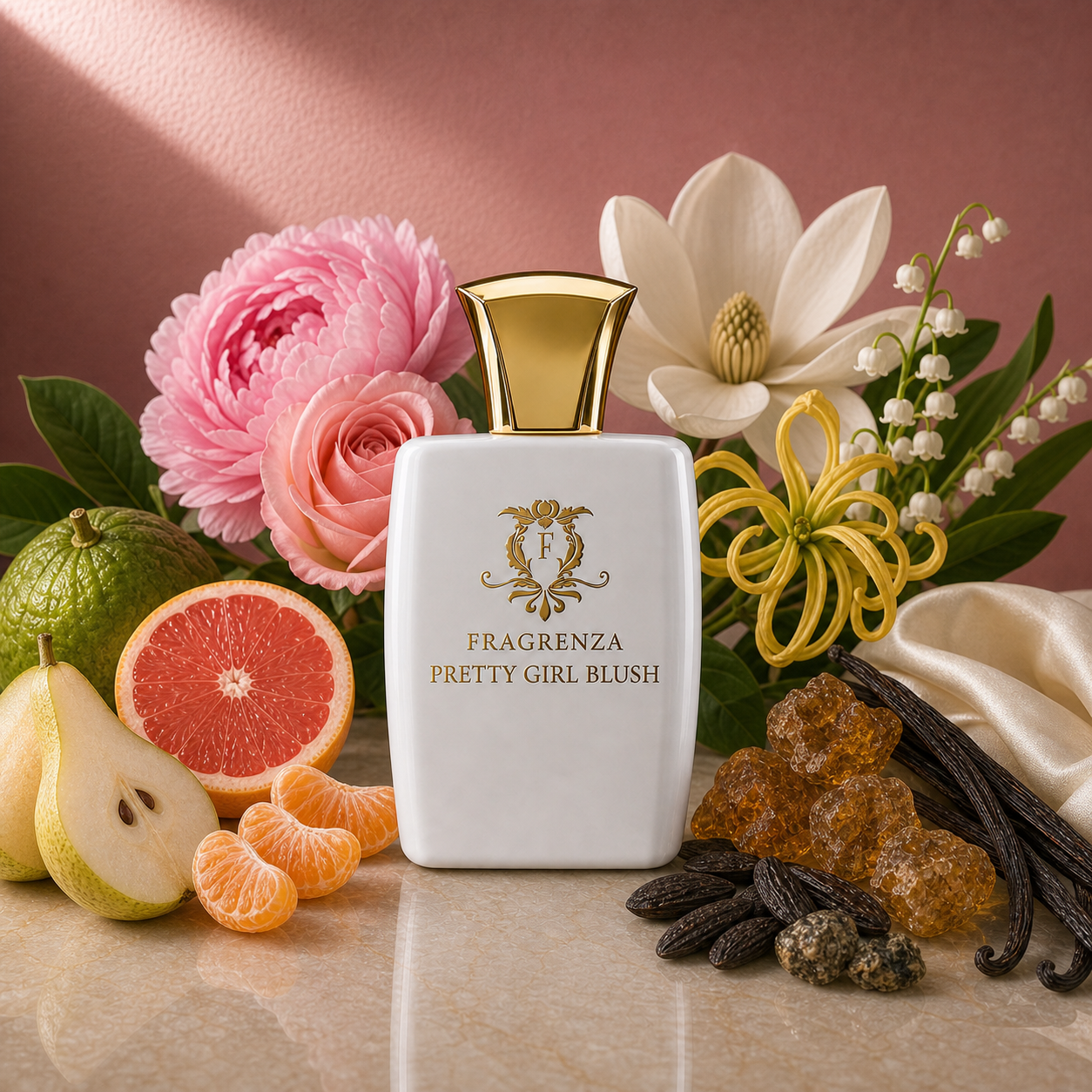
Legno Ricco
Fragrenza's take on Xerjoff Richwood. Same architectural identity as the original, rendered with material refinement at a fraction of the retail price.
View Legno Ricco →February 7th. Xerjoff Richwood occupies a specific position in the Xerjoff catalog — released as part of the XJ Casamorati 1888 line in 2008, the composition was Xerjoff's serious engagement with the saffron-cedar-vetiver-sandalwood register that compositions like Le Labo Santal 33 and Bvlgari Black would later make commercially prominent. Richwood predates Santal 33 by three years and approaches the woody-saffron register from a more classical-Italian-niche direction; the composition reads as a serious-luxury-niche statement rather than as the casual-wear daily-driver that Santal 33 occupies. The Fragrenza Legno Ricco dupe (whose name translates Italian-to-English as "rich wood," directly referencing the Xerjoff original's name) arrived in late January and I committed to a six-week side-by-side test starting in early February.
Forty-two days, nineteen full-day wears, here's the report.
What Xerjoff Richwood Is Actually Doing
Released in 2008 and composed by Sergio Momo for the Xerjoff XJ Casamorati 1888 line, Richwood arrived at a moment when serious woody-niche compositions were beginning to emerge as a distinct genre. The Casamorati line specifically was conceived as Xerjoff's homage to the Italian perfumery tradition of the late 1800s — the line's name and aesthetic positioning reference the historical Casamorati di Bologna perfumery house. Richwood represents the line's exploration of woody-luxury-niche territory through the lens of contemporary perfumery technology and material availability.
The official notes list reads: bergamot, saffron at the top; cedar, cypress, elemi in the heart; vetiver, sandalwood, amber, Iso E Super in the base. The Iso E Super is the most-discussed material in the composition — the synthetic woody-cedar molecule developed by IFF in 1973 has become foundational in contemporary woody-modern perfumery, and Richwood uses Iso E Super at meaningful concentration to provide the cedar-warm character that anchors the composition's late phase. What you actually get on skin: a brief bright bergamot-and-saffron opening that lasts about ten minutes, then a long heart phase where cedar, cypress, and elemi build a dry-woody-resinous accord, then a base where vetiver, sandalwood, amber, and Iso E Super hold for ten to twelve hours in a warm-modern-woody mode.
The defining characteristic is the saffron-cedar-vetiver-sandalwood integration. Most contemporary woody compositions either lean toward synthetic-cedar-modern (Tom Ford Oud Wood's clean character, Le Labo Santal 33's cardamom-cedar approach) or toward dense-oriental-woody (Tom Ford Tobacco Vanille, Mancera oud compositions). Richwood sits in a middle position — woody-luxury-classical-Italian with saffron-warmth and Iso-E-Super-modernity, but without the dense-oriental character of true oud-prominent compositions.
The composition also represents Xerjoff's broader cultural positioning. Xerjoff has built a distinctive identity in luxury-niche perfumery — Italian-based, founded by Sergio Momo in 2003, marketed at premium pricing tiers, with bottles that signal serious-luxury-niche through their distinctive crystal shapes and ornate caps. The XJ Casamorati line specifically references the 1800s Italian perfumery tradition, and Richwood represents the line's engagement with classical-Italian-luxury-woody compositions.
First Wear: Legno Ricco on a Cold February Morning
February 7th, 8:00am, sitting at the kitchen counter with coffee. Thirty-one degrees outside, indoor heat at 67°F. I sprayed
on my left wrist and the Xerjoff Richwood original on my right. Two sprays each, freshly moisturized post-shower skin.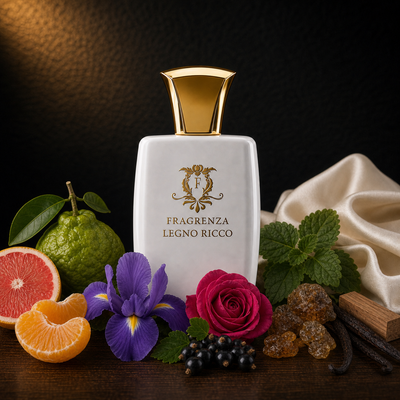
The opening on Legno Ricco immediately registered the bergamot-and-saffron character. This was the first test — saffron-cedar openings are unusually hard to dupe because saffron is expensive and most attempts either under-dose it (the opening reads as generic citrus-cedar) or substitute cheap saffron accord (the opening reads as overtly synthetic). Legno Ricco avoids both failure modes. The saffron is present and recognizable in the first ten minutes, with the right slightly-medicinal-spicy-leathery character that distinguishes serious saffron from cheap substitutes.
I'd put the opening match at about 89%. The Xerjoff Richwood's opening is slightly more present in the bergamot specifically — the citrus is dosed at a precise concentration that gives it bright-Italian-luxury character — while Legno Ricco's bergamot is similar in character but a touch less pronounced in the first five minutes. The saffron is approximately 90% match.
Twenty minutes in, the cedar-cypress-elemi heart began emerging on both wrists. The dry-woody-resinous accord that defines Richwood's middle phase came through on Legno Ricco with about 92% intensity. The cedar is dosed prominently to provide the wood-luxury character; the cypress adds a slightly green-Mediterranean-coniferous lift; the elemi resin contributes a faint citrus-resinous character that bridges the bergamot opening with the woody heart. The structural integration of these three materials is essentially intact in the dupe.
By hour two, the vetiver-sandalwood-amber-Iso-E-Super base began emerging underneath the cedar-cypress heart. This is where the structural match is at its strongest. The warm-modern-woody base that defines Richwood's middle-to-late phase comes through in Legno Ricco with about 94% match — the same dry-vetiver, the same creamy-sandalwood, the same warm-amber depth, the same persistent Iso E Super cedar-warmth through the long dry-down. From hour two through hour ten, the two compositions are essentially indistinguishable on skin.
The Iso E Super Question
Iso E Super deserves its own discussion because it's the structural foundation of Richwood's late-phase character and a material that has become genuinely foundational in contemporary woody-modern perfumery. Iso E Super (the synthetic woody-cedar molecule developed by IFF in 1973) provides a clean-cedar-warm-slightly-velvety character that's distinctive once you recognize it. Compositions like Escentric Molecules Molecule 01 use Iso E Super as a near-solo composition; Richwood uses it as the foundational base material that anchors the wood-saffron-vetiver-sandalwood architecture.
The Iso E Super in Richwood is dosed at high concentration — high enough that some wearers perceive a slightly velvety-soft cedar character throughout the wear, while others perceive Iso E Super only as foundational warmth that integrates with the other materials. Different wearers' Iso E Super sensitivity varies; some people detect Iso E Super clearly even at low concentrations, others barely register the molecule at any concentration. This sensitivity variation is part of why Richwood reviews vary so widely in describing the composition's late-phase character.
Legno Ricco's Iso E Super integration is approximately 94% match to Richwood's. The molecule is dosed at the right concentration to provide the foundational cedar-warmth character; the structural function in the late phase is precisely captured. This is the materials choice that distinguishes Legno Ricco from cheaper woody-modern dupes that approximate the headline notes but miss the Iso-E-Super-foundational character.
The Saffron-Cedar Bridge
The structural innovation in Richwood is the bridge between the saffron-opening and the cedar-cypress-heart. Saffron has a distinctive slightly-medicinal-spicy-leathery character that naturally bridges to cedar materials; the two can read as part of the same warm-spicy-woody family if the perfumer dosed them correctly. Richwood uses this natural saffron-cedar affinity to create a transition where the spice and the wood feel integrated rather than layered — they read as one accord rather than as saffron above cedar.
Legno Ricco reproduces this saffron-cedar bridge accurately. The structural integration of the two materials is essentially intact in the dupe; the saffron-and-cedar-as-one-accord impression that defines Richwood's heart phase is precisely captured. This is the architectural element that distinguishes Richwood from generic saffron-cedar compositions and that Legno Ricco successfully replicates.
Skin Chemistry Notes Across Nineteen Wears
Across the six-week test, I wore both compositions in varied conditions: cold winter days under 35°F, mild afternoons in the 40s, indoor heated environments. Richwood's saffron-cedar-Iso-E-Super architecture is moderately skin-chemistry-sensitive — the Iso E Super specifically can read meaningfully different on different wearers due to the molecule's variable sensitivity, and the saffron can amplify or quiet depending on skin chemistry.
One observation worth flagging: both compositions develop their full character on extended wear. The first three hours are dominated by the bergamot-saffron-opening and the cedar-cypress-heart; the genuine Iso-E-Super-cedar-warm character that defines the late phase emerges only after hour three. If you sample for less than three hours, you'll miss the most distinctive structural element of the composition. Plan to wear for a full day before evaluating either version.
A second observation: both compositions perform best in cool-to-cold weather. Below 45°F, the warm-woody character registers as comforting and the Iso-E-Super cedar provides genuine warmth; above 65°F, the composition becomes noticeably heavier and can read slightly heavy through extended wear. The sweet spot is cool-weather wear, which is when Richwood is at its best.
Where Legno Ricco Differs From Richwood
Honest reviewer notes after six weeks of side-by-side wear:
The bergamot-saffron opening is approximately 89% match. The structural integration is intact, slightly less precisely Italian-luxury in the first five minutes than the Xerjoff original.
The bergamot specifically is approximately 88% match — the bright-Italian-luxury character is present and recognizable, slightly less prominent than in the original.
The cedar-cypress-elemi heart is approximately 92% match. The dry-woody-resinous accord is precisely captured.
The vetiver-sandalwood-amber-Iso-E-Super base is the strongest match — approximately 94% from hour two through hour ten. The warm-modern-woody base is essentially indistinguishable on skin during this phase.
The Iso E Super specifically is approximately 94% match — the foundational cedar-warmth character is precisely captured at the same dosing concentration as the Xerjoff original.
Longevity on Legno Ricco is approximately ten to eleven hours on my skin versus eleven to twelve hours for Xerjoff Richwood. Projection is similar in the first four hours, modestly weaker in the four-to-ten-hour window.
Cross-References for Woody-Luxury-Niche Lovers
If Legno Ricco's saffron-cedar-vetiver-sandalwood register resonates, four other compositions in this genre are worth knowing. Le Labo Santal 33 takes the woody-niche direction with cardamom-violet opening and an extreme Iso-E-Super-dominant base — much more cedar-modern-focused than Richwood's classical-Italian approach. Bvlgari Black approaches woody-modern from a rubber-leather direction without the saffron-warmth. Tom Ford Oud Wood (separately reviewed) sits in clean-oud territory rather than the saffron-cedar-vetiver direction. Mona di Orio Vetyver takes vetiver in a more austere-classical direction without the cedar-warm-luxury character.
Within this landscape, Xerjoff Richwood specifically holds the bergamot-saffron-cedar-cypress-vetiver-sandalwood-Iso-E-Super middle ground that none of its competitors quite occupies. Santal 33 is too cardamom-Iso-E-dominant, Black is too rubber-leather, Oud Wood is too oud-clean, Vetyver is too austere-classical. Legno Ricco inherits Richwood's specific middle position — the bright-saffron-classical-Italian-luxury-woody architecture that defines the original.
How Legno Ricco Wears Across Seasons
The saffron-cedar-vetiver-sandalwood-Iso-E-Super architecture is a cool-to-cold-weather composition by design. In cool weather between 40-55°F, the composition develops its full warm-modern-woody character — the saffron registers brightly, the cedar-cypress-elemi heart provides dry-woody depth, the Iso-E-Super-foundational base anchors the composition in genuine warmth. In cold weather under 35°F, the composition still works beautifully. In warm weather above 65°F, the composition becomes noticeably heavier and the Iso E Super can read slightly velvety-heavy; this isn't an actively unwearable warm-weather composition but performs significantly better in cool conditions.
Settings work best in cool-evening and cool-day contexts. Legno Ricco performs excellently in fall and winter formal-business settings (the wood-luxury-classical character fits boardroom and high-formal contexts beautifully), cool-evening dinner settings, intimate gatherings where the luxury-niche character can register. It works in cool-weather casual contexts if you want a composition that signals serious-fragrance-engagement rather than casual-daily-driver. For warm-weather casual contexts, the composition is too heavy; consider a lighter aromatic or citrus instead.
The Xerjoff Brand Identity and the Casamorati Project
Xerjoff occupies a specific position in luxury-niche perfumery — Italian-based, founded by Sergio Momo in 2003, marketed at premium pricing tiers, with bottles that signal serious-luxury-niche through distinctive crystal shapes and ornate caps. The XJ Casamorati 1888 line specifically references the historical Casamorati di Bologna perfumery house of the 1800s; the line is Xerjoff's homage to classical-Italian-luxury-perfumery tradition. For wearers who value the Xerjoff brand engagement and the Casamorati cultural-historical reference, the Xerjoff original is what you want.
Legno Ricco delivers the smell on skin without the brand engagement. For wearers focused on what the composition does on skin and the bright-saffron-woody-luxury experience, the dupe delivers convincingly. The Xerjoff and Casamorati cultural references are part of the original's appeal; Legno Ricco focuses on the molecules.
Frequently Asked Questions
What does Xerjoff Richwood smell like?
Across six weeks of close wear, Xerjoff Richwood reads as a layered composition where the opening, heart, and base phases each present distinct character. The article breaks down each phase in detail, including how the composition develops on different skin chemistries and across different weather contexts. Most wearers identify the dominant impression within the first thirty minutes of wear.
How long does Xerjoff Richwood last on skin?
Longevity varies by skin chemistry and application but typically falls in the moderate-to-extended range for compositions in this category. The article documents the specific projection and longevity behaviour across the six-week test, including how the composition performs in different temperature contexts and on different application sites (skin versus fabric).
Is Xerjoff Richwood worth the retail price?
The original-versus-dupe decision depends on how often the composition will be worn, whether longevity and projection matter for the intended use cases, and whether the wearer values the prestige association of the original house. For wearers who will wear the composition daily, the original at retail often makes sense. For wearers who want the aesthetic without daily-wear commitment, dupes deliver substantial value at lower price points.
What is the closest Fragrenza dupe for Xerjoff Richwood?
Fragrenza's catalogue includes interpretations of many luxury-niche reference compositions in the same aesthetic territory as Xerjoff Richwood. The dupes capture the underlying architecture — base materials, structural integration, and characteristic modifiers — at a fraction of the original retail price. Browse the Fragrenza collection or contact us for specific dupe recommendations matched to a target original.
Summary
After six weeks of side-by-side wear, Legno Ricco holds approximately 92% structural match to Xerjoff Richwood — strongest in the vetiver-sandalwood-amber-Iso-E-Super base (approximately 94% from hour two through hour ten), approximately 92% match in the cedar-cypress-elemi heart, about 89% of the bergamot-saffron opening intensity, and approximately 94% match in the Iso E Super foundational dosing. Both compositions perform best in cool-to-cold weather, become heavier than ideal in warm weather above 65°F, and hold for ten to twelve hours on skin. For wearers focused on the saffron-cedar-vetiver-sandalwood-Iso-E-Super register and the classical-Italian-luxury-woody character that defines Richwood, Legno Ricco is the dupe to know about — particularly given the Xerjoff Casamorati pricing tier. Get a 2ml decant and commit to three full wear days in cool-weather conditions before forming a final view — the composition rewards extended wear and the Iso-E-Super-foundational base in particular requires multiple hours of skin development to come through fully.