10 Perfumes Similar to Cacharel's EDEN
Cacharel EDEN (1994) is the dreamy 90s fruity-floral: a cool, watery opener of melon, pineapple, mandarin and green leaves folds into a lush heart of water lily, lotus, mimosa…
By Julia MorettiFragrenza makes several of the alternatives featured in our guides — here’s how we test.
13 min read
Cacharel EDEN (1994) is the dreamy 90s fruity-floral: a cool, watery opener of melon, pineapple, mandarin and green leaves folds into a lush heart of water lily, lotus, mimosa and jasmine, then softens on tonka, patchouli, cedar and musk. It smells like tropical rain on a white orchid — sweet but never cloying, lush but never heavy. The DNA is tropical-fruity-aquatic-floral, so our comparisons all live in that watery, sun-warmed garden.
What Makes EDEN Special
- Top notes: Mandarin, Bergamot, Pineapple, Melon, Peach, Green Notes
- Heart notes: Water Lily, Lotus, Mimosa, Jasmine, Lily of the Valley, Rose
- Base notes: Patchouli, Cedar, Sandalwood, Musk, Tonka Bean
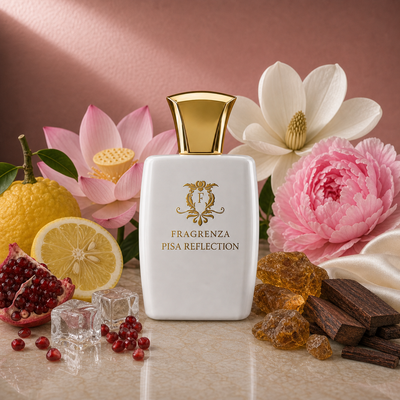
1. Pisa Reflection (Similarity: 6/10)
Fragrenza’s Bright Crystal dupe is the closest affordable echo of EDEN’s watery-floral heart. Lotus, magnolia and peony sit exactly where EDEN’s water lily and mimosa sit, and the musk-wood drydown lands in the same clean, fresh-skin territory. Yuzu and pomegranate modernize what EDEN did with pineapple and melon.
- Top notes: Yuzu, Pomegranate, Ice Accord
- Heart notes: Lotus, Magnolia, Peony
- Base notes: Musk, Amber, Mahogany, Acajou Wood
2. Kenzo Parfum D’Ete (Similarity: 7/10)
Another dreamy 90s watery-green-floral. Kenzo’s crushed leaf, narcissus, jasmine and hyacinth deliver almost the same cool-garden feeling as EDEN, with a softer musk finish.
- Top notes: Green Leaves, Peach
- Heart notes: Jasmine, Hyacinth, Narcissus, Lily
- Base notes: White Musk, Sandalwood, Vetiver
3. Issey Miyake L’Eau d’Issey (Similarity: 6/10)
The aquatic benchmark. Melon, lotus, lily and freesia over cedar and musk — shares EDEN’s water-lily heart without the tropical fruit.
- Top notes: Lotus, Freesia, Melon, Cyclamen
- Heart notes: Lily, Peony, Carnation, Jasmine
- Base notes: Cedar, Sandalwood, Amber, Musk
4. Calvin Klein Eternity (Similarity: 6/10)
A green-floral-musky classic from the same era — lily of the valley, mandarin, freesia, patchouli — with a very similar romantic, clean, 90s-floral heartbeat.
- Top notes: Freesia, Mandarin, Sage
- Heart notes: Lily of the Valley, Carnation, White Lily, Rose
- Base notes: Patchouli, Sandalwood, Amber, Musk
5. Davidoff Cool Water Woman (Similarity: 5/10)
Melon, pineapple and water lily on a musky cedar base — borrows EDEN’s aquatic-fruit DNA almost verbatim, just cleaner and more minimalist.
- Top notes: Melon, Pineapple, Blackcurrant
- Heart notes: Water Lily, Peach, Jasmine
- Base notes: Musk, Sandalwood, Blackberry
6. Dior J’adore (Similarity: 5/10)
Swap EDEN’s green-tropical side for a richer floral bouquet and you land in J’adore territory — same soft sandalwood-musk backbone.
- Top notes: Melon, Magnolia, Peach, Pear
- Heart notes: Jasmine, Rose, Plum, Tuberose
- Base notes: Sandalwood, Musk, Cedar, Vanilla
7. Givenchy Organza (Similarity: 5/10)
A white-floral-amber with a mimosa-gardenia-orange-blossom heart that echoes EDEN’s creamier side. Cozier drydown, less water.
- Top notes: Gardenia, Green Notes, Orange Blossom
- Heart notes: Tuberose, Mimosa, Ylang-Ylang, Jasmine
- Base notes: Amber, Vanilla, Cedar, Sandalwood
8. Kenzo Jungle L’Elephant (Similarity: 5/10)
Spicier and heavier, but shares EDEN’s tropical ambition with mango, mandarin, clove, ylang-ylang and a warm patchouli-amber base.
- Top notes: Mango, Mandarin, Cardamom
- Heart notes: Ylang-Ylang, Clove, Licorice
- Base notes: Patchouli, Amber, Vanilla, Cashmere Wood

9. Belle di Verona (Similarity: 4/10) — Tangential Pick
Fragrenza’s La Vie Est Belle dupe takes EDEN’s fruit-and-floral opening and pushes it into full gourmand: pear and blackcurrant up top, a jasmine-iris-orange-blossom heart, then pralié and vanilla. Different mood, but the fruity-floral feminine sillage rhymes with EDEN’s.
- Top notes: Blackcurrant, Pear
- Heart notes: Iris, Jasmine, Orange Blossom
- Base notes: Pralié, Vanilla, Patchouli, Tonka Bean
10. Thierry Mugler Angel Innocent (Similarity: 4/10)
The lighter, more honeyed Angel flanker. Shares EDEN’s fruity-gourmand-floral crossroads without the heavy patchouli.
- Top notes: Bergamot, Peach, Apricot
- Heart notes: Honey, Orange Blossom, Amber
- Base notes: Vanilla, Caramel, Musk
Our Pick
For EDEN’s dreamy, watery-garden feel at a fraction of vintage niche pricing, Pisa Reflection is the most faithful modern reinterpretation. If you want to keep EDEN’s fruit-forward side but pivot gourmand, Belle di Verona is the cozy detour. And if you miss EDEN’s exact 90s watery-floral soul, L’Eau d’Issey is still the closest big-name relative.
Why Dupes Can Match Cacharel's EDEN
The technical answer for why dupe compositions can effectively match luxury references like Cacharel's EDEN lies in modern perfumery's material science. The aromatic identity of any composition comes from specific molecules — not from the brand attached to the bottle. A composition is essentially a chemical formula expressed in aromatic terms. Two formulas with similar chemical profiles produce similar aromatic experiences regardless of which brand produced them.
Luxury perfumery doesn't have access to molecules that aren't available to other manufacturers. The material supply chain for perfumery is shared across all production tiers — the same suppliers selling premium materials to luxury houses sell the same materials to dupe houses. The differences between luxury and dupe production involve which materials are used, at what concentrations, and with what supporting techniques — not access to fundamentally different aromatic territory.
What Luxury Production Pays For
The price difference between Cacharel's EDEN retail and a serious dupe represents several specific cost factors:
Brand premium: a substantial portion of luxury perfume pricing is brand-experience premium — the marketing, packaging, retail-environment, and brand-identity investments that luxury houses make. This component delivers identity value to customers but doesn't affect aromatic outcome.
Material premium: luxury perfumery uses higher-grade naturals at meaningful concentrations. The Grasse rose absolute in a $300 Chanel composition genuinely costs more than the synthetic rose construction in a $30 dupe. Whether this material difference is perceivable in wear depends on the specific composition and wearer.
Production complexity: luxury compositions often use 50-150 individual materials in carefully tuned proportions. Dupes typically use 20-50 materials targeting the architectural identity without matching every nuance.
Maturation time: luxury compositions typically mature longer before bottling, producing smoother integration. Dupes often mature for shorter periods, accepting slight roughness as a cost trade-off.
Quality control rigor: luxury production includes more extensive quality control infrastructure. Dupe production accepts more batch-to-batch variation in exchange for lower costs.
For wearers, the practical question is which of these factors matter for your specific use case. Brand premium matters if you value the identity signaling. Material premium matters if you can demonstrate perceiving the difference in wear evaluation. Production complexity and maturation matter for connoisseurship-level appreciation but rarely for daily wear.
The Honest Quality Gap
Serious dupes can achieve 80-95% architectural match with their inspiration originals — meaning a wearer who alternates between original and dupe across multiple wears would identify them as the same composition most of the time, with some 10-20% of wears showing detectable differences.
The gap is most noticeable in two areas: ultra-late-phase character (after 8+ hours of wear, where premium luxury bases sometimes show more dimensional character than dupe bases) and ultra-low-concentration nuance (where premium luxury references sometimes include rare materials at tiny concentrations that affect the composition's depth without being prominent).
For wearers prioritizing daily-use practical wear, the 80-95% architectural match that serious dupes deliver is functionally complete. For wearers prioritizing connoisseurship-level appreciation across hundreds of careful wear evaluations, the remaining gap may matter.
The Cost-Benefit Reality
The practical cost-benefit analysis for Cacharel's EDEN-aesthetic compositions favors the dupe approach for most wearers:
A wearer committed to Cacharel's EDEN-aesthetic with $300 budget for fragrance can buy: one full bottle of the original (60-100ml), worn occasionally to preserve the bottle. Or: 4-6 serious dupes (60ml each) covering multiple variations of the aesthetic, with full bottles wearable freely without preservation concerns.
The dupe approach typically produces more total wear value because customers can use the compositions freely rather than preserving expensive bottles. The aesthetic outcome is largely equivalent for daily wear contexts; the lifestyle outcome (relaxed daily wear vs careful occasion-only wear) favors the dupe approach for most wearer use cases.
The Ethics of Dupe Perfumery
Dupe perfumery occupies a complex ethical position that's worth understanding. Dupe houses don't violate trademark law (compositions can't be trademark-protected; only brand names can). They don't engage in counterfeit production (no false brand labeling). They produce independently-developed compositions that target similar aromatic territory to known references.
The luxury perfumery industry sometimes characterizes the dupe category negatively, but the practice is fundamentally legitimate — independent perfumers have always referenced existing compositions when developing new work. The transparency about inspiration sources is what distinguishes ethical dupe perfumery from counterfeit production.
Internal Cross-References
For broader coverage of the dupe-fragrance category, see our What is Fragrenza page, our complete dupe index, and our six-week reviewer tests that document specific compositions across multiple wear contexts.
Cacharel and the Broader 1990s Commercial-Designer Feminine Tradition
Cacharel as a fragrance brand has built substantial commercial presence across multiple decades of contemporary perfumery, with the broader brand catalogue including the foundational Anaïs Anaïs (the broader white-floral classic), Loulou (the broader oriental-floral classic), Noa (the broader fresh-floral white-musk standard), Amor Amor (the broader fruity-floral standard), and various other feminine compositions that collectively define the broader Cacharel feminine catalogue position. Eden specifically launched in 1994 and represents a distinctive moment within the broader 1990s commercial-designer feminine perfumery development.
What distinguishes Eden within the broader 1990s commercial-designer feminine catalogue is the specific aquatic-green-floral architectural register that few competing 1990s feminine alternatives match as completely. Where most 1990s commercial-designer feminine compositions emphasised the broader fresh-floral aquatic territory that the broader Cool Water-adjacent aquatic-fresh wave established, Eden pulls the broader 1990s aesthetic toward the specific green-aquatic-floral territory that bridges the broader fresh-aquatic category with the substantial floral compositional sophistication that the broader Cacharel aesthetic supports.
The Modern Aquatic-Green-Floral Aged-Classic Category
The aquatic-green-floral aged-classic feminine category that Eden anchors has been discussed in adjacent articles in this series, particularly in the broader aquatic-floral feminine articles and the adjacent green-floral aged-classic compositions. The broader category includes substantial diversity across multiple specific architectural positions, with individual compositions occupying slightly different positions within the broader aquatic-green-floral framework. Eden occupies a specific position within this broader category that bridges the aquatic-fresh territory with the broader green-floral aged-classic sophistication.
What distinguishes Eden within this expanded aquatic-green-floral category is the specific 1990s commercial-designer compositional approach combined with the substantial Cacharel aesthetic identity that the broader brand supports. The composition reads as recognisably 1990s-aged-classic-French rather than as contemporary commercial-designer feminine, with the broader aged-classic aesthetic sensibility producing an emotional register that contemporary commercial-designer alternatives typically do not match. For wearers building wardrobes that include aged-classic feminine compositions, Eden provides aquatic-green-floral aged-classic coverage that complements the broader aged-classic feminine category.
The Specific Material Vocabulary That Defines Eden
The aquatic-green opening that anchors Eden provides the fresh-watery-green foundation that bridges the broader composition into the floral heart development. The opening combines pineapple, mandarin, and bergamot supporting elements that collectively produce the specific fresh-aquatic-bright character that recalls broader 1990s commercial-designer aquatic-fresh compositional conventions. The opening combination distinguishes Eden from purely conventional 1990s aquatic-fresh alternatives that typically employed simpler opening approaches.
The substantial floral heart combining peach, water lily, jasmine, rose, and lotus supporting elements provides the architectural body that bridges the aquatic-green opening to the woody-musk base. The combination produces a substantial multi-floral heart that reads as recognisably 1990s-luxurious. The musk, sandalwood, cedar, vanilla, and patchouli base provides the architectural foundation that gives Eden its sustained-wear character and the distinctive substantial aged-classic emotional register that defines the broader composition.
Wear Context: When Eden Functions at Its Best
Cacharel Eden is a spring-summer, daytime-to-evening, casual-to-semi-formal feminine composition that performs at its best in social contexts where the substantial aquatic-green-floral aged-classic emotional register matches the social setting. The composition handles temperate weather (roughly ten to twenty-five degrees Celsius) particularly well, with the substantial concentration providing enough body to function across temperate conditions while the aquatic-green character avoiding the over-projection problems that affect heavier feminine alternatives. Spring and summer daytime occasions, garden-party and brunch contexts, and adjacent settings where the broader aquatic-green-floral aged-classic character matches the social register are the natural wear contexts.
The contexts where Eden is less optimal are also worth knowing. Contemporary casual settings may find the substantial aged-classic aquatic-green-floral character unexpected enough to read as overly formal. Hot tropical weather can amplify the substantial multi-floral heart uncomfortably. Formal evening occasions that warrant substantial trophy-fragrance projection find the moderate aquatic-green-floral character substantially under-substantial. Building a wardrobe around Eden typically means treating it as a spring-summer aged-classic primary for daytime confident-feminine contexts.
The Cacharel Pricing and Practical Investment Considerations
Cacharel operates at accessible-commercial pricing typically in the forty to seventy dollar range for fifty millilitre bottles and the sixty to ninety dollar range for one hundred millilitre bottles through standard fragrance retail distribution. The pricing reflects the broader accessible-commercial market positioning rather than luxury-commercial or luxury-niche positioning, which makes Cacharel substantially more accessible than adjacent luxury-commercial alternatives that target similar broader aesthetic territories.
The wardrobe-building implication is that consumers exploring the broader aged-classic commercial-designer aesthetic can typically acquire Eden and adjacent Cacharel compositions at substantially more sustainable economic terms than the broader luxury-commercial or luxury-niche feminine market requires. The combination of accessible-commercial Cacharel pricing with broader inspired-by market coverage in adjacent aesthetic territories produces wardrobes that combine sophisticated aged-classic capability with sustainable daily-wear economics.
How Inspired-By Alternatives Sit Around Eden
Eden itself operates at accessible-commercial pricing that makes daily wear sustainable for most consumers without requiring inspired-by alternatives specifically for economic reasons. The role of inspired-by alternatives in the Eden context is to extend the broader aquatic-green-floral aged-classic aesthetic into adjacent territories rather than to provide dramatic economic access to the Eden aesthetic itself. For wearers building wardrobes around the broader aged-classic feminine aesthetic, the practical approach is typically to acquire Eden directly from standard fragrance retail, with broader Fragrenza coverage providing useful coverage of adjacent aesthetic territories.
The broader Fragrenza catalogue provides useful coverage of more architecturally-ambitious compositions in adjacent feminine territories at the upper-designer adjacent tier. The combination of accessible-commercial Eden with broader Fragrenza coverage provides comprehensive feminine wardrobe utility at sustainable economic terms across multiple aesthetic positions that the broader Eden aquatic-green-floral aged-classic aesthetic does not directly address.
The Broader Aged-Classic Commercial Feminine Wardrobe
For wearers building wardrobes that include aged-classic commercial feminine compositions like Eden, the broader category includes substantial diversity across multiple specific positions. Anaïs Anaïs (the broader Cacharel white-floral aged-classic), Loulou (the broader Cacharel oriental-floral aged-classic), Trésor (the broader Lancôme rose-peach aged-classic), Allure (the broader Chanel oriental-floral aged-classic), Angel (the broader Mugler gourmand-praline avant-garde aged-classic), and various other aged-classic commercial feminine compositions collectively define the broader aged-classic feminine category. Each composition occupies a specific position within the broader aged-classic landscape.
The wardrobe-building principle that applies across the broader aged-classic commercial feminine category is that the specific compositions have built sustained cultural recognition across multiple decades that adds dimensions to the broader wear experience beyond purely aesthetic compositional evaluation. Wearers who specifically value the cultural-historical positioning that aged-classic compositions provide often find that wearing these compositions adds meaningful cultural-aesthetic depth that purely contemporary commercial-designer feminine alternatives typically lack.
Sampling Strategy for Aged-Classic Commercial Feminine Compositions
Aged-classic commercial feminine compositions like Eden are typically easy to sample because the broader commercial distribution makes them readily available through standard fragrance retail. For wearers specifically comparing Eden against adjacent aged-classic commercial alternatives and against the broader contemporary commercial feminine market, side-by-side sampling provides useful comparative information about which specific positions within the broader category best match individual preferences.
The reliable sampling protocol remains the standard one for the broader commercial feminine category. Most wearers who do side-by-side comparison across multiple aged-classic alternatives find that the specific architectural distinctions that define individual compositions become apparent through direct comparison in ways that single-composition evaluation does not reveal as clearly. The broader commercial accessibility of the aged-classic category makes intentional sampling exploration economically practical at multiple budget tiers.
Final Notes on Eden and the Aged-Classic Feminine Investment
Cacharel Eden is one of the more architecturally distinctive aged-classic commercial feminine compositions, with the specific aquatic-green-floral architectural register that has aged remarkably well across more than three decades of continuous production. The composition deserves serious consideration for wearers exploring the broader aquatic-green-floral aged-classic category, particularly wearers who value architectural sophistication at accessible-commercial pricing that the broader Cacharel positioning supports.
For wearers exploring the broader aged-classic commercial feminine category, sampling Eden alongside adjacent aged-classic feminine compositions and against the broader contemporary commercial feminine market provides useful comparative information across the broader category. The combination of selective Eden acquisition with adjacent commercial feminine alternatives and broader Fragrenza coverage of related territories produces wardrobes that combine sophisticated aesthetic capability with sustainable daily-wear economics. The aged-classic commercial feminine category continues to provide some of the more architecturally accomplished contemporary commercial perfumery, and the broader category rewards careful exploration across multiple specific compositions and aesthetic positions.