

Seven Rules for Applying Fragrance That Most People Get Wrong in 2026
Most fragrance advice arrives as fragments, a tip here, a rule there, a half-remembered piece of wisdom from a perfume counter conversation a decade ago
By Julia MorettiFragrenza makes several of the alternatives featured in our guides — here’s how we test.
8 min read
Most fragrance advice arrives as fragments — a tip here, a rule there, a half-remembered piece of wisdom from a perfume counter conversation a decade ago. The result is a collection of disconnected ideas that often contradict each other and rarely add up to a coherent practice. This guide consolidates the seven principles that genuinely matter into a single framework you can actually use.
Master these seven rules, and the application questions that most wearers wrestle with for years will resolve themselves. The fragrances in your collection will perform better, project more consistently, and last longer. And the people around you will respond to your fragrance more positively, because you'll be wearing it with intention rather than improvisation.
Rule One: Apply to Pulse Points, Not Clothing
The single most foundational rule. Pulse points — the chest, the sides of the neck, the inside of the wrists, the inner elbows — are areas where blood vessels run close to the surface, creating zones of slightly elevated temperature. That warmth volatilizes the fragrance molecules more effectively than cool-skin or fabric application, producing stronger projection and longer wear.
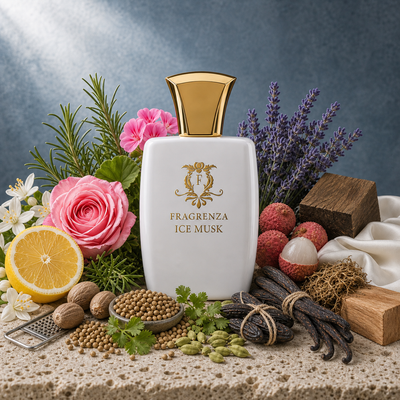
Ice Musk is a useful illustration of why this matters. The fragrance's clean, slightly cool, musky-skin signature reads beautifully when applied to the chest — the natural warmth of the upper sternum opens the fragrance into a fresh-skin halo that surrounds the wearer at conversational distance. The same fragrance applied to clothing would project flatly and fade quickly, losing the warm-skin diffusion that makes it work. Where you spray matters as much as how much you spray. For a deeper geography of the pulse points, see our pulse-point guide.
Rule Two: Don't Rub After Spraying
The wrist-rubbing reflex is the most stubborn fragrance myth in popular culture. It comes from a generation of advice that wrongly assumed rubbing helped the fragrance develop. In reality, rubbing breaks down the top notes by accelerating volatilization unevenly, which can shorten the opening phase by 30 to 50 percent and shift the fragrance's character.
The correct technique is to apply and let the fragrance dry on its own. If you've sprayed both wrists, gently touch them together once — don't rub back and forth. This single rule, applied consistently, will improve how every fragrance you own develops on skin. It costs nothing and takes no time, which makes it one of the highest-leverage corrections in fragrance practice.
Rule Three: Match Concentration to Context
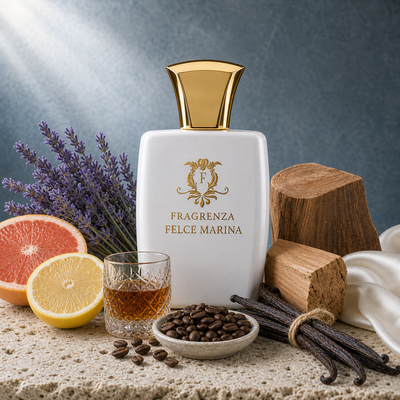
Felce Marina is a good example of how concentration and context interact. Built as a fresh-marine aromatic EDP, it delivers exactly the projection and longevity needed for daytime work and warm-weather wear. Wearing a heavy oriental EDP to a summer beach day would be a concentration-to-context mismatch; wearing Felce Marina to a December evening event would be the opposite mismatch.
The fix is building a small collection that covers your actual lifestyle. A versatile daytime EDP, a warm-weather lighter composition, a cold-weather warm-base composition, and possibly a special-occasion anchor will handle the vast majority of contexts you encounter. For more on building a wardrobe, see our occasions guide.
Rule Four: Apply 20-30 Minutes Before Departure
Most wearers spray their fragrance and walk out the door immediately. The result is that everyone they meet in the first half-hour smells the volatile opening rather than the fragrance's true character. The 20 to 30-minute rule fixes this by giving the top notes time to settle and the heart notes time to begin emerging before you encounter other people.
This rule is especially important for fragrances with citrus, ginger, or sharp aromatic openings, where the first few minutes can read as harsh or alcoholic before the heart notes emerge. Time the application correctly, and the same fragrance will be perceived as more refined and more pleasant by everyone you encounter — without changing anything else about how you wear it.
Rule Five: Adjust Dose to Skin Chemistry
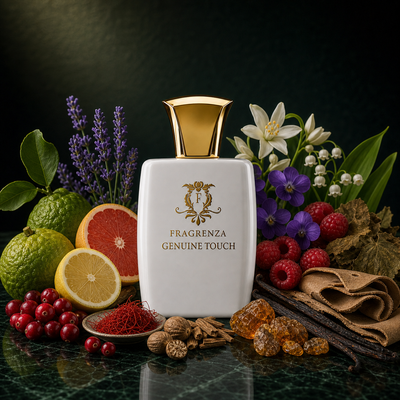
The same fragrance performs differently on different skin types. Dry skin burns through fragrance faster; warm, slightly oily skin amplifies base notes and extends wear time. Genuine Touch — a clean, aromatic, fresh-modern composition — will typically need 3 sprays on dry skin to deliver the same projection that 2 sprays achieves on average skin and 2 sprays achieves on naturally warm skin.
The fix is calibration. Pay attention to how your fragrances perform on you across multiple wears, and adjust your application accordingly. Don't apply by recipe; apply by feedback. If your fragrance fades by lunch, you need more or you need to apply differently. If it overwhelms a room at 9 AM, you need less. The right dose is the dose that produces the projection you want, not the dose that someone else recommends.
Rule Six: Use Layering Carefully
Layering — wearing two compatible fragrances together — can produce extraordinary results when done well and disasters when done poorly. The principle that makes it work is architectural compatibility. A clean musk like Ice Musk can layer beautifully with a warm vanilla or a soft floral, where the clean-skin signature provides a baseline against which the warmer fragrance develops. Two heavy orientals layered together typically fight each other rather than complementing.
Start with one fragrance on the chest and the other on the inner wrists to keep them slightly separated, and evaluate the combination at the 30-minute mark when both have had time to develop. If it works, you've discovered a new fragrance you didn't previously own; if it doesn't, you've learned something about which architectures combine. Layering rewards experimentation but punishes carelessness.
Rule Seven: Store Bottles Properly
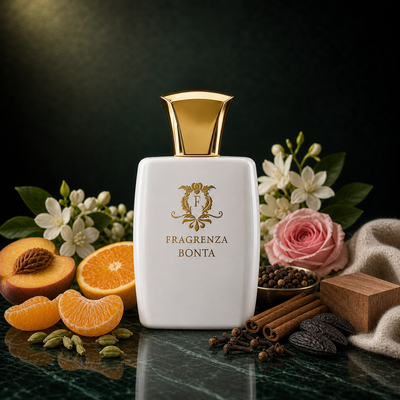
Application technique matters, but it only matters if the fragrance is in good condition when you apply it. Bontà and other warm-base compositions can age beautifully for 5 to 8 years under good storage conditions, but the same fragrance stored on a sunny bathroom shelf may show significant degradation in 18 to 24 months. The fix is keeping fragrances in their original boxes, in a cool, dark, dry place — a dresser drawer or closet shelf is ideal.
This rule extends to the application bottles themselves. Travel atomizers age faster than the source bottle and should be refilled every 2 to 3 months from properly stored full bottles. The mediocre fragrance experiences that wearers blame on "this perfume doesn't work on my skin" are often actually storage-related degradation. For more, see our storage guide.
How These Seven Rules Compound
Each of the seven rules above is a single intervention. Applied individually, they each produce modest improvements. Applied together, they compound into a transformation. A wearer who applies to pulse points, doesn't rub, matches concentration to context, times the application, calibrates dose to skin, layers carefully, and stores bottles properly will get noticeably better performance out of every fragrance they own — sometimes dramatically better.
The seven rules also work as a diagnostic. If a fragrance is underperforming for you, run through the list and identify which rules you're not following. Almost always, one or more of the seven is the source of the problem. The fragrance is rarely the issue; the practice usually is.
Common Misapplications
Even wearers who know the rules often misapply them. Spraying "three to five" pulse points instead of "one to three" pushes into over-application. Storing in the original boxes but on a sunny shelf preserves only half the storage benefit. Timing the application correctly but with the wrong concentration for the context misses the bigger problem. The rules work as a system, not as standalone interventions.
For an integrated view of how application and concentration work together, see our how-to-apply guide and the concentrations guide.
Related Reads
- Five fragrance mistakes
- Where to apply your perfume
- How to apply men's fragrance
- Fragrance etiquette
- Perfume storage tips
- Different fragrances for different occasions
Frequently Asked Questions
Can I skip any of the seven rules?
Not really. Each rule addresses a different failure mode, and skipping one creates a weak link in the chain. The rule most often skipped — timing the application 20-30 minutes before departure — has outsized impact because it determines how everyone you meet in the first hour perceives your fragrance. Audit your practice and you'll likely find one or two rules you're not following consistently.
How long does it take to internalize the seven rules?
Most wearers integrate them within 4 to 6 weeks of conscious practice. The pulse-point and don't-rub rules become automatic almost immediately. Concentration-to-context awareness takes longer because it requires building a wardrobe that supports it. Timing the application becomes habitual once you experience the difference, usually within a few weeks.
Do these rules apply to body sprays and lighter products too?
The application rules apply to all scented body products to varying degrees. Pulse-point application improves the diffusion of body sprays and lotions just as it does for fragrance. The concentration-to-context rule applies less because body sprays are inherently light. Storage matters less for body products because they're usually consumed faster than fragrance is.
What if my skin is unusually warm or cool?
Naturally warm skin amplifies fragrance — you'll generally need one fewer spray than the standard recommendation. Naturally cool skin requires one more spray or a slightly heavier concentration to deliver equivalent projection. This is a calibration adjustment, not a rule break. The seven rules apply to all skin types; the dosing within them adjusts to skin chemistry.
Are there exceptions to the don't-rub rule?
Very few. Some traditional eaux de cologne were historically applied with patted distribution rather than rubbing, which is functionally different and acceptable. But modern alcohol-based fragrances should never be rubbed after application. If you have a specific compelling reason to rub (you've spilled fragrance and need to spread it out, for example), accept the trade-off; otherwise, follow the rule.
How important is storage really?
Very. Storage is the rule most commonly underestimated, and the consequences are often invisible until you compare a well-stored bottle to a poorly-stored one. A fragrance that has been stored properly for three years will smell noticeably better than the same fragrance stored on a bathroom shelf for one year. Invest the small effort in proper storage and you'll preserve the full value of your collection.
The Bottom Line
The seven rules — pulse points not clothing, no rubbing, concentration-to-context, 20-30 minutes before departure, calibrate to skin chemistry, layer carefully, store properly — together form the foundation of competent fragrance practice. Each rule alone produces modest improvement; applied together, they transform how your collection performs. Run through them as a diagnostic checklist, fix the rules you're not following, and you'll find that the fragrances already in your collection deliver experiences you didn't know they were capable of.