

Where to Apply Your Perfume for Maximum Impact and Longevity in 2026
By Julia MorettiFragrenza makes several of the alternatives featured in our guides — here’s how we test.
9 min read
Most people apply perfume the same way they apply deodorant — a quick spray, a vague gesture toward the chest or wrists, and out the door. That's a missed opportunity. Where you apply fragrance, more than how much you apply, determines how the scent develops, how long it lasts, and how it reads to the people around you. Master the pulse points, and you'll get more wear out of less fragrance, with better diffusion and more consistent projection.
This guide breaks down each pulse point in detail, explains why it works (or doesn't), and offers practical advice on how to build a personal application strategy. It's the foundational technique that separates fragrance enthusiasts from casual sprayers, and once you understand it, you'll never apply blindly again.
Why Pulse Points Matter
Pulse points are areas where blood vessels run close to the surface of the skin, creating zones of slightly elevated temperature. That warmth matters for fragrance application because heat accelerates the volatilization of fragrance molecules — the process by which the scent rises off the skin into the air and reaches the nose of you and the people around you.
A fragrance applied to a cool, dry area like the back of the hand will perform very differently from the same fragrance applied to a warm pulse point like the inside of the wrist or the side of the neck. The cool-skin application will smell flatter, project less, and fade faster. The pulse-point application will bloom into the air more fully, project further, and last longer. Understanding this is the foundation of good fragrance technique.
The Chest — The Most Underrated Pulse Point
The chest — specifically the upper sternum area, just below the collarbones — is the single most effective place to apply fragrance, and it's also the most overlooked. The chest sits close to the face, which means you and people in conversation with you can both perceive the fragrance throughout the day. It's protected from environmental friction (sleeve cuffs, hand washing, surface contact), which extends wear time significantly. And it diffuses the scent upward as your body heat rises, creating a soft halo around your head and shoulders.
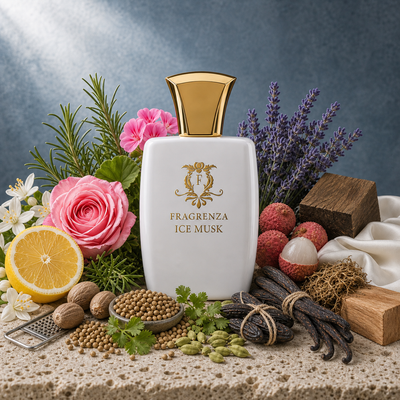
Ice Musk is a particularly good case study for chest application. The fragrance's clean, slightly cool, musky-skin signature reads beautifully when it diffuses upward from the chest — it creates a fresh-skin halo that's perceptible at conversational distance but never overwhelming. This is the kind of application strategy that turns a moderately projecting fragrance into something that registers all day without ever crossing into elevator-filling territory. For more on technique, see our seven rules guide.
The Neck — Behind the Ears and Along the Sides
The neck is the second-most-important pulse point, and it has two distinct sub-zones. Behind the ears — specifically the soft skin just below the earlobe — is where many fragrance enthusiasts apply for date-night and evening contexts. The location creates a fragrance pocket that becomes perceptible only when someone is close to you, which is exactly the right intimacy level for evening wear.
The sides of the neck — along the carotid artery line — are the daytime application zone. This area projects more openly than behind-the-ears, making it appropriate for work and social contexts where you want the fragrance to register at conversational distance rather than only at intimate distance. A single spray to each side of the neck is usually enough for daytime wear.
The Inside of the Wrists — The Classic Pulse Point
The inside of the wrist is the most iconic pulse-point application, and it works well for most fragrances. The combination of warm skin and frequent natural movement creates pulses of scent throughout the day as you gesture, type, drive, and otherwise use your hands. Apply one spray to one wrist, then gently touch the other wrist to it — don't rub. Rubbing breaks down the top notes by accelerating volatilization unevenly, which can shift the fragrance's character.
The wrist has one limitation worth knowing: it's exposed to environmental friction throughout the day. Sleeve cuffs, hand washing, and surface contact all reduce wrist-applied fragrance wear time, typically cutting it by 25 to 40 percent compared to a protected pulse point like the chest. For long-wear contexts, supplement the wrist with a chest or neck application.
The Inside of the Elbows — The Hidden Long-Wear Zone
The inside of the elbow is one of the most underrated pulse points, especially for warm-weather wear. The skin here is warm, slightly protected by the natural fold of the joint, and rarely exposed to friction. A spray to each inner elbow can extend wear time significantly, and the location diffuses scent upward as your arms move — creating subtle pulses of fragrance that surprise people in close proximity without ever being overwhelming.
This pulse point works especially well for short-sleeve weather, when the inner elbow is more exposed to airflow. In winter, when long sleeves cover the elbow, the application becomes more intimate — perceptible only when you remove a layer or extend your arms.
The Back of the Knees — The Wildcard Pulse Point
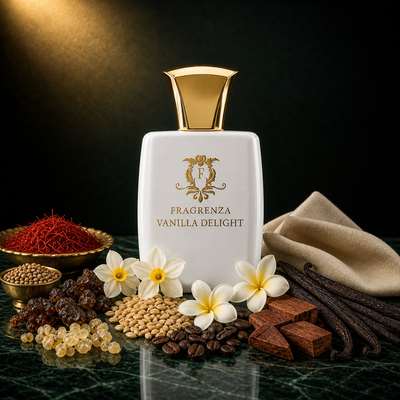
The back of the knees is the classic "insider" pulse point, often recommended by fragrance enthusiasts for warm-weather wear and for situations where you want a fragrance halo that diffuses from below rather than from above. The technique works particularly well with warm-base fragrances like Vanilla Delight, where the dessert-warm signature blooms upward as you walk and creates a soft scent trail.
The back of the knees is most effective when worn with dresses, shorts, or skirts — anything that exposes the area to airflow. Under long pants, the application is functionally invisible. As a complement to chest or neck application, it's a useful technique for creating multi-directional diffusion. As a standalone application, it tends to be too subtle for most contexts.
The Ankles — For Sandal Season
Ankle application is the rarest of the pulse-point strategies, but it has its place. The technique works for warm-weather wear when you're in sandals or open shoes, and the heat of the foot combined with movement creates a slow, low-level diffusion that's particularly effective for outdoor settings. Don't apply directly to the ankle joint itself; the inside of the ankle, where the artery runs close to the surface, is the correct zone.
This isn't an everyday application. It's an addition to your primary chest or neck application for specific contexts — outdoor summer events, beach evenings, anywhere you want a subtle fragrance halo that radiates from below as well as above.
The Hair — Use With Caution
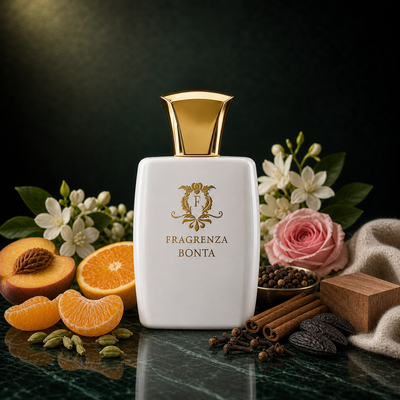
Hair holds fragrance beautifully, but it's not technically a pulse point — the appeal of hair application is the way scent embeds in the fibers and releases slowly as you move. Warm-base fragrances like Bontà work particularly well in hair, where the spiced-and-creamy signature can linger for a full day. However, alcohol in the fragrance can dry out hair over time, especially color-treated or fine hair.
The safer technique is to spray the fragrance onto a hairbrush and then brush through, which distributes the scent without depositing alcohol directly on the hair shaft. Or apply to the back of the neck near the hairline; the fragrance will transfer to hair through movement.
Where NOT to Apply
Several common application sites are actually counterproductive. The outside of the wrists is too exposed to friction. The palms transfer fragrance to anything you touch. Hands washed with soap will lose fragrance immediately. Clothing absorbs the scent but doesn't allow it to develop with skin chemistry, which is why fragrances often smell flatter on fabric than on skin.
The face is another zone to avoid — alcohol-based fragrances can irritate facial skin and the area around the eyes. If you want a face-adjacent halo, apply to the neck just below the jaw rather than to the face itself.
Building a Personal Strategy
The optimal strategy combines two or three pulse points for layered diffusion. A common pattern: chest (for upward halo), one side of the neck (for conversational projection), and inner wrist (for occasional pulses through hand movement). This three-point application uses two to three sprays of an EDP and delivers all-day wear with consistent, balanced projection.
For lighter fragrances and warm weather, single-point application to the chest is often sufficient. For evening events and cold weather, supplement with hair or inner-elbow applications for additional diffusion. For more on application philosophy, see our how-to-apply guide and the five fragrance mistakes.
Related Reads
- Seven rules for applying fragrance
- How to apply men's fragrance
- Five fragrance mistakes
- Fragrance etiquette
- Perfume storage tips
- Anatomy of a perfume
Frequently Asked Questions
Should I rub fragrance into my skin after applying?
No. Rubbing breaks down the top notes by accelerating volatilization unevenly, which can shift the fragrance's character and shorten the opening phase. The correct technique is to apply and let the fragrance dry on its own. If you've applied to both wrists, gently touch them together once — don't rub back and forth.
How many pulse points should I apply to?
Two to three is the sweet spot for most fragrances and contexts. One spray to the chest plus one spray to the side of the neck gives all-day diffusion without over-projecting. Adding inner wrists is appropriate for evening or cold weather. More than three application sites with two sprays each typically over-applies and pushes into the elevator-filling territory that scores poorly in attraction and etiquette contexts.
Does fragrance last longer on warm or cool skin?
Warm skin makes fragrance project more in the short term but also evaporates the top notes faster, which can shorten the opening phase. Cool skin holds fragrance more slowly but with less diffusion. Pulse points are warm by definition, which is why they're the standard application zones — they balance projection and longevity better than cool-skin areas.
Why does my fragrance fade so fast on my wrists?
The wrists are exposed to environmental friction throughout the day — sleeve cuffs, hand washing, surface contact — all of which reduce wear time. If your fragrance fades faster than expected, try applying to the chest or behind the ears instead, where the skin is protected from friction.
Should I moisturize before applying fragrance?
Yes, especially if you have dry skin. An unscented moisturizer applied to pulse points before fragrance extends wear time by giving the fragrance molecules something to bind to. Avoid scented lotions, which can interact with the fragrance and shift its character. The technique works particularly well for warm-base fragrances that benefit from a moisturized canvas.
Can I apply fragrance to my clothing?
Generally, no. Fabric absorbs the fragrance but doesn't allow it to develop with skin chemistry, which is why fragrances often smell flatter on clothing than on skin. Additionally, some fragrances — especially heavy gourmands and leather notes — can stain delicate fabrics or persist on wool and silk for weeks. Apply to skin first; clothing application is a workaround, not a strategy.
The Bottom Line
Pulse-point application is the single biggest variable in how a fragrance performs. Start with the chest, add the neck for conversational projection, and consider the inner wrists for movement-based pulses. Adapt your strategy to the weather, the context, and the specific fragrance you're wearing. Once you've internalized the geography of the pulse points, you'll find that the same fragrance can deliver wildly different experiences depending on where you apply it — and that's the foundation of getting more from your collection.