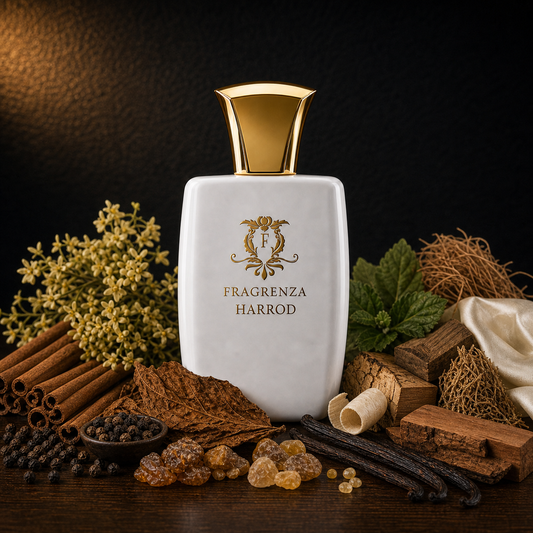


10 Perfumes Similar to Pink Woods by Ariana Grande
10 Perfumes Similar to Pink Woods by Ariana Grande, an editorial deep-dive on notes, character, and how to wear it
By Julia MorettiFragrenza makes several of the alternatives featured in our guides — here’s how we test.
13 min read
Crack a bottle of Ariana Grande Pink Woods and you're immediately met with a burst of ripe raspberry and crushed strawberry — candy-bright and unapologetically sweet, the kind of opening that makes you smile before you've even thought about it. Jasmine follows quickly, adding a soft, creamy florality that keeps the fruit from tipping into syrup. Then patchouli unfurls from the base, earthy and a little smoky, transforming what could have been a simple gourmand into something genuinely dimensional. Pink Woods is optimism in a bottle: it smells like summer weekends, fresh-cut flowers, and the best kind of dessert.
What Makes Pink Woods Special
Pink Woods works because it solves a common sweet-fragrance problem: the base. Too many fruity florals sit on a one-dimensional musk foundation and fade fast. Ariana Grande's perfumers anchored this one in real patchouli — not the sharp, hippie-era version, but the soft, modern patchouli that adds body and richness without darkening the mood. The raspberry-strawberry accord stays lively throughout the wear because the jasmine heart constantly refreshes it. The result is a fragrance that punches well above its price point. Its known weakness is sillage — after the first hour, Pink Woods becomes a personal fragrance rather than a room-filling one, which is worth keeping in mind for evenings out.
1. Viktor & Rolf Flowerbomb
Flowerbomb is the sweet floral-patchouli benchmark. Launched in 2005, it exploded the concept of maximalist femininity into the mainstream: rose, jasmine, freesia, and orchid assembled over a deep patchouli-and-musk base in a composition built for impact. The DNA overlaps substantially with Pink Woods — both foreground white florals over an earthy patchouli spine, and both make sweetness their defining signature. Flowerbomb simply turns the dial to eleven where Pink Woods stays at eight, resulting in heavier projection and a denser, more powdery dry-down.
Flowerbomb's principal drawback is cost: regular wear at luxury pricing adds up quickly, and recent reformulations have trimmed some of the original's raw patchouli depth.
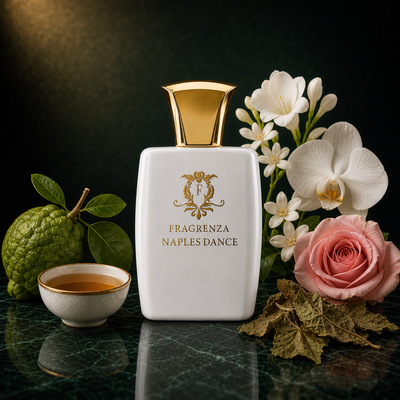
2. Fragrenza Alternative: Naples Dance
Naples Dance captures Flowerbomb's explosive sweet-floral architecture — the jasmine-and-rose detonation, the creamy patchouli landing — at a fraction of the price. It carries a slightly brighter berry nuance that brings it even closer to the Pink Woods DNA, making it an ideal choice when you want Flowerbomb's depth paired with Pink Woods' playful freshness.
3. Lancôme La Vie Est Belle
La Vie Est Belle built its legacy on a singular accord: luminous iris-praline floating over patchouli and tonka bean, with a soft berry nuance in the opening that has clear parallels to Pink Woods. Both fragrances use patchouli as a structural anchor for sweetness, and both achieve a warmth in the dry-down that makes them feel like wearing something comforting. La Vie Est Belle tilts more gourmand — the praline note is stronger, the iris adds a powdery register — but the general territory is unmistakably similar.
La Vie Est Belle's weakness is its tendency to lean cloying in heat, with the praline-patchouli combination occasionally muting the lighter floral elements.

4. Fragrenza Alternative: Belle di Verona
Belle di Verona distills La Vie Est Belle's warm, radiant sweetness into an everyday-wearable form. The patchouli-and-floral heart is faithfully rendered, and the softer fruit notes in the opening bring it into direct alignment with Pink Woods' berry-forward personality. It's a smooth, approachable fragrance that works across seasons.
5. Chanel Coco Mademoiselle
Coco Mademoiselle approaches the fruity-floral-patchouli territory from a more elevated, chypre-inflected angle. Sicilian orange and bergamot open things up before rose and jasmine take over, ultimately landing on a base of vetiver, white musk, and patchouli that is simultaneously more dry and more sophisticated than Pink Woods. The structural similarity is real — jasmine and patchouli are the load-bearing walls of both compositions — but Coco Mademoiselle's orientation is confident womanhood where Pink Woods is carefree youth.
At Chanel's price point, Coco Mademoiselle is a considered purchase, and the reformulation over the years has made it progressively drier and less fruity than its original iteration.
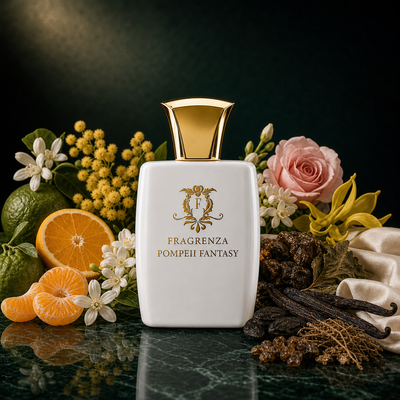
6. Fragrenza Alternative: Pompeii Fantasy
Pompeii Fantasy delivers Coco Mademoiselle's chypre-floral confidence with a warmer, slightly fruitier character that closes the gap with Pink Woods considerably. The patchouli base is well-constructed and the overall silhouette — citrus-lifted florals descending into a musky patchouli close — is immediately recognisable to anyone who loves the Chanel original.
7. Yves Saint Laurent Mon Paris
Mon Paris is Pink Woods' most direct mainstream relation. Strawberry, raspberry, and white florals tumble over a patchouli-and-musk base in a composition that is bold, unambiguously sweet, and built for lasting impression. YSL gave Mon Paris exceptional sillage — this fragrance fills rooms and lingers on fabric — which differentiates it from Pink Woods' more intimate projection while sharing nearly identical building blocks. The raspberry-strawberry opening is practically interchangeable between the two.
The limitation for Mon Paris is longevity on dry skin types, where the berry accord can fade within a few hours, and some wearers find the reformulated version less vibrant than the original launch.

8. Fragrenza Alternative: Santo Stefano
Santo Stefano brings Mon Paris' fruity-floral-patchouli dynamic to an everyday price point with excellent projection and longevity. The berry-floral opening is lively and generous, the patchouli base is warm without being heavy, and the overall composition sits in the same sweet-feminine register that makes both Pink Woods and Mon Paris perennial crowd-pleasers.
9. Gucci Bloom
Gucci Bloom offers a 5/10 match — it shares the white floral emphasis (tuberose, jasmine, Rangoon creeper) and the soft musk dry-down with Pink Woods, but there's no fruit and no patchouli, giving it a greener, more soil-like freshness. It's worth exploring if what draws you to Pink Woods is primarily the jasmine-musk heart rather than the berry-patchouli framework — a beautiful fragrance that intersects at the floral midpoint and diverges almost everywhere else.
10. Thierry Mugler Angel
Angel scores a 4/10: the connection is the patchouli. Angel's famous patchouli-chocolate-caramel accord shares an ancestral link with Pink Woods' earthy base, and both fragrances succeed by using patchouli to give a sweet composition its backbone. But Angel goes deeper, darker, and far more gourmand — it replaces Pink Woods' fresh berry brightness with molten cocoa and spun sugar. If you find Pink Woods too light and want to stay in the patchouli-sweet family, Angel is the bold next step.
Ariana Grande as a Fragrance Brand and Why That Matters
Celebrity fragrance launches have a difficult historical reputation in the fragrance community. The vast majority of celebrity-branded compositions through the 2000s and early 2010s were generic-fruity-florals built to ride name recognition rather than to deliver compositions that competed seriously with designer or niche offerings, and the category as a whole earned a reputation for forgettability. The Ariana Grande line, launched starting with Ari in 2015 and continuing through Cloud, R.E.M., Thank U Next, and Pink Woods among others, has been one of the small number of celebrity fragrance projects that genuinely changed how the category is taken seriously. Cloud in particular became a cultural phenomenon comparable to Sol de Janeiro Cheirosa 62, and the broader Ariana Grande catalogue is now studied as an example of how a celebrity fragrance line can be built with enough compositional care to function as primary fragrances rather than as merchandise.
Pink Woods sits within this catalogue as one of the more architecturally interesting entries. The fruity-floral-patchouli structure is conventional enough to be commercially accessible, but the specific execution — the raspberry-strawberry handling, the modern patchouli treatment, the jasmine integration — reflects compositional choices that elevate the result above the genre baseline. Understanding Pink Woods as a serious composition rather than as celebrity merchandise changes how you compare it to the alternatives discussed above. The DNA shared with Flowerbomb, La Vie Est Belle, Mon Paris, and Coco Mademoiselle is genuine, not coincidental, and the wearer who loves Pink Woods is almost always responding to the same architectural choices that make those luxury compositions enduring bestsellers.
The Specific Material Vocabulary That Defines Pink Woods
The raspberry and strawberry accord that opens Pink Woods is built primarily from synthetic ionones and red-fruit reconstructions rather than from natural berry materials, which is industry-standard for fruity-floral compositions at this price point. Natural raspberry absolute and strawberry absolute exist but are extremely expensive and lack the projection profile that consumer-fragrance fruity openings require. The synthetic alternatives reproduce the fresh-ripe red-fruit character at projection levels that work for fragrance application, and the better fruity-florals (which Pink Woods is among) handle the synthetics with enough restraint to avoid the candy-syrup effect that less competent compositions in this category produce.
The jasmine in Pink Woods reads as a soft white-floral construction rather than as a Grasse-jasmine-driven luxury accord. This is appropriate for the composition's price positioning and consistent with the modern celebrity-fragrance approach to floral materials — the jasmine effect is delivered through carefully calibrated synthetic constructions that produce a clean, projection-friendly floral lift without the cost barrier of natural absolutes. The patchouli base is the most distinctive material choice. The modern patchouli used in Pink Woods is the fractionated, low-camphor variety that the perfumery industry has developed over the past two decades specifically to address the perception problems that traditional patchouli used to create (the hippie association, the muddy-earthy reading, the difficulty integrating with sweet compositions). The result is a clean, slightly cocoa-tinted patchouli that anchors sweetness without bringing the negative connotations that older patchouli treatments carried.
How the Fruity-Floral-Patchouli Category Has Evolved
The fruity-floral-patchouli structure that Pink Woods sits within has a clear lineage in modern perfumery. Thierry Mugler Angel (1992) established patchouli as a structural element in sweet feminine compositions, demonstrating that patchouli could carry chocolate, caramel, and fruit accords in a way that earlier perfumery had not attempted. Viktor and Rolf Flowerbomb (2005) extended the logic by combining patchouli with white florals and fruit at maximum projection, creating the template that defines the modern feminine-bomb category. Yves Saint Laurent Mon Paris (2016) refreshed the template for a new generation, with the strawberry-raspberry-patchouli accord that Pink Woods now references directly. Lancome La Vie Est Belle (2012) added the praline-gourmand element that connects the category to the broader sweet-floral territory.
Pink Woods belongs to this lineage as a contemporary celebrity-fragrance entry that participates in the category at a more accessible price point. The composition does not invent new territory but it executes the established template competently and adds enough specific character (the brighter berry handling, the lighter overall projection, the youth-coded emotional register) to differentiate itself within the crowded field. For wearers building a fruity-floral-patchouli wardrobe, knowing where Pink Woods sits relative to Flowerbomb, Mon Paris, and the others helps you avoid acquiring multiple compositions that occupy the same wardrobe slot at different brand price points.
Wear Context: When Pink Woods Works Best
Pink Woods is a warm-weather, daytime, casual-to-semi-formal composition that performs reliably across a wide range of contexts but excels in a specific sweet spot. It works at its best in the temperature range of roughly fifteen to twenty-five degrees Celsius, where the berry-floral opening reads as fresh-bright rather than amplifying uncomfortably (which can happen at higher temperatures) or muting under cold air suppression (which can happen below ten degrees). The composition is appropriate for office wear in environments that permit moderate fragrance projection, for daytime social occasions, for casual dates and weekend wear, and for any context where its youthful-feminine emotional register matches the social situation.
The wear contexts where Pink Woods is less than optimal are also worth knowing. Formal evening occasions typically call for compositions with more sophisticated architectural depth and more substantial projection than Pink Woods delivers — the alternatives discussed above (particularly Flowerbomb, Coco Mademoiselle, and Mon Paris in their full-strength versions) are better suited to those contexts. Very cold weather suppresses the lighter floral elements of Pink Woods more than it suppresses heavier compositions, which can make the composition feel thin compared to warmer-weather wear. And professional environments with strict fragrance restrictions may find Pink Woods' sweet-floral character too overtly feminine even at moderate projection levels.
The practical implication is that Pink Woods earns its place in a wardrobe as the daytime-casual sweet-floral option rather than as a year-round all-occasion primary. Pairing it with a more substantial evening composition (Naples Dance, Belle di Verona, or Pompeii Fantasy from the Fragrenza alternatives discussed above) and optionally with a colder-weather richer composition gives you complete coverage across the year and across the occasion spectrum.
How the Fragrenza Alternatives Sit Around Pink Woods
The four Fragrenza alternatives recommended above — Naples Dance, Belle di Verona, Pompeii Fantasy, and Santo Stefano — are calibrated to cover the four most useful positions adjacent to Pink Woods. Naples Dance covers the maximum-projection patchouli-bomb territory that Flowerbomb owns, useful for occasions that warrant more presence than Pink Woods delivers. Belle di Verona covers the warm-praline-gourmand territory that La Vie Est Belle defines, useful for cooler-weather wear when the patchouli-anchored sweetness needs more depth. Pompeii Fantasy covers the citrus-lifted chypre-floral territory that Coco Mademoiselle exemplifies, useful for situations that call for more sophistication than the youthful Pink Woods provides. Santo Stefano covers the berry-floral-patchouli direct-comparison territory that Mon Paris occupies, useful when you want Pink Woods' DNA at projection levels that fill larger spaces.
The most common wardrobe mistake among Pink Woods enthusiasts is acquiring all four alternatives and discovering substantial redundancy across them. The compositions overlap considerably, and a wardrobe that includes Pink Woods plus all four alternatives effectively contains five compositions in the same broad category. The more efficient approach is to add one or two alternatives based on the specific wear contexts that Pink Woods does not cover well — typically Belle di Verona for cooler-weather wear and either Naples Dance or Santo Stefano for higher-projection occasions, with Pompeii Fantasy added later if you find yourself wanting more sophisticated alternatives for semi-formal contexts.
Layering Pink Woods With Other Compositions
Pink Woods' moderate projection makes it a good candidate for layering with other compositions, which is a technique that experienced fragrance wearers use to create custom scent profiles that no single bottle delivers. Layering Pink Woods with a vanilla-anchored composition (such as Kayali Vanilla 28 or any of the various Sol de Janeiro mists) amplifies the sweet-comforting character and extends longevity. Layering with a clean musk composition (Glossier You, various clean-musk indie offerings) softens the floral projection and shifts the composition toward a more skin-close personal-fragrance reading. Layering with a citrus composition (any of the various Atelier Cologne or Jo Malone citrus offerings) lifts the opening and creates a brighter, more daytime-formal effect.
The layering protocol matters. Apply the lighter, more volatile composition first (typically the citrus or the secondary layer) and the heavier, more anchoring composition second (typically Pink Woods or the vanilla layer), ensuring that the second composition has body parts of its own rather than being sprayed directly over the first. The traditional layering points are the chest for the primary composition and the wrists or behind the ears for the supporting composition. With two compositions, total application volume should be slightly reduced compared to wearing either alone to avoid combined-projection overload.
Final Notes on Pink Woods and Building Around It
Pink Woods is one of the more successful celebrity fragrance launches of recent years, and the wearers who love it are responding to genuine compositional quality rather than to brand recognition alone. The composition delivers its specific aesthetic register — youthful, sweet, warm-floral with patchouli anchoring — reliably across daytime wear contexts, and its accessible price makes it a sensible primary fragrance for many wearers in the demographic it targets.
For wardrobe building, the practical approach is to keep Pink Woods as the daytime-casual sweet-floral option and add one or two adjacent compositions that cover the wear contexts Pink Woods does not handle optimally. The Fragrenza alternatives discussed above provide accessible-price pathways for that wardrobe expansion. Sampling each alternative for at least a full day before commitment is the standard advice — fruity-floral-patchouli compositions can read very differently across skin types, and the alternative that competes most directly with Pink Woods on paper may not be the alternative that wears most compellingly on your particular chemistry. As always, the goal is to spend wardrobe dollars on bottles you actually wear regularly rather than on bottles that fill the same slot as compositions you already own.