

Blackcurrant Bud in Perfumery
Blackcurrant bud is one of modern perfumery's most expressive fruity notes, a note every fragrance lover should learn to recognise on skin.
By Julia Moretti 4 min read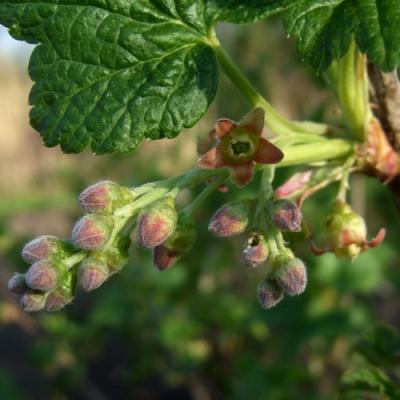
What Does Blackcurrant Bud Smell Like?
Blackcurrant bud absolute — extracted from the dormant buds of Ribes nigrum before they open in spring — is one of the most polarising and fascinating materials in all of perfumery. Its smell is sharp, fruity, and provocative: a distinctively dark berry character, unmistakably blackcurrant, but accompanied by a raw, green, almost animal facet that perfumers describe, with admirable frankness, as "catty." This feline quality — a sharp, slightly sulphurous note reminiscent of cat fur or, more evocatively, the underside of the blackcurrant leaf — is simultaneously off-putting on first encounter and strangely compelling in context, adding a natural rawness and excitement to fragrance compositions that more polite ingredients cannot provide.
The full smell of blackcurrant bud is a study in aromatic paradox: it is simultaneously clean and dirty, fresh and animalic, fruity and green. When used by a skilled perfumer in carefully calibrated quantities, this duality creates an almost electrifying vitality — a sense of living, unprocessed nature that polished synthetic fruits entirely lack. In excess, blackcurrant bud reads as overpowering and off-putting; in balance, it is one of the most thrilling notes in the perfumer's vocabulary.
History of Blackcurrant Bud in Perfumery
Blackcurrant bud has been used in perfumery since at least the mid-twentieth century, but its most significant emergence came in the chypre and fruity-chypre fragrances of the 1970s and 1980s. The chypre family — built on bergamot, rose, oakmoss, and labdanum — had a characteristic tart, dry quality that blackcurrant bud amplified and focused into something more explicitly fruity without sacrificing the family's characteristic complexity. This development helped birth the "fruity chypre" sub-family that produced some of the era's most celebrated women's fragrances.
The note gained enormous mainstream visibility in 1989 when Thierry Mugler — then a relatively new name in fragrance — included a pronounced blackcurrant bud accord in Angel, alongside chocolate and patchouli, creating what many consider the first major gourmand fragrance. In Angel, blackcurrant bud provided the dark, raw, almost challenging counterpoint to the confectionery sweetness, grounding the composition in something feral and surprising. The success of Angel opened the door to greater experimentation with blackcurrant bud across the industry, and the note has since become a standard tool in the creation of fruity and fruity-floral compositions.
Key Aromatic Molecules in Blackcurrant Bud
The characteristic "catty" quality of blackcurrant bud is due primarily to 4-methoxy-2-methylbutane-2-thiol — a sulphur-containing compound (thiol) detectable at extraordinarily low concentrations. Thiols are among the most potent odorants known to chemistry, and this particular compound is responsible for the characteristic smell of cat urine as well as the more delicate animal facet of blackcurrant. Remarkably, in the diluted concentrations used in perfumery, this compound reads not as unpleasant but as sharp, natural, and excitingly raw.
The fruity blackcurrant character of the absolute is provided by butyric acid derivatives and various esters that together create the recognisable dark berry quality. The green aspects come from cis-3-hexenol and related green-leaf compounds naturally present in the bud. The interaction of these fruity, green, and sulphury-catty elements creates a profile that is extraordinarily complex and distinctive — and essentially impossible to replicate convincingly with purely synthetic ingredients, which is why natural blackcurrant bud absolute remains highly prized despite its challenges and expense.
Famous Fragrances Featuring Blackcurrant Bud
Several of the most commercially successful and critically admired fragrances of the past four decades have relied on blackcurrant bud as a key note. Stella McCartney's Stella used it prominently in a rose-centric composition that balanced the catty sharpness with warm peony and amber. Jean-Paul Gaultier's Classique incorporates blackcurrant bud in its unusual fruity-floral opening. Guerlain's Mitsouko — arguably the most famous chypre ever created — contains a trace of blackcurrant bud character in its distinctive opening accord, though this is achieved through a complex combination of ingredients rather than the absolute alone.
More accessibly, YSL Black Opium uses blackcurrant bud-adjacent dark fruit notes alongside coffee and vanilla in a composition that captures the note's dark, provocative edge in a format accessible to contemporary tastes. The floral fragrances collection at Fragrenza includes compositions that build on the fruity-floral tradition that blackcurrant bud helped define. For those interested in darker, more complex fruity accords, explore the oriental fragrances category where blackcurrant's dark berry character finds its most adventurous expression.
Blackcurrant Bud's Interactions with Other Notes
Blackcurrant bud's most successful partnerships depend on finding ingredients that can either contrast with or harmonise with its distinctive catty-fruity character. With rose, the dark berry quality creates an intriguing natural pairing — blackcurrant and rose share aromatic compounds and reinforce each other's complexity in a way that feels simultaneously unexpected and inevitable. With patchouli — the great earthy-sweet base note — blackcurrant bud creates the dark, earthy-fruity accord that was central to the gourmand revolution of the 1990s.
With white musks and florals, blackcurrant provides a vital edge that prevents compositions from reading as too soft or predictable. Its raw energy contrasts with the clean transparency of musks and the smooth opulence of florals in a way that makes the whole composition more alive. With cashmere wood and vanilla, the fruit becomes sweeter and more contained — a safer, more commercial interpretation of the note that has driven many mainstream feminine fragrance bestsellers of recent decades.