

Buchu in Perfumery
Buchu is one of modern perfumery's most expressive fruity notes, a note every fragrance lover should learn to recognise on skin.
By Julia Moretti 4 min read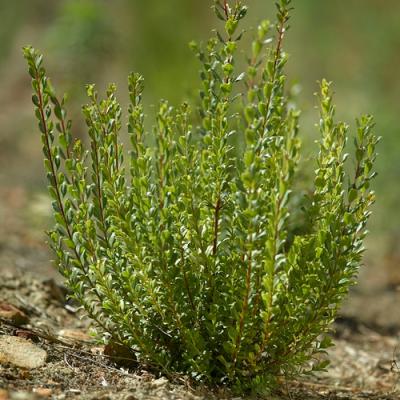
What Does Buchu Smell Like?
Buchu is one of the more unusual and fascinating aromatic materials to have found its way into the mainstream of fine fragrance. Derived from the leaves of Agathosma betulina and related species — small shrubs native to the Western Cape of South Africa — buchu essential oil carries a smell that is simultaneously herbal, fruity, and distinctly catty-sulphurous, not unlike a more rounded and herbaceous version of blackcurrant bud. There is an immediately recognisable blackcurrant quality to buchu — a dark berry juiciness that owes its character to the same family of sulphur-containing compounds — but accompanied by herbal, minty, and camphoraceous undertones that give the material a distinctly different and altogether more complex character than simple blackcurrant.
Some noses detect a distinctly South African quality in buchu — something of the veld, of wild herbs sun-drying on the hillsides of the Cape, of the distinctive fynbos ecosystem from which the plant emerges. It is not an easy or domesticated smell; there is a wildness and rawness to buchu that makes it difficult to use in large quantities but invaluable as an accent material, adding an authenticity and natural vitality to compositions that no synthetic can reproduce exactly.
History of Buchu in Traditional Use and Perfumery
The Khoikhoi and San peoples of southern Africa have used buchu for thousands of years — as an insect repellent, a body deodorant (mixed with fat and applied to the skin), a medicinal herb for kidney and urinary tract ailments, and a ritual preparation. Dutch settlers in the Cape Colony encountered buchu in the seventeenth century and quickly recognised its commercial potential, first as a medicinal herb (buchu extract and brandy was a popular nineteenth-century remedy in South Africa and export markets) and later as a flavouring agent for blackcurrant-flavoured foods and beverages.
In fine perfumery, buchu came to significant attention in the late twentieth century as perfumers began looking beyond the conventional European palette of aromatic materials and exploring botanicals from other traditions and ecosystems. The blackcurrant character of buchu made it a natural companion to the blackcurrant bud trend that had emerged in fruity chypres, offering a similar olfactory family but with the added dimension of herbal complexity and a distinctly South African botanical identity. Today, buchu oil is produced commercially in South Africa under sustainable harvesting programmes and is used in both flavour and fragrance applications worldwide.
Key Aromatic Molecules in Buchu
The characteristic smell of buchu, like that of blackcurrant bud, is substantially determined by sulphur-containing compounds. The most significant is 8-mercapto-p-menthan-3-one (also known as pulegone-8-thiol), a thiol compound responsible for the distinctive blackcurrant-like fruitiness. This compound is structurally and sensorially related to the thiols found in blackcurrant bud and to the compounds responsible for the characteristic smell of grapefruit, suggesting an evolutionary and chemical kinship between these otherwise very different plants.
The herbal and camphoraceous aspects of buchu come from diosphenol (known as "buchu camphor"), a compound with a distinctive medicinal-herbal smell that is specific to the buchu species and accounts for much of the material's uniqueness in the perfumer's palette. Pulegone contributes a cool, slightly minty quality; various monoterpenes and sesquiterpenes provide the green, herbal background. The interaction of these disparate compound classes — thiols, terpene alcohols, and camphoraceous ketones — creates the characteristically complex and difficult-to-categorise profile that makes buchu such a distinctive and valuable aromatic material.
Buchu in Famous Fragrances and Modern Perfumery
Buchu remains a relatively specialised material compared to more mainstream aromatics, but its influence has grown steadily over recent decades. Its blackcurrant character has been exploited in compositions across the fruity-floral and chypre families, often working behind the scenes as a naturalness-enhancing material in blackcurrant accords rather than as a named note. In niche and artisanal perfumery, buchu sometimes features more prominently as a declaration of botanical specificity and geographical provenance — fragrances that celebrate the diversity of the world's aromatic heritage rather than relying on conventional European botanical traditions.
The herbal-fruity combination that buchu exemplifies is also found in the register of some acclaimed modern masculines and unisex compositions, where the catty-herbal quality adds an edge that prevents clean aromatic compositions from reading as generic. Those exploring the niche fragrances collection at Fragrenza will encounter compositions that engage with unusual botanical materials like buchu — fragrances that prioritise distinctiveness and olfactory character over reassuring familiarity.
Buchu's Interactions with Other Notes
Buchu's dual herbal-fruity character makes it versatile as a bridge between the green-herbal and fruity families. With citrus — particularly grapefruit, which shares thiol chemistry — buchu amplifies the fresh, lively quality of citrus top notes while adding a natural rawness. With rose, it creates a dark, complex floral-fruit accord reminiscent of the best traditional chypres. With woody base notes and vetiver, the herbal aspects of buchu extend naturally, creating an accord evocative of wild, sun-dried scrubland.
In gourmand compositions, buchu provides the natural dark-fruit counterpoint that prevents sweetness from becoming cloying — the same function performed by blackcurrant bud in compositions like Angel, but with an additional layer of herbal complexity. The sustainability credentials of commercially cultivated South African buchu add a further dimension for those who care about responsible sourcing in fine fragrance: unlike some exotic botanicals, buchu production supports local communities and sustainable land management in one of the world's most biodiverse ecosystems, making it one of the more consciously sourced materials available to the contemporary perfumer.