
Mugwort in Perfumery: The Bitter, Aromatic Herb of Ancient Tradition
Mugwort is a fresh, herbaceous note prized by perfumers, a note every fragrance lover should learn to recognise on skin.
By Julia Moretti 5 min read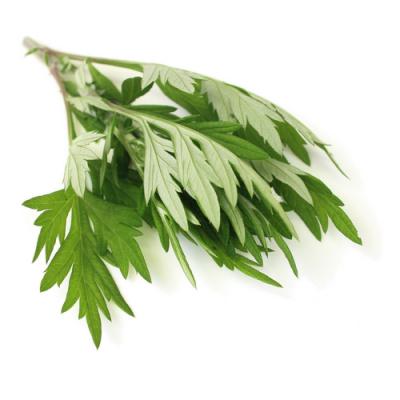
What Does Mugwort Smell Like in Perfumery?
Mugwort is not an ingredient that announces itself with obvious prettiness. Derived from Artemisia vulgaris — and closely related to the broader artemisia family that includes wormwood, tarragon, absinth and Roman chamomile — mugwort essential oil has a smell that is simultaneously bitter, herbal, slightly camphorous, and warm: a quality that some describe as medicinal and others as strangely intoxicating. Where many herbal notes in perfumery suggest the garden, mugwort suggests the wild hillside, the forest edge, the margins of cultivation where plants grow on their own terms. It is an ingredient associated with antiquity, with ritual, with the smell of the world before refinement.
The artemisia family as a whole occupies a fascinating position in the perfumer's vocabulary. Artemisia absinthium (wormwood) is the most famous member: the legendary ingredient of absinthe, associated with hallucination and artistic excess. Artemisia genepi is used in the alpine liqueur of the same name. Tarragon (Artemisia dracunculus) is the most culinary. Mugwort sits between these poles: less intensely bitter than wormwood, less sweetly anisic than tarragon, with a distinctive green-camphorous-warm quality that is more challenging than either and ultimately more interesting in a fine fragrance context.
Chemistry: Thujone, Camphor and Sesquiterpene Complexity
Mugwort essential oil's chemistry is somewhat variable depending on the chemotype, the geographical origin of the plant and the part of the plant used. The principal components typically include 1,8-cineole (eucalyptol), which provides the camphor-like, slightly medicinal freshness; various monoterpene hydrocarbons including alpha- and beta-thujone, which contribute the bitter, artemisian character specific to this plant family; camphor itself; and various sesquiterpenes including beta-caryophyllene and germacrene, which add earthy, woody depth. The thujone content is of toxicological significance — alpha- and beta-thujone are neurotoxic at high doses, which is why absinthe was historically restricted in many countries — and mugwort oil is used at carefully controlled concentrations in fragrance, well below any level of concern.
The 1,8-cineole/camphor combination gives mugwort oil an opening that reads as clean, sharp and medicinal in a way that is closer to certain aromatic herbs (rosemary, sage, eucalyptus) than to the warmer herbal notes. As the more volatile compounds dissipate, a greener, slightly bitter herbal quality emerges, followed by the warmer, resinous-earthy depth of the sesquiterpene fraction. This three-phase development — sharp and clean, then bitter-herbal, then warm and earthy — gives mugwort a useful structural role in complex aromatic compositions where a sustained herbal quality is required across the full drydown arc.
History: Sacred Plant to Perfumery Ingredient
Mugwort's history in human culture is extraordinarily long and rich. The plant has been used medicinally and ritually across Europe, Asia and the Americas for thousands of years: as a digestive aid, a treatment for menstrual irregularity, an insect repellent and, perhaps most famously, as the principal constituent of moxibustion in traditional Chinese medicine. In European folk tradition, mugwort was associated with travel protection — Roman soldiers were said to line their sandals with it to protect their feet on long marches — and with dreaming, being placed under pillows to stimulate vivid dreams.
As a fragrance material, mugwort entered the Western fine perfumery tradition primarily through the lens of the aromatic fougere and the herbal chypre. Perfumers developing masculine-coded fragrances in the post-war era found that artemisia family materials — including both wormwood and mugwort — added an edge of bitterness and green complexity that distinguished their compositions from the sweeter, more obviously floral feminine tradition. The bittergreen, camphorous quality of artemisia became a marker of a certain kind of austere, intellectual masculinity in fragrance — a quality exploited most famously by Chanel's Pour Monsieur and similar compositions in the 1950s through 1970s.
Mugwort in Context: Chypres, Fougeres and Beyond
In contemporary fine fragrance, mugwort and artemisia materials appear most often in aromatic compositions with a green-herbal emphasis, in chypres where a bitter edge is desired alongside the classic oakmoss-bergamot-labdanum structure, and in avant-garde or niche compositions exploring unconventional botanical territory. The material's combination of camphor, green bitterness and earthy warmth makes it particularly effective in compositions that aim to capture specific natural landscapes: scrubland, high meadows, the smell of herbs drying in late summer heat.
With lavender, mugwort creates an intensely aromatic, slightly medicinal green accord that is at the heart of certain classic fougere structures. With bergamot, it creates a more refined, slightly bitter citrus-herbal opening. With oakmoss and labdanum, it participates in the broader chypre structure, adding a specifically bitter-green dimension that enriches the mossy base. With dark, resinous materials like incense, mugwort creates compositions of almost ritualistic character — bitter, smoky, ancient-smelling — that push the boundaries of conventional fragrance into something more genuinely strange and atmospheric.
Note Interactions: Contrasts and Affinities
Mugwort's bitterness and camphor quality mean that it works best as a modifying element within a larger composition rather than as a standalone accord. It excels at adding edge and complexity to compositions that might otherwise be too smooth or sweet: a touch of mugwort in a heavily rose-dominant composition introduces an interesting green tension. Similarly, in a vanilla-heavy oriental, mugwort's bitterness provides contrast that prevents the sweetness from becoming oppressive.
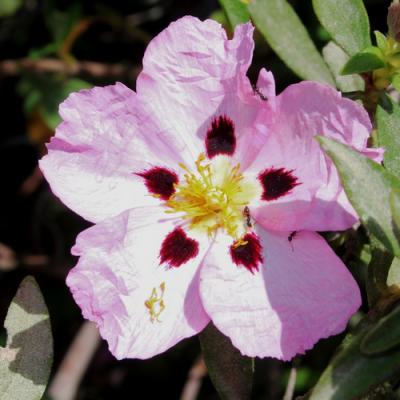
With vetiver and patchouli, mugwort creates a deeply earthy, rooty accord of great sophistication. With tobacco materials, it reinforces the dry, slightly bitter quality of the leaf, creating a more aromatic and less sweet tobacco effect. With citrus and herbal materials, it participates in aromatic accords that smell of Mediterranean garrigue — the wild, sun-baked hillside vegetation of southern Europe that includes lavender, thyme, sage, cistus and artemisia growing together in a single pungent, intoxicating landscape.
Wardrobe Context and Wearing Suggestions
Mugwort-prominent fragrances are emphatically not for everyone, but for those who appreciate green, aromatic and slightly challenging compositions, they represent some of the most interesting territory available in both mainstream and niche perfumery. Their natural season is late summer and early autumn, when the drying, slightly medicinal quality of artemisia plants reads as seasonally appropriate rather than incongruous. They suit confident, unconventional wearers who want a fragrance that says something specific about their taste — a preference for the wild over the cultivated, the complex over the immediately beautiful.
For those exploring the broader world of niche fragrances and seeking something genuinely distinctive, aromatic compositions featuring mugwort and other artemisia materials offer a compelling alternative to the more heavily marketed floral and oriental families. They tend to be well-made, intellectually interesting and — unlike many heavily marketed mainstream launches — genuinely polarising in the most interesting sense: they will not suit everyone, but those they do suit they will suit perfectly.