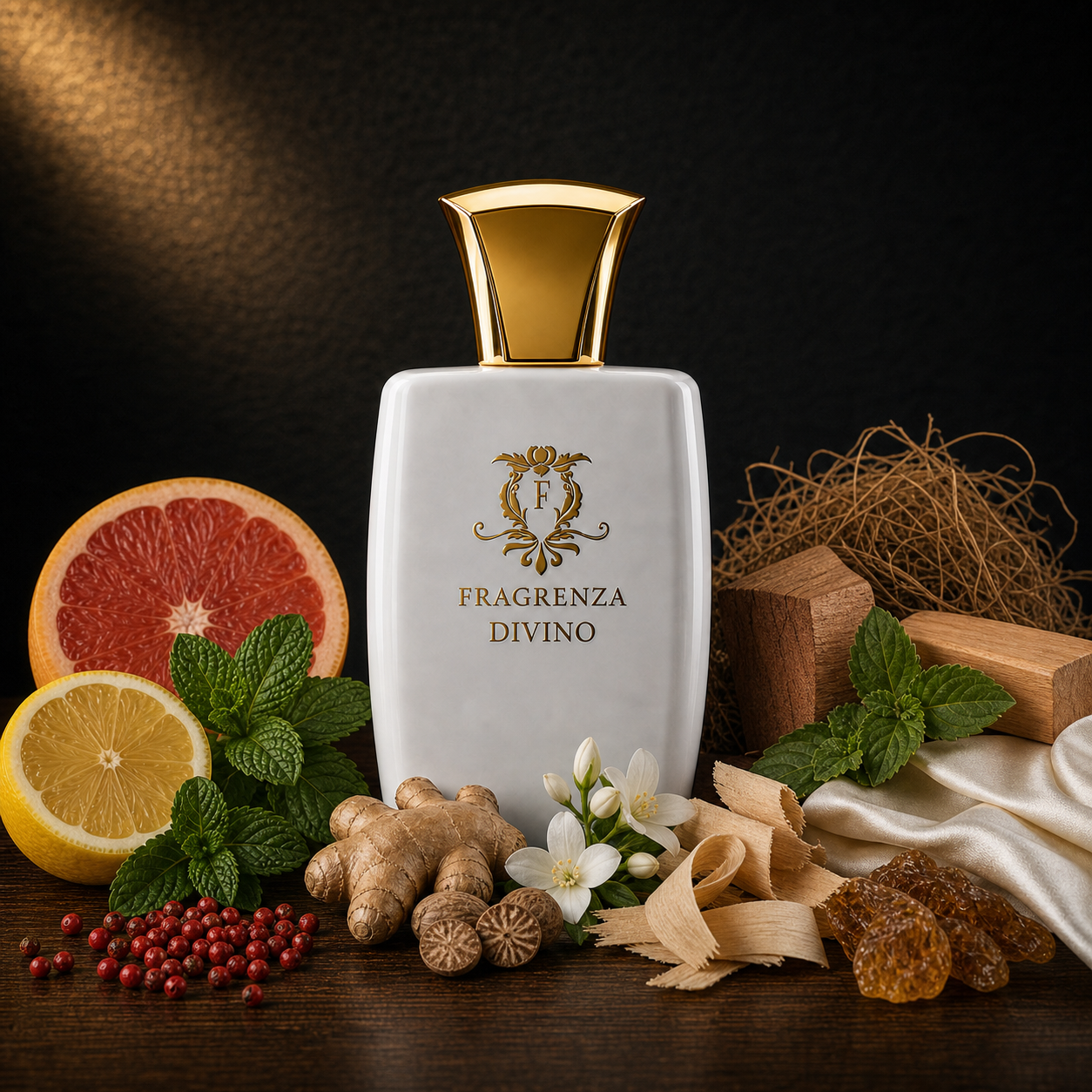


Pure Malt in Perfumery: The Whisky-Inspired Note That Redefines Warm, Woody Masculines
Pure Malt is a dry, anchored woody base: bark-bright on opening, resin-warm at the heart, settled and slow through the dry-down.
By Julia Moretti 5 min read
Few notes in contemporary masculine perfumery carry the immediate atmosphere of pure malt. That characteristic whisky-barrel warmth — simultaneously woody, sweet, smoky, and honeyed — speaks to something deep in the cultural psychology of fine fragrance: the connection between exceptional craftsmanship, aged complexity, and the particular pleasure of something made slowly and well. Pure malt as a perfumery concept belongs to a tradition of whisky-inspired compositions that has produced some of the most compelling and commercially successful fragrances of the past two decades.
What Does Pure Malt Smell Like?
Pure malt in fragrance captures the multi-layered aromatic experience of single malt Scotch whisky: the sweet, grainy warmth of malted barley; the vanilla, caramel, and toffee notes that develop during barrel ageing; the subtle smokiness of certain regional expressions; and the complex honey-and-dried-fruit character that distinguishes aged malt from younger spirits. There is a distinctive wooden quality — the impression of an oak barrel — that gives the note structure and depth.
Crucially, the pure malt note in perfumery is not about smelling of alcohol. The sharp, volatile character of spirits is rarely a direct aim in fragrance composition; instead, what perfumers seek to capture is the aromatic residue of the whisky-making process — the malted grain, the barrel character, the dried fruits and caramel of the slow transformation. The result smells warm, sophisticated, and deeply comforting rather than obviously alcoholic.
The Chemistry of Malt and Whisky Notes
Constructing a convincing malt accord requires drawing on several molecular families that together suggest the different dimensions of the whisky experience. The malted grain quality comes primarily from maltol and ethyl maltol — molecules with a sweet, slightly caramelised, grain-like character that underpins the accord's central warmth. These are the same molecules used in many gourmand compositions to create sweet, foodie impressions, but in malt accords they are calibrated to suggest the roasted grain rather than the confectionery.
The barrel-ageing character is evoked by vanillin and coumarin (sweet, warm, slightly woody), guaiacol and eugenol (the smoky-woody phenolic molecules that give peated whisky its distinctive character), and oak lactones that contribute the vanilla-coconut quality of charred oak. Honey facets come from phenyl acetic acid derivatives, while dried-fruit depth draws on damascenone and other rose ketone compounds. For the full story of coumarin's role in fragrance, see our article on coumarin in perfumery.
The Cultural Context: Whisky and Masculinity in Fragrance
The whisky note in masculine perfumery draws on a well-established cultural association between malt spirits and particular ideals of masculine sophistication. The lone Scotsman distillery, the patient cooper, the connoisseur who can identify a dram's regional origin from a single sip — these images have permeated fragrance marketing as powerfully as they have permeated advertising for spirits themselves.
This cultural weight gives malt-inspired fragrances an inherent authority and seriousness that few other gourmand or foodie notes can claim. Praline smells delicious but doesn't carry the same cultural gravitas; vanilla is beloved but has been somewhat democratised by its ubiquity. Malt, by contrast, carries associations of craft, patience, and connoisseurship that elevate it above its sweetness and make it feel appropriate for compositions targeting sophisticated masculine wear.
The broader woody fragrance tradition provides the structural context within which most malt compositions operate, using the warm sweetness of malt to soften and enrich dry, architectural wood accords.
Famous Fragrances Featuring Pure Malt
Serge Lutens's explorations of smoky-woody-sweet compositions helped establish the cultural credibility of whisky-type notes in niche perfumery. The house's willingness to embrace complexity — including the challenging, potentially polarising qualities of smoke and phenolic materials — showed that malt-inspired fragrance could be genuinely sophisticated rather than merely quirky.
Tom Ford Tobacco Vanille demonstrates the broader territory in which malt notes operate: that warm, rich intersection of vanilla sweetness, dried tobacco, and spice that creates an overwhelming sense of luxury. The compositional logic is similar — sweet, warm, organic materials aged and transformed by time — even where tobacco rather than malt is the explicit reference. Parfums de Marly Layton demonstrates how vanilla, apple, and warm spice create a rounded gourmand quality that malt notes inhabit naturally.
Within the niche fragrance world, several independent houses have created explicit malt-whisky tributes, positioning the note as a sensory exploration of the distillery aesthetic — smoke, wood, sweet grain, and the particular silence of an ageing warehouse.
How Pure Malt Interacts with Other Notes
The pure malt note is a generous and versatile base material that enriches the compositions it inhabits. Its most natural partners are other warm, sweet, or smoky materials. Tobacco and malt are perfect companions: both carry dried, transformed plant material sweetness; both evoke the rituals of masculine connoisseurship; and together they create a composition of extraordinary warmth and character. Vanilla amplifies malt's inherent sweetness and lactonic warmth while smoothing its rougher edges.
Leather and malt create a powerfully atmospheric combination that evokes the interior of a private library or a whisky distillery's tasting room: smoke, wood, dried fruit, animal skin, and the sweetness of malt all coexisting in a composition of great authority. Cedar and sandalwood provide clean, architectural structure that prevents the malt accord from becoming too heavy or sweet-dominant; the contrast between the clean wood and the rich, sweet malt creates a pleasingly complex tension.
Spices — particularly cardamom, cinnamon, and clove — integrate beautifully with malt accords, adding warmth and complexity that echoes the spiced character of certain whisky expressions. Incense can be used with exceptional effect against malt, the dry, resinous smoke of incense amplifying the phenolic smokiness already present in malt's chemistry.
Wearing Pure Malt Fragrances
Pure malt fragrances belong to the cooler months and the evening. Their richness and warmth are best appreciated when the air is cold, in exactly the same way that a glass of single malt feels most appropriate on a winter evening. These compositions have become signatures of the serious masculine fragrance wardrobe: worn to business meetings, to evenings out, to occasions where the implicit message is one of quiet confidence and sophisticated taste.
The note performs exceptionally well on wool and cashmere — fabrics that absorb the warm, sweet complexity and release it slowly and beautifully over many hours. Application on clothes as much as on skin is highly recommended for the most satisfying olfactory experience. For the full range of compositions in this vein, the men's fragrance collection offers numerous explorations of this warm, woody-sweet aesthetic.
Final Thoughts
Pure malt in perfumery represents a meeting point between craft traditions: the distiller's art and the perfumer's art, both in the business of capturing time, transformation, and extraordinary raw materials in a small vessel. The note's warmth, complexity, and inherent cultural gravity make it one of the most rewarding ingredients in the masculine perfumery lexicon — a choice that consistently delivers sophistication, character, and a unique sense of place and moment.