The Allure of Patchouli Perfumes: Why This Earthy Note Endures
Why Patchouli Refuses to Go Away
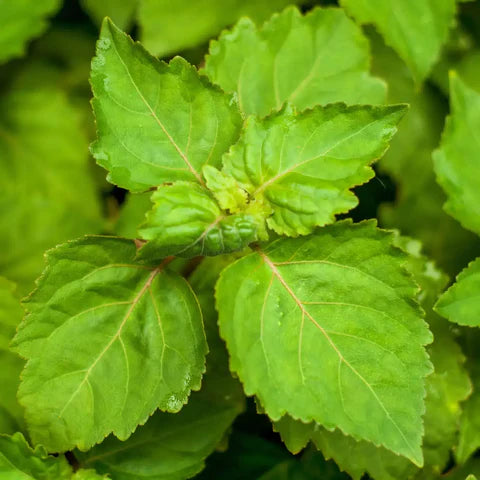
There is something almost defiant about patchouli's continued prominence in fine perfumery. It has been declared dead more than once — too hippie, too heavy, too old-fashioned — and yet it persists, appearing in season after season of new releases from both mainstream houses and niche perfumers, anchoring bestselling fragrances, and quietly defining the deep, sensual quality that separates a genuinely memorable fragrance from one that merely smells pleasant. Patchouli refuses to go away because it does something that no other ingredient does in quite the same way: it adds genuine darkness, earthiness, and sensual weight to a composition, qualities that are antithetical to the clean, synthetic brightness that dominates much contemporary perfumery and yet seemingly what a significant portion of fragrance wearers actually want.
The allure of patchouli is partly about contrast. In a world of transparent, airy, fresh fragrances — aquatics, clean musks, light florals — a fragment of genuine earthiness is startling and somehow deeply satisfying. Patchouli reminds the nose that perfumery has roots, literally and figuratively, in the natural world: in soil, in tropical forests, in the ancient trade routes that brought exotic materials to European markets. When you smell patchouli, you are smelling something real, something with weight and history, something that connects contemporary fragrance to a much older human relationship with aromatic plants.
The Cultural Journey of Patchouli
To understand patchouli's enduring allure, it helps to trace its extraordinary cultural journey. The ingredient arrived in Europe in the nineteenth century, as described in detail in our guide to patchouli's scent and history, carried on the fabric of Kashmiri shawls and quickly adopted by the French perfume industry. In its early incarnations in Western perfumery, patchouli was an ingredient of unambiguous luxury — exotic, mysterious, and associated with the distant Orient.
The counterculture appropriation of patchouli in the 1960s changed its associations dramatically and, in the short term, damagingly. When the scent of patchouli became synonymous with a specific subculture — associated with cannabis smoke, incense, unwashed hair, and political rebellion — it alienated a significant portion of the mainstream fragrance market. For much of the 1980s, as power dressing and bold, unsubtle fragrances like Opium and Giorgio Beverly Hills dominated the market, patchouli receded into the background, its presence muted and its associations still somewhat tainted by the previous decade.
The rehabilitation began gradually. The niche perfumery movement of the 1990s, which emphasized naturalistic ingredients and rejected mainstream conventions, embraced patchouli as an authentic, complex material that deserved better than its hippie reputation. At the same time, Thierry Mugler's Angel — released in 1992 — demonstrated that patchouli could function in an entirely new way, paired with sweet gourmand notes in a combination that felt transgressive and exciting rather than nostalgically earthy. Angel changed everything: it made patchouli desirable again to a young, fashion-conscious audience and laid the groundwork for its current status as one of the most versatile and ubiquitous base notes in commercial perfumery.
What Makes Patchouli Perfumes Distinctive
Patchouli fragrances occupy a specific territory in the fragrance spectrum that is genuinely difficult to replicate with other materials. The earthiness of patchouli adds a quality that perfumers describe as “ground” — a sense of weight, rootedness, and connection to the natural world that lighter, more synthetic materials cannot provide. When you wear a patchouli fragrance, particularly one where the note is prominently featured, you carry something with you that has genuine aromatic depth rather than simply smelling pleasant.
The longevity of patchouli fragrances is also distinctive. Because patchouli oil consists primarily of heavy sesquiterpene molecules with very low volatility, patchouli-forward fragrances tend to have exceptional tenacity on skin. A significant patchouli-based composition can persist for twelve hours or more, evolving throughout that time as the lighter top and heart notes fade and the patchouli becomes increasingly prominent. This evolution — the way a patchouli fragrance seems to deepen and settle into the skin rather than simply fading — is one of the distinctive pleasures of the note for its admirers.
The sensuality of patchouli fragrances is another defining quality. Patchouli has an inherent animalic quality — subtle in fine fragrance use, but unmistakable to a trained nose — that gives patchouli-forward compositions a physical, almost carnal quality that lighter fragrances lack. This is why patchouli has such strong associations with seduction and intimacy across cultures and centuries. When paired with musks and amber, patchouli creates a skin-close warmth that feels genuinely intimate — a fragrance that belongs to and with the wearer rather than floating above them.
The Best Patchouli Fragrances to Explore
The range of patchouli expressions in contemporary fine fragrance is vast, and exploring it reveals the note's remarkable flexibility. At one extreme are fragrances where patchouli is the undisputed star: dark, earthy, brooding compositions that make no attempt to soften or conceal the ingredient's challenging facets. At the other extreme are fragrances where patchouli is barely perceptible — a structural element in the base notes that contributes depth and longevity without announcing itself.
Tom Ford Black Orchid represents patchouli at its most dramatic and unapologetic. The dark, resinous, truffle-inflected composition is built around patchouli's deepest, most earthy facets, with the black orchid accord providing tropical floral richness and dark chocolate adding gourmand sweetness to what would otherwise be an intensely austere composition. This is patchouli as theater — bold, theatrical, and utterly distinctive. It is not a fragrance for the faint-hearted, but for those who respond to its dark intensity, it is incomparable.
Coco Mademoiselle sits at the opposite end of the spectrum — a mainstream feminine in which patchouli is a discreet but essential structural element. The warm, slightly earthy quality that distinguishes Mademoiselle from lighter floral compositions is largely patchouli's contribution, and yet most wearers would not identify it by name. This is patchouli as craft — invisible but indispensable, doing the structural work that allows the rose and jasmine heart to shine.
La Vie Est Belle by Lancôme occupies an interesting middle position: its patchouli is audible but not dominant, providing the earthy counterpoint to the praline-vanilla sweetness that prevents the composition from becoming purely saccharine. This is perhaps the most commercially successful deployment of the patchouli-gourmand accord after Angel, and its success has inspired countless imitations. Understanding what the patchouli contributes to La Vie Est Belle — the slight darkness, the grounding, the longevity — is an excellent exercise in learning to identify the note in context.
In the niche fragrance category, patchouli has found some of its most sophisticated expressions. Delina by Parfums de Marly uses patchouli in a light, elegant way that complements rather than dominates its rose-lychee-musky floral structure. The Maison Margiela Replica series has produced patchouli-featuring compositions that explore the note in atmospheric and conceptual contexts. And numerous Serge Lutens, L'Artisan Parfumeur, and other niche compositions have pushed patchouli into new territories, pairing it with materials like incense, leather, and even aquatic notes in ways that defy simple categorization.
Patchouli's Interactions with Other Notes
Patchouli's most essential relationships are with rose, vanilla, and musk — the materials that most effectively modulate its earthiness and create commercially successful compositions. With rose, patchouli creates the classic chypre contrast that has defined luxury feminine perfumery for over a century. With vanilla, it creates the gourmand oriental that has dominated mainstream commercial perfumery since the 1990s. With musk, it creates the deeply sensual, skin-close warmth that is patchouli's most intimate expression.
Beyond these primary relationships, patchouli works beautifully with woods, spices, and resins. Cedar and patchouli create an earthy-woody accord with genuine sophistication. Patchouli and saffron create a spiced, slightly animalic warmth that appears in many luxury orientals. Patchouli and labdanum build the deep, balsamic-earthy base of the great oriental tradition. Each of these relationships is worth exploring in context, because patchouli behaves quite differently depending on its companions.
Wearing Patchouli Fragrances
For those new to patchouli or returning to it after a long absence, the best approach is graduated exposure rather than immediate immersion. Start with fragrances where patchouli is a supporting note — Coco Mademoiselle, La Vie Est Belle, Flowerbomb — and develop familiarity with the note in a context where it is modulated by other materials. As your nose adjusts and you begin to appreciate what patchouli contributes, you can move toward compositions where it is more prominently featured.
Patchouli fragrances are most comfortable in cooler weather and evening contexts. They carry a weight and richness that can feel overwhelming in summer heat or harsh fluorescent work environments, but in autumn air or candlelit social settings, that same weight feels appropriate and even magnificent. For building a collection of oriental fragrances, patchouli literacy is not optional — it is essential. Learn to love patchouli, or at least to appreciate what it does, and an enormous portion of the fragrance canon suddenly becomes richer, more comprehensible, and more rewarding.