

Aldehydes in Perfumery: The Synthetic Family That Defined Modern Fragrance
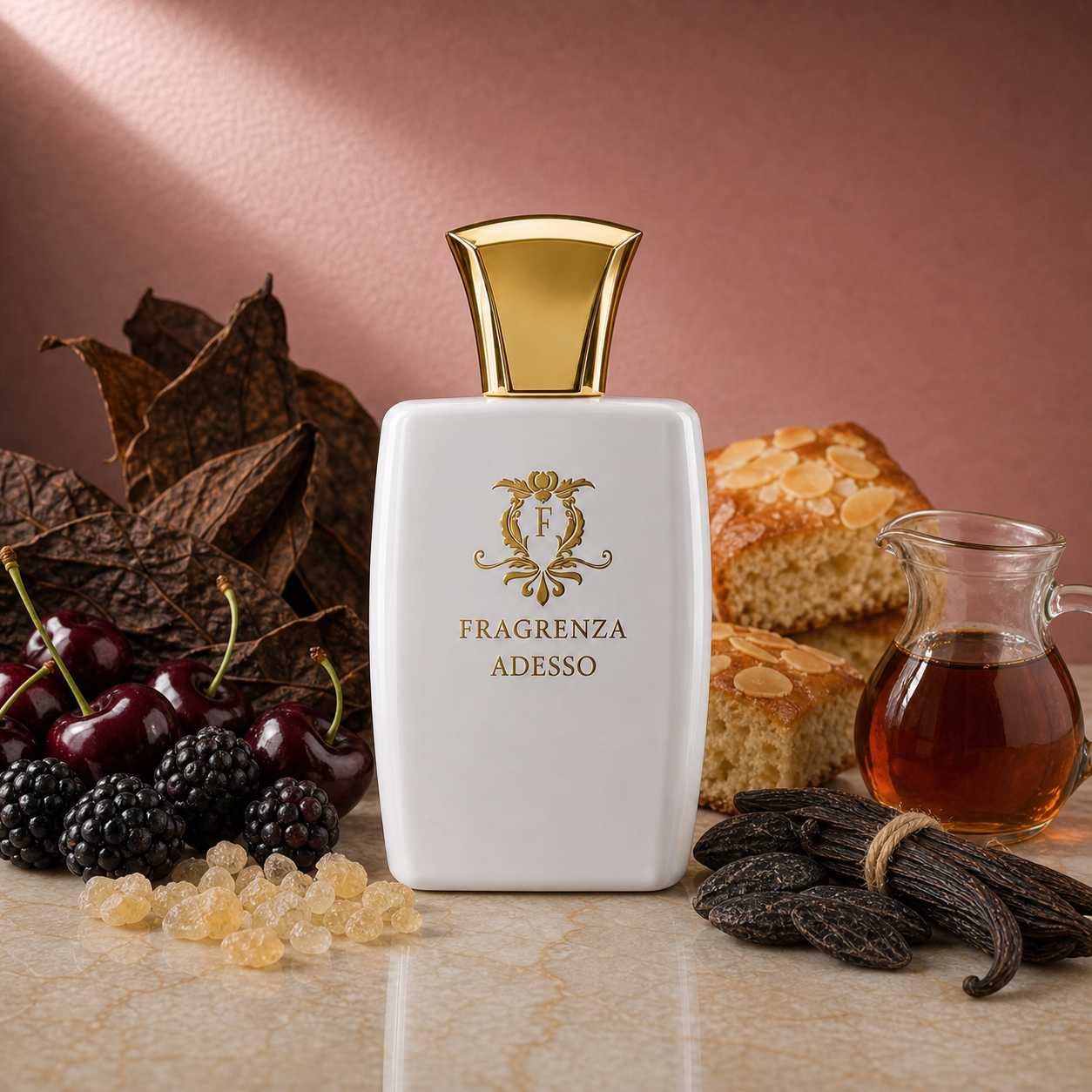
Aldehydes is a modern, clean, low-lit signature: dry-bright on opening, evenly tuned through the heart, slow and quiet in the base.
By Julia Moretti 8 min read
The synthetic family that defined modern perfumery
Aldehydes are perhaps the most important molecular family in the history of fine fragrance. Bright, sparkling, slightly waxy, with a distinctively soapy-clean character at high concentration and a smooth-radiant facet at lower doses, aldehydes transformed perfumery in 1921 with Chanel No. 5 and have anchored a meaningful share of fine fragrance composition ever since. The family is essential to almost every classical aldehydic feminine, contributes to nearly every fragrance opening across registers, and continues to define what distinguishes modern perfumery from pre-twentieth-century compositions.
This is the guide to aldehydes as a perfumery category. What aldehydes actually are at the molecular level, the breakthrough that brought them into fine fragrance, the cultural history of aldehydic perfumery, the famous fragrances that put aldehydes to work, the Fragrenza compositions that use the aldehydic register, and how to think about aldehydes in your own wardrobe.
What aldehydes are in perfumery
Aldehydes are a family of organic chemical compounds defined by a specific functional group (R-CHO). In perfumery, the term most commonly refers to the aliphatic aldehydes — long-chain saturated aldehyde molecules numbered by their carbon chain length. The most important materials in fine fragrance include:
Aldehyde C-8 (octanal): bright, slightly waxy, citrus-like character.
Aldehyde C-9 (nonanal): rosy-aldehydic, more rounded than C-8.
Aldehyde C-10 (decanal): orange-rind-bright, slightly fatty, classical aldehydic character.
Aldehyde C-11 (undecanal): rose-direction aldehydic warmth.
Aldehyde C-12 lauric (dodecanal): powdery-waxy, slightly violet-aldehydic.
Aldehyde C-12 MNA (methylnonyl acetaldehyde): distinctive citrus-rose-aldehydic character used in classical Chanel No. 5.
Aldehyde C-14 (gamma-undecalactone): this is technically a lactone rather than a true aldehyde but is named in the aldehydic series; delivers peach-and-apricot character.
The aldehydic family extends well beyond these classical materials. Modern perfumery uses dozens of synthetic aldehydes including aromatic aldehydes (vanillin, anisaldehyde, cinnamaldehyde), citrus aldehydes (citronellal, geranial), and floral aldehydes (helional, hydroxycitronellal) that contribute distinct facets to fine fragrance.
What aldehydes actually smell like
Aliphatic aldehydes vary widely depending on chain length and modification. C-8 reads bright-citrus; C-9 reads rosy-aldehydic; C-10 reads orange-bright; C-11 reads rose-warm; C-12 lauric reads powdery-waxy; C-12 MNA reads citrus-rose. The combinations used in classical aldehydic feminines deliver the bright, sparkling, slightly soapy-clean character that defines the category.
The wear on skin reads bright, sparkling, slightly clean-laundry, with a transparency and lift that distinguishes aldehydic perfumery from richer floral or woody compositions. Aldehydic compositions tend to project clearly in the opening and gradually integrate with heart and base materials over the wear. The volatile aldehyde molecules dissipate within the first hour or two; most aldehydic compositions rely on florals, woods, and musks to extend the wear past the volatile opening.
Aldehydes are among perfumery’s most universally compatible materials. They appear in classical aldehydic feminines, contemporary citrus colognes, modern fresh masculines, and countless compositions across registers. The material family bridges between citrus brightness and floral elegance and provides the distinctive lift that distinguishes modern perfumery openings from purely natural-citrus structures.
Cultural and compositional history
Aldehydic perfumery has a specific founding moment. Chanel No. 5 (1921, composed by Ernest Beaux) is the canonical founding aldehydic feminine and remains in continuous production a century later. Beaux used overdosed aliphatic aldehydes (C-10, C-11, C-12) at concentrations no previous fragrance had attempted, alongside rose, jasmine, ylang ylang, and animalic base materials. The composition was massively influential and reshaped Western feminine perfumery for decades.
The mid-twentieth century treated aldehydic feminines as a foundational category. Lanvin Arpege (1927), Worth Je Reviens (1932), Caron Fleurs de Rocaille (1933), Madame Rochas (1960), and dozens of other compositions used aldehydes structurally in floral-aldehydic feminines.
The 1960s and 1970s saw aldehydic perfumery extend into masculine territory through compositions like Hermes Equipage (1970) and various aldehydic-fougere works. Calvin Klein Eternity (1988) used aldehydes in modern fresh-floral feminine register. The contemporary moment treats aldehydes as structural elements used selectively in many compositions rather than as a dominant aesthetic.
Famous aldehydic fragrances
Several compositions deserve study because they show what aldehydes can do at the structural center. Chanel No. 5 (1921) is the canonical aldehydic feminine and one of the founding works of modern perfumery. Lanvin Arpege (1927) places aldehydes in a refined floral structure. Worth Je Reviens (1932) and Caron Fleurs de Rocaille (1933) extended the aldehydic-feminine register. Madame Rochas (1960) is one of the great mid-century aldehydic florals. Estee Lauder Estee (1968) and Hermes Caleche (1961) continue the classical aldehydic tradition.
In the contemporary niche space, aldehydes appear in countless compositions as structural elements. Various Frederic Malle, Le Labo, Comme des Garcons, and contemporary niche perfumers use aldehydic materials freely. The category is now ubiquitous in fine perfumery, even if dedicated aldehydic compositions are less common than in the classical era.
Aldehydes in the Fragrenza line
Several Fragrenza compositions use aldehydic character explicitly.
is the most directly relevant — aldehydes appear explicitly in the opening alongside mandarin, orange, mate, and magnolia, with a heart of coriander, cinnamon, nutmeg, and caraway and a base of patchouli, labdanum, amber, and vetiver. The aldehydic-spice register that this composition demonstrates shows how aldehydes lift and brighten warmer base materials.
places shimmering aldehydes in the heart alongside black currant and licorice, with rose, ylang-ylang, orange blossom, and jasmine in the floral opening, and incense, sandalwood, and patchouli at the base — the aldehydic-floral-animalic register that bridges classical and contemporary perfumery.
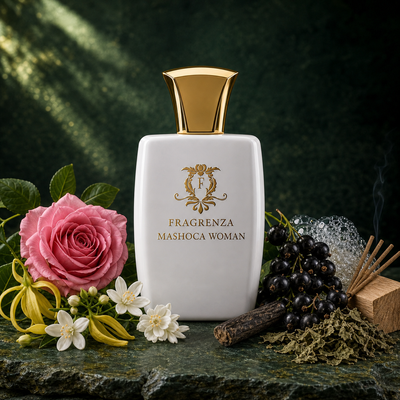
In the bright-aldehydic direction,
uses citrus, mint, pear, and lemonade in the opening with a sage and elderberry heart and a cedarwood-musk base — the modern fresh-aldehydic register adjacent to classical aldehydic openings. And uses delicate floral character that gives way to fruity-and-resinous-woody depth, with aldehydic facets bridging the structural transitions.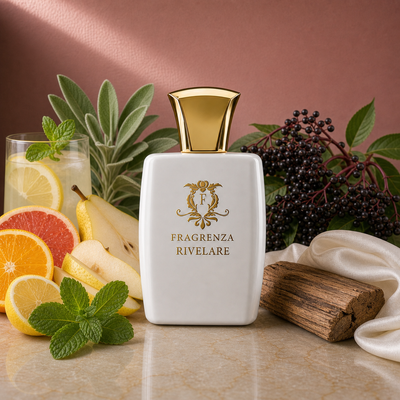
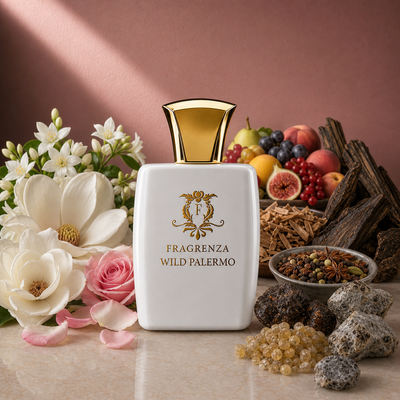
For more on related modern and synthetic perfumery, see our entries on metallic notes, marine notes, and musk.
How aldehydes interact with other notes
Aldehydes are perhaps the most compositionally generous category in fine perfumery. Their bright-sparkling character bridges across nearly every other aromatic family.
With florals (especially rose, jasmine, ylang ylang), aldehydes lift the floral character into the classical aldehydic-feminine register. Chanel No. 5 demonstrates the pattern at its most refined.
With citrus, aldehydes amplify the bright-fresh character into the contemporary fresh-citrus register that anchors modern colognes and fresh-masculine compositions.
With iris and powdery materials, aldehydes contribute lift to classical powdery-floral structures.
With clean musks, aldehydes create the modern bright-clean register that has anchored a meaningful share of contemporary unisex perfumery.
With animal notes (civet, ambergris, musk), aldehydes provide the bright-clean counterpoint that classical Chanel No. 5-direction compositions exploited.
With woody and amber materials, aldehydes lift the heavier base materials into a fresher contemporary register.
Aldehydes in the modern wardrobe
Aldehydic compositions wear well across all four seasons depending on the surrounding materials. Classical aldehydic florals are at home year-round; contemporary fresh-aldehydic compositions wear best in spring and summer; aldehydic-amber compositions extend into autumn and winter. The category is among the most flexible in fine perfumery.
Aldehydes carry no inherent gender coding. The category anchored classical feminine perfumery (Chanel No. 5) and classical masculine perfumery (Equipage); contemporary unisex compositions use aldehydes freely.
Application is conventional: pulse points, light spray. Aldehydic notes generally express most clearly in the opening and gradually integrate with heart and base materials through the wear. Expect strong aldehydic projection in the first thirty to sixty minutes, then a gradual settling into the heart and base over the following hours.
Frequently asked questions
What do aldehydes smell like in perfume?
Bright, sparkling, slightly waxy, with a distinctively soapy-clean character at high concentration and a smooth-radiant facet at lower doses. Specific aldehydes vary by chain length: C-8 reads bright-citrus, C-10 reads orange-bright, C-11 reads rose-warm, C-12 lauric reads powdery-waxy. The category is among perfumery’s most universally recognizable signatures.
What is the difference between aldehydic and metallic notes?
Significant overlap rather than fundamental distinction. Aldehydes deliver bright-sparkling character with metallic facets at higher concentrations. Metallic perfumery uses a broader set of synthetic captives that extend beyond aldehydes into pure mineral and inorganic-direction materials. Most aldehydic compositions read as metallic; most metallic compositions use aldehydes.
Are aldehydes natural?
Mixed. Some aldehydes (citral, citronellal, geranial) appear in natural materials at significant concentrations. Most aliphatic aldehydes used in fine perfumery are synthetic (the natural concentrations are too low for commercial extraction). The category as a whole is dominated by synthetic captives in modern fine fragrance.
Are aldehydic fragrances feminine?
Conventionally coded toward feminine through the Chanel No. 5 lineage, but the category has no inherent gender coding. Aldehydes appear in countless masculine and unisex compositions. Modern perfumery treats aldehydes as fully gender-neutral structural materials.
What season are aldehydic fragrances best for?
All four, depending on which aldehydes dominate and what surrounds them. Classical aldehydic florals wear year-round; contemporary fresh-aldehydic compositions wear best in spring and summer; aldehydic-amber compositions extend into cooler weather. The category is among the most flexible in fine perfumery.
What perfumes use aldehydes well?
Chanel No. 5 (1921) is the canonical aldehydic feminine. Lanvin Arpege (1927), Worth Je Reviens (1932), and dozens of mid-twentieth-century classical aldehydic florals use the family extensively. Contemporary niche perfumery uses aldehydes structurally across countless compositions, even if dedicated aldehydic launches are less common now than in the classical era.
Why do aldehydic fragrances smell so distinctive?
Because the molecular families that deliver aldehydic character (the aliphatic aldehydes’ long-carbon-chain structure with a specific functional group) carry distinctive aromatic signals that no other perfumery category replicates exactly. Aldehydes occupy a unique position in fine fragrance and their character is unmistakably modern.
The structural place of aldehydes
Aldehydes brought the bright-sparkling-modern register into fine perfumery in 1921 and have anchored a meaningful share of fine fragrance composition ever since. The family’s combination of brightness, lift, and aromatic precision makes it useful across nearly every register in modern perfumery. Whether you are wearing a classical aldehydic feminine, a contemporary niche fresh-citrus, a modern unisex composition, or any fragrance that uses aldehydes structurally to brighten and lift the opening, the aldehydic materials are doing the structural work that distinguishes modern perfumery from pre-twentieth-century compositions. A century of fine fragrance has built around them.