

Tonka Bean in Perfumery: Sweet, Warm, and Irresistibly Coumarinic
Tonka bean is a centrepiece of the modern gourmand family, a note every fragrance lover should learn to recognise on skin.
By Julia Moretti 7 min read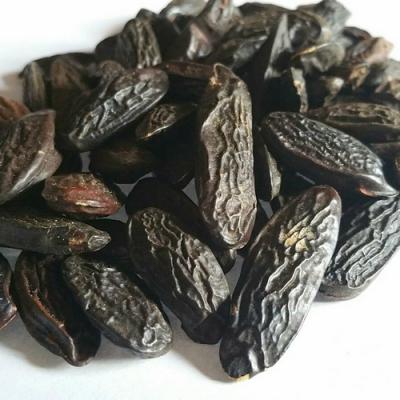
The Warm Heart of Countless Beloved Fragrances
If you have ever smelled a fragrance and thought: "there is something here that is sweet but not sugary, warm but not heavy, somehow both comforting and elegant," there is a good chance that tonka bean was at work. It is one of the great foundation stones of modern perfumery — not a headline ingredient in the way that rose or oud commands attention, but a deeply important supporting note whose contribution to the character of thousands of fragrances is both profound and often underappreciated. Tonka bean is the note that makes good fragrances feel finished, coherent, and irresistibly wearable.
The smell of tonka bean is warm and complex: vanilla-like, but drier and less sweet; almond-like, but without the harsh sharpness of benzaldehyde; hay-like in the way of freshly cut clover drying in summer sun. There is a powdery quality, a soft creaminess, and beneath it all a slightly spicy-bitter note that prevents the sweetness from becoming cloy. It is one of those rare ingredients that can be deployed in almost any fragrance family — from the lightest, most airy florals to the densest, most labdanum-heavy orientals — and improve whatever it touches.
Botanical Origins: The Tree of Life from the Amazon Basin
The tonka bean is the seed of Dipteryx odorata, a large tropical tree native to the Amazon basin and cultivated primarily in Venezuela, Brazil, and Nigeria. The tree produces hard, dark, wrinkled seeds roughly the size of a large almond, which are harvested, fermented in rum or alcohol, and then dried — a process that concentrates the aromatic compounds and produces the characteristic sweet-spicy scent that tonka bean lovers find so compellingly beautiful.
The first European contact with tonka bean came through the French colonists in what is now French Guiana in the eighteenth century. The name "tonka" derives from a Galibi word for the tree, and the bean quickly found favour in both the pharmaceutical and perfumery industries of Europe — in tobacco, as a flavouring (though since restricted in many countries due to coumarin toxicity in large doses), and most durably in fragrance composition.
Commercial cultivation is centred in Venezuela, where the town of Caicara del Orinoco is the main trading hub for wild-harvested tonka beans from the surrounding forest. The fermentation and drying process, which causes the sugar coumarin to crystallise visibly on the surface of the beans as white needle-like crystals, is an art in itself, and the quality of the resulting material varies significantly depending on the care taken during this post-harvest stage.
Coumarin: The Molecule That Changed Perfumery
The primary aromatic compound in tonka bean is coumarin, a naturally occurring lactone found in the seeds at concentrations of up to ten percent by weight. Coumarin's smell is one of the most beautiful and recognisable in all of perfumery: sweet, vanilla-like, slightly grassy-hay-like, with a warm, balsamic depth that feels simultaneously simple and inexhaustibly complex on close examination.
Coumarin holds a unique place in fragrance history: it was the first synthetic aromatic compound to be used in fine perfumery. When Aime Guerlain created Jicky in 1889 — widely considered the first modern fine fragrance — he deployed synthetic coumarin alongside lavender and vanilla, creating an accord that was simultaneously novel and deeply reassuring. The success of coumarin-based compositions led to the development of the fougère (fern) fragrance family, which pairs coumarin with lavender and oakmoss in a structure that has defined masculine perfumery for more than a century.
Today, coumarin can be obtained both from natural tonka bean absolute and synthesised from salicylaldehyde — the synthetic route is now dominant in commercial perfumery due to consistency and cost. However, tonka bean absolute offers a richer, more complex olfactory experience than isolated coumarin, containing not only coumarin but also dihydrocoumarin (sweeter, creamier), umbelliferone (slightly UV-active and ethereal), and traces of benzaldehyde, propiovanillone, and other compounds that collectively produce the characteristic tonka bean facets beyond simple coumarin.
Tonka Bean in Perfumery History and the Fougère Revolution
The story of tonka bean in modern perfumery begins with Houbigant's Fougere Royale (1882), in which Paul Parquet used coumarin — derived in part from tonka bean — to create the fougère accord that would define a fragrance family and influence the construction of masculine perfumery to this day. The sweet, hay-like warmth of coumarin, set against aromatic lavender and the mossy depth of oakmoss, produced something that did not exist before: a fragrance that was simultaneously fresh and warm, natural and abstract, familiar and novel.
In the twentieth century, tonka bean's role expanded beyond the fougère family into the oriental category, where its warm sweetness complemented the ambery, resinous, balsamic materials that define that genre. The great orientals — Shalimar, L'Heure Bleue, Opium — all benefit from coumarinic notes that smooth the transition between their spicy, resinous hearts and their rich, animalic bases. Tonka bean, as a natural source of coumarin complexity, has been part of this story at every stage.
In contemporary perfumery, tonka bean has experienced a significant resurgence of interest, partly driven by the gourmand revolution and the appetite for warm, sweet, comforting fragrances. Its ability to deliver vanilla-adjacent sweetness with a more interesting, drier, more complex character than vanilla itself makes it ideal for modern gourmands that want richness without pure confectionery sweetness.
Famous Fragrances Built Around Tonka Bean
The list of great fragrances in which tonka bean plays a central or significant role is extraordinarily long. Guerlain's Shalimar, arguably the most celebrated oriental fragrance in history, uses coumarinic notes including tonka bean at its base to create that signature accord of bergamot, iris, civet, and warm balsamic sweetness. La Vie Est Belle by Lancome deploys iris, praline, and tonka bean in a composition that has become one of the best-selling fragrances in the world precisely because of tonka's ability to deliver warmth and approachability without heavy-handedness.
Flowerbomb by Viktor & Rolf uses tonka bean alongside patchouli, caramel, and jasmine to create an intensely sweet, enveloping floral that consistently ranks among the top-selling women's fragrances globally. Black Opium by YSL pairs tonka with coffee, white flowers, and vanilla in an addictive composition that perfectly captures tonka's ability to make sweet ingredients feel sophisticated rather than cloying. Tom Ford Tobacco Vanille is another masterclass in tonka deployment, its warm, resinous sweetness underscored by coumarinic depth.
Note Interactions: Tonka Bean as a Team Player
Tonka bean's extraordinary value in perfumery lies partly in its versatility as a blending note. Its most famous partnership is with lavender — the fougère accord that has defined masculine perfumery for 140 years. The cool, herbal freshness of lavender and the warm, sweet, hay-like quality of tonka produce a balance that feels both natural and deeply pleasing, evoking a sensory memory of sunlit fields that has proven to have near-universal appeal.
Tonka and vanilla are close relatives that interact in complex ways. Used together, they create a sweetness that is richer and more faceted than either achieves alone — vanilla adds its creamy custard note, tonka brings the hay-almond dimension, and together they form a base accord of exceptional warmth and depth. This combination is the backbone of many of the world's most commercially successful oriental and gourmand fragrances.
With sandalwood, tonka produces an exquisite woody-sweet accord — the creamy warmth of sandalwood meeting the coumarinic sweetness of tonka in a combination that feels luxurious, comforting, and timeless. The addition of amber or labdanum to this combination creates the foundation of the classic oriental base that underpins an enormous range of oriental fragrances.
Wardrobe Context: When to Reach for Tonka
Tonka bean's warm, enveloping quality makes it a natural choice for cooler weather: autumn evenings, winter nights, the moments when you want a fragrance that feels like comfort and luxury rather than freshness and vigour. Its sweetness without cloying excess gives it particular appeal in evening wear — it is a note that comes into its own in the intimate distances of a dinner table or a well-heated room.
Within a fragrance wardrobe, tonka-forward compositions tend to be the ones that provide emotional warmth and sensory pleasure — the fragrances you reach for when you want to feel good, to comfort yourself or someone near you, to wrap the day's end in something beautiful. They are not power statements or challenging intellectual exercises; they are the fragrances of ease, intimacy, and uncomplicated pleasure. For that reason, a well-chosen tonka composition is an essential and irreplaceable part of any serious fragrance collection.