

Coriander in Perfumery: The Spice That Defies Easy Classification
Coriander is a foundational raw material in the woody family, a note every fragrance lover should learn to recognise on skin.
By Julia Moretti 6 min read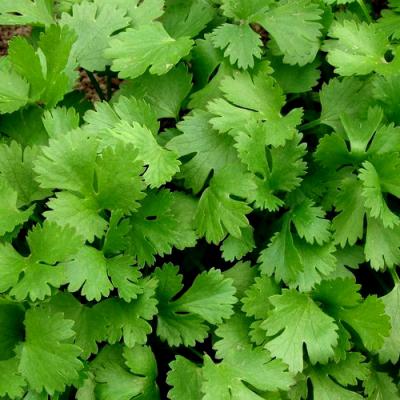
A Spice with an Identity Crisis — and That's Its Genius
Coriander is one of perfumery's most genuinely perplexing ingredients. Ask ten different people what coriander smells like in a fragrance context and you are likely to receive ten different answers, none of them entirely wrong. Some detect citrus. Others notice a warm spiciness. Some find a woody, almost cedar-like dryness. Others are struck by an herbaceous, slightly floral quality. All of these perceptions are accurate, which is precisely what makes coriander such a valuable and interesting tool for perfumers.
This aromatic multivalence — the ability to read differently in different contexts and to different noses — makes coriander one of those quiet overachievers in the perfumer's palette. It rarely gets the marketing spotlight that rose or oud command, but it appears in a remarkable number of celebrated fragrances, often as the ingredient that provides coherence to a composition without being immediately identifiable as the source of that coherence.
What Does Coriander Smell Like in Perfumery?
The coriander used in perfumery is the seed, not the leaf. This distinction is critical: coriander leaf (often called cilantro) has a bright, divisive, very green and slightly soapy quality that most people find either delightful or deeply unpleasant. The seed smells entirely different — warmer, drier, more complex, and without the polarising green freshness of the leaf.
Coriander seed essential oil has a primary character that is simultaneously woody and citrus-like. There is a warmth to it — a slight spiciness that does not read as sharp or peppery but rather as a gentle, diffuse heat. Alongside this warmth is a brightness that sits between lemon and wood — not as sharp as lemon, not as linear as cedar, but sharing qualities of both. There is also a faint floral note in good-quality coriander oil, a whisper of something almost rose-like that adds softness to the overall impression.
The result is a note that feels simultaneously fresh and warm, citric and spicy, bright and woody. It is this quality of being several things at once that makes coriander so useful as a transition element in fragrance composition — it can bridge top notes and heart notes, connect citrus to spice, or link floral to woody without creating obvious joins that the nose finds dissonant.
Origins and Extraction
Coriander (Coriandrum sativum) is one of the oldest cultivated spices, with records of its use stretching back to ancient Egypt and beyond. Today it is cultivated across a wide geographic range, with major essential oil production in Russia, Eastern Europe, India, and Morocco. The quality and aromatic profile of the oil varies significantly by origin: Russian coriander is often considered the benchmark for fine fragrance use, with a particular balance of the linalool that defines the seed's characteristic scent.
The essential oil is obtained by steam distillation of the dried, crushed seed. The process is straightforward and produces an oil of good stability and yield, making coriander one of the more accessible natural spice materials. The distillation temperature and duration significantly affect the aromatic quality of the resulting oil — lower temperature distillation tends to produce oil with a fresher, more citric character, while higher temperatures may emphasize the warmer, spicier aspects.
Key Aroma Molecules
Linalool is the dominant molecule in coriander seed oil, typically comprising 60 to 80% of the oil's composition. This is a remarkable fact that explains much about coriander's aromatic character and its behaviour in fragrance compositions. Linalool is the same molecule that gives lavender its soft, floral-herbal quality and contributes significantly to bergamot's floral complexity. In coriander, however, the supporting molecules create a very different overall impression — the linalool's floral qualities are modified and grounded by the spice context.
Geraniol and geranyl acetate — molecules also found in geranium and rose — contribute the faint floral-rosy quality in coriander's background. Alpha-pinene and beta-pinene add a clean, slightly resinous brightness. Camphor contributes a slight medicinal freshness. The combination of all these components in the proportions found in coriander seed oil creates the characteristic note that is unlike any single one of its constituent parts.
The high linalool content means that coriander oil shares molecular territory with lavender, bergamot, geranium, and rose — ingredients that all feature linalool prominently. This explains why coriander blends so naturally with each of these materials, creating transitions that feel organic rather than constructed.
Coriander's Role in Fragrance Composition
Because of its complexity and its ability to bridge fragrance families, coriander typically functions as a top-heart note — prominent in the early stages of a fragrance's development and remaining detectable well into the heart phase. It is rarely used as a pure top note (its citric freshness is less immediately striking than true citrus materials) and equally rarely as a base note (it lacks the depth and tenacity for that role).
In men's fragrances, coriander is a classic ingredient in aromatic fougeres and spicy woody compositions. It appears in the opening of many sophisticated masculine fragrances where its combination of freshness and spice creates an immediate impression of refinement and complexity. The note reads well in professional contexts — its warmth and subtlety suggest understated elegance rather than overt projection.
In feminine compositions, coriander can add an unexpected complexity to floral or fruity fragrances, providing a spicy, slightly woody backbone that prevents lightness from tipping into inconsequentiality. Used well, it can make a floral composition smell more interesting and multi-dimensional than the floral notes alone would achieve.
Famous Fragrances Featuring Coriander
Coriander appears prominently in a number of iconic masculine fragrances. Bleu de Chanel opens with a citrus-ginger-coriander accord that establishes the fragrance's polished, contemporary character — the coriander providing a bridge between the citric brightness of the opening and the woody heart that follows. The note's dual citric-spicy nature makes it ideal for exactly this transitional role.
Spicebomb by Viktor and Rolf features coriander as part of its spice-forward opening, where it combines with cardamom, pink pepper, and cinnamon to create the fragrance's explosive initial impression. In this context, coriander provides the citric brightness that prevents the spice accord from becoming heavy and overwhelming.
Parfums de Marly Layton uses coriander alongside apple and bergamot in its opening, creating a fresh, slightly spiced accord that transitions elegantly into the fragrance's lavender and vanilla heart. The coriander here serves as a sophisticated linking element — present enough to add complexity, subtle enough not to assert itself over the more prominent notes.
Interactions with Other Notes
Coriander's most natural partners are the spice family members it shares the most molecular territory with. With cardamom, coriander creates a warm, slightly eucalyptus-spiced accord that feels both fresh and complex. With ginger, it creates a brighter, more energetic spice combination. With black pepper, the pairing creates a sharp, slightly citric, very clean spice accord that reads as modern and sophisticated.
Coriander pairs beautifully with woody notes, particularly sandalwood and cedar. The warm, slightly dry quality of coriander resonates with the creaminess of sandalwood and the clean dryness of cedar, creating woody accords that have more brightness and freshness than woody notes alone would provide. With vetiver, coriander's citric quality creates an interesting contrast against vetiver's smoky earthiness.
The note is more challenging with heavy florals. Against rich, indolic florals like tuberose or gardenia, coriander's spice character can create an uncomfortable medicinal quality. Better pairings in the floral realm are with rose, geranium, and lighter florals where the shared linalool chemistry creates natural affinity.
Wardrobe Context
Coriander's versatility makes it appropriate across a wide range of occasions and seasons. Its warm, spice character gives it more relevance in cooler months than pure citrus notes, while its freshness prevents it from being seasonally limited to autumn and winter. A composition that features coriander prominently in its opening will work well across three seasons with only high summer presenting a slight mismatch with the note's warm character.
The note's professional and sophisticated associations make it particularly well-suited to workplace wear — it announces complexity and refinement without being assertive or polarising. For those exploring the designer fragrance market and wanting something with more character than a simple fresh aquatic but less obviously dramatic than a heavy oriental, coriander-accented compositions offer an excellent middle path.