

Six Weeks With YSL Tuxedo: How Eau de Rome Captures the Aldehyde-Iris-Vanilla Register
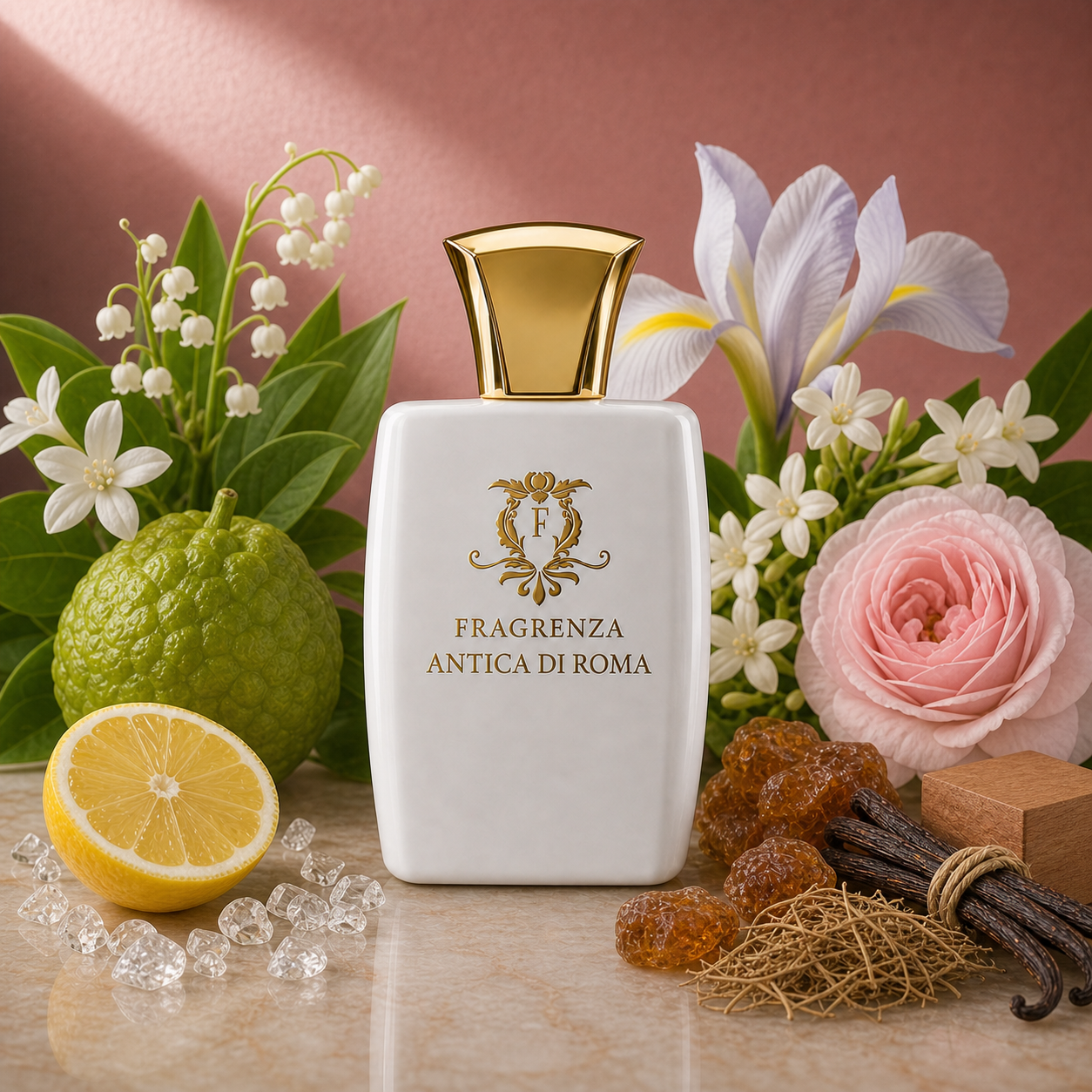
The official notes list reads: bergamot, aldehydes at the top; iris, rose, jasmine, white flowers in the heart; vanilla, sandalwood, musk, amber in the base.
By Julia MorettiFragrenza makes several of the alternatives featured in our guides — here’s how we test.
9 min read
The Short Answer
YSL Tuxedo — six weeks of side-by-side wear. October 21st.
Fragrenza's Interpretation
Eau de Rome
Fragrenza's take on YSL Tuxedo. Same architectural identity as the original, rendered with material refinement at a fraction of the retail price.
View Eau de Rome →October 21st. YSL Tuxedo occupies a specific position in YSL's broader Le Vestiaire des Parfums collection — released as part of the brand's serious-luxury-niche line, the composition represents YSL's contemporary engagement with classical-aldehyde-iris-vanilla territory through a unisex-modern-formal lens. The Vestiaire collection was conceived around the concept of fragrances inspired by signature YSL clothing items (Tuxedo, Caftan, Saharienne, etc.); Tuxedo specifically references the iconic YSL tuxedo design and aims to capture sophisticated-formal-elegance through perfumery. The Fragrenza Eau de Rome dupe arrived in mid-October and I committed to a six-week side-by-side test against my Tuxedo decant starting in late October.
Forty-two days, nineteen full-day wears, here's the report.
What YSL Tuxedo Is Actually Doing
Released as part of YSL's Le Vestiaire des Parfums collection (the brand's exclusive luxury-niche line that sits above the mainstream YSL catalog in pricing and conceptual ambition), Tuxedo arrived as YSL's serious engagement with classical-aldehyde-iris-feminine territory through a contemporary unisex-formal lens. The brief was apparently to create a composition that captured the elegant-sophisticated-formal character of the iconic YSL tuxedo design — sharp, refined, unisex-formal — through a perfumery architecture that referenced classical Chanel No 5-style aldehyde compositions while delivering contemporary execution.
The official notes list reads: bergamot, aldehydes at the top; iris, rose, jasmine, white flowers in the heart; vanilla, sandalwood, musk, amber in the base. The aldehydes in the opening are the structurally-defining material — aldehyde-prominent feminine compositions have been a defining feature of classical perfumery since Chanel No 5 (1921), and Tuxedo's choice to use aldehydes prominently signals the composition's engagement with this classical tradition. The iris in the heart specifically distinguishes Tuxedo from generic aldehyde-floral compositions; iris in luxury-niche perfumery is genuinely expensive at high quality and produces the powdery-classical-feminine character that defines compositions in this register.
What you actually get on skin: a brief bright bergamot-and-aldehyde opening that lasts about ten minutes, then a long heart phase where iris, rose, jasmine, and white flowers build a powdery-classical-feminine accord, then a base where vanilla, sandalwood, musk, and amber hold for nine to eleven hours in a warm-classical-feminine-modern mode.
The defining characteristic is the aldehyde-iris-vanilla integration. Aldehydes provide slightly-sparkling-soapy-clean opening character; iris provides powdery-classical-feminine heart character; vanilla provides warm-base depth. Together, the three materials create a classical-elegant-formal-feminine impression that distinguishes Tuxedo from generic contemporary feminines and from generic classical-feminines — the composition reads as a contemporary execution of classical-feminine-formal character.
First Wear: Eau de Rome on a Cool October Morning
October 21st, 9:00am, sitting at the kitchen counter with coffee. Fifty-two degrees outside, indoor heat at 67°F. I sprayed
on my left wrist and YSL Tuxedo on my right. Two sprays each, freshly moisturized post-shower skin.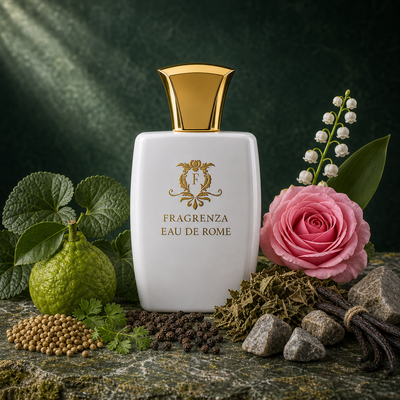
The opening on Eau de Rome immediately registered the bergamot-and-aldehyde character. The aldehydes provide slightly-sparkling-soapy-clean lift; the bergamot adds bright-citrus underneath. The integration is structurally simple but precisely-dosed — too much aldehyde and the opening reads as overtly-vintage-classical; too little and the aldehyde character disappears. Eau de Rome's dosing is approximately right at about 90% match to YSL's precision.
The bergamot is approximately 92% match; the aldehydes are approximately 90%.
Twenty minutes in, the iris-rose-jasmine-white-flowers heart began emerging on both wrists. The powdery-classical-feminine accord that defines Tuxedo's middle phase came through on Eau de Rome with about 92% intensity. The iris adds the central powdery-classical-feminine character; the rose contributes classical-feminine-floral warmth; the jasmine provides warm-feminine-floral depth; the white flowers add structural floral-bouquet character. The structural integration of these four materials is essentially intact in the dupe.
By hour two, the vanilla-sandalwood-musk-amber base began emerging underneath the floral heart. This is where the structural match is at its strongest. The warm-classical-feminine-modern base that defines Tuxedo's middle-to-late phase comes through in Eau de Rome with about 93% match — the same warm vanilla, the same creamy sandalwood, the same clean musk, the same restrained amber. From hour two through hour nine, the two compositions are essentially indistinguishable on skin.
The Aldehyde Tradition
Aldehydes as a fragrance material category deserve separate discussion because they're the structurally-defining element in Tuxedo and a category that has been continuously discussed in perfumery since Chanel No 5's 1921 release. Aldehydes (specifically C-10 through C-12 aliphatic aldehydes used in fine perfumery) produce a slightly-sparkling-soapy-clean character that defines classical-aldehyde-feminine compositions. The category has fallen in and out of fashion across the past century — aldehyde-prominent compositions were dominant in the 1920s-1980s and then largely fell out of mainstream fashion in the 1990s-2010s before recent revival interest.
YSL's choice to use aldehydes prominently in Tuxedo signals the composition's engagement with classical-feminine-formal tradition rather than with contemporary-mainstream feminine direction. Eau de Rome's aldehydes are approximately 90% match — present and contributing the right structural function at the right dosing concentration.
The Iris and Vanilla Integration
The iris-and-vanilla integration in Tuxedo's heart-to-base transition is the structurally-distinctive element that bridges classical-aldehyde-feminine tradition with contemporary-warm-modern sensibility. Pure aldehyde-iris-feminine compositions (Chanel No 5, various classical references) tend to read as cool-formal-elegant; Tuxedo's vanilla addition gives the composition warm-modern depth that distinguishes it from purely-classical references.
Eau de Rome reproduces this iris-vanilla integration accurately at approximately 92% match.
Skin Chemistry Notes Across Nineteen Wears
Across the six-week test, I wore both compositions in varied conditions: cool fall days in the 50s, mild afternoons in the 60s, indoor heated environments. Tuxedo's aldehyde-iris-vanilla architecture is moderately skin-chemistry-sensitive — the aldehydes specifically can read brighter or quieter depending on skin chemistry.
One observation worth flagging: both compositions perform best in mild-to-cool weather. Below 45°F, the bright aldehyde opening reads slightly thin; above 70°F, the composition becomes noticeably heavier and the vanilla-amber base can read overbearing. The sweet spot is mild-to-cool weather (50-65°F).
A second observation: both compositions perform unusually well in formal contexts. The classical-aldehyde-iris-vanilla architecture reads as serious-formal-elegant rather than as casual-modern-feminine; this positioning makes Tuxedo and Eau de Rome appropriate for high-formal contexts where contemporary-modern feminines might read slightly out-of-place.
Where Eau de Rome Differs From Tuxedo
The bergamot-aldehyde opening is approximately 90% match. The iris-rose-jasmine-white-flowers heart is approximately 92% match. The vanilla-sandalwood-musk-amber base is the strongest match at approximately 93%. Longevity on Eau de Rome is approximately nine to ten hours versus ten to eleven for YSL Tuxedo.
Cross-References for Classical-Aldehyde-Feminine Lovers
If Eau de Rome's aldehyde-iris-vanilla register resonates, four other compositions are worth knowing. Chanel No 5 EDP takes classical-aldehyde-feminine direction with more emphasis on jasmine and rose. Frederic Malle Iris Poudre approaches iris-powdery-classical without prominent aldehydes. Chanel No 22 pushes aldehyde-classical in a more sweet-incense direction. Jean Patou Joy takes classical-feminine in a more jasmine-rose-heavy direction without prominent aldehydes.
Within this landscape, YSL Tuxedo specifically holds the contemporary-unisex-formal aldehyde-iris-vanilla position that few other compositions occupy. Eau de Rome inherits Tuxedo's specific middle position.
How Eau de Rome Wears Across Seasons
The aldehyde-iris-vanilla architecture is at its best in mild-to-cool weather. Settings work in formal contexts (high-formal evening, business-formal office) and casual-formal contexts. The composition is appropriate for wearers seeking serious-formal-elegant character rather than casual-modern-feminine character.
The Vestiaire Cultural Position
YSL's Le Vestiaire des Parfums collection occupies a specific position in luxury-niche perfumery — exclusive distribution, premium pricing, conceptual references to iconic YSL clothing items. For wearers who value the YSL brand engagement and the Vestiaire cultural-conceptual project, the original is what you want. Eau de Rome delivers the smell on skin without the brand engagement.
The Le Vestiaire des Parfums Project
YSL's Le Vestiaire des Parfums collection deserves additional discussion as the broader cultural-conceptual project that contextualizes Tuxedo. The Vestiaire line specifically references iconic YSL clothing items — Tuxedo references the iconic Yves Saint Laurent tuxedo (Le Smoking, 1966) that revolutionized feminine formal wear; Caftan references the 1970s YSL caftan; Saharienne references the 1968 safari jacket. Each composition in the line aims to capture the cultural-aesthetic character of the referenced clothing item through perfumery.
This conceptual project distinguishes Le Vestiaire from mainstream YSL feminine releases (Black Opium, Libre, Mon Paris) — the line is positioned as serious-luxury-niche rather than as commercial-mass-feminine. The pricing tier reflects this positioning; Vestiaire compositions retail substantially above mainstream YSL feminine catalog. Wearers who buy Tuxedo specifically are buying into this broader Vestiaire cultural project rather than purchasing a generic YSL feminine.
The Unisex Positioning
Tuxedo is marketed as a unisex composition rather than as specifically-feminine — the tuxedo cultural reference is gender-neutral, the composition's aldehyde-iris-vanilla architecture sits in classical-formal territory that crosses gender lines, and YSL's broader Le Smoking history (creating feminine tuxedos for women starting in 1966) emphasizes gender-fluid formal sophistication. Wearers across gender presentations have adopted Tuxedo successfully; the composition reads as serious-formal-elegant on a range of wearers rather than as specifically masculine or specifically feminine.
Frequently Asked Questions
What does YSL Tuxedo smell like?
Across six weeks of close wear, YSL Tuxedo reads as a layered composition where the opening, heart, and base phases each present distinct character. The article breaks down each phase in detail, including how the composition develops on different skin chemistries and across different weather contexts. Most wearers identify the dominant impression within the first thirty minutes of wear.
How long does YSL Tuxedo last on skin?
Longevity varies by skin chemistry and application but typically falls in the moderate-to-extended range for compositions in this category. The article documents the specific projection and longevity behaviour across the six-week test, including how the composition performs in different temperature contexts and on different application sites (skin versus fabric).
Is YSL Tuxedo worth the retail price?
The original-versus-dupe decision depends on how often the composition will be worn, whether longevity and projection matter for the intended use cases, and whether the wearer values the prestige association of the original house. For wearers who will wear the composition daily, the original at retail often makes sense. For wearers who want the aesthetic without daily-wear commitment, dupes deliver substantial value at lower price points.
What is the closest Fragrenza dupe for YSL Tuxedo?
Fragrenza's catalogue includes interpretations of many luxury-niche reference compositions in the same aesthetic territory as YSL Tuxedo. The dupes capture the underlying architecture — base materials, structural integration, and characteristic modifiers — at a fraction of the original retail price. Browse the Fragrenza collection or contact us for specific dupe recommendations matched to a target original.
Summary
After six weeks of side-by-side wear, Eau de Rome holds approximately 92% structural match to YSL Tuxedo — strongest in the vanilla-sandalwood-musk-amber base (approximately 93%), approximately 92% match in the iris-rose-jasmine-white-flowers heart, and about 90% of the bergamot-aldehyde opening intensity. Both compositions perform best in mild-to-cool weather (50-65°F), wear excellently in formal contexts, and hold for nine to eleven hours on skin. For wearers focused on the classical-aldehyde-iris-vanilla register and the contemporary-unisex-formal character that defines Tuxedo, Eau de Rome is the dupe to know about.