

Perfume Storage Tips 2026: How to Keep Your Fragrances Fresh for Longer
Perfume Storage Tips 2026: How to Keep Your Fragrances Fresh for Longer, an editorial deep-dive on notes, character, and how to wear it
By Julia MorettiFragrenza makes several of the alternatives featured in our guides — here’s how we test.
7 min read
The bottle on your dresser is more fragile than you think. Light, heat, humidity, and oxygen all conspire to slowly degrade fragrance over time, and the cumulative effect of poor storage is one of the most underappreciated factors in why fragrances "smell different than they used to." The bottle hasn't changed identity; it has changed chemistry, and most of those changes are preventable with simple storage discipline.
This guide breaks down the science of fragrance degradation, the practical storage techniques that prevent it, and the specific compositions that are most vulnerable. By the end, you'll have a clear framework for protecting your collection so that the fragrances you bought two years ago smell as good in five years as they do today.
What Actually Damages Fragrance
Four environmental factors do most of the damage. Light — particularly UV — breaks down aromatic molecules and shifts color and character. Heat accelerates chemical reactions, including unwanted ones like top-note oxidation. Humidity introduces water vapor that can interact with alcohol-based formulations. Oxygen, introduced through repeated bottle opening and accumulating headspace as fragrance is used, slowly oxidizes the composition.
The combined effect is gradual but real. A well-built modern EDP stored properly will hold its character for 5 to 10 years. The same bottle stored on a sunny bathroom shelf may show noticeable degradation in 18 months, and significant degradation in 3 years. The math favors the careful storer.
Store in the Dark
Light is the most damaging single factor. Direct sunlight is obviously bad, but even bright indirect light (a sunny windowsill, an open shelf in a brightly lit room) accelerates degradation over time. The fix is simple: keep fragrances in their original boxes when not actively in use, and store them in a closed drawer or closet rather than on an open shelf or vanity.
The original boxes serve a purpose beyond aesthetics. They block UV and limit light exposure when bottles aren't being actively used. Buyers who throw away the boxes have lost one of the easiest free protections against degradation. Keep the boxes. Use them.
Keep It Cool
Heat is the second-most-damaging factor, and it's where bathroom storage goes wrong. Bathrooms experience large temperature swings every time the shower runs, which puts fragrance under repeated thermal stress. The cumulative effect over months and years degrades the composition meaningfully.
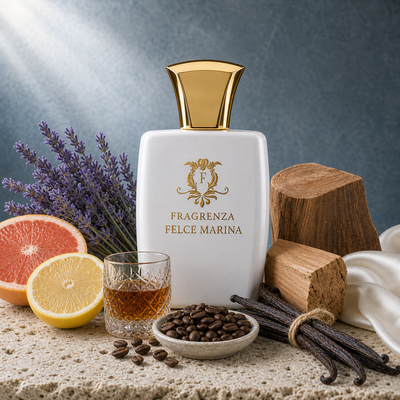
Felce Marina, like most fresh-aromatic compositions, is particularly vulnerable to heat damage. The bright, slightly marine top notes are the first to suffer when fragrance is stored warm — the freshness fades, the structure flattens, and the fragrance can shift toward a chemical or slightly synthetic character within 18 to 24 months under bad storage conditions. The fix: store in a cool, stable-temperature location — a dresser drawer or closet shelf in an interior room is ideal. Avoid bathrooms, sunny windowsills, and anywhere near a radiator, heating vent, or appliance. For more on the structural elements of fresh-aromatic compositions, see our notes-in-perfumery archive.
Control Humidity
Humidity is the most overlooked environmental factor. Alcohol-based fragrances are stable in dry conditions but can be subtly affected by sustained high humidity. The issue isn't catastrophic; you won't open a bottle to find water inside. But sustained humidity can interact with the formulation in ways that shift the development over years of storage.
The practical implication: keep fragrances in dry rooms, not in basement storage or humid garage shelving. If you live in a humid climate, a small dehumidifier in your storage closet can extend fragrance shelf life noticeably. For most wearers in temperature-controlled homes, this is a minor factor — but it matters at the edges.
Limit Oxygen Exposure
Every time you open a fragrance bottle, you introduce a small amount of fresh air. Over time, this air accumulates in the headspace of the bottle as the fragrance is used, and the oxygen slowly oxidizes the composition. This is normal, expected, and unavoidable with sprayed-and-used fragrances — but it's why a half-empty bottle ages faster than a full one.
The mitigation is simple: buy fragrances in sizes you'll use within 2 to 3 years rather than buying 100ml bottles you'll only use 50ml of in five years. For fragrances you wear infrequently, smaller bottles (30ml or 50ml) are the better choice. Travel atomizers also help — decanting a portion of a bottle into a smaller atomizer for daily use keeps the main bottle sealed and slows headspace accumulation.
Bontà and the Warm-Base Exception
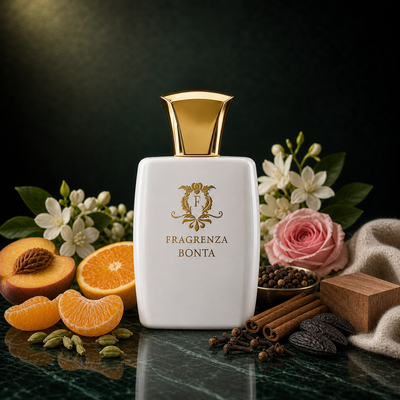
Not all fragrances age identically. Warm-base compositions with heavy amber, vanilla, oud, and resinous notes — the family Bontà belongs to — actually age more gracefully than light, citrus-and-aromatic compositions. The aromatic compound profile is more stable, and minor oxidation of base notes can sometimes deepen the warmth in pleasing ways rather than degrading the composition.
This is the classic "the perfume improves with age" phenomenon, and it's real but limited to specific architectural families. Warm orientals, gourmands with heavy base notes, and oud-anchored compositions can wear well for 5 to 8 years under good storage conditions. Light citrus EDTs and fresh-aromatic compositions generally do not. Plan your storage strategy around the architecture: light fragrances need more careful protection, warm fragrances can tolerate more time.
The Cellar Strategy
Serious collectors approach fragrance storage the way wine collectors approach cellaring — dedicated spaces, controlled environments, organized rotation. You don't need a full fragrance cellar to benefit from cellar principles. A single drawer or closet shelf set aside for fragrance, kept cool, dark, and dry, will deliver most of the storage benefits without the elaborate infrastructure.
If you have a particularly valuable collection or live in a problematic climate, a small wine refrigerator set to roughly 55-60°F provides excellent fragrance storage. This is overkill for most wearers but valuable for serious collectors. For more on building a collection strategically, see our occasions guide and the application guide.
What to Avoid
Several common storage practices actively damage fragrance. Bathroom shelves — too much heat and humidity variation. Sunny windowsills — UV exposure. Car interiors — extreme temperature swings. Refrigerator storage — sometimes recommended but generally counterproductive due to repeated temperature transitions when bottles are moved in and out. Frozen storage — actively damages the composition. Decorative display on open shelves in brightly lit rooms — the aesthetic appeal isn't worth the storage cost.
If a fragrance is displayed prominently for aesthetic reasons, accept the storage trade-off and replace it more frequently. Or buy a smaller bottle for display and a regular-size bottle for properly stored use. The combination preserves both the aesthetic display and the fragrance's longevity.
Related Reads
- Does perfume get stronger with age
- Five fragrance mistakes
- Perfume concentrations
- Anatomy of a perfume
- Travel-friendly perfumes
- Seven rules for applying fragrance
Frequently Asked Questions
How long does an unopened fragrance bottle last?
An unopened bottle stored under good conditions can last 5 to 10 years or more without significant degradation. Once opened, oxygen exposure accelerates aging, and most fragrances are best consumed within 3 to 5 years of opening. Warm-base compositions like Bontà can tolerate longer post-opening storage; fresh-aromatic compositions like Felce Marina should be used within 2 to 3 years for best results.
Should I refrigerate my fragrances?
Generally, no. Refrigerator storage requires moving bottles between cold and room temperature repeatedly, and the thermal stress is worse than steady room-temperature storage. The exception is dedicated wine refrigerators set to 55-60°F where bottles aren't frequently moved — those provide good storage for serious collectors but are overkill for most wearers.
Can I tell if my fragrance has gone bad?
Yes, by smell. Degraded fragrance typically smells slightly sharp, sour, or chemical compared to its original character. The top notes are usually the first to suffer, and a fragrance that smells "off" in the first few minutes after spraying — even if the dry-down still seems normal — has likely begun to oxidize. Color changes (yellowing) can also indicate degradation but aren't always reliable.
Does the storage matter more for designer or niche fragrances?
Both equally, but the cost stakes are higher for niche. A degraded $50 designer fragrance is a frustration; a degraded $400 niche fragrance is a real financial loss. Niche collectors typically invest more in proper storage because the bottles justify the protection. The principles are the same for all fragrance regardless of price.
How should I store travel atomizers?
Travel atomizers should follow the same storage principles as full bottles — cool, dark, dry, oxygen-limited. Because atomizers are smaller and used more frequently, they age faster than the source bottle. Refill them every 2 to 3 months from a properly stored full bottle rather than keeping a single atomizer for years. The smaller volume means a single atomizer's lifespan is naturally limited.
Can I store fragrances on their side?
Most fragrance bottles can be stored upright or on their side without issue, as long as the cap is secure. The exceptions are atomizer pumps that can leak if stored on their side for extended periods. Upright storage is safest as a default. For travel, a vertical orientation in your suitcase reduces the risk of leakage during transit.
The Bottom Line
Fragrance storage is one of the easiest interventions you can make to extend the lifespan and preserve the character of your collection. Keep bottles in their original boxes, in a cool, dark, dry drawer or closet shelf, away from bathrooms and sunny windowsills. Warm-base compositions like Bontà age more gracefully than fresh-aromatic compositions like Felce Marina, but both benefit from proper storage. Invest a small amount of attention in storage discipline, and your fragrances will reward you with consistent character years after purchase.