

Fragrance Etiquette 2026: How to Wear Perfume Without Overwhelming Others
Fragrance etiquette doesn't make for popular reading. The rules feel restrictive, slightly old-fashioned, and easy to dismiss as overcautious
By Julia MorettiFragrenza makes several of the alternatives featured in our guides — here’s how we test.
8 min read
Fragrance etiquette doesn't make for popular reading. The rules feel restrictive, slightly old-fashioned, and easy to dismiss as overcautious. But the wearer who ignores them is also the wearer who gets eye-rolls in elevators, polite distance at office meetings, and the unspoken reputation of being the person whose fragrance precedes them into rooms. Most fragrance etiquette violations are unintentional — the wearer simply doesn't realize how their fragrance is registering with others — and the fix is awareness rather than abstinence.
This guide walks through the principles of modern fragrance etiquette: where to project less, where to project more, how to read social contexts, and how to wear fragrance with the confidence that comes from knowing you're calibrated correctly for the situation. Apply these principles, and fragrance becomes an asset rather than a liability in every social context you enter.
The Foundation: Olfactory Adaptation
Before any specific etiquette rule, understand olfactory adaptation — the brain's habit of tuning out persistent smells. The wearer's nose adapts to their own fragrance within 15 to 30 minutes of application, while everyone around them continues to perceive the fragrance clearly. This single fact explains most fragrance etiquette violations: wearers can't smell themselves, assume the fragrance has faded, and over-apply or apply repeatedly.
Ice Musk illustrates this dynamic well. The fragrance's clean, slightly cool, musky-skin signature projects beautifully at conversational distance from a two-spray application — the wearer perceives it for the first hour and then loses awareness, while everyone else continues smelling it through the day. The temptation to add more sprays is exactly the wrong response. Trust the dose, not your own perception. For more on application calibration, see our pulse-point guide.
Principle One: Close-Quarters Restraint
The most important fragrance etiquette principle is calibrating dose to the closeness of the social context. Elevators, conference rooms, airplanes, restaurant booths, theater seats — these are environments where you share air with strangers within a 6-foot radius for sustained periods. A fragrance that's appropriate for an outdoor barbecue can be overwhelming in a 4-foot elevator, even at the same application dose.
The fix is awareness of which contexts you're entering. For most close-quarters contexts, two sprays of an EDP is the upper limit. If you know you'll be in a shared elevator or a conference room throughout the day, apply on the lighter side and trust that the people around you will appreciate the restraint. The wearer who under-applies slightly is always better-perceived than the wearer who over-applies slightly.
Principle Two: Office and Professional Settings
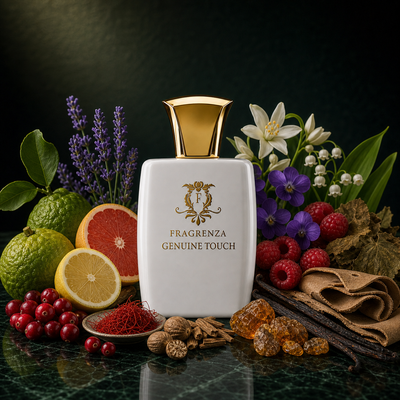
Office environments are the most fragrance-restrictive professional contexts most wearers encounter. Open-plan offices, shared meeting rooms, and conference centers concentrate fragrance in shared air, and even well-built fragrances applied at normal doses can become irritating to colleagues over an 8-hour day. The fix is choosing fragrances calibrated for professional settings and applying with extra restraint.
Genuine Touch is the archetypal office-appropriate fragrance — a clean, aromatic, fresh-modern signature that projects at conversational distance without filling shared air. Two sprays in the morning carry through to evening without ever crossing into the elevator-filling territory that triggers HR conversations in some offices. This is the right register for professional contexts: present, well-groomed, never intrusive. Some workplaces explicitly prohibit fragrance — know your office culture and adapt accordingly.
Principle Three: Restaurants and Food Contexts
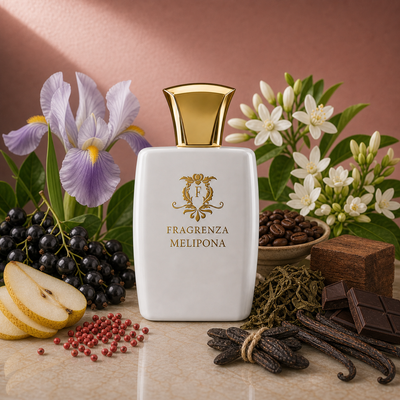
Strong fragrances interfere with the dining experience for everyone within a 6-foot radius — yourself, your dining companions, and adjacent tables. Heavy orientals, smoky leathers, and aggressive aquatics can completely overwhelm the subtle aromas of food and wine that fine dining environments are designed around. Fragrance-friendly dining requires lighter compositions and lighter application.
Melipona is a good example of a fragrance that wears appropriately in dining contexts. Built on iris, pear, and pink pepper with a soft coffee-chocolate dry-down, the composition delivers the Skin Scents 2.0 register — skin-close warmth without dense floral volume — which is precisely the calibration that fine dining contexts reward. The fragrance is refined and quietly present, but it doesn't project loudly enough to interfere with food aromas at the next table. Apply one spray rather than two for fine dining contexts, and avoid heavy gourmands or smoky compositions entirely for special-occasion restaurants. The chef worked hard on the food; don't drown it in your fragrance.
Principle Four: Intimate Settings
Date nights, anniversary dinners, theater dates, romantic evenings — these contexts reward fragrance more than they restrict it, but the rules still apply. The right fragrance in an intimate setting projects at the close-conversational distance that allows your companion to perceive it without the people two tables over also perceiving it. Calibrate accordingly: enough fragrance to register at 18 inches, not enough to register at 6 feet.
The principle is intimacy versus projection. Intimate settings reward intimate fragrances — warm-base, slightly sensual, calibrated for close-distance perception. Heavy projectors that fill rooms work against intimacy by making the fragrance a public statement rather than a private signal. Adjust dose downward for date nights; the goal is to be perceived by one person beautifully, not by everyone around them.
Principle Five: Public Transportation
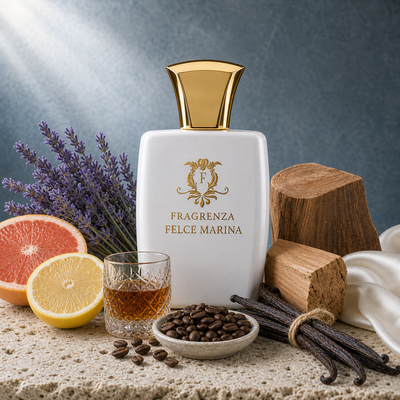
Public transit — subways, buses, trains, rideshares, airplanes — places fragrance wearers in extremely close proximity to strangers who didn't consent to your fragrance choices. The etiquette is simple: apply on the lighter side, choose less aggressive compositions, and accept that public transit is not the venue for heavy projectors.
Felce Marina is a useful example of a fragrance that wears appropriately on public transit. The fresh-marine aromatic structure reads as clean and atmospheric rather than as performatively scented, and the projection sits at the conversational-distance range that allows fellow passengers to remain comfortable. Heavy gourmands, smoky leathers, and oud-anchored fragrances are inappropriate for public transit — save them for contexts where the people around you have chosen to share your air.
Principle Six: Outdoor and Casual Contexts
Outdoor settings — patios, beaches, sporting events, casual gatherings — are the most fragrance-permissive contexts. Outdoor airflow disperses fragrance quickly, the social distances are typically larger, and the fragrance has less opportunity to concentrate in shared air. This is where heavier projectors and more confident applications are appropriate.
That said, outdoor doesn't mean unlimited. Three sprays of a heavy projector at an outdoor brunch can still overwhelm the people at your table. Calibrate to the proximity of the people you're with, not just to the outdoor context. Generally: three sprays for outdoor casual is appropriate; four-plus is excessive in most contexts regardless of venue.
How to Read a Room
The most useful fragrance etiquette skill is reading the room as you enter it. Is this a close-quarters environment? Are you in close proximity to strangers? Are you in a food-or-wine context where aroma matters? Are you in a setting where conservative dress and presentation are expected? Each context calls for different fragrance calibration, and the wearer who reads the room correctly avoids the etiquette violations that less attentive wearers commit unintentionally.
Pay attention to the responses of the people around you. Subtle distance-keeping, lingering at the edges of conversation, polite but brief interactions — these are signals that your fragrance may be over-projecting for the context. Adjust on future occasions. For more on building a fragrance practice that responds to context, see our occasions guide and the application guide.
Related Reads
- Seven rules for applying fragrance
- Five fragrance mistakes
- Where to apply your perfume
- Different fragrances for different occasions
- How to apply men's fragrance
- Travel-friendly perfumes
Frequently Asked Questions
How do I know if I'm wearing too much fragrance?
If you can clearly smell your own fragrance 30 minutes after applying, you're probably wearing too much. The wearer's nose adapts faster than other people's, which means by the time the projection feels normal to you, it's usually 25 to 50 percent stronger than what others perceive. If you frequently get "compliments" framed as "I can smell you from across the room," treat those as polite corrections, not as praise.
Is it okay to wear fragrance to the gym?
Generally, no. Sweat amplifies fragrance projection, and gym environments concentrate the sweat-and-fragrance combination in shared air during physical activity — a context where fellow gymgoers can't easily relocate. Apply fragrance after your shower instead. This is basic gym etiquette and applies to nearly all gym contexts regardless of facility size.
What about wearing fragrance to funerals or solemn events?
Restraint, or skip it entirely. Funerals, memorial services, and solemn religious events are not contexts where fragrance choice should draw attention. If you wear fragrance, choose a restrained, neutral composition and apply minimally — one spray maximum. Heavy projectors and signature scents are inappropriate for these contexts.
Should I ask my colleagues if my fragrance bothers them?
Generally, no — the question puts colleagues in an awkward position where the honest answer feels rude. Instead, observe behavior. If colleagues consistently sit further from you in meetings, lean back during conversations, or avoid close-distance interactions, your fragrance may be over-projecting for the office. Adjust on your own initiative rather than asking for feedback.
Is fragrance ever inappropriate at all?
In specific contexts, yes. Hospital visits to patients with respiratory conditions or chemotherapy-induced sensitivity should be fragrance-free. Yoga and meditation classes are typically fragrance-free environments. Some workplaces and academic settings have explicit fragrance-free policies. Know the contexts in your life that require fragrance abstinence, and respect them — the wearer who can't tolerate going fragrance-free for these contexts has a relationship with fragrance that has crossed from enjoyment into dependence.
How do I respond if someone tells me my fragrance is too strong?
Take it seriously, even if it's said with humor. The wearer's nose adapts, and the people around you have better information about your projection than you do. Reduce your application by one spray on future wears, and consider whether the specific fragrance you were wearing may project more strongly than you realized. The feedback is a gift; respond with gratitude rather than defensiveness.
The Bottom Line
Fragrance etiquette is about calibrating dose to social context. Close-quarters contexts (offices, elevators, restaurants, public transit) demand lighter application. Outdoor and casual contexts permit more confident application. Intimate settings reward warm-base fragrances applied at close-conversational doses. The four Fragrenza picks in this guide — Ice Musk, Genuine Touch, Melipona, and Felce Marina — are calibrated for the close-quarters social contexts where most fragrance etiquette violations happen. Choose appropriately for the context, apply with restraint, and you'll find that fragrance becomes an asset rather than a liability in every social setting you enter.