

Exploring Niche Fragrances 2026: Discover Uncommon Scents for Your Unique Personality
Niche perfumery has shifted from a tiny insider category to one of the most discussed corners of the fragrance world. The term itself can be slippery
By Julia MorettiFragrenza makes several of the alternatives featured in our guides — here’s how we test.
8 min read
Niche perfumery has shifted from a tiny insider category to one of the most discussed corners of the fragrance world. The term itself can be slippery. Some use it to mean small-batch artisan production, others to mean unconventional materials, others to mean expensive packaging. The most useful definition is the one rooted in compositional intent: a niche fragrance is one designed primarily as a creative statement rather than as a commercial product engineered to please the widest possible audience. Niche perfumery prioritises distinct olfactory architecture, generous raw-material budgets, and the willingness to take aesthetic risks that mainstream releases tend to smooth out.
Exploring niche fragrances is rewarding precisely because the field is so varied. There is no single niche aesthetic, no shared house style across the category, and that means a thoughtful exploration involves understanding the architectural families that structure the discipline. Approach the category through the lens of structure rather than brand, and the path through it becomes clear.
The Architectural Families of Niche Perfumery
Most niche compositions can be sorted into a handful of architectural families, each defined by how the perfumer organises the relationship between top, heart, and base. Understanding these families gives you a way to navigate the field without getting lost in marketing copy or note pyramids that omit more than they reveal.
Family One: The Spicy-Floral Aldehydic Architecture
This family descends from the great twentieth-century floral perfumes but updates them with modern materials and contemporary proportions. The aldehydes are dialled down, the florals are sharpened with spice, and the base often integrates resinous or smoky elements that older versions of this family avoided. The result is a recognisable but reframed femininity, one that reads as confident rather than decorative.
Sensual Flame
sits in this family and demonstrates how it works in practice. The composition uses a creamy floral heart against a spiced amber base, with a touch of fruited brightness in the top that keeps the structure from feeling heavy. Wearers who think of themselves as floral skeptics often respond to compositions in this family because the architecture provides enough structural contrast to keep the florals from feeling one-dimensional.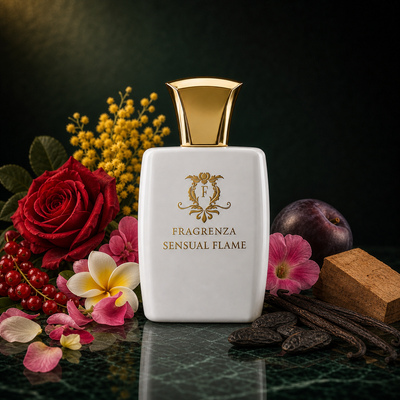
Family Two: The Resinous Woody-Oriental Architecture
The oriental category has been criticised in recent years for its outdated terminology, and the trade has largely moved to calling these compositions ambery or resinous. The structural identity remains the same: a top sweetened with citrus or spice, a heart built on labdanum, opoponax, or resinous balsams, and a base dominated by woods, resins, and animalic notes.
Joyful Oud

Family Three: The Gourmand-Amber Architecture
Gourmand compositions emerged as a distinct family in the 1990s with the success of Angel and Lolita Lempicka, and they have since become one of the most commercially successful structures in perfumery. Niche gourmands distinguish themselves from mainstream gourmands by avoiding the sugar-spun, cotton-candy effect and instead building flavour profiles that read as adult rather than playful.
Bontà
illustrates the niche gourmand approach. The composition leans into pistachio and creamy lactonic notes rather than the heavy sugar of mainstream gourmands, and the result is a flavour profile that feels closer to an Italian dessert than a confectionery counter. The amber base grounds the sweetness and gives the composition longevity that gourmands often lack.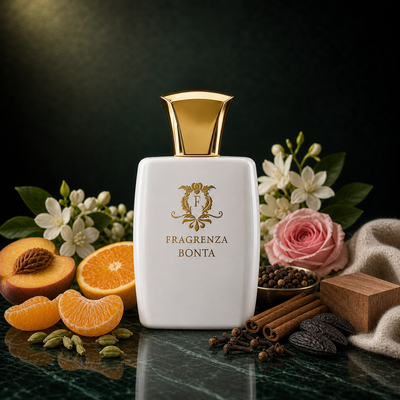
Family Four: The Modern Floral Architecture
Where the spicy-floral family updates the great florals of the twentieth century, the modern floral family abandons those references entirely and starts from a different premise. These compositions tend to use single-flower headspace recreations, transparent base structures, and unconventional pairings between florals and non-floral materials like leather, smoke, or marine notes.
Rose Choral
is a useful example of the modern floral approach. The rose here is treated not as a romantic symbol but as a complex olfactory material with green, peppery, honeyed, and metallic facets that can be foregrounded or suppressed. The composition gives equal weight to several of these facets simultaneously, which produces a polyphonic effect, the sense of multiple voices rather than a single melody.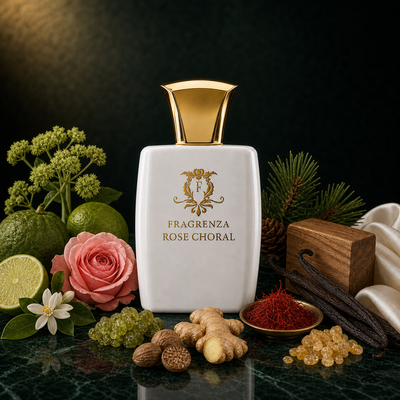
Family Five: The Aromatic-Fougère Architecture
The fougère is one of the oldest formal categories in perfumery, defined by the triangulation of lavender, coumarin, and oakmoss. Modern fougères extend this triangle with citrus, herbs, marine accords, and updated base materials. The family produces some of the most wearable everyday compositions in niche perfumery because the structure naturally reads as fresh and grounded simultaneously.
Felce Marina
exemplifies the modern Mediterranean fougère. The composition combines aromatic herbs, salty marine notes, and a soft mossy base in a way that reads unmistakably as a coastal landscape. Compositions in this family suit warm-weather wear and casual contexts particularly well, and they tend to be among the easiest niche compositions for newcomers to wear, because the structure is intuitive even when the materials are unusual.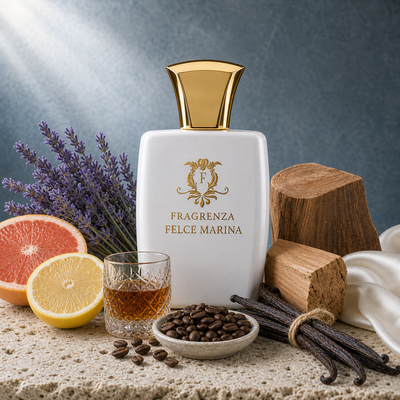
How to Use These Families to Build Your Exploration
The most efficient way to explore niche perfumery is to identify which families resonate with you and which leave you cold, then move systematically through each family to discover the variations within it. Start with one composition from each of the five families described above. Wear each one for at least a full day, ideally several days, and pay attention to what holds your interest beyond the first impression. The compositions that reward repeated wearing are the ones worth pursuing further.
Once you have identified the families you respond to, dive deep before broadening. Within the spicy-floral family alone there are dozens of distinct sub-styles, from the powdered iris-centric variant to the smoky tobacco-floral variant to the citrus-led aldehydic variant. The same is true for every other family. Mastering one family before moving to the next gives you a vocabulary you can use to evaluate everything else you encounter.
What Niche Perfumery Is Not
A common confusion conflates niche with expensive. Price is not a reliable indicator of architectural seriousness. Some of the most thoughtful niche compositions are accessibly priced, and many of the most expensive luxury releases are commercially calibrated rather than creatively distinctive. Look at the structure, not the bottle or the boutique.
Another confusion conflates niche with unwearable. The notion that niche perfumery is necessarily strange, challenging, or polarising mistakes a subset of the field for the whole. Plenty of niche compositions are extraordinarily wearable. The defining quality is creative intent, not provocative output.
How to Sample and Evaluate
Sample sets are the right starting point. Buy small decants of three to five compositions, wear each one over several days in varied contexts, and take notes. The notes do not need to be technical; what matters is recording your honest response to how the fragrance behaves on you, how it makes you feel, and whether you want to wear it again the next day. Fragrance preference is deeply personal, and the only reliable evaluator is your own nose over time.
Related Reads
- What is niche perfumery: the foundational definition
- How to choose your signature scent: applying architectural thinking to selection
- Oud in Perfumery: the pillar material behind the resinous family
- Rose in Perfumery: the central material of the modern floral family
- Lavender in Perfumery: the structural backbone of the fougère family
- Best niche perfumes worth exploring across the families
Frequently Asked Questions
What makes a fragrance niche rather than mainstream?
The defining quality is creative intent. Mainstream fragrances are engineered to please the widest possible audience and tested heavily for broad commercial appeal. Niche fragrances are designed as creative statements, with more generous raw-material budgets, more distinctive architectural choices, and a willingness to take aesthetic risks. The difference shows up in the structure and longevity of the composition, not just the price tag or the boutique placement.
Are niche fragrances always more expensive?
Generally yes, because the raw-material costs and smaller production runs make them more expensive to produce. However, price varies widely across the category, and some niche compositions are accessibly priced while some luxury releases are mainstream in everything but cost. Use architectural quality rather than price as your guide.
How long does it take to develop a niche fragrance preference?
Most people need three to six months of sustained exploration to develop a clear sense of which architectural families they respond to. The first month tends to involve surprise and disorientation as the nose adjusts to unfamiliar structures. The second and third months bring growing pattern recognition. By month six most explorers can articulate their preferences with reasonable precision.
Can I wear niche fragrances every day?
Absolutely. The notion that niche compositions are only for special occasions is outdated. Many niche compositions are designed precisely for daily wear, and the architectural variety in the category means there is something appropriate for every context, from morning commute to formal evening. Match the composition to the setting rather than reserving niche for rare events.
What is the difference between niche and indie perfumery?
The terms overlap but are not identical. Indie usually refers to ownership structure (independent rather than corporate-owned) and small production scale. Niche refers to creative intent and architectural seriousness regardless of ownership. Most indie perfumers produce niche work, but some niche houses are owned by major groups, and some indie producers make commercially calibrated rather than niche work.
How do I find niche fragrances that suit me?
Start with the architectural families rather than individual products. Identify which structural patterns you respond to (spicy-floral, resinous, gourmand, modern floral, fougère), then sample several compositions within each preferred family before broadening. This approach builds vocabulary and pattern recognition faster than chasing individual releases without an organising framework.
The Bottom Line
Niche perfumery is best explored through architectural families rather than brand collections or hype cycles. Understand the five core families described here, sample one composition from each, and let your responses guide the next round of exploration. The category rewards patience and structured curiosity, and the path through it becomes steadily clearer the longer you walk it.