The Best Perfumes Similar to Tom Ford Sahara Noir: A Frankincense and Oud Guide
Tom Ford Sahara Noir is a desert-inspired oriental of rare compositional confidence
By Julia MorettiFragrenza makes several of the alternatives featured in our guides — here’s how we test.
15 min read
What Makes Tom Ford Sahara Noir Unique?
Tom Ford Sahara Noir is a desert-inspired oriental of rare compositional confidence. Released in 2013 as part of the Private Blend collection, it opens with an incense-and-cumin combination that refuses to apologise — dry, slightly medicinal, genuinely Middle Eastern — before a rose-jasmine heart softens it without sweetening it, and a base of raw oud and sandalwood anchors everything in genuine depth. It is one of the few Tom Ford fragrances that feels authentically rooted in the Middle Eastern fragrance tradition rather than merely inspired by it.
Part of our Tom Ford Dupes guide.
The frankincense and cumin combination is what gives Sahara Noir its distinctive opening — a signature rarely attempted in mainstream perfumery, because cumin is an ingredient that requires confidence to use well. Finding real structural matches means looking past generic oud fragrances and toward compositions that specifically share the frankincense-cumin-rose-oud architecture. The alternatives below are ranked by that exact note overlap.
The Top Pick: Black Sahara by Fragrenza (Similarity: 10/10)
Tom Ford Sahara Noir retails at $280 or more for 50ml with limited stockist availability, making it one of the more difficult Private Blend entries to access and afford for regular wear. For a fragrance this intensely characterful, the cost can feel prohibitive when you want to wear it as a daily signature. Our Arabian Timber captures a similar character at a fraction of the price.
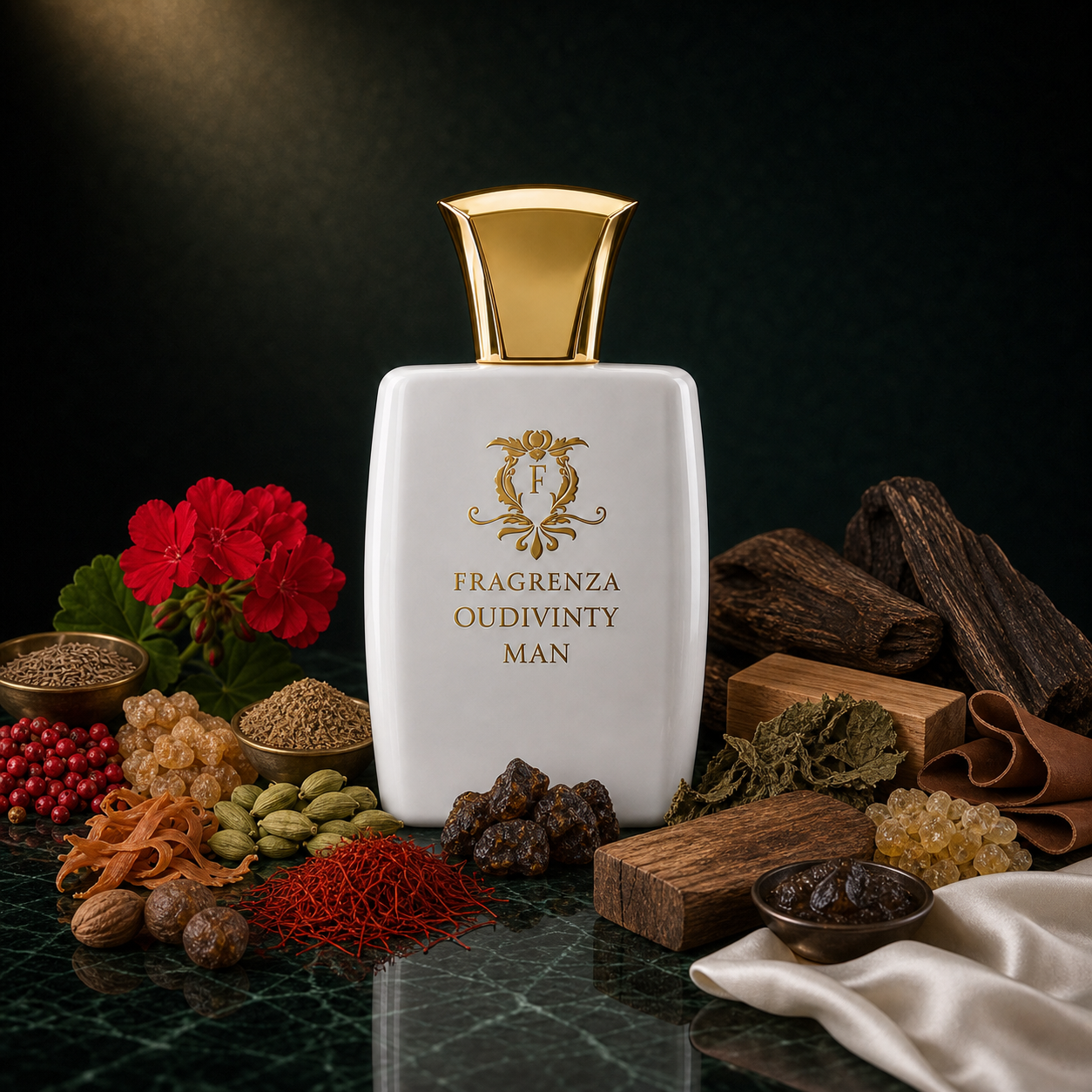
Fragrenza's Black Sahara captures the full frankincense-cumin-rose-oud architecture at a fraction of that cost. The opening delivers the same warm, resinous incense over dry cumin — that distinctive medicinal-spice combination that sets Sahara Noir apart from anything in the mainstream. The rose heart softens it into something genuinely beautiful without losing the austerity, and the deep oud-sandalwood drydown lingers on skin for hours. This is the full Sahara Noir experience worn freely.
- Top Notes: Frankincense, Cumin
- Heart Notes: Rose, Jasmine
- Base Notes: Oud, Sandalwood
- Longevity: 8–12 hours
- Sillage: Moderate to strong
Tom Ford Noir de Noir (Similarity: 8/10)
Noir de Noir is the closest structural relative to Sahara Noir within Tom Ford's own Private Blend line. Saffron and black truffle open over rose before transitioning into an oud-patchouli-vanilla base. The rose-oud axis is directly shared, and both fragrances use unusual top notes — cumin in Sahara Noir, truffle in Noir de Noir — to add a distinctive, challenging character to what would otherwise be a conventional floral-oud. Darker and more resinous than Sahara Noir overall, but clearly from the same olfactory family.
- Top Notes: Saffron, Black Truffle, Black Rose
- Heart Notes: Rose, Oud, Tree Moss
- Base Notes: Patchouli, Vanilla, Benzoin
- Longevity: 8–12 hours | Sillage: Moderate to strong
Amouage Epic Man (Similarity: 8/10)
Epic Man shares Sahara Noir's frankincense-rose-oud-sandalwood blueprint with remarkable precision. Pink pepper and saffron open warm and spiced, the heart brings frankincense and rose into close alignment with Sahara Noir's incense-floral core, and the base of oud, patchouli, and sandalwood mirrors the original's deep woody finish. At around $310 for 100ml, it remains a luxury commitment for daily use. The structural overlap with Sahara Noir is among the highest of any fragrance in the mainstream market.
- Top Notes: Pink Pepper, Cardamom, Saffron
- Heart Notes: Rose, Frankincense, Myrrh, Geranium
- Base Notes: Oud, Patchouli, Sandalwood, Musk
- Longevity: 10–14 hours | Sillage: Strong
Amouage Gold Man (Similarity: 7/10)
Amouage Gold Man is one of the most opulent rose-incense fragrances in existence. Frankincense and myrrh open over a jasmine-rose heart before settling into sandalwood, patchouli, and civet. The shared elements with Sahara Noir are frankincense, rose, jasmine, and sandalwood — a significant structural overlap. Gold Man is sweeter and more opulent where Sahara Noir is drier and more austere, but both draw from the same classical Middle Eastern fragrance tradition with unmistakable authority.
- Top Notes: Frankincense, Myrrh, Bergamot
- Heart Notes: Rose, Jasmine, Ylang-Ylang
- Base Notes: Sandalwood, Patchouli, Civet, Musk
- Longevity: 10–14 hours | Sillage: Strong
Dior Leather Oud (Similarity: 7/10)
Leather Oud opens with leather and incense — sharing Sahara Noir's dry, smoky top-note character — before revealing a rose-oud heart and a sandalwood-cedar base. Three of Sahara Noir's four defining pillars (incense, rose, oud, sandalwood) appear here in close alignment. The leather note substitutes for Sahara Noir's cumin warmth, giving Leather Oud a more polished, less earthy character, but the overall olfactory direction is clearly shared.
- Top Notes: Leather, Incense
- Heart Notes: Rose, Oud
- Base Notes: Sandalwood, Cedar
- Longevity: 8–12 hours | Sillage: Moderate to strong
Serge Lutens Arabie (Similarity: 6/10)
Arabie is a Middle Eastern-inspired gourmand-oriental that uses dates, fig, and apricot over a rose-oud-leather base. It shares Sahara Noir's oud base and rose presence while taking the sweetness in a distinctly fruity-dried-fruit direction. The rose-oud drydown is genuinely convergent, though Arabie's fruit-forward heart is a significant departure from Sahara Noir's austere frankincense-cumin character. Worth exploring for those who love the oud-rose base but want more warmth and sweetness.
- Top Notes: Dates, Fig, Apricot, Cumin
- Heart Notes: Rose, Oud, Labdanum
- Base Notes: Leather, Vetiver, Musk
- Longevity: 8–12 hours | Sillage: Moderate
Roja Parfums Amber Aoud (Similarity: 6/10)
Amber Aoud shares Sahara Noir's rose-jasmine heart and oud-sandalwood base, but replaces the incense-cumin opening with a bright bergamot-lemon accord and shifts the base toward amber rather than raw oud. The result is more opulent and plush where Sahara Noir is dry and austere. Best suited for those who love Sahara Noir's drydown but find the cumin and frankincense opening too challenging as a daily combination.
Maison Francis Kurkdjian Oud Satin Mood (Similarity: 6/10)
Oud Satin Mood centres on rose and violet over oud, sandalwood, and frankincense — sharing Sahara Noir's rose-frankincense-oud-sandalwood skeleton directly. Where Sahara Noir is dry and cumin-warmed, Oud Raso by Fragrenza captures the velvet-smooth rose-oud character of the original MFK at a more accessible price — a plush, enveloping composition where rose drapes over oud and sandalwood with a warm frankincense depth. If the rose-frankincense-oud combination is what draws you to Sahara Noir, Oud Raso delivers that same warmth at a fraction of the niche-house price.
Serge Lutens Fille en Aiguilles (Similarity: 4/10)
Fille en Aiguilles shares Sahara Noir's incense-resin character, using frankincense and pine resin over amber and benzoin to create a warm, resinous atmosphere. The frankincense connection is real, but the pine-forward, forest-floor character of this fragrance takes it far from Sahara Noir's rose-oud-cumin territory. Worth exploring for those drawn specifically to the incense aspect of Sahara Noir, but not a structural match for the overall composition.
Which Fragrance Is Most Like Tom Ford Sahara Noir?
For the closest structural match, Tom Ford Noir de Noir is the strongest companion within the same house — it shares the rose-oud core and uses similarly unusual top notes to set it apart from conventional floral-ouds. For the frankincense-rose-oud architecture specifically, Amouage Gold Man and Epic Man are both outstanding alternatives with exceptional longevity.
Within Fragrenza's range, Black Sahara delivers the complete Sahara Noir DNA — incense, cumin, rose, oud, sandalwood — at a price that makes regular wear of this distinctive and demanding profile genuinely feasible.
For more accessible options, explore our designer fragrance dupes.
Tom Ford Sahara Noir and the Private Blend Discontinuation Question
Tom Ford Sahara Noir occupies a specific historical position within the broader Private Blend catalogue that deserves additional context. The composition launched in 2013 as a flanker entry inspired by Middle Eastern fragrance traditions and was discontinued from regular production several years later, with the composition remaining available only through limited stockist channels, secondary market sales, and occasional limited-edition reissues. This discontinuation status substantially affects the practical purchasing landscape for Sahara Noir specifically and makes the inspired-by alternative discussed in the article above more economically relevant than for compositions that remain in regular production at standard retail.
Discontinued luxury compositions occupy a specific commercial niche that secondary-market dynamics make complicated. Bottles command substantial premiums above original retail because of the artificial scarcity, but the same scarcity creates significant authentication risk, since counterfeit operations specifically target discontinued luxury compositions where supply scarcity provides cover for fake distribution. The wearer who specifically wants authentic Sahara Noir as a collector item faces both substantial price premiums and meaningful authentication risk, which makes the Fragrenza Black Sahara alternative more practically appealing than the standard luxury-versus-inspired-by economic calculation would suggest. For most wearers who simply want to wear the Sahara Noir aesthetic regularly, the alternative provides more sustainable access to the broader aesthetic than the discontinued original can offer.
The Frankincense-Cumin Architectural Combination and Why It Is So Unusual
The frankincense-cumin opening that defines Sahara Noir most distinctively deserves additional examination because the combination is genuinely unusual within mainstream luxury perfumery. Cumin in perfumery is one of the most polarising materials available — the spice's distinctive aromatic character includes specific compounds (cuminaldehyde, beta-pinene, gamma-terpinene) that can read as either compellingly exotic-spicy or as aggressively sweat-savoury depending on how the material is integrated into a composition and on individual wearer perception. Most contemporary luxury perfumery avoids cumin entirely or uses it at very low concentrations as a supporting trace element, which makes Sahara Noir's choice to centre cumin alongside frankincense in the opening genuinely architectural-bold.
The frankincense in Sahara Noir is rendered as the higher-quality steam-distilled variant rather than as a synthetic incense reconstruction, which delivers the specific lifted-resinous character that lower-cost frankincense materials cannot produce. The combination of substantial frankincense with substantial cumin creates a specific aromatic effect that reads as recognisably Middle Eastern desert atmospherics — the ceremonial-religious frankincense character meeting the savoury-warm cumin character produces an opening that feels culturally specific rather than abstractly oriental, which is part of what gives the composition its specific identity within the broader contemporary oriental category.
For wearers building a wardrobe around the broader frankincense-anchored aesthetic, knowing that the cumin treatment is the architectural risk that makes Sahara Noir distinctive helps clarify which adjacent alternatives function as genuine substitutes. Compositions that share the frankincense character but use safer supporting materials (pink pepper, cardamom, saffron) deliver a smoother, more conventional aesthetic that some wearers will prefer to the cumin-frankincense combination, while compositions that preserve the cumin treatment (Black Sahara, certain Middle Eastern alternatives, a few niche entries) deliver the more architecturally distinctive aesthetic that defines the Sahara Noir signature.
The Middle Eastern Frankincense-Oud Tradition That Sahara Noir References
Sahara Noir's positioning as authentically rooted in Middle Eastern fragrance tradition rather than merely inspired by it deserves additional context because the distinction matters substantially for understanding what the composition is actually doing. Traditional Middle Eastern (Khaleeji-style) perfumery has a specific aesthetic vocabulary that differs from Western luxury perfumery in several important ways. The compositions typically use oud at substantially higher concentrations than Western luxury compositions, rely more heavily on natural rose absolutes and natural musk substitutes, are often produced as attar-style oil-based compositions rather than as alcohol-based eaux de parfum, and are designed for substantial projection and very long longevity (often twenty-plus hours of perceptible wear) that exceeds what Western luxury perfumery typically targets.
Sahara Noir's specific position is as a Western luxury composition that consciously draws on the Khaleeji tradition while operating within Western luxury perfumery's technical and commercial conventions. The composition uses alcohol-based eau de parfum format rather than oil-based attar format, projects substantially rather than the maximum-projection profile that Khaleeji compositions deliver, and integrates the Middle Eastern aesthetic vocabulary into a Western luxury commercial framework that makes it accessible to consumers who would not typically engage with traditional Middle Eastern attar perfumery. For wearers interested in the broader Middle Eastern fragrance tradition, sampling Sahara Noir alongside traditional Khaleeji attar compositions (Ajmal, Al Haramain, Asgharali, various other traditional houses) provides useful comparative information about where the Western luxury treatment differs from the source tradition.
How the Frankincense-Anchored Category Has Evolved Over the Past Decade
The broader frankincense-anchored luxury fragrance category has expanded substantially over the past decade, with both designer and niche houses releasing additional entries that participate in the broader aesthetic. Comme des Garcons Avignon (2002, predating most of the contemporary expansion) defined the contemporary cathedral-incense aesthetic that connects to but differs from the Khaleeji frankincense-oud tradition. Heeley Cardinal (2007) and various other Heeley entries extended the broader incense-luxury aesthetic. Amouage Interlude Man (2012) and the broader Amouage catalogue contribute substantial frankincense-oud compositions across multiple price tiers. By Kilian, Roja Parfums, and various other ultra-luxury houses have continued to develop frankincense-anchored entries throughout the past decade.
What distinguishes Sahara Noir within this expanded category is the specific combination of Middle Eastern aesthetic authenticity and Western luxury commercial framing, plus the cumin treatment that no other commercially significant composition has matched. The discontinuation of the composition from regular production has created a specific gap in the contemporary frankincense-anchored category that adjacent compositions can address only partially, and the Fragrenza Black Sahara alternative is one of the more directly comparable accessible-price options that preserves the specific architectural character that the original delivered.
Wear Context: When Sahara Noir and Its Alternatives Function at Their Best
Sahara Noir and its architectural relatives perform at their best in cooler-weather contexts (roughly five to twenty degrees Celsius), in evening and formal social settings, and in contexts where the substantial projection and culturally specific atmospheric register match the social setting. Cold-weather formal evenings, religious or ceremonial occasions where the frankincense character matches the atmospheric setting, late-autumn and winter at-home wear contexts, and social settings where appreciative recognition of distinctive oriental fragrance is expected are the natural wear contexts for compositions in this aesthetic territory.
The contexts where the category underperforms are also worth knowing. Daytime business environments often find the substantial projection and unusual aesthetic register inappropriate, particularly in industries where conventional polished-fresh masculine projection is the expected default. Hot weather amplifies the cumin and oud components uncomfortably, with the heat pulling the compositions into more aggressive readings than the cooler-weather designs intend. Casual social settings find the ceremonial-distinctive character overdressed for the social register. Building a wardrobe around the Sahara Noir aesthetic typically means treating compositions in the category as cooler-weather evening specialists rather than as year-round all-context primaries, with lighter-aesthetic compositions covering the wear contexts that the frankincense-cumin-oud category does not handle optimally.
How the Fragrenza Alternatives Provide Coverage Across the Broader Category
The Fragrenza alternatives discussed in the article above — Black Sahara directly for Sahara Noir, Arabian Timber for related Tom Ford Arabian Wood territory, and Oud Raso for the broader MFK Oud Satin Mood adjacent territory — collectively cover the broader frankincense-oud-warm-oriental aesthetic at accessible price points. Black Sahara is the direct substitute that preserves the specific frankincense-cumin-rose-oud architecture that defines Sahara Noir most distinctively. Arabian Timber extends the broader aesthetic into adjacent territory that emphasises the woody-oud character over the frankincense-cumin opening. Oud Raso provides smoother, more contemporary luxury-niche character within the broader oud-rose family.
For wearers building a wardrobe around the broader Middle Eastern-influenced oriental aesthetic, the practical approach is to identify which specific facet of the broader category appeals to you most and to invest in the alternative that targets that facet specifically. Black Sahara is the right primary for wearers who specifically value the cumin-frankincense distinctive opening. Arabian Timber serves wearers who prefer the woody-oud character without the cumin challenge. Oud Raso serves wearers who want the smoother contemporary luxury treatment that contemporary MFK-tier compositions deliver. The three alternatives together cover most of the practical wear-context range that wearers building a Middle Eastern-influenced oriental wardrobe would want to address, at accessible price points that make intentional wardrobe-building economically practical.
Sampling Strategy for Frankincense-Cumin-Oud Compositions
Frankincense-cumin-oud compositions like Sahara Noir require longer evaluation windows than most other fragrance categories because the architectural development happens slowly across the wear arc and the most distinctive character emerges several hours into wear rather than in the opening. A counter-sniff or thirty-minute evaluation provides particularly limited information for this category because the cumin opening can read as challenging or even unpleasant to wearers who have not yet experienced the heart-to-base integration where the composition's most distinctive character emerges. Wearers who reject Sahara Noir or its alternatives based on opening evaluation alone often miss the composition's most appealing aspects.
The reliable protocol is to apply two sprays to clean skin in a low-fragrance environment, evaluate at thirty minutes, two hours, four hours, eight hours, and twelve hours, and pay particular attention to the four-to-eight-hour window where the frankincense-rose-oud integration reaches its most distinctive expression. Side-by-side comparison of any available Sahara Noir sample (which may require pursuing decants from specialised services given the discontinuation) and Black Sahara on opposite wrists provides the most useful comparative information because the architectural similarity is high while the specific material treatments may differ in ways that affect overall wear experience.
Final Notes on Sahara Noir and the Discontinued-Luxury Question
Tom Ford Sahara Noir is one of the more architecturally distinctive compositions in the contemporary Western luxury fragrance market, and the discontinuation of regular production has created a specific scarcity premium that affects how the composition should be evaluated for purchase. For wearers who specifically value the distinctive frankincense-cumin opening and who want to wear the composition regularly, the Fragrenza Black Sahara alternative provides more sustainable access than the secondary-market Sahara Noir original, both economically and from an authentication-risk perspective.
For collectors who specifically want authentic Sahara Noir as a collection piece rather than as a daily-wear composition, the secondary-market acquisition route remains the only option, with the associated price premiums and authentication considerations. For wearers who want to explore the broader frankincense-oud aesthetic without committing to the specific Sahara Noir architectural choices, the broader category includes substantial alternatives at multiple price tiers (Amouage Epic Man, Gold Man, various Roja Parfums entries, and many others) that provide useful sampling exploration. The Fragrenza alternatives extend accessibility further by providing inspired-by compositions at price points that make daily wear sustainable, which is the most practical case for most enthusiasts who want to wear the broader Middle Eastern-influenced oriental aesthetic regularly rather than treating it as occasional collector-piece wear. The aesthetic is one of the more compositionally serious territories in contemporary perfumery, and it deserves serious sampling exploration regardless of which specific compositions any particular wearer ultimately invests in.