

Akigalawood: Scent Profile + Best Niche Perfumes That Use It (2026 Guide)
Akigalawood sits as a calm modern note: lit, slow-burning, low-keyed, lingering quietly past the heart on warm skin. A reference for modern compositions.
By Julia Moretti 7 min read
Akigalawood smells earthy, woody, and slightly peppery — a warm, ambery character that bridges patchouli and oud without being quite either. Distilled from a fraction of patchouli oil, it reads dark and resinous with a dry, spicy-woody depth and a whisper of smoke, which is why perfumers use it to add refined, oud-like richness to modern fragrances.
The contemporary woody captive of niche perfumery
Akigalawood is one of perfumery’s most distinctive contemporary aromatic captives. Earthy, woody, slightly peppery, with a complex character that bridges between patchouli and oud without being either, Akigalawood was developed by Givaudan in the 2010s and has rapidly become a structural staple of contemporary niche and luxury perfumery. The material was created by molecular distillation of patchouli oil — isolating a specific aromatic fraction that delivers a particular warmth, depth, and slight pepper-and-oud-like character without the full earthiness of standard patchouli.
This is the guide to Akigalawood as a perfumery material. What Akigalawood actually is in fine fragrance, the technical innovation that made the material possible, the cultural moment that brought Akigalawood into contemporary perfumery, the famous fragrances that put the material to work, the Fragrenza compositions that use the Akigalawood register, and how to think about the material in your own wardrobe.
What Akigalawood is in perfumery
Akigalawood is a Givaudan captive material developed through molecular distillation of patchouli essential oil. The technical process — called molecular distillation — uses high vacuum and low temperature to separate specific aromatic fractions from a complex natural material based on their molecular weight and volatility. Akigalawood isolates a specific high-value fraction of patchouli that delivers warm, woody, slightly peppery character with a quiet oud-like depth.
The material was launched commercially around 2014 and quickly became one of the most influential perfumery captives of the contemporary era. The aromatic profile bridges between several established categories: warmer than pure patchouli, more refined than pure oud, slightly peppery in a way that distinguishes it from straight woody captives, with a contemporary character that reads immediately as modern luxury perfumery.
Akigalawood is a captive material — meaning the molecule is exclusive to Givaudan and to perfumers working with Givaudan. Other aroma-chemical houses have developed similar materials with related but distinct aromatic profiles, and the contemporary woody-captive landscape includes several molecules that approximate Akigalawood’s register at different price points.
What Akigalawood actually smells like
Akigalawood in fine fragrance reads as a warm, woody, slightly peppery, quietly oud-like character that is unmistakably contemporary. Compared to other woody materials: less earthy than pure patchouli, less smoky than oud, less dry than cedar, with a peppery-warm dimension that no other single material delivers. The character is among the most recognizable contemporary perfumery signatures — once you know what Akigalawood smells like, you can identify it across dozens of compositions that use the material.
The wear on skin reads warm, woody, slightly carnal, with a contemporary refinement that distinguishes Akigalawood-led compositions from purely patchouli or oud structures. The material is among contemporary perfumery’s great fixatives — the heavy aromatic molecules slow the evaporation of lighter materials and extend the wear of an entire composition.
Cultural and compositional history
Akigalawood is barely a decade old. The material was launched commercially around 2014 and entered fine fragrance through a small number of niche compositions that used the captive heavily. Within a few years, Akigalawood had become one of the signature materials of contemporary niche luxury perfumery, appearing in compositions from Maison Francis Kurkdjian, Tom Ford, Le Labo, Diptyque, and many independent perfumers.
The material’s rise tracks closely with the contemporary niche oud movement. Akigalawood delivers oud-adjacent character at lower cost and within IFRA limits, which makes it useful for compositions that want oud-like warmth without the complexity, expense, or regulatory constraints of natural oud. Many contemporary “oud” compositions in luxury perfumery rely on Akigalawood and similar captives more than on natural agarwood.
The contemporary moment treats Akigalawood as a structural staple of niche luxury perfumery. The material has effectively created its own register — the Akigalawood-led contemporary woody composition is now a recognizable category in fine fragrance.
Famous Akigalawood fragrances
Several compositions deserve study because they show what Akigalawood can do at the structural center. Maison Francis Kurkdjian Oud Satin Mood and various MFK Oud compositions use Akigalawood structurally. Tom Ford Ombre Leather and various Tom Ford private blends use the material. Several Le Labo and Diptyque oud-and-woody compositions place Akigalawood at the heart of contemporary luxury structures.
The material is rarely named on contemporary fragrance bottles (the captive’s name is technical and commercial perfumery prefers familiar terms like “woods” or “oud”), but Akigalawood appears extensively in modern niche perfumery and shapes the aromatic profile of compositions in subtle but distinctive ways.
Akigalawood-direction in the Fragrenza line
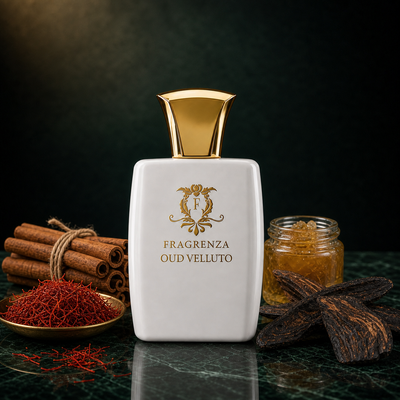
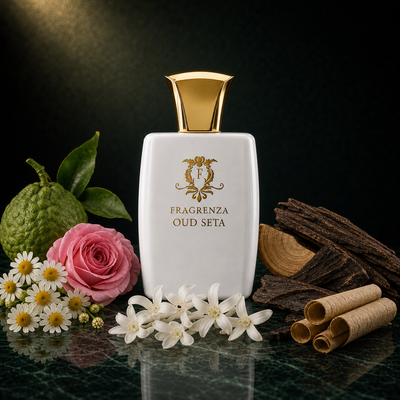
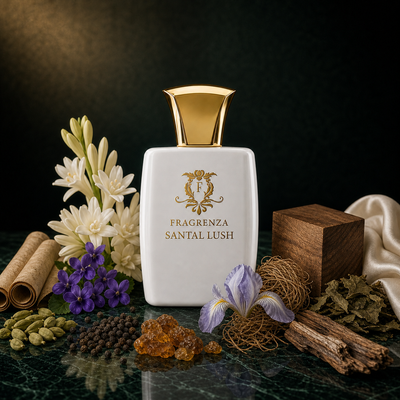
Several Fragrenza compositions use woody-and-peppery character adjacent to the Akigalawood register.
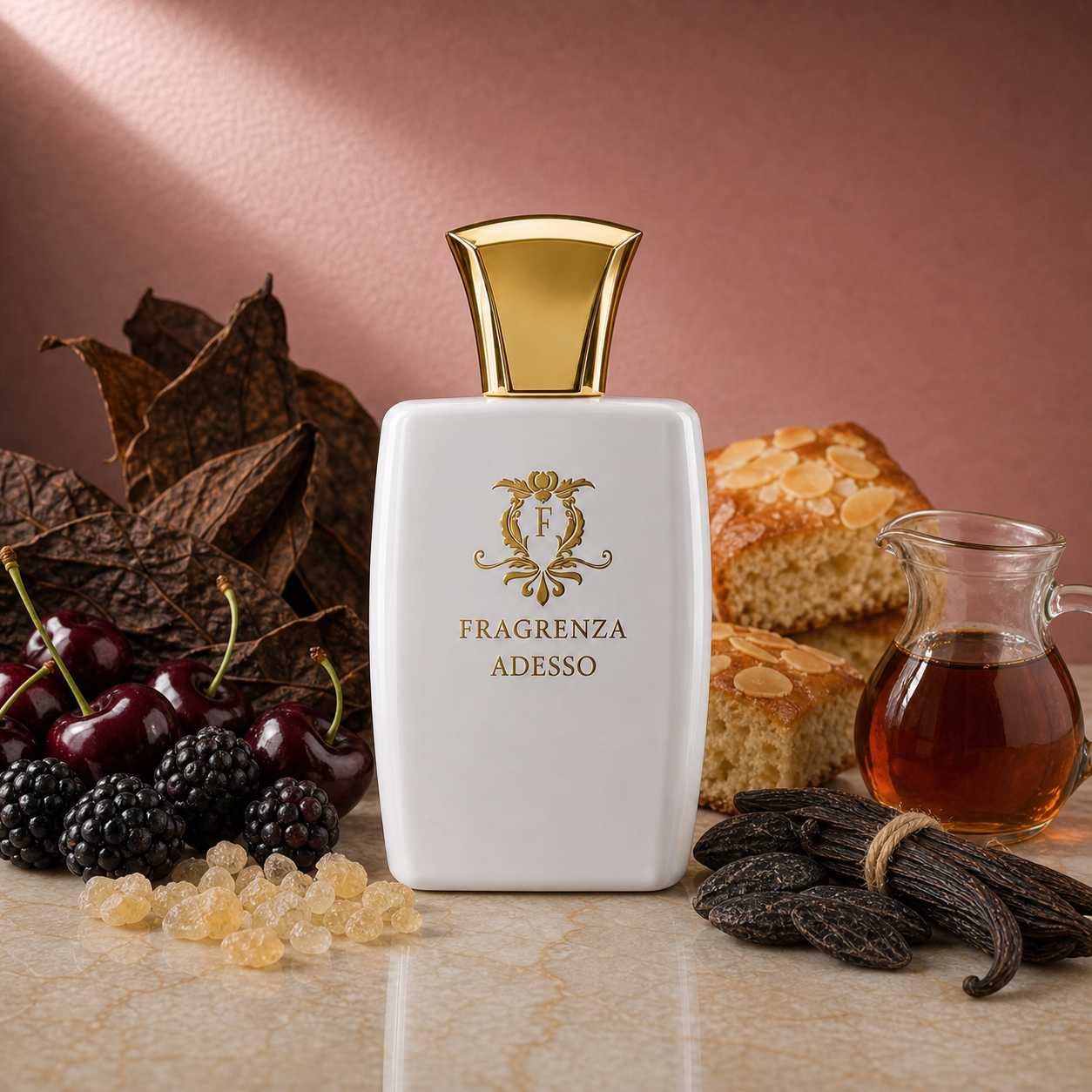
places sandalwood, oud, leather, and patchouli alongside vanilla in the base, with crystallized sugar, labdanum, opoponax, and incense in the heart and bergamot, oregano, and pepper in the opening — the warm-woody-peppery register where Akigalawood-direction character lives.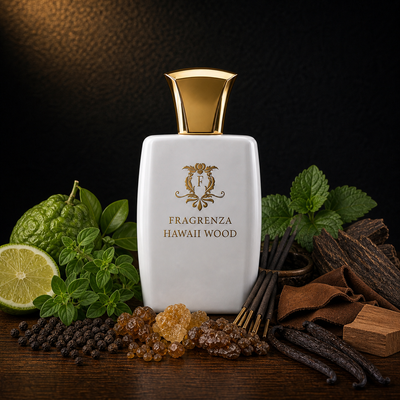
and use oud-and-velvet woody structures that bridge into Akigalawood territory through their refined contemporary woody character. And places sandalwood, patchouli, and cedar in the base alongside soft musk, with a heart of tuberose, amber, iris, and vetiver and an opening of cardamom, violet, papyrus, and pepper — the meditative-woody-peppery register adjacent to Akigalawood perfumery.
For more on related contemporary woody perfumery, see our entries on oud, patchouli, and woody notes.
How Akigalawood interacts with other notes
Akigalawood is compositionally generous. Its warm-woody-peppery character bridges across many other aromatic families.
With oud and oud-direction materials, Akigalawood extends the contemporary oud register and reduces cost without sacrificing structural character.
With patchouli, Akigalawood deepens classical patchouli compositions into a more refined contemporary register. The two materials reinforce each other compositionally because Akigalawood is derived from patchouli.
With rose, Akigalawood creates the contemporary rose-oud-direction register that has anchored a meaningful share of niche perfumery in the past decade.
With saffron and warm spices, Akigalawood extends the saffron-oud register that defines several contemporary luxury compositions.
With leather and dark woods, Akigalawood deepens classical leathery-woody structures into contemporary niche territory.
Akigalawood in the modern wardrobe
Akigalawood compositions wear especially well in autumn and winter, where the warm-woody-peppery character settles into cooler air. The category is closely associated with evening wear, formal occasions, and contemporary luxury perfumery.
Akigalawood carries no inherent gender coding. Contemporary compositions use the material freely across all registers. The material is functionally gender-neutral.
Application is conventional: pulse points, light spray. Akigalawood-direction notes generally express most clearly in the heart and base of compositions and persist for many hours through the dry-down.
Related reading
Akigalawood grows out of the woody-spicy world of patchouli and oud, so keep exploring the notes it's most closely related to:
Frequently asked questions
What does Akigalawood smell like in perfume?
Warm, woody, slightly peppery, with a quietly oud-like character that is unmistakably contemporary. Less earthy than patchouli, less smoky than oud, more peppery-warm than cedar. The character is one of the most recognizable contemporary perfumery signatures, instantly identifiable across dozens of compositions that use the material structurally as a fixative and aromatic anchor in modern niche luxury fine fragrance.
Is Akigalawood a natural perfumery material?
Partially. Akigalawood is derived from patchouli essential oil through molecular distillation, which isolates a specific aromatic fraction. The starting material is natural; the captive itself is an isolated fraction rather than the whole natural oil. The material is sometimes classified as a natural-direction captive rather than purely synthetic.
How is Akigalawood different from patchouli?
Akigalawood isolates a specific aromatic fraction of patchouli that delivers warm, woody, slightly peppery character without the full earthiness of standard patchouli. The two materials read distinctly different on skin, even though they share botanical origin. Akigalawood reads more refined-contemporary; patchouli reads more classical-earthy.
How is Akigalawood different from oud?
Different botanical sources and different aromatic profiles. Akigalawood is derived from patchouli; oud is derived from infected agarwood. Akigalawood delivers oud-adjacent character at lower cost and within IFRA limits, but it does not replace true oud aromatically. Many compositions use both materials together for full structural depth.
Why is Akigalawood so common in contemporary niche perfumery?
Because the material delivers a distinctive contemporary warm-woody-peppery character at scale and within regulatory limits. The captive’s combination of refined modernity, oud-adjacent depth, and reasonable cost makes it useful for compositions that want contemporary luxury character without the complexity of natural oud or full patchouli.
What perfumes use Akigalawood well?
Maison Francis Kurkdjian Oud Satin Mood, Tom Ford Ombre Leather, and various contemporary niche compositions use Akigalawood structurally. The material is rarely named on fragrance bottles but appears in dozens of contemporary luxury compositions.
The contemporary place of Akigalawood
Akigalawood is one of contemporary perfumery’s most influential recent captives. The material has shaped the contemporary niche luxury woody register over the past decade and continues to anchor a meaningful share of modern fine fragrance. Whether you are wearing a contemporary niche oud-direction composition, a luxury rose-and-Akigalawood feminine, or a modern woody-peppery masculine, the Akigalawood materials are doing the structural work that distinguishes contemporary luxury perfumery from classical woody compositions.